The best Zombie movies I have seen - A thread:
Night of the Living Dead (1968)
Director: George A. Romero
There is no way I start this thread with any other movie. Romero basically made this genre more popular with this low budget masterpiece & the films he made after.
(1/n)
One giant leap for mankind
History was made on July 20, 1969, when Apollo 11's Neil Armstrong and Buzz Aldrin became the first to set foot on the Moon.
For more than 5 decades, the total number of moonwalkers has remained at 12. NASA will change that with Artemis IV.
Recapturing thoughts I've expressed before on this specific calendar day: they went at the very earliest moment our technology would allow. Driven by a global conflict which demanded constant demonstrations of technical supremacy. Science piggy-backed on the Cold War and we got the greatest feat of exploration in human history. Even to this day. And until we land humans on Mars, nothing will eclipse the event that was Apollo 11. A singular moment of excellence. The men. The machines. Our national will. 🇺🇸 🌖🚀
Karel Zeman was a visionary Czech filmmaker whose groundbreaking work blended live action, animation, and practical effects in ways decades ahead of his time.
Watching how he created his visual effects is still astonishing today.
Before Neil Armstrong could take his historic first steps on the Moon, NASA first had to master the techniques that would let an astronaut safely exit a spacecraft in space.
On June 3, 1965, Gemini IV pilot Ed White made that first step with the first American spacewalk.
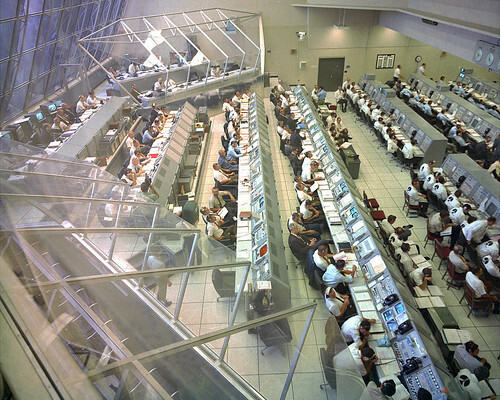
Overall view of the Firing Room #2 in the Launch Control Center during the Countdown Demonstration Test for the Apollo 12 mission.
Image Number: 69PC-0570
Date: October 29, 1969 https://t.co/H5jrmPpptO
A lot of Americans remember Sears as a dying store in a half-empty mall.
That’s not what Sears was.
Sears was how American factories entered ordinary houses. Kenmore in the kitchen. Craftsman in the garage. DieHard under the hood. Coldspot humming in the corner. Lawn tractors in sheds. Socket sets in drawers that nobody was allowed to lose.
It was basements, workbenches, catalogs, part numbers, repairmen, delivery trucks, credit accounts, and old men who could hear a washer struggling before it finally quit.
A kid could flip through the Wish Book and learn what adulthood looked like. Tools. Appliances. Work boots. School clothes. A bicycle. Sometimes even a whole house ordered by mail and built piece by piece after the materials came in by rail.
That was the part Sears understood. America was full of people trying to build stable lives with practical things.
Then the practical world got replaced by a disposable one. The catalogs vanished. The stores hollowed out. Manufacturing moved overseas. Repair got expensive. Replacement got cheap. The people who knew how everything worked got older, retired, or died, and a lot of what they knew went with them.
People call it the death of a department store.
I don’t.
Sears was one of the last national systems that still assumed ordinary Americans should know how to maintain the world around them instead of just replacing it. That’s the strange poverty nobody talks about now.
Not having fewer things. Having more than ever and understanding almost none of them.
Soyuz 11: The Only Humans Who Ever Died in the Vacuum of SpaceIn the summer of 1971, three Soviet cosmonauts—Georgy Dobrovolsky, Vladislav Volkov, and Viktor Patsayev—achieved what no one had done before. They became the first crew to dock with and live aboard a space station: the pioneering Salyut 1. For 22 days they worked, ate, slept, and made history in the harsh silence of orbit.Then came the journey home.The Soyuz 11 spacecraft performed a picture-perfect re-entry. Its parachute bloomed against the clear Kazakh sky, and the capsule touched down gently on the steppe. From the outside, everything looked exactly as it should. But when the recovery teams pried open the hatch, they froze in horror.All three men were still strapped in their seats—dead.Their faces were covered in dark, bruised patches. Blood trickled from their noses and ears. There was no pulse, no breath, no sign of life. The silence inside the capsule was absolute.The investigation that followed revealed one of the most haunting tragedies in spaceflight https://t.co/T2A3mb9L9g 168 kilometers above Earth—just as the descent module separated from the service module—a critical breathing ventilation valve was jolted open with explosive force. In seconds, the capsule’s atmosphere vanished into the void. The men were suddenly exposed to the raw vacuum of space.The air was ripped from their lungs in an instant. They lost consciousness within 10–15 seconds. Viktor Patsayev fought longest—he was seen reaching desperately for the valve, trying to crank it shut by hand. He never finished the turn. The wheel stopped halfway.They had no spacesuits. No warning. No https://t.co/wwQG82iPJQ this day, Georgy Dobrovolsky, Vladislav Volkov, and Viktor Patsayev remain the only human beings to have died in the vacuum of outer space.
@d4doome@AJ_Ravenhearst Jinx! I was just thinking about the great Excalibur. Thanks for the reminder.
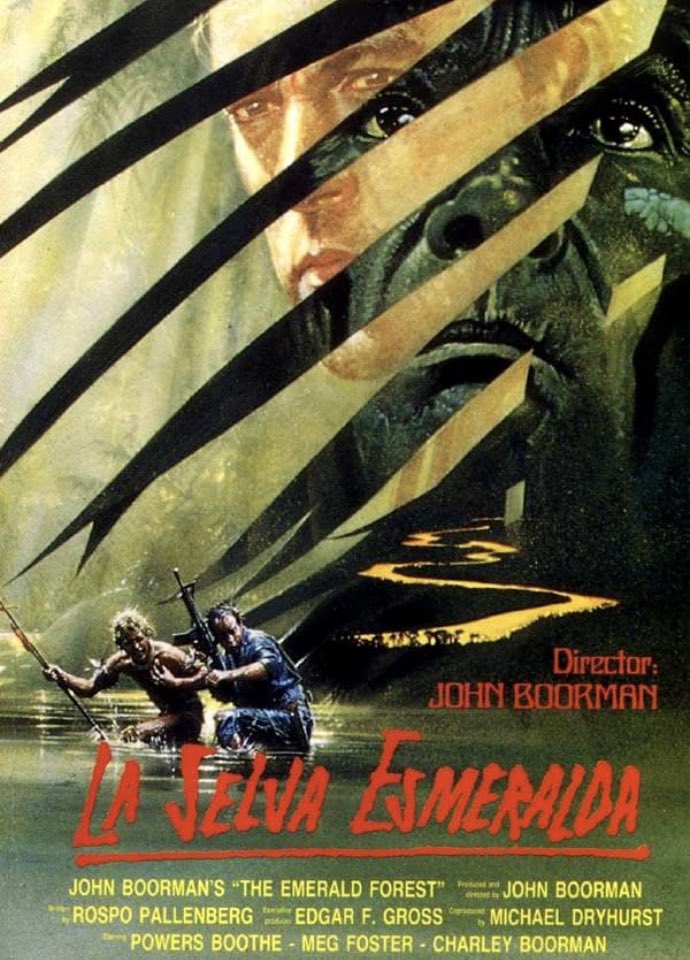
I need to visit some of his other movies, as I’m already a big fan of Deliverance, and the forgotten The Emerald Forest.
Beautiful tribute to the iconic Rex Reed. R.I.P.
“Especially when Rex hated a movie, his evisceration was so colorful that it made me want to see it. That was his gift: he could pan something so viciously that it felt unmissable. I tried explaining this to him a few times—you hate it so much, I have to see it—and he’d grumble, not angry but perplexed, as if my Millennial sensibility was something he’d never crack. In ways, Rex was like a grandparent I got to keep long enough to appreciate.”
‘Was there ever a time when good movies outnumbered bad ones? “Yes,” he conceded, “but not while I was writing. I saw wonderful films through the ’60s and maybe a few in the ’70s. But the greatest movies were in the ’40s. It wasn’t a great period for the world, but the movies reflected higher thinking.”’
https://t.co/zdbA3oa1iN