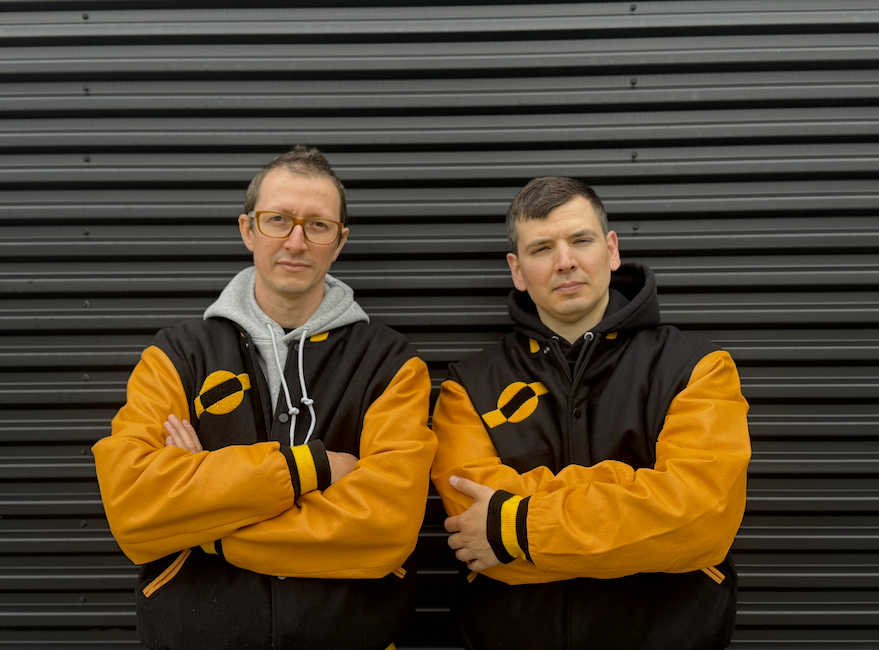
We’re excited to announce our first mission into orbit!
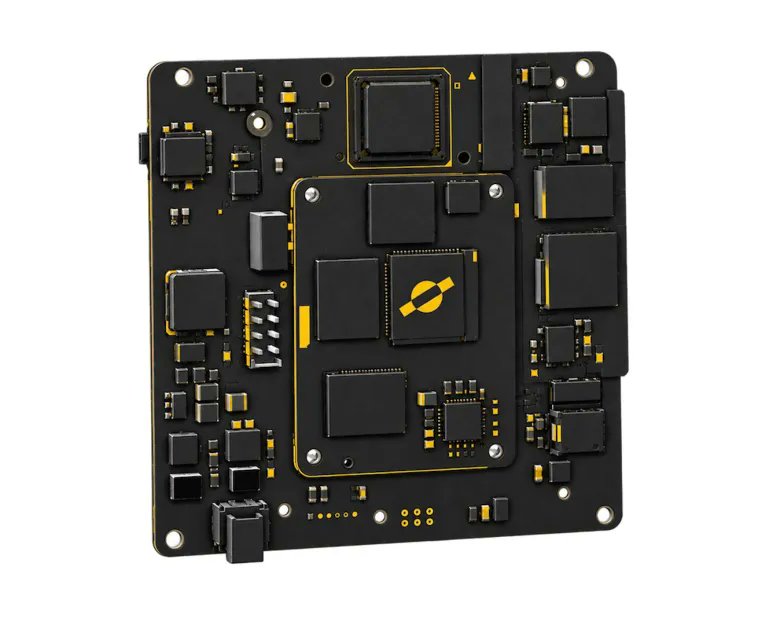
The work began last year, with the development of our space internet architecture design, Space Fabric. Now, we’re taking the hardware into orbit in Q1 next year.
Its job will be to prove Space Fabric’s security and multi-tenancy computing capabilities in GEO.
If you want to build with confidential computing and security services in orbit, you have to solve the connectivity challenges between the different components of the space infrastructure orbit and Earth.
This mission is how we begin addressing that challenge.
Big credits to our amazing engineers for getting Space Fabric built and ready for orbit. Stay tuned for updates!
Read the article:
https://t.co/hhKCgeVso0
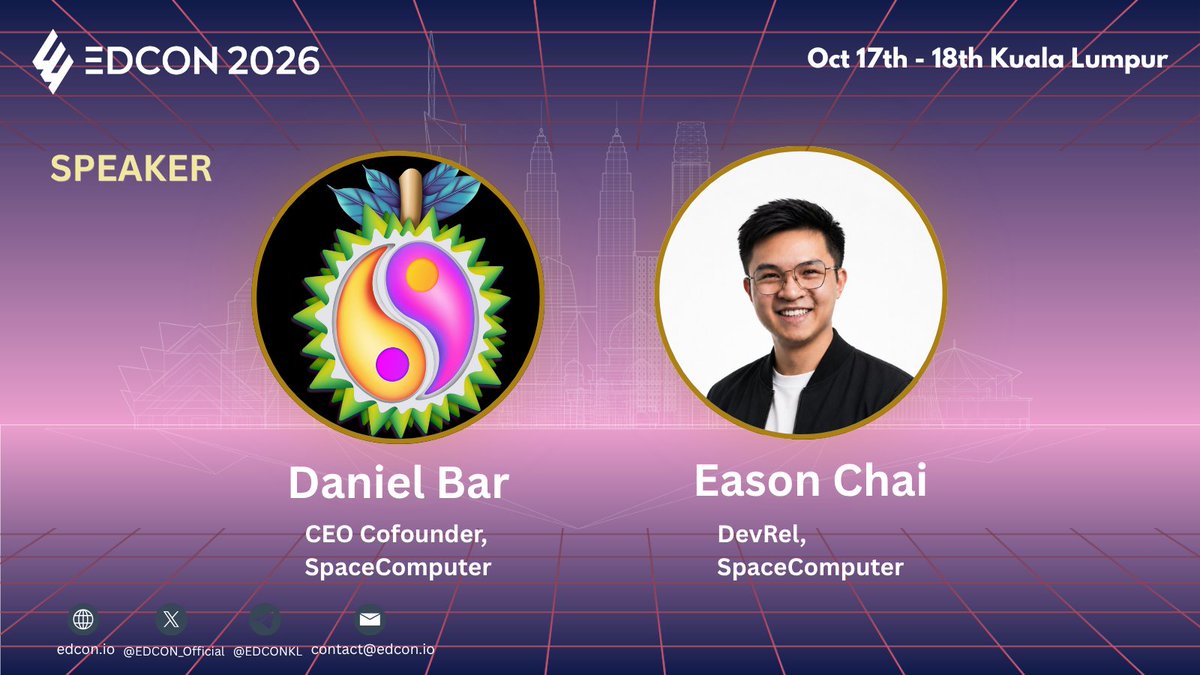
🚨 Speaker Announcement 🚨
We’re excited to announce that @semicondurian, CEO Cofounder @SpaceComputerIO and @easonchaiii, DevRel of @SpaceComputerIO will jointly speak at EDCON2026!
They will talk about Trust Fabric for the Space Internet.
EDCON 2026 will be held from Oct 17th to 18th in Kuala Lumpur, Malaysia🇲🇾!
Event free tickets :https://t.co/mNK5DPk7IR
🔔Join Us at EDCON 2026!
Apply to speak, sponsor, volunteer, or collaborate—EDCON offers unmatched access to the global Ethereum community.
More info: https://t.co/T4VQf5PWNK
Key management service (KMS) is one of the most critical security services. If this is a new concept for you, and you're building apps with AI, this post is for you.
A KMS is a system that generates, stores, and controls access to the cryptographic keys used to encrypt, decrypt, and sign data.
Applications ask the KMS to perform those operations, and the keys themselves stay inside the service.
If you want to take your app security to the next level, this blog is an excellent primer to get you started:
https://t.co/zQFOmlcny8
Exciting to see @semicondurian and @rezabfil and the whole @SpaceComputerIO team bring their Space Fabric architecture to life! 📡🛰️🌐
The SpaceX IPO has opened the eyes of the world to space infrastructure, but few people think about the security of compute in orbit. This is where SpaceComputer will play a pivotal role.
At its core Space Fabric is being built to protect data and computations in orbit while keeping compute cryptographically verifiable and secure.
A marriage of hardware and cryptographic primitives 💛
Don't get me started on quantum, much of today's cryptography won't hold in the future. These early missions by SpaceComputer will build the security foundations for a post-quantum readiness future. The Space Fabric architecture is an early, concrete step in that direction.
Congratulations to everyone involved!🎉
We're taking a bet that the future development and growth of space computing will resemble a lot what we've seen on earth:
- Open and interoperable
- Cryptographically verifiable and secure
- Shared resources will unlock utility and scale
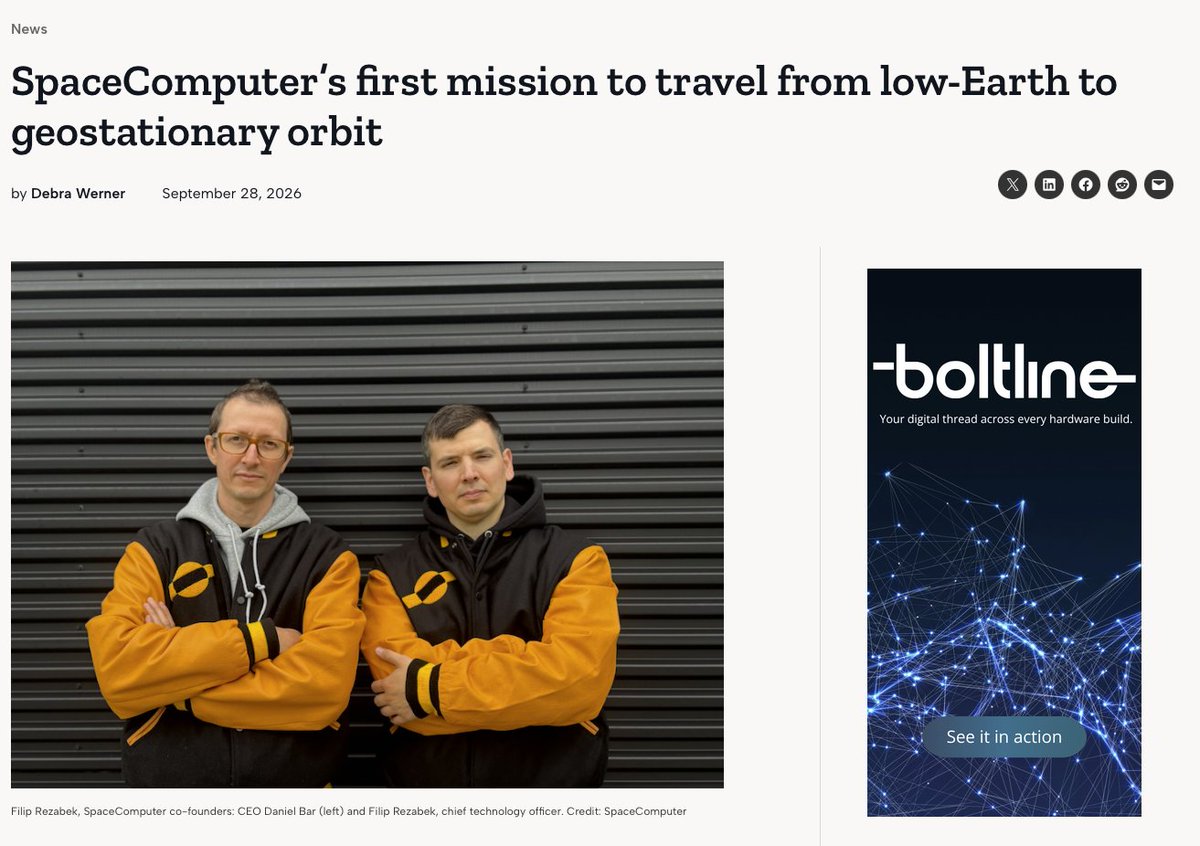
Today we're announcing the first mission of @SpaceComputerIO, a custom design and implementation of our Space Fabric architecture. Our payload will be integrated aboard a spacecraft traveling from LEO to GEO and will be planned to operate in GEO for full 12 months or longer.
Thanks to @spacereportr and @SpaceNews_Inc for the coverage 👽🙏🏻
1/
Giving an AI agent its own private key is one of the riskiest security decisions you can make right now.
A private key allows software to sign transactions for you, and researchers have already tricked AI agents into signing transfers to wallets the researchers controlled.
A key management service (KMS) keeps keys locked away and still allows agents to use them, without ever having full access to the key itself.
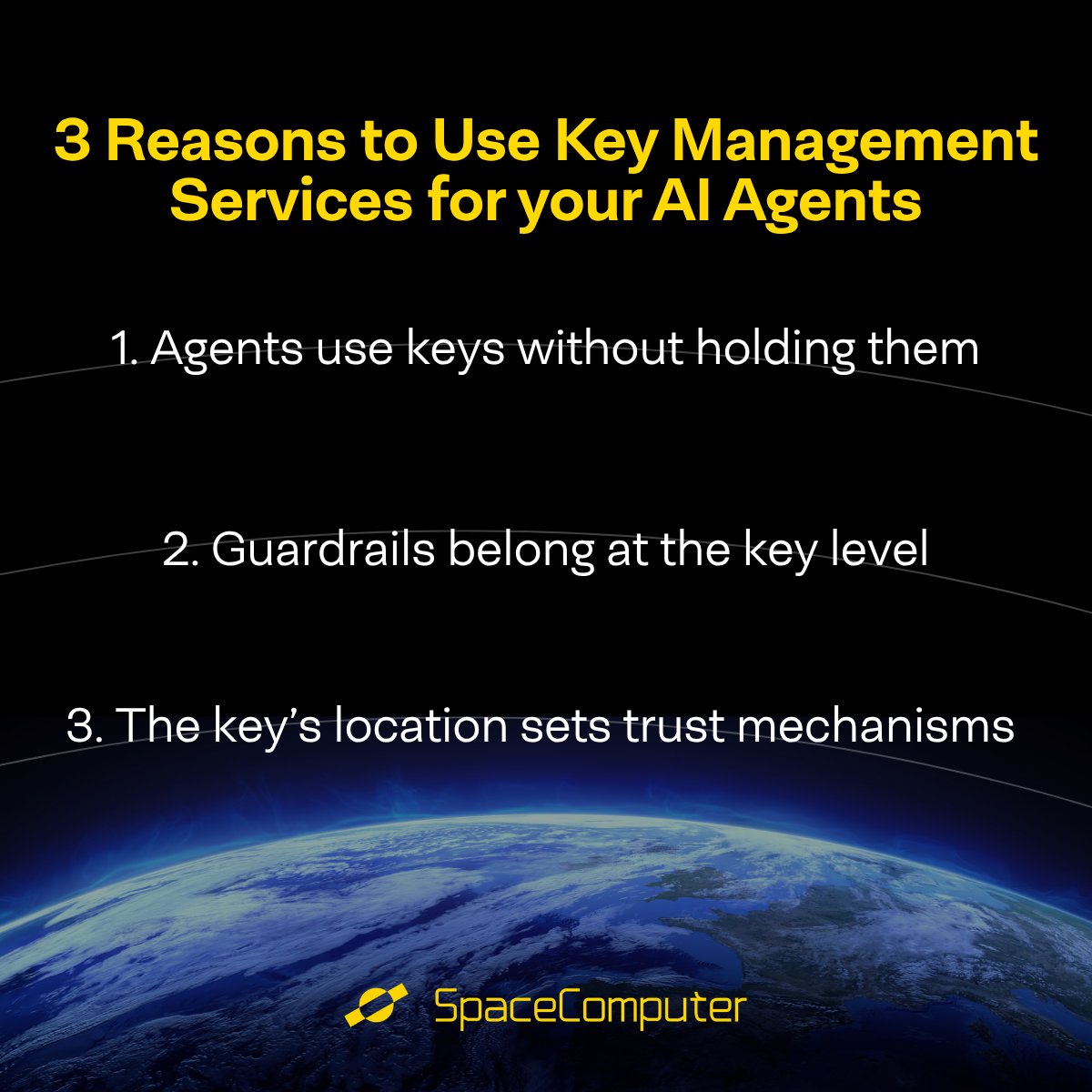
There's 3 critical reasons your agents need a KMS that is actually secure👇
1. A tricked agent can't leak the key if it never has full access to it
2. Limits live at the key level, so when you set a limit like "never send more than $500" the agent cannot bypass this limit
3. Hardware-isolated environments (like TEEs) let you verify where signing happens instead of trusting a server
As agents get more capable, a trusted KMS is how you decide what they're actually allowed to do.
We see this as critical infrastructure to the future of the space internet. More to share on this soon 👀
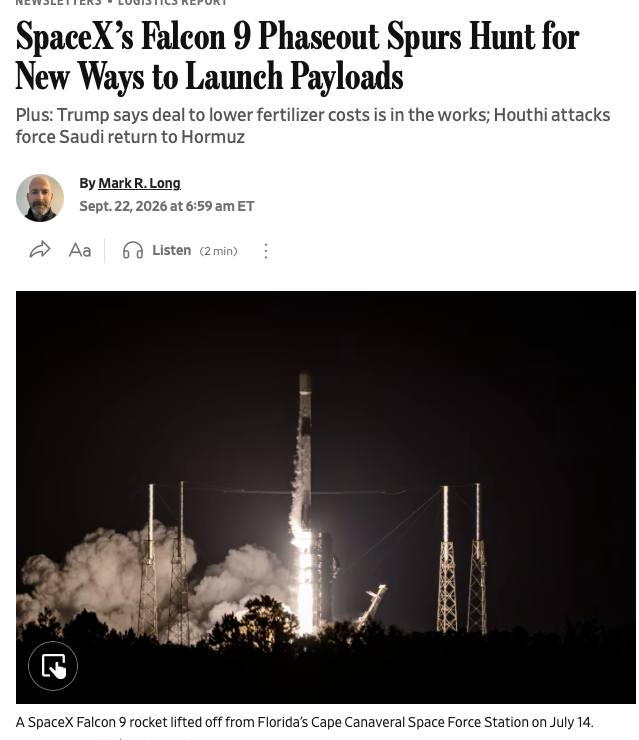
It's no longer a secret that Falcon 9 missions are deprioritized as SpaceX shifts more and more focus and resources to Starship
There's a lot of industry wide concerns about it, but, are they justifies?
Short term: absolutely, everyone is already feeling the crunch on launch availability
Long term: this will lead to
1. Competition on launch, more resources will be allocated to get alternative providers into production
2. Long term this will be remembered as the traumatizing period we needed to make sure accessibility to space isn't neglected. SHOCK THERAPY for the space sector
Post Quantum Cryptography (PQC) is critical infrastructure for space technologies.
And this is a much deeper conversation than just preparing for the inevitability of quantum computers breaking classic cryptographic encryption.
We need to build adaptable, software-enabled post-quantum migration solutions for spacecrafts that work with data in any capacity.
At SpaceComputer, PQC readiness and migration is a top priority amongst our cybersecurity solutions.
Subscribe & watch the full video on YouTube: https://t.co/EVAcsylXVO
Post-quantum migration is fundamentally a key management problem.
You can’t upgrade key security if you can’t find the keys. A key management service (KMS) centralizes key generation, storage, access control, rotation, and audit, so keys live in one hardened place, like a trusted execution environment (TEE). That's security you need today.
Post quantum cryptography (PQC) is security for the future where quantum computers will eventually break public key encryption.
These threats are relevant today. Harvest now, decrypt later attacks collect encrypted data today to break it once quantum machines are strong enough.
So why do you need both?
When every key lives in a KMS and you swap in quantum-resistant algorithms, every key inherits the upgrade. The KMS becomes your layer of cryptographic agility.
A KMS also automates the mechanics of generating new keys, re-encrypting data, and key rotation and retirement across your stack. It also absorbs the friction of PQC's larger keys and signatures so your applications stay fast.
With quantum computing still on the horizon, and KMS options available from every cloud provider, why is SpaceComputer building a post-quantum agile platform?
One simple reason: a satellite launched today must be ready for the next 5-10 years. You can't add hardware in orbit (for obvious reasons), so crypto-agility must be built in before launch.
Our KMS will anchor keys in attested TEEs, non-exportable by design: they can be used but never extracted.
We're starting with hardened infrastructure on Earth, eventually moving to keys born in orbit inside a satellite-based TEE, with post-quantum readiness currently in development.
So we ask you: how are your security keys managed today? And if you could test a KMS built for orbit: would you?
Drop a 🙋 below if you'd want early access.
Post-quantum cryptography changes the math that supports your security without changing how it works on the surface.
You'll still have a private key and a public key. The algorithms are migrated within a key management service to withstand quantum computers, not just classical ones.
@rezabfil breaks it down in the clip below 👇
The space industry is at the precipice of an exponential transition
1. Nearish term:
from 10-20k satellites in orbit to ~100k
2. Longer term, prepare for >10m satellites
Security infrastructure requires first principles thinking across the stack and the opportunities are huge!
There's 15,000 satellites in orbit today, with projections for over 100,000 by 2030.
As part of the new generation of companies racing to build compute satellites, we ask one question: how are companies handling their cybersecurity?
Many platforms are marketed as 'secure' and 'sovereign' yet take no visible steps towards cybersecurity measures.
And cybersecurity is becoming such critical infrastructure in space it's at a 5 billion dollar market gap in 2025.
This coincides with cyber incidents surging upwards of 118% in 2025, with little critical infrastructure built to encrypt, secure, and protect everything from ground stations to GEO spacecraft.
We're building to fill that gap, and solve the security problem in space infrastructure.
Here's a comprehensive breakdown of the state of the industry, and what we need to do next with cybersecurity for space infrastructure:
https://t.co/sBzf0yo5XM
If your satellite isn't secure at launch, it can be compromised with as little as a software-defined radio and a few software bugs.
"So we have to consider the life cycle and the lifetime of the designs of the respective choices, the respective spacecrafts and make sure that there are solutions for that."
That's our mission at at SpaceComputer: building secure satellite computing systems for the long term, starting at the hardware and software level.
Catch the full deep dive with on YouTube: https://t.co/WKHoJtoxak
Every spacecraft and ground station in the data chain needs security and end-to-end verifiability.
One of the best use cases for this is satellite imaging.
Our approach to this is to use cryptographically verify what image came from which satellite.
This high-security guarantees help prove the image wasn't tampered with, which is useful for providers and data users alike.
Let us know in the comments what other use cases verifiability in orbit could be used for? 🤔
Are space data centers are dumb, or does SpaceX's IPO filing make them inevitable?
This is the most polarizing debate in orbital computing: cooling vs. power.
We cover both arguments at their strongest points, and the R&D pipeline that will end the argument by 2027.
Read it here: https://t.co/MqmoT8IGpn
Commercial activity led roughly 78% of the $626B space economy in 2025
Governments are now the minority customer!
Every satellite business needs several other space businesses to get it from idea to orbit
everyone is racing to build a piece of the space acceleration era, but all these layers aren't yet interoperating the same way infrastructure does on Earth.
I've compiled my recent 3 piece into a deep dive on 50+ companies, from ground stations on Earth to asteroid miners, and what's happening in each layer:
https://t.co/fxs5bdaGaT