Inexperienced females carrying operational loads of 55% body weight during a prolonged treadmill protocol showed a 6.1+/-3.8% decline in maximal iso-squat production, indicating neuromuscular fatigue:
https://t.co/KaezBJL1Mp
Inexperienced females carrying operational loads of 55% body weight during a prolonged treadmill walking protocol also showed an immediate increase in max vertical ground reaction force in both legs, commonly associated with overuse injury:
https://t.co/rTExZpy01m
When matched for both stature and mass, female firefighters wearing a 21 kg breathing apparatus showed a 7% reduction in VO2peak compared to males, despite no differences in absolute VO2 and ventilation. When fitness-matched, these differences were not observable.
Just 6 days of nitrate consumption may improve time-trial performance by ~5% compared to placebo when applied to military personnel carrying a simulated approach-march load (55% relative body mass). See more here:
https://t.co/wWa0nZ4e5H
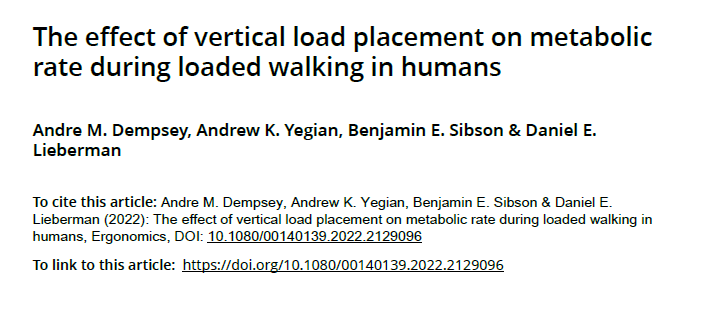
Military personnel are commonly instructed to wear their rucks higher on the trunk. A new study shows that high vertical load placement may have an energy saving effect, specifically when the load mass is 25-40% of an individual's body mass. https://t.co/RMHEv8esEC
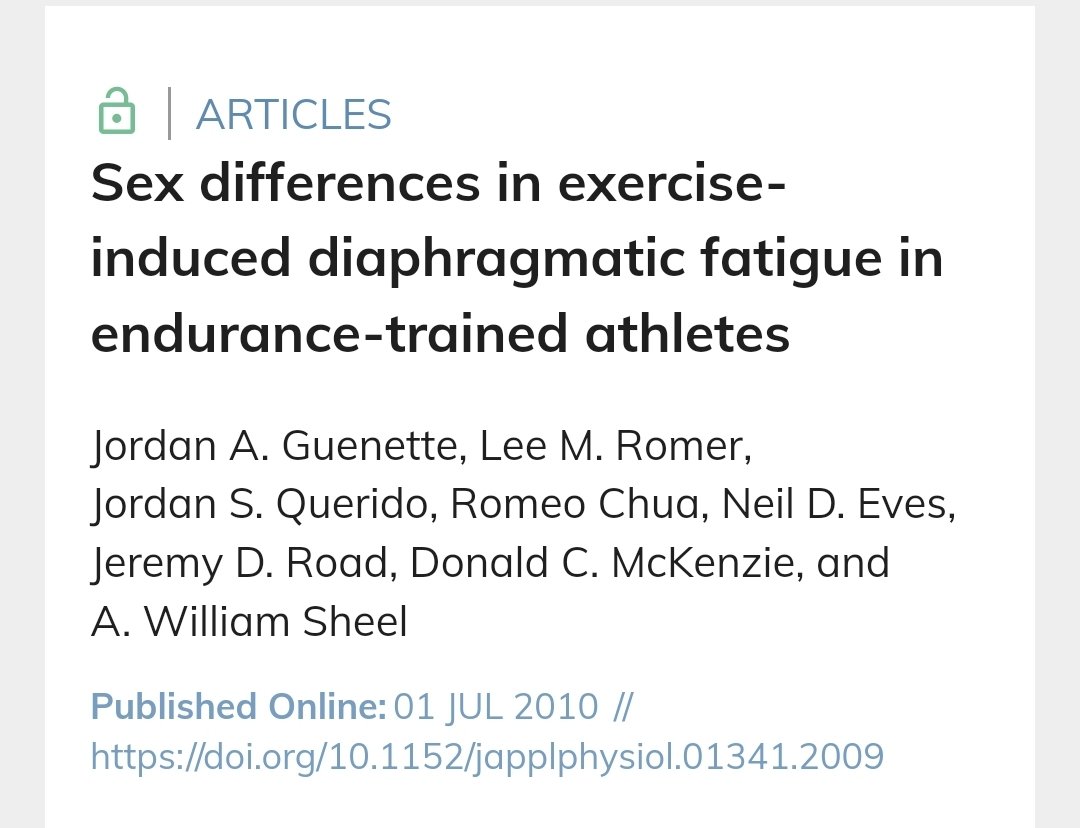
Females may have the upperhand when it comes to inspiratory muscle fatigue near maximal work rates. While cycling to 100% work rate during a time to exhaustion test, there was a 12% reduction in total inspiratory force output in males compared to only a 3% reduction in females
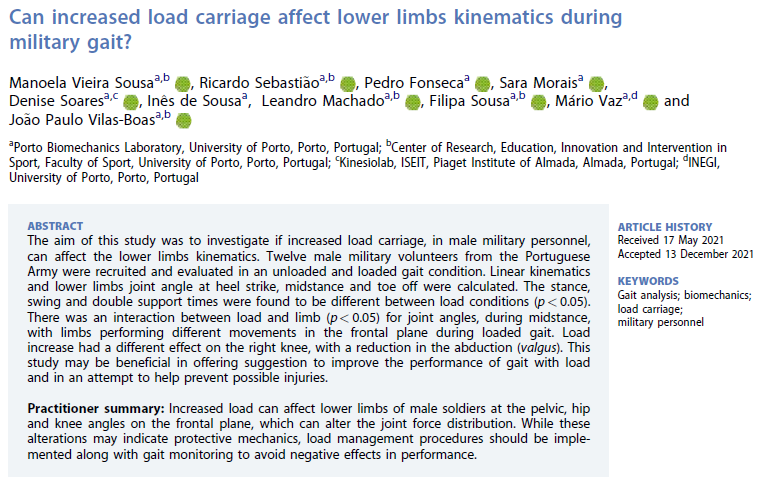
A new study looking at limb symmetry while carrying heavy loads in male infantry personnel found a 16% increase in double support time when walking with a 27 kg backpack. Read more here:
https://t.co/XGRTZjBGtl