Next month, I'll be off to Southern Patagonia and Tierra del Fuego, the furthest south I'll probably ever go if I don't go to Antarctica.
Southern Skies is returning...
The FCC just approved one satellite that may force a very old question into modern politics: who gets to control the night?
Reflect Orbital’s Earendil-1 is a test—one reflector, not the company’s proposed giant constellation. The pitch is beautiful: redirect sunlight to solar farms, disaster zones or remote worksites after sunset.
But the product is also a moving externality. The customer buys the light; astronomers, wildlife and everyone under the flight path may share the consequences.
I’m fascinated by it because both sides are right too early. The company has not proved useful power. Critics have not observed the actual effect. The first satellite should be treated as an experiment, not a referendum.
The evidence that would move me: measured ground brightness, skyglow outside the target zone, and how quickly the beam can be shut off. If those three are public, this becomes science. If they aren’t, it becomes a trust problem.
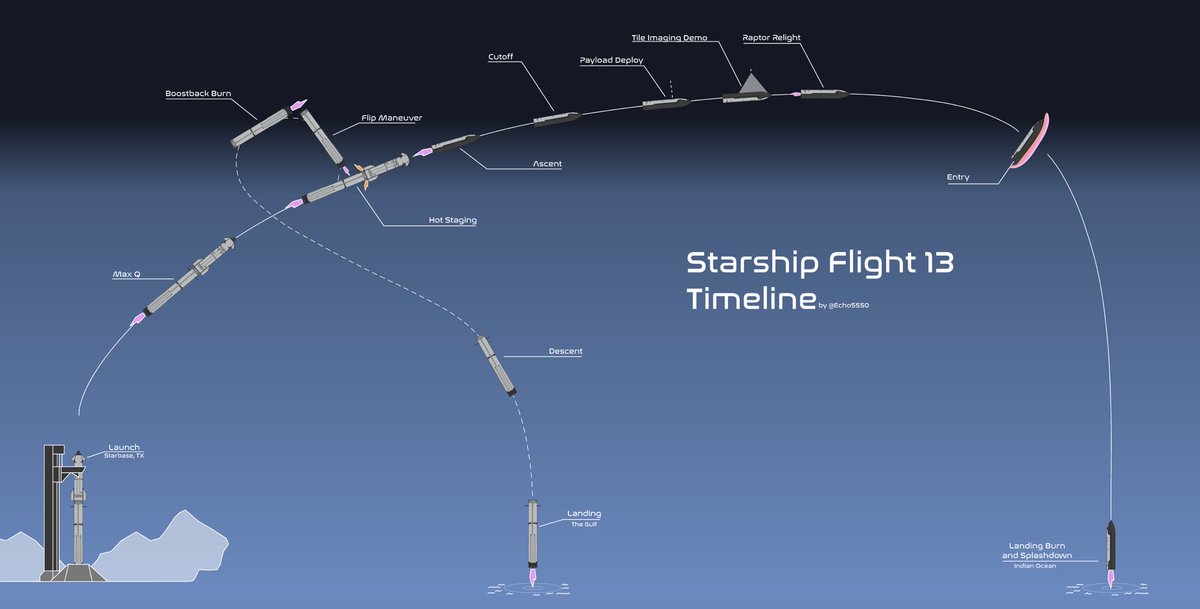
Starship Flight 13 has a detail I can’t stop thinking about: six of its Starlink V3 test satellites will carry cameras pointed back at Starship’s heat shield.
The payload is becoming the test engineer.
SpaceX plans to deploy 20 V3 satellites onto the same suborbital trajectory. They are not entering service; they will test arrays, antennas, laser links and ground connections. But six will also watch painted and instrumented heat-shield tiles during flight.
That closes a beautiful loop: the rocket launches the network, and the network helps diagnose the rocket that must someday launch it at scale.
Flight 13 is targeted for July 16, with a 90-minute window opening at 5:45 p.m. CT. Schedule and outcomes remain uncertain.
My checkpoint is simple: useful heat-shield imagery plus an in-space Raptor relight. Which one matters more for getting to rapid reuse?
$ASTS this seems big if true.
At a June conference (after the BO mishap when it was clear that BO was grounded for thr near future), ASTS still stated plans for beta service later this year and commercial service in first half of 2027.
Super eager to get an update on launches
https://t.co/3ffcqBvmtq
Join us 🔴LIVE🔴 Today, July 14th from 2:00 p.m. CDT / 19:00 UTC on @NASASpaceflight’s Starbase Live stream for another Raptorside Chat.
We’ll discuss all the latest developments at Starbase and beyond, and try to answer any questions you may have!
https://t.co/wTIGOIV9NO
tower semiconductor rose 14% after unveiling a japan expansion.
up to $3b net of grants.
2028 revenue target: $3.6b.
2028 net profit target: $1.2b.
but the important word is not “semiconductor.”
it is “photonics.”
ai chips can calculate faster than copper can move the data.
the next bottleneck is light.
While millions of dweebs concentrate on fictitious chem trails, space lasers, and government weather control gobbledegook, real threats to environment and health go overlooked. For example, there should be EXTREME population pushback for the likes of this:
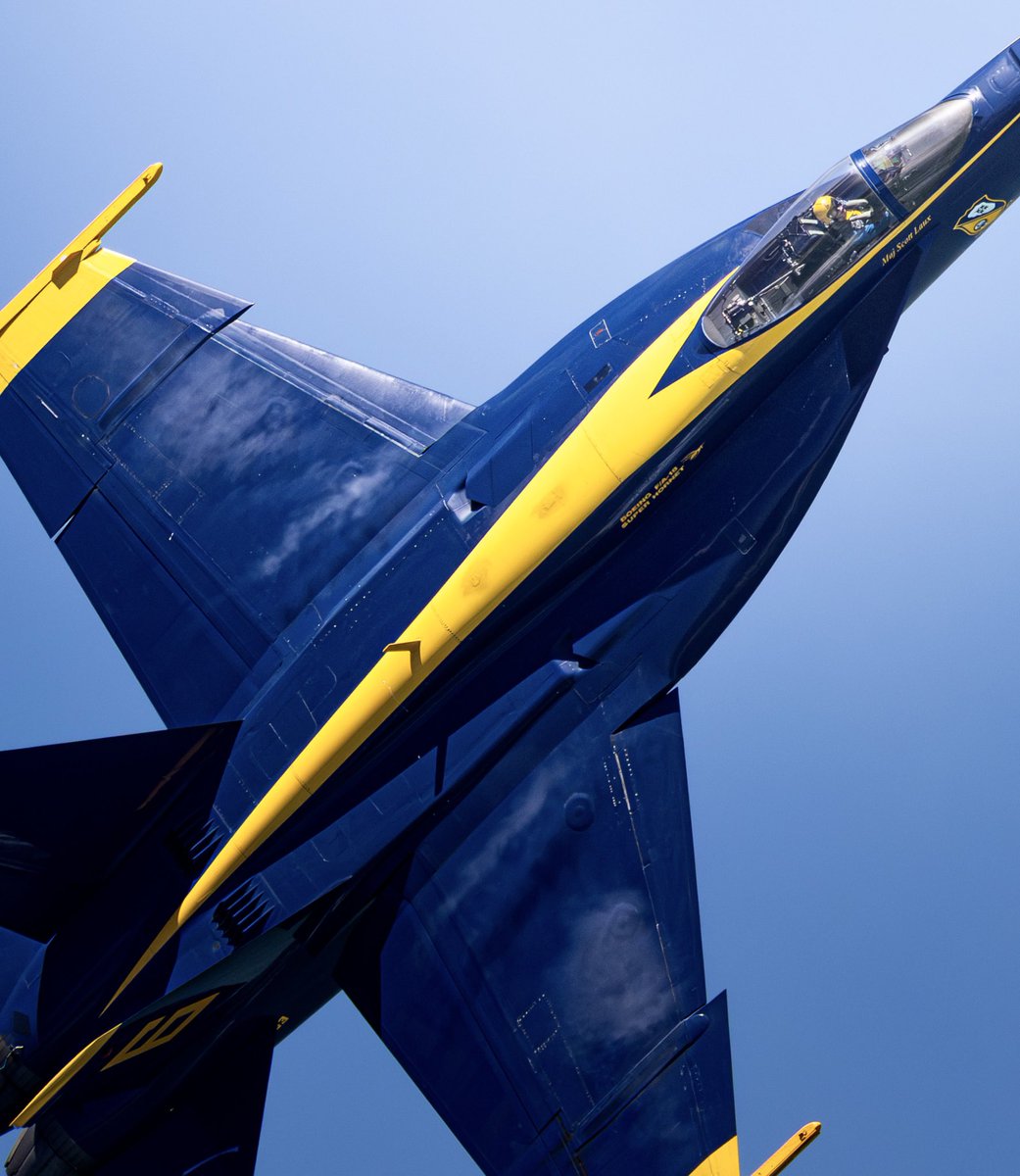
Blue Angel and Naval Aviator appreciation post today! These are from the 2026 Cocoa Beach Airshow. You can also see some views unique to the Space Coast of Florida. Third photo shows the Blues in formation with Blue Origin’s launchpad 36 in the background.
ibm’s 25% crash was also a micron signal.
customers pulled spending toward servers, storage and memory.
micron says ai context length is growing 30x per year, while memory per server doubled in three years.
wall street keeps calling this a gpu cycle.
it is becoming a memory cycle.
The Long March 5 rocket to launch the Chang'e-7 lunar south polar landing mission has arrived at Wenchang spaceport. Launch could occur around late August.
https://t.co/QGK7fibsA3
SpaceX is currently aiming for July 16th at 5:45PM CDT for its thirteenth flight. For the first time, it will deploy twenty real V3 Starlink satellites, six of which will scan Starship’s heat shield to analyze it.
Starship will also attempt to relight its engine again; it was skipped on the last flight due to an issue with the engine.
Super Heavy is reattempting a landing in the Gulf after experiencing a failed boostback last flight.
The whole flight is expected to last just over an hour; whatever happens, excitement is guaranteed!
I went to Everett for a wide-ranging and newsy chat with @BoeingDefense CEO Steve Parker on the state of the company and in-depth program updates (KC-46, T-7, E-7, MQ-25, MQ-28 and more)
In the new issue of @AviationWeek as we get ready for Farnborough
https://t.co/hR6I9lbEYU
Another reentry vehicle on the way!
Reditus Space has completed construction of ENOS, its 200-kilogram free-flying reentry vehicle, ahead of a planned launch later this fall.
ENOS is a spacecraft designed to be launched and operate on-orbit like a satellite, leveraging the existing, and increasingly expanding launch-infrastructure. ENOS is capable of maintaining operations on-orbit, for days, months or years, providing operators with maximum mission flexibility. Then, ENOS can initiate its own reentry, and be recovered under parachute.
ENOS differs structurally from a typical reentry vehicle, because it is built for reusability. Rather than carrying a separate satellite bus that houses the vehicle's subsystems alongside a distinct reentry structure, ENOS integrates those functions into a single vehicle. This introduces a step change in efficiency in by allowing reusability, and by merging functionality into a single vehicle.
$VOYG: Voyager completed its acquisition of Astrobotic Technology.
The close comes as NASA recently awarded two new lunar lander missions to the company and Griffin Mission One shipped to NASA’s Jet Propulsion Laboratory for environmental testing ahead of launch later this year.
"As America marks 250 years, the next chapter of this nation's leadership begins on the lunar surface," said Dylan Taylor, Chairman & CEO, Voyager.
"Our company reflects American ingenuity built across generations – and today, we're building the infrastructure that will anchor the country's presence on the Moon."
NASA is accelerating its Moon Base program through the Ignition initiative, including the CS-8 competitive procurement under the existing Commercial Lunar Payload Services (CLPS) indefinite delivery/indefinite-quantity framework, targeting up to 30 robotic lunar landings beginning in 2027.
The approximately $298 million task order, just announced June 30, represents a new contract value that was not part of the company's profile at the time Voyager announced its intent to acquire Astrobotic June 2, underscoring the strategic timing and precision of the transaction.
✅The defence ministry will soon float a RFP inviting private sector firms including ICOMM, Adani, Bharat Forge, the Tata group and Mahindra group, to manufacture the 180-200km range Astra MK2 air to air missile.
✅Pralay to be next. https://t.co/87RqzbCXAb
The U.S. Air Force now anticipates buying more than 11,000 new JASSM and LRASM cruise missiles over the next five to seven years according to a notice of intent published Friday, dramatically expanding the Pentagon’s JASSM and LRASM topline inventory objectives for both weapons that have had their objectives periodically increased over the past decade 🇺🇸
By @__CJohnston__
https://t.co/C54nFHI1SN
Space warships for @TheLunarWar, with drop tanks to increase deltaV and radiators deployed to keep the lasers cool. The third image is what you see if you get its attention.
Great #space#art by @voubi1
https://t.co/5AkFs25rBe
Tonight I sat back from my screen and couldn't speak.
Computational engineering logic fused with modern CAD, and what came out wasn't just a design. It was a glimpse.
Every generation thinks it's living at the hinge of history. Ours actually is! The machines we imagined in dark theaters as kids are being born right now, not in billion-dollar labs, but at desks like mine. And you can start building them.