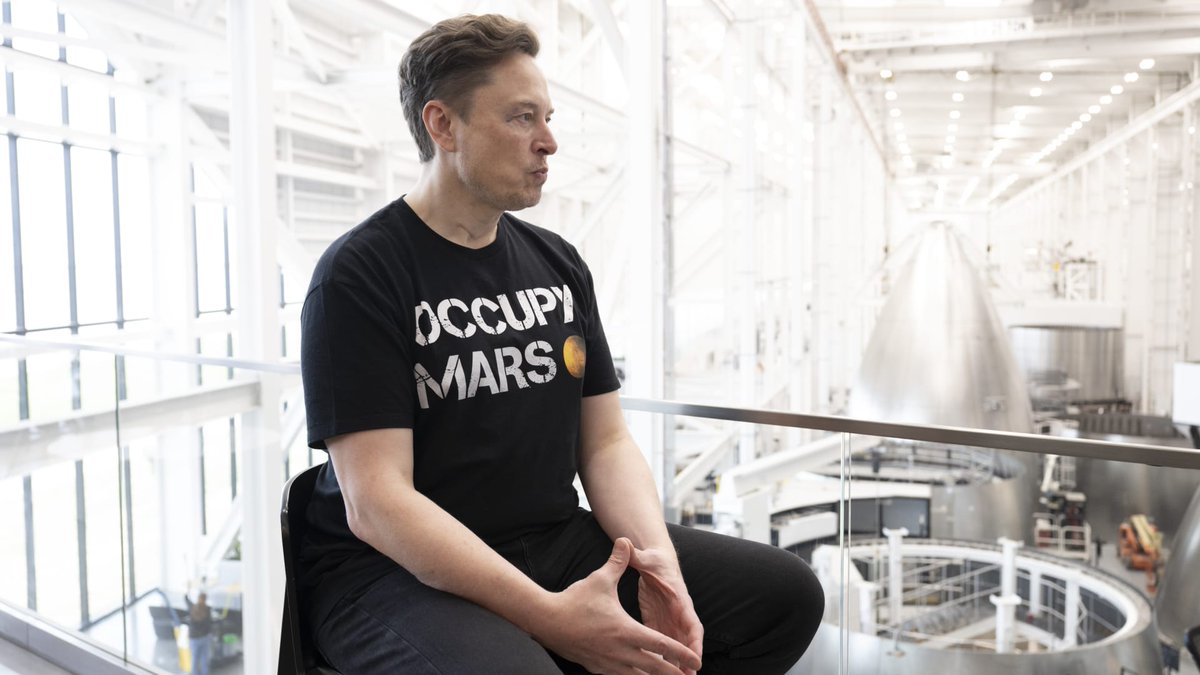
Elon Musk's net worth to surpass $1 trillion with SpaceX IPO, as he owns shares worth over $866 billion. SpaceX's updated IPO prospectus highlights significant commercial growth potential. #SpaceX#SpaceEconomy
Google has agreed to pay SpaceX $920 million a month for computing power as part of a cloud-services deal that runs through mid-2029 https://t.co/NNcexacQwz
Deep space observation capabilities advancing satellite sensor technology enable astronomers to capture stunning images of the Hydra Cluster, 100 million light-years away, with three large galaxies near the cluster center. #SpaceExploration#DeepSpaceObservation
Deep space imaging technology advances with near-infrared imaging using Keck/NIRC2 with laser guide star adaptive optics, ruling out a helium star companion to PSR J1928+1815. #SpaceTechnology#AstroPhysics
SpaceX's Starbase in Texas supports satellite monitoring, driving commercial applications and economic growth through infrastructure development and job creation. #SpaceEconomy#CommercialSpace
James Webb Space Telescope captures planetary nebula Tc 1, where buckyballs were first identified in 2010. Buckyballs are molecules with 60 carbon atoms, enabling future research in space exploration technology. #SpaceExploration#AstronomicalImagery
ESA's Tessera AI model offers high-accuracy datasets from Copernicus Sentinel-1 and Sentinel-2, enabling accessible Earth observation. This technology enhances space-based data applications. #SpaceData#EarthObservation
Space economy advancements in data analysis lead to discovery of 10 short-period white-dwarf M-dwarf binaries through minute-scale eclipses in TESS data. This breakthrough enhances understanding of post-common-envelope systems. #SpaceEconomy#AstroPhysics
NASA upgrades critical water system at Stennis Space Center, draining 66-million-gallon reservoir to lowest level since 1960s construction. #SpaceInfrastructure#SpaceEconomy
NASA's Andromeda Galaxy imagery showcases technological advancements in planetary exploration, enabling future resource utilization and Mars economy development. The galaxy's observation history spans 1000 years, from al-Sufi's record to Messier's catalogue entry.
NASA's High Performance Spaceflight Computing project tests next-gen space processor for autonomous spacecraft, accelerating scientific discovery and advancing space industry capabilities. #SpaceTech#SpaceIndustry
Development of readout electronics for NASA's Habitable Worlds Observatory mission supports direct imaging and spectroscopy of habitable exoplanets. Enhances exoplanet exploration capabilities. #SpaceEconomy#AerospaceTechnology
Blue Origin's damaged launchpad may not be restored until 2028, impacting NASA's Artemis return-to-the-moon program contracts with the agency. #SpaceEconomy#SpaceInfrastructure
SpaceX's deal with Anthropic not disclosed in IPO filing, raising concerns about transparency. Details shared by Elon Musk on X platform. #SpaceX#SpaceEconomy
NASA releases 2026 Civil Space Shortfall Ranking list, ranking technology areas requiring further development to meet future mission needs. The list integrates over 400 responses from industry, government, and academia. #SpaceEconomy#SpaceIndustry
Fragmentation of Intelsat 33E poses risk to GEO satellites. Analysis shows 4,393 fragments generated, with initial distribution indicating potential collision risk. Space debris management crucial for satellite operations and infrastructure development.
NASA tests mobile wastewater treatment system at University of North Dakota, preparing for long-duration missions on Moon and Mars. Technology aims to support future space infrastructure development. #SpaceInfrastructure#SpaceEconomy