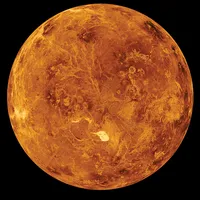
🚀 Welcome to Daily Space Questions! 🌌
1️⃣ We post a space-themed question daily.
2️⃣ Answer in the comments or click 'See more' for the reveal and explanation.
3️⃣ Join us in exploring the cosmos!
Correct Answer: C) Jupiter
Explanation: Jupiter is the largest planet in our solar system, with a diameter of about 143,000 km. It is so large that over 1,300 Earths could fit inside it. Known for its gas composition and prominent storms like the Great Red Spot, Jupiter dominates our solar system in size and mass.
Correct Answer: C) Mars
Explanation: Mars hosts the tallest mountain in our solar system, Olympus Mons. It is a massive shield volcano that stands about 22 km high, which is nearly three times the height of Mount Everest, Earth's highest mountain. Olympus Mons is so large at the base that it covers an area roughly equivalent to the size of Arizona.
#Space #SpaceX #NASA
Correct Answer: B) Saturn (Comment if you got it right)
Explanation: Saturn has the most extensive and complex ring system in our solar system. The rings are made up of countless small particles, ranging in size from micrometers to meters, that orbit the planet. These particles are primarily composed of water ice, with traces of rocky material. The rings are divided into several sections, named alphabetically in the order they were discovered, and are visible even with small telescopes from Earth.
#SaturnRings #SpaceExploration #NASA
Correct Answer: B) Mars (Comment if you got it right)
Explanation: Mars is known as the "Red Planet" because of its reddish appearance, which is due to iron oxide, or rust, on its surface. This gives Mars its distinctive color that can be seen even with the naked eye from Earth. Mars has been the subject of many missions to explore its surface and potential for past or present life.
#Mars #RedPlanet #NASA
Correct Answer: C) Jupiter (Comment if you got it right)
Explanation: Jupiter is the largest planet in our solar system, with a diameter of about 142,984 km (88,846 miles). It is a gas giant primarily composed of hydrogen and helium, and it has a mass more than twice that of all the other planets in the solar system combined. Jupiter is known for its Great Red Spot, a giant storm larger than Earth that has been raging for centuries.
#Jupiter #GasGiant #NASA
Correct Answer: B) Venus (Comment if you got it right)
Explanation: Venus has a very slow rotation on its axis, taking about 243 Earth days to complete one rotation. Interestingly, it takes about 225 Earth days for Venus to complete one orbit around the Sun. This means that a day on Venus (one full rotation) is longer than a year on Venus (one full orbit around the Sun).
#Venus #SpaceTrivia #NASA
Correct Answer: C) Enceladus (Comment if you got it right)
Explanation: Enceladus, one of Saturn’s moons, is considered one of the most promising places to search for extraterrestrial life. Its south pole features geysers that spew water vapor and ice particles into space, suggesting the presence of a subsurface ocean beneath its icy crust. The discovery of organic molecules in these plumes has fueled speculation about the potential for microbial life in its hidden ocean.
#Enceladus #AlienLife #SaturnMoons #NASA
Daily Space🚀 Question: Which moon of Saturn is considered one of the most likely places to find extraterrestrial life?
A) Titan
B) Europa
C) Enceladus
D) Mimas
Correct Answer: A) Viking 1 (Comment if you got it right)
Explanation: Viking 1 was the first spacecraft to land successfully on Mars and complete its mission. It was launched by NASA on August 20, 1975, and landed on Mars on July 20, 1976. Viking 1 provided the first detailed images of the Martian surface and conducted experiments to search for signs of life, analyze the atmosphere, and study the planet's geology.
#Viking1 #MarsLanding #NASA
Daily Space🚀 Question: What phenomenon, observed in the universe, is thought to be the result of the collision or merging of two neutron stars?
A) Pulsars
B) Black holes
C) Supernovae
D) Kilonovae
Unlock the secrets of cosmic cataclysms! Share your answer below and let’s explore the events that light up the universe in extraordinary ways.
Correct Answer: A) Apollo 11
(Comment if you got it right)
Explanation: Apollo 11 was the groundbreaking NASA mission that first landed humans on the Moon on July 20, 1969. Astronauts Neil Armstrong and Buzz Aldrin became the first and second humans, respectively, to walk on the lunar surface, while Michael Collins orbited above in the command module. Armstrong's first step onto the lunar surface was broadcast on live TV to a worldwide audience, marking the moment with his famous words, "That's one small step for man, one giant leap for mankind."
#Apollo11 #MoonLanding #NASA
Daily Space🚀 Question: Which mission was the first to land humans on the Moon, marking a significant milestone in space exploration history?
A) Apollo 11
B) Gemini 12
C) Skylab
D) Mercury-Redstone 3
Correct Answer: C) Event horizon
(Comment if you got it right)
Explanation: The event horizon of a black hole is the boundary beyond which nothing, not even light, can escape its gravitational pull. It represents the point of no return; once an object crosses this boundary, it is inexorably drawn into the black hole. The concept of the event horizon is fundamental in the study of black holes and general relativity.
#EventHorizon #BlackHoles #NASA
Daily Space🚀 Question: What is the term for the boundary of a black hole, beyond which nothing can escape, not even light?
A) Singularity
B) Accretion disk
C) Event horizon
D) Photon sphere