June 12, 2026 could be historic: SpaceX is going public.
For the first time, investors may own a piece of the company shaping the future of space travel, Starlink, and Mars exploration.
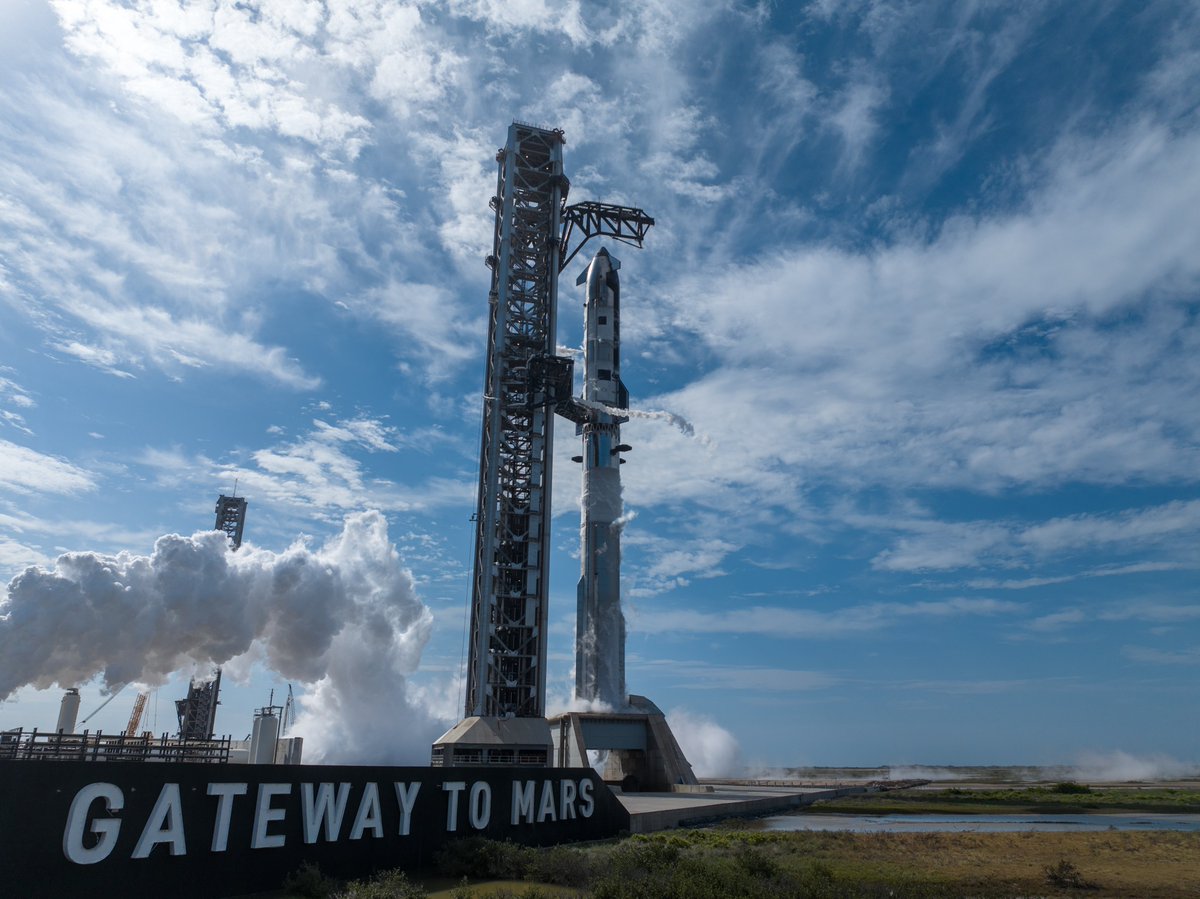
Launch rehearsal complete. During a flight-like countdown, more than 5,000 metric tonnes (11+ million pounds) of propellant were loaded on the fully stacked Starship and Super Heavy V3 vehicles for the first time
Celebrating our 1,000th Supercharger post in Australia with the opening of Byron Bay
This marks 10,000 km of major AU corridors accessible by the Supercharger network
@CoconutDon49626@99_Colorado Yes, I’ve installed Tesla home chargers.
• 120V (regular outlet): Only ~3-5 miles of range per hour (trickle charge — very slow).
• 240V (NEMA 14-50 or Wall Connector): 25-44 miles per hour — 5-10x faster!
Most people install 240V for daily use. Cost usually $500–$1,500.
Today my Tesla on FSD V14.3.4 was driving when all of a sudden it swerved out of my lane.
My instant thought was “what the hell, there no reason for the car to do that, it’s broken”
Turns out after looking in the dash cam the vehicle beside swerved into my lane… I had absolutely no idea.
Thank you so much @tesla_ai for making the roads safer. You guys are hero’s.
Elon warned about the AI energy bottleneck before most people even understood it was coming
“I can’t emphasize enough - we need more electricity. However much electricity you think you need, it’s more than that”
Now if look at what is happening. AI labs are raising billions, buying tons of GPUs, and announcing giant clusters
But then reality hits:
Where do you plug them in?
This is why the AI race is really an energy race. Even the most sophisticated labs can have the money, the chips, and the models but none of it scales without the grid capacity to feed it
The bottleneck is not just GPUs anymore. It is electricity, substations, transmission, permitting, and the ability to actually plug these massive clusters into the real world
Elon saw this years ago and now everyone else is catching up