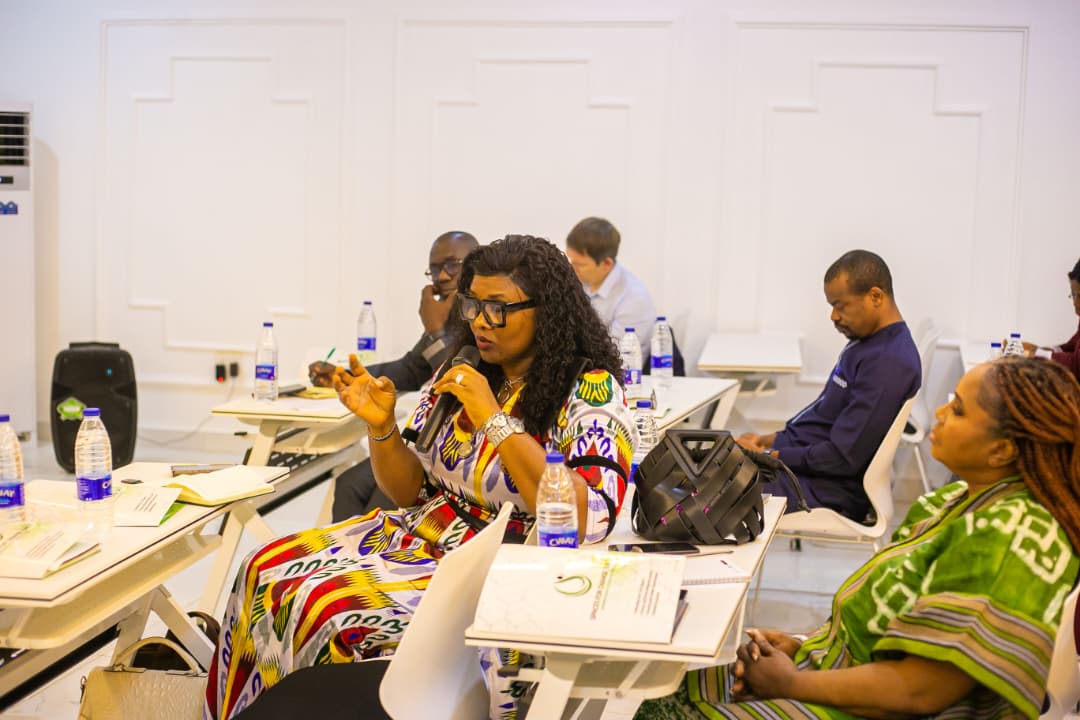
S4C works to increase public participation, especially of the youth, women & communities in social and economic policy development & decision-making in W/A.
Capping the activities of the Opening Ceremony with the official launch of the novel AML/CFT report titled, "Overcompliance with FATF Recommendation 8 in West Africa: Towards Dismantling Regulatory Burdens for NGOs".
The report traces the historical background and drivers of overcompliance with FATF Recommendations in the subregion, including how they manifest through mandatory registrations, multiple licensing points, financial exclusion, bank over-regulation, duplicity and overlapping regulatory functions, among others.
It concludes with targeted recommendations for international watchdogs, external assessors, state regulators, financial institutions, and NPOs, too.
Download the report 👉 https://t.co/g3LwfXtkLN
#3AMLCFT26
Niger Delta communities are paying the price of divestments and energy transition
This statement sat at the heart of the multi-stakeholder engagement organized by Spaces for Change and partners of Ford Foundation’s Natural Resources and Climate Justice (NRCJ) Consortium on the 31st of August, 2026.
Oil companies are divesting from assets in onshore and shallow waters, leaving behind massive environmental liabilities, destroyed livelihoods, disease, and disrupted commitments to the Host Community Development Trusts established under the Petroleum Industry Act. Bille Kingdom, in Degema LGA of Rivers State, where gas emissions and bubbles pose a threat of imminent fires and blowouts, is a sad example.
Bille community representatives told stories of what seems like Nigeria's worst gas contamination crisis. Ford Foundation partners explored joint strategies for bolstering regulatory action and corporate accountability.
This is not just a discourse; the road to #NED2026 has just only begun!
#RemediationBeforeDivestments!
ARE YOU READY FOR THE BIGGEST HOST COMMUNITY-LED CONVENING IN THE EXTRACTIVE SECTOR?
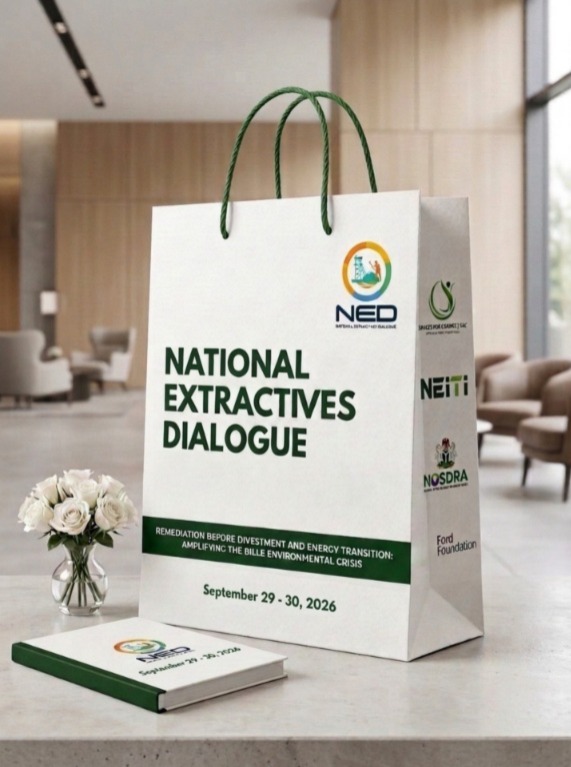
Spaces for Change is pleased to present the 5th edition of the annual National Extractive Dialogue (NED) 2026. Convened around the theme: "Remediation Before Divestment and Energy Transition: Amplifying the Bille Environmental Crisis", this edition will bring together host communities, regulatory bodies, relevant government agencies, independent energy operators, civil society organizations, etc, to interrogate the accelerated onshore asset divestments by International Oil Companies (IOCs) alongside the strategic push towards a national energy transition, and its ongoing environmental impact on host communities across the Niger Delta with special focus on the Bille Kingdom of Rivers State.
Hosted in partnership with the Nigeria Extractive Industries Transparency Initiative (@nigeriaeiti) and National Oil Spill Detection and Response Agency (@NOSDRANIGERIA) with support from the Ford Foundation (@FordFoundation), the two-day conference will provide a national platform for stakeholders in the extractive sector to converge, dialogue, and advance practical solutions that will amplify grassroot realities, enforce pre-divestment liabilities, and enforce broadened regional governance on transparency in energy transition projects of IOCs in Nigeria.
See the flier for more details
Stay tuned as we bring more information about the conference.
#Divestment #NED2026 #HostCommunities #NigerDelta #JustTransition
Yesterday, Spaces for Change hosted the management and staff of the Compliance Institute, Nigeria (@Compliance_Inst). The luncheon offered an opportunity to strengthen our existing partnership and identify areas for future collaboration.
#Compliance#Colloraboration
Spaces for Change, in collaboration with the Bayelsa State Police Command @BayelsaPoliceNG, organised the Police-Tech Connect with Neighbourhood Watch Groups (NWGs) in Amassoma and Ondewari communities on 24th and 25th of August, 2026.
As part of the organization's crime prevention initiatives under the People-Centered Public Safety (PCPS) project supported by @OpenSociety, the training equipped NWGs with smartphones and trained them on the use and deployment of technological tools in community patrol and vigilance operations while deepening their collaboration with law enforcement agencies.
By training NWGs to gather digital evidence safely and legally, trained community groups were better equipped to gather, transfer, and share logs with official police teams, thereby providing faster, real-time evidence of crime incidents and the historical context needed for investigations.
#PublicSafety
Technology can record a conversation, preserve an intimate moment, track a person, manipulate an image, amplify abuse and become a weapon.
That was one of my reflections after attending the two day Training for Legal Practitioners on Technology Based Harms, organised by @Spaces4Change in collaboration with Luminate on 19 and 20 August 2026 at the Radisson Hotel, Ikeja, Lagos.
The training examined targeted surveillance, digital rights, privacy, data protection, technological evidence, technology facilitated gender based violence, deepfakes, synthetic media, cross border data privacy, freedom of expression, defamation and the Cybercrimes Act.
The range of topics reinforced one important point. Technology based harm rarely fits neatly into one area of law.
I have encountered this in practice.
At different times, I represented two unrelated multinational companies before the National Industrial Court of Nigeria and the Nigeria Police. Employees secretly recorded sensitive conversations involving management and later used the recordings to blackmail and pressure the companies.
I have also represented a woman whose fiancé, based abroad, repeatedly recorded intimate images of her during private video calls. When the relationship broke down, he used those recordings to blackmail her and subjected her to sexual exploitation and coercion.
Technology did not create that abusive relationship. It gave the abuser another tool through which to exercise control.
These experiences made the discussions on technology facilitated gender based violence, privacy and digital evidence particularly significant to me. A recording, message, screenshot or video may become central to a case. Lawyers must understand not only the law, but also how digital evidence is created, preserved, authenticated and challenged.
The discussion on deepfakes and synthetic media made this even more urgent. Technology can now create convincing representations of people saying or doing things that never happened. The implications for privacy, reputation, evidence and public discourse are significant.
The central lesson for me is that technology based harm is not merely a technology problem. It is a justice, privacy and human rights problem. It can also become a criminal justice, employment, evidential or regulatory problem.
Lawyers must therefore become more technologically literate. We must understand digital evidence, support victims, engage law enforcement, advise institutions, contribute to policy and law reform, and educate the public.
I am grateful to @Spaces4Change and Luminate for creating the space for these important conversations.
I also appreciate the Nigerian Bar Association, Lagos Branch, Human Rights Committee, for the privilege of being part of this training.
Technology is changing the way harm occurs. The law must keep pace.
Un mois après Abuja : WANEP-Togo revient sur sa participation à la 3ᵉ Conférence Africaine AML/CFT (@spaces4change) — Recommandation 8 du GAFI, et partage de notre expérience en renforcement de capacités des OSC togolaises sur la conformité. @WANEP_Regional@Seyram_adiakpo
Incidents tracked on the Closing Spaces Database (https://t.co/D6KYIZzrHN) reveal a surge in cases of targeted surveillance and other technology-facilitated harms, but getting adequate legal representation for victims remains an uphill struggle. SPACES FOR CHANGE's two-day "Training for Legal Practitioners on Litigating Tech-Based Harms" is closing this gap.
With support from Luminate, 38 lawyers in Lagos are receiving advanced legal training to understand evolving trends in emerging technologies, the admissibility of technological evidence in civic rights claims, statutory protections, surveillance, deep fakes, interceptions, warrants, privacy, and court decisions. Through this training, SPACES FOR CHANGE is intentionally building a pool of trained lawyers, ready and willing to provide legal representation to victims of tech-enabled violations of civic freedoms.
#LawyersTraining #DigitalRights #CivicFreedom
REPORT LAUNCH ~ OVERCOMPLIANCE WITH FATF R8 IN WEST AFRICA: Towards Dismantling Regulatory Burdens for NGOs
#3AMLCFT2026
https://t.co/alJIQwWWbf via @YouTube
TRANSITIONING FROM THE OLD TO THE REVISED FATF REC 8: LESSONS ACROSS AFRICA ~ FATF-R8-Compliant countries (like Tunisia and Nigeria) share their journey towards attaining a compliant rating on FATF Recommendation 8. They also share how they are transitioning from the old language to the revised FATF Rec 8: What was the state of play before the revisions? What has now changed? How are different contexts implementing the risk-based approach?
#3AMLCFT2026
https://t.co/BAdbv5YAyf via @YouTube
Welcome to another edition of our monthly newsletter 😁
In this month's edition, we reflect on some of our activities from July.
From hosting Africa's largest AML/CFT convening, our appointment as a co-chair of the Global NPO Coalition on FATF, to leading the PCPS project delegation together with the VP of the Open Society Foundations to the Bayelsa State Government House in Yenagoa, and equipping members of the Neighborhood Watch Group (NWG) in Ondewari - a riverine community in offshore Bayelsa State - with practical instructions, technological skills 👨🏿💻 and resources for bolstering crime prevention , patrol coordination, and digital evidence gathering, our activities cut across our major pillars of civic space protection, digital rights and tech justice, and research and knowledge building.
Click the link https://t.co/AenKAjKFI3 to read more.
#PublicSafety #AMLCFT #3AMLCFT26
FROM GREY LISTING TO RESILIENCE: THE ROLE OF NON-PROFIT ORGANISATIONS IN AML/CFT COMPLIANCE #3AMLCFT2026
Listen to experts discusss Nigeria's successful exit from the FATF grey-list, highlighting the valuable lessons learned such as the importance of partnership, outreach, institutional coordination and sustained engagement with stakeholders, especially the non-profit organizations.
https://t.co/99UxmKcpyL via @YouTube
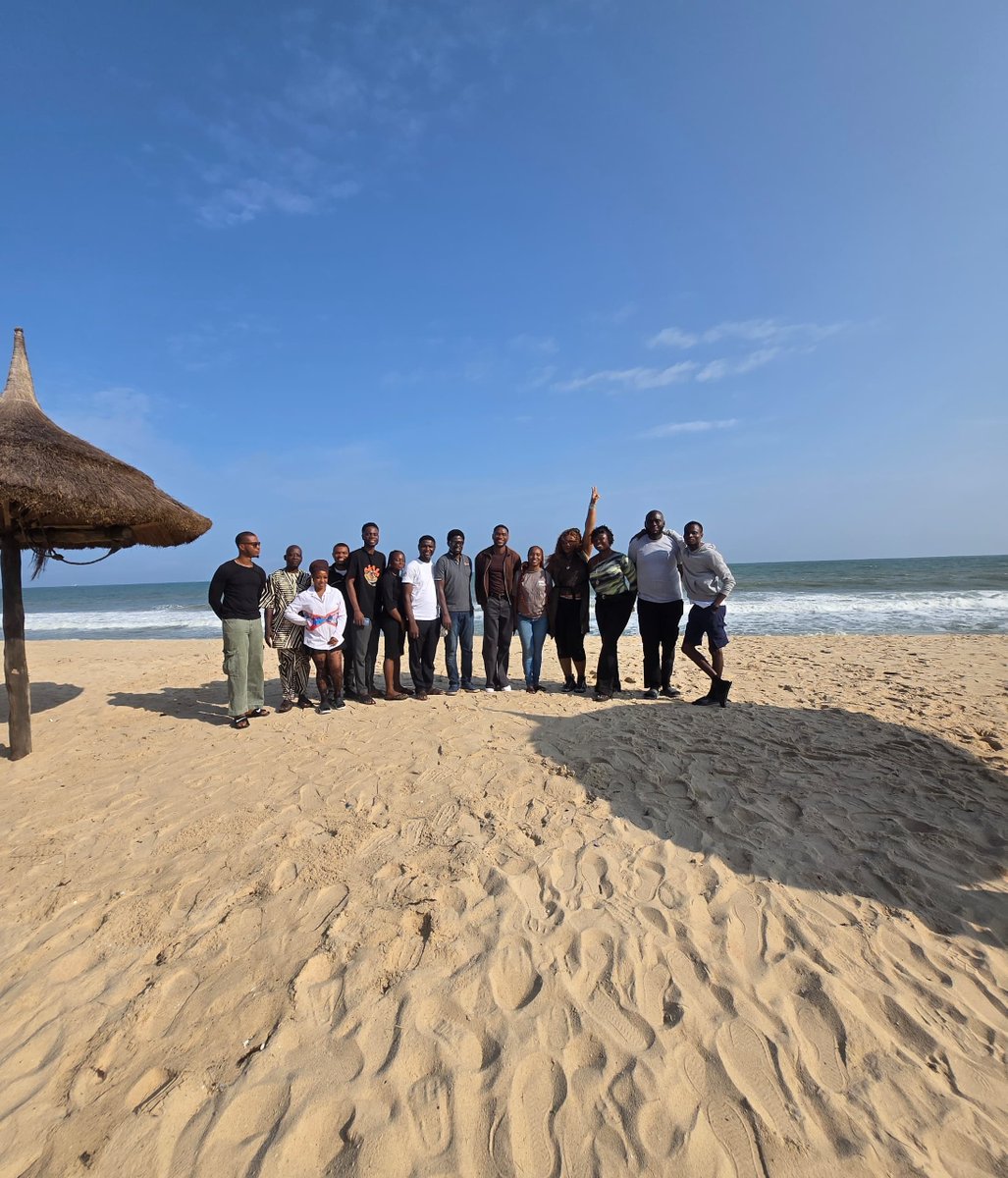
Last week, we stepped away from our desks and closed our offices for our annual staff retreat.
Bringing together both current and former members of the Spaces for Change team, this year's edition created a rare opportunity to reflect on the organization's past achievements, present realities, and future aspirations.
Through engaging conversations, team-building activities, and moments of shared reflection, we reconnected with one another, celebrated our wins, and explored the opportunity not just to unwind but to renew our collective energy and strengthen our commitment to delivering impactful work throughout the rest of the year.
#InstitutionalStrengthening #Teambonding
Spaces for Change is honoured to announce its appointment as co-chair of the Global NPO Coalition on FATF, alongside the Human Security Collective and the Charity & Security Network. We recognise that this responsibility comes with an even greater obligation to serve. We are deeply grateful to our partners, colleagues, beneficiaries, and the many stakeholders whose collaboration, trust, and steadfast support have contributed to this milestone.
Click the link 👉 https://t.co/QURROUMF6C to read more.
We joined civil society actors from over 30 countries at the 3rd Africa High-Level Civil Society Conference, held in Abuja.
The conference focused on critical discussions around risk assessment for Non-Profit Organizations (NPOs), and strategies to safeguard civic space globally.
The engagement also created opportunities to share Tracka’s work on community-driven accountability.
We stay committed to amplifying citizens' voices and strengthening accountability systems, locally and globally.