On October 9, the Trump administration imposed sanctions on the International Criminal Court (ICC) itself—the court of last resort for victims of genocide, war crimes, and crimes against humanity. This was the latest step in a rolling series of sanctions against individual judges, prosecutors, and human rights actors who have worked for and with the ICC. The Open Society Foundations are fighting the sanctions regime in federal court.
The sanctions are part of an escalating campaign which, as U.S. Secretary of State Marco Rubio announced in July, is intended to “dismantle the ICC—brick by brick, if necessary.”
Already concerned about the sanctions in place since 2025, we, together with the American Friends Service Committee @afsc_org, the Center for Constitutional Rights @theCCR, and Human Rights Watch @hrw, filed a lawsuit in federal court in New York on August 11, 2026. The case argues that the sanctions regime exceeds presidential authority, violates constitutional protections of free expression and association, and is unconstitutionally vague.
The ICC is where victims of the gravest crimes—from Gaza to Ukraine to the Philippines—can turn when their own governments will not act, and where even heads of state can be made to answer. The Trump administration’s sanctions are designed to close that door, and to punish anyone who helps keep it open.
How can resource-rich countries turn critical minerals into lasting economic growth?
In a special TWIGD episode sponsored by @OpenSociety, experts explore ASEAN-Africa cooperation & opportunities to retain more mineral value.
https://t.co/mR0af3wUpV
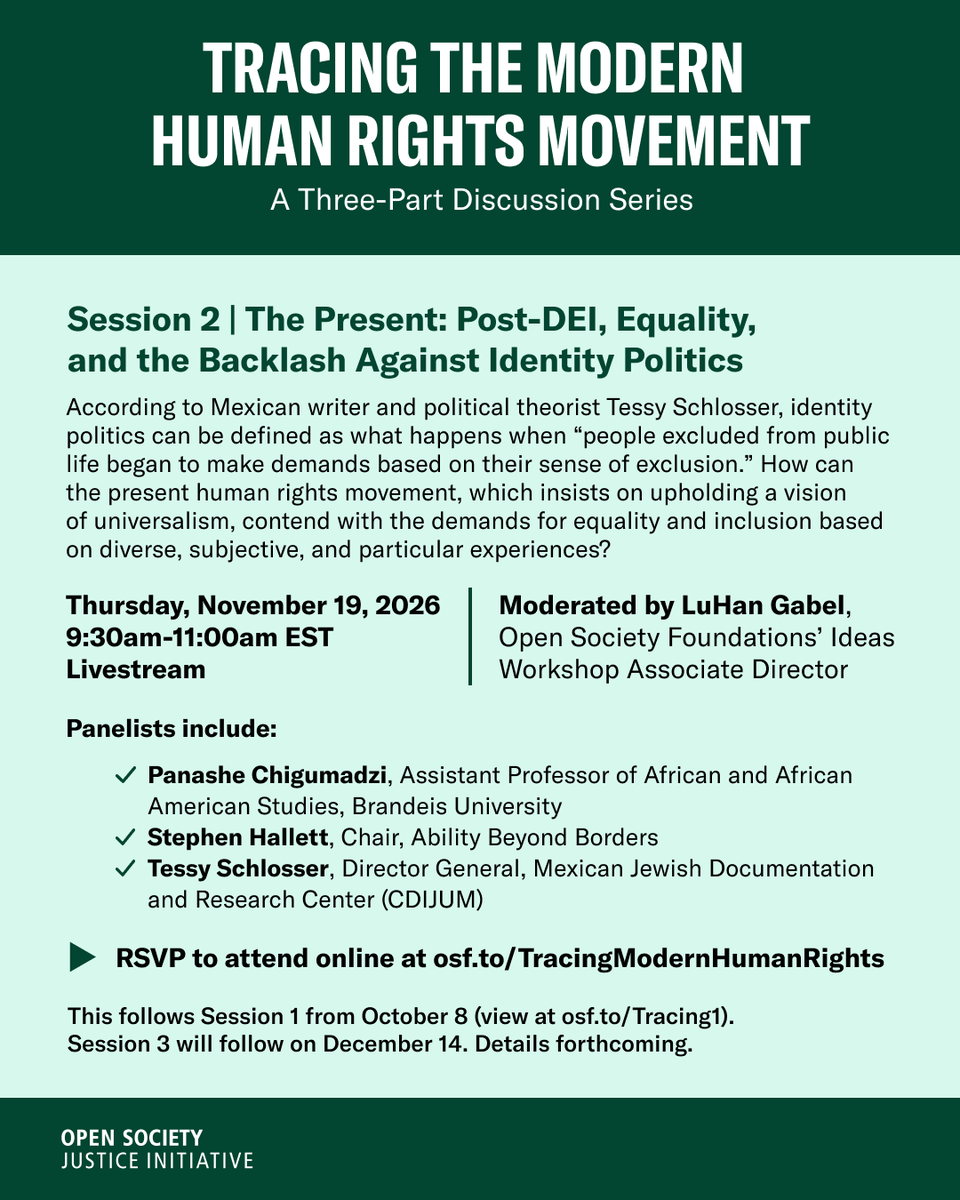
November 19: Join the second in an online discussion series tracing the human rights movement’s past, present, and future. @PanasheChig, Stephen Hallett, @tessyschlo, and LuHan Gabel explore where the movement is at today. https://t.co/rm8yr9OaY5
Open Society President @NowrojeeOSF reflects on the attacks facing nonprofits and why we’re not backing down from funding important causes: “This moment demands moral clarity. It requires courage. And philanthropy is being called on to speak out...what are your values good for if you don’t stand up for them?”
Civic space is closing, governments are restricting NGOs, and “investing in institutions for the sake of institutions” doesn’t hold—we must be open to interrogating our beliefs around where philanthropy can add value.
More from my conversation with @alliancemag at the WINGS Forum: https://t.co/gbV5Nm8Oxq
U.S. sanctions against the ICC are an afront to victims of genocide, war crimes, and crimes against humanity. Our James Goldston also argues on @swissinfo_en that the ICC does not present a threat to U.S. sovereignty.
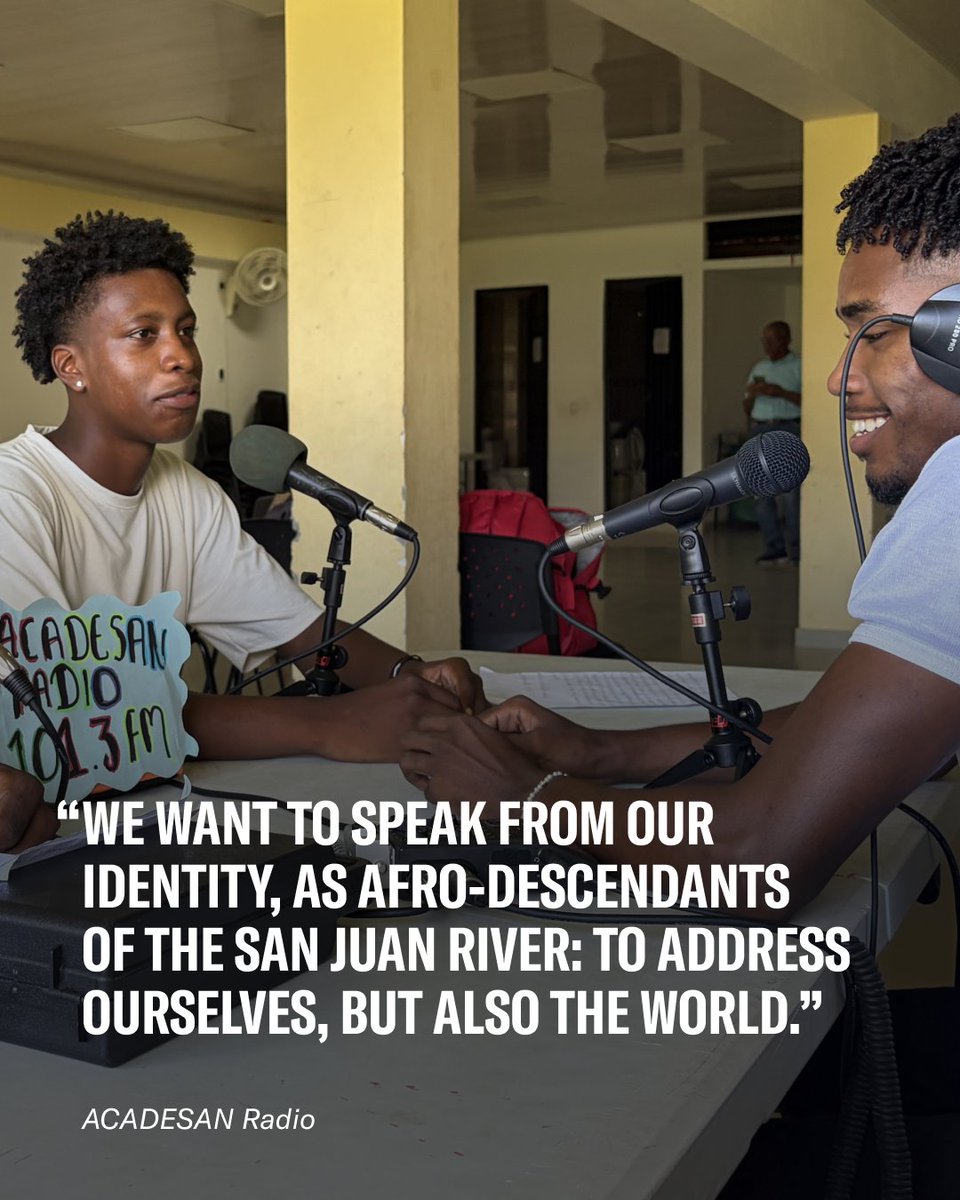
The region struggles with natural disasters, armed group conflict, and illegal mining, putting environmental defenders at significant risk. The community radio will strengthen communities across the 72 territories.
These efforts will help bring communities together and make defenders more resilient by giving them a space to share their struggles, prevent risks and attacks, and celebrate their work and achievements.
“We want to speak from our identity, as Afro-descendants of the San Juan River: to address ourselves, but also the world.”
ACADESAN (San Juan General Community Council) is an Afro-Colombian ethno-territorial organization representing 72 territories along the San Juan River basin in the Chocó and Valle del Cauca departments of Colombia, covering more than 680,000 hectares.
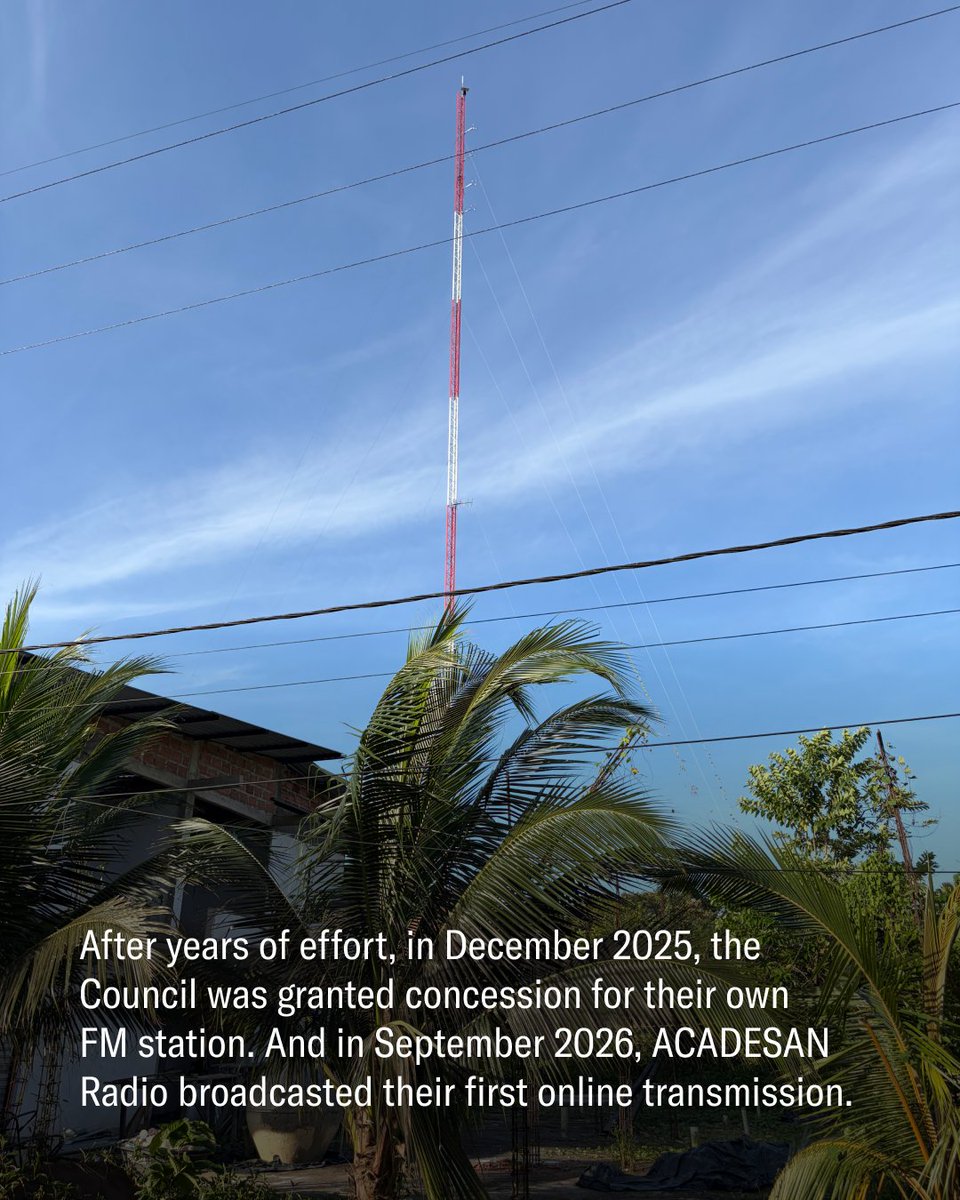
Since 2019, local authorities and leaders of the Council decided that the collective territory needed a radio station. After years of effort, on September 9, 2026, ACADESAN Radio broadcasted its first online transmission.
3.3 billion people across the world now live under governments that are paying more for debt servicing than they do for health or education. Countries in debt, including those in Africa, are fighting back by using their resources to advance new economic models.
It's time international financial institutions supported them.
President Zelenskyy has been clear he's willing to do what is necessary to achieve peace. Putin is the one clearly not interested in peace and who continues to kill innocent civilians.
Together with @OHCHR_ESARO, @NANHRI40, and @achpr_cadhp, we’re hosting the second “Reimagining the Future of Human Rights in Africa” regional convening in Addis Ababa next week.
🧵Eastern Africa stands at a defining moment 👇
As one of the first points of contact with the justice system, police stations have a critical responsibility to uphold the rule of law and protect human rights.
Many of the thousands of people currently awaiting trial in our correctional facilities today could have avoided prolonged detention if proper procedures had been followed and their rights respected upheld from the onset.
As part of our efforts towards safety and security supported by the @OpenSociety, we joined magistrates and the Justice Development and Peace Commission (JDPC), Ibadan, on oversight visits to 10 police stations across Ibadan, Oyo State.
What did we find behind those cell doors?
🎥 WATCH FULL VIDEO ON YOUTUBE: https://t.co/TH2IhwCvuo
#Oyo #AccessToJustice #Nigeria
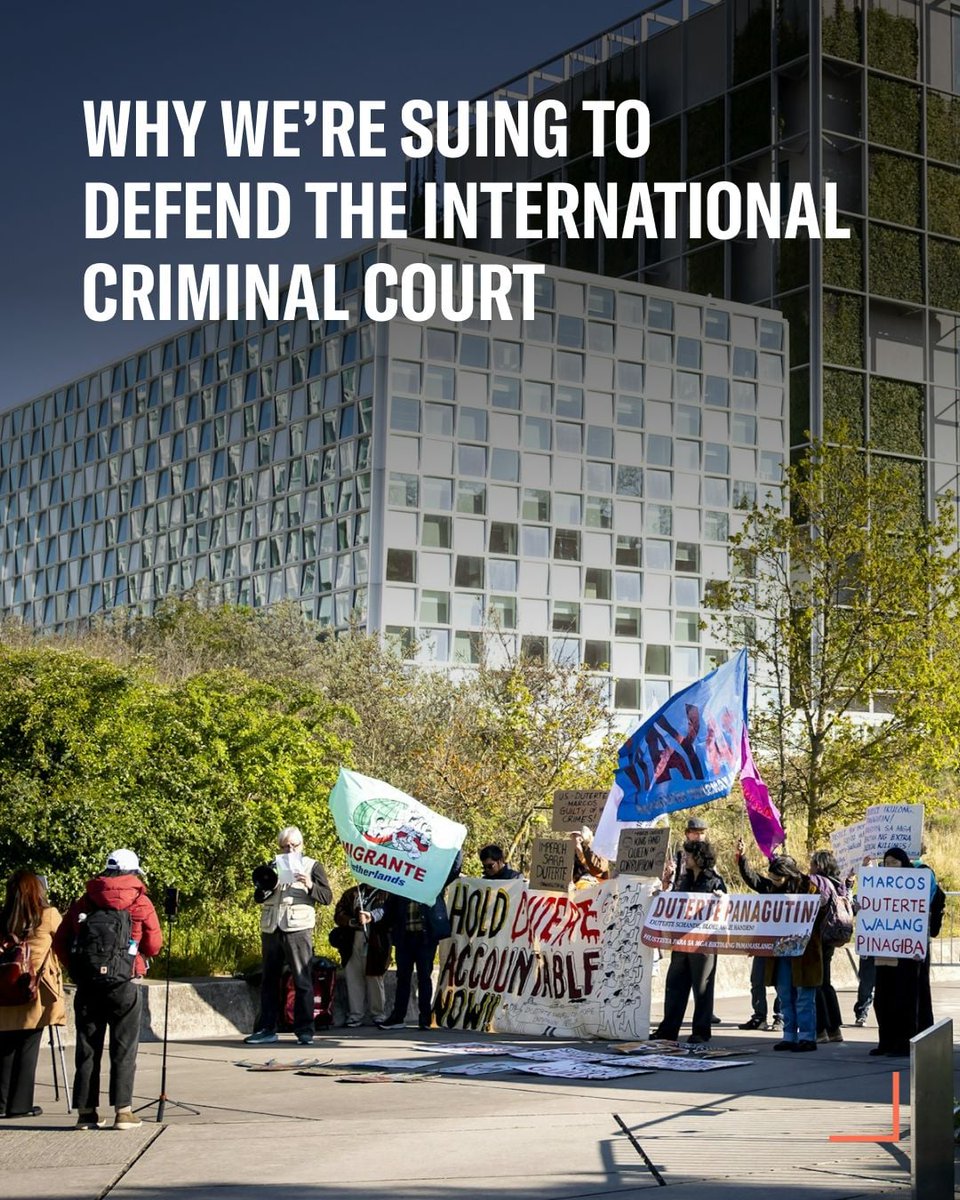
On October 9, the Trump administration imposed sanctions on the International Criminal Court (ICC) itself—the court of last resort for victims of genocide, war crimes, and crimes against humanity. This was the latest step in a rolling series of sanctions against individual judges, prosecutors, and human rights actors who have worked for and with the ICC. The Open Society Foundations are fighting the sanctions regime in federal court.
The sanctions are part of an escalating campaign which, as U.S. Secretary of State Marco Rubio announced in July, is intended to “dismantle the ICC—brick by brick, if necessary.”
Already concerned about the sanctions in place since 2025, we, together with the American Friends Service Committee @afsc_org, the Center for Constitutional Rights @theCCR, and Human Rights Watch @hrw, filed a lawsuit in federal court in New York on August 11, 2026. The case argues that the sanctions regime exceeds presidential authority, violates constitutional protections of free expression and association, and is unconstitutionally vague.
The ICC is where victims of the gravest crimes—from Gaza to Ukraine to the Philippines—can turn when their own governments will not act, and where even heads of state can be made to answer. The Trump administration’s sanctions are designed to close that door, and to punish anyone who helps keep it open.
The Trump administration’s sanctions on the ICC as an institution create additional harms for those seeking justice for crimes against humanity, war crimes, and genocide, and threaten fundamental freedoms. We’ve joined with others to defend the ICC. https://t.co/Fb9T8hrKyd
The Open Society Foundations today condemned the Trump administration’s announcement of new sanctions on the International Criminal Court (ICC) as an institution, an unprecedented escalation of its campaign against the independent court dedicated to ensuring accountability for the gravest crimes.
“Since its establishment, the International Criminal Court has served as a court of last resort, delivering justice and accountability for victims of war crimes, crimes against humanity, and genocide when they have nowhere else to turn. The Trump administration’s actions are a direct attack on the victims’ right to pursue accountability for crimes against Ukrainians, Palestinians, the Rohingya, Darfurians, and women and girls in Afghanistan,” said Binaifer Nowrojee @NowrojeeOSF, president of the Open Society Foundations.
“The attack on the ICC punishes the people seeking justice instead of the perpetrators. These actions threaten to create a new era of impunity, where grave crimes go unpunished, and the perpetrators are free to repeat them. No one should be beyond the reach of the law, no matter how powerful. Open Society is committed to a world where human rights are protected, power is constrained by law, and justice is available to all.”
Open Society supported the campaign to establish the ICC following the genocides in Rwanda and the former Yugoslavia in the 1990s to prevent those responsible from evading justice. As a court of last resort for victims who have nowhere else to turn, the ICC investigates and prosecutes individuals responsible for war crimes, crimes against humanity, genocide, and the crime of aggression when national authorities are unwilling or unable to do so. Nearly two-thirds of UN member states have joined the court. Its work spans the globe; it has initiated 18 investigations in countries including the Philippines, Sudan, Venezuela, and Ukraine.
Open Society has long supported the ICC’s engagement with civil society and has consistently opposed efforts to undermine the court’s independence. In August, the Open Society Institute, a part of the Open Society Foundations, joined three human rights groups in a lawsuit challenging the Trump administration’s previous sanctions targeting individuals and organizations affiliated with or assisting the work of the ICC.
In 2025, the Open Society Justice Initiative joined more than 70 civil society and faith-based organizations in warning against the potential use of sanctions to attack the court. The group argued that the ICC performs a vital role in international affairs by investigating crimes that shock the conscience of humanity and that “it does so in a manner that protects the due process rights of the accused, the sovereignty of states, including the United States, and the rights of victims.”
Open Society is committed to the independent and impartial pursuit of international justice wherever crimes that violate international law have been perpetrated.
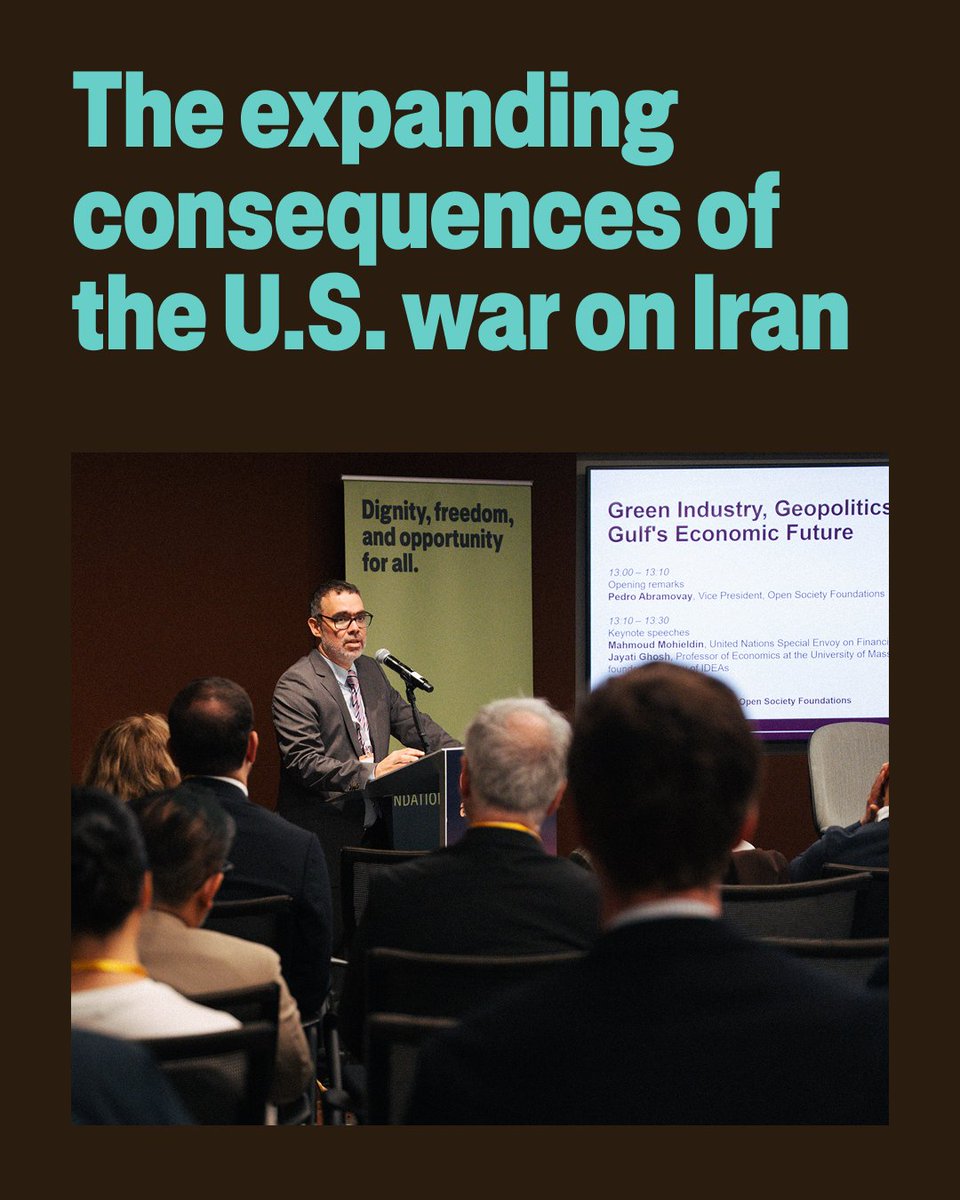
How can the multilateral system better reflect Global South leadership? How can we center human rights and dignity in the age of AI? How is the U.S. war on Iran reshaping Strait of Hormuz and Red Sea geopolitics? As world leaders and decision makers gathered for UNGA 81, Open Society convened a diverse group of civil society voices and local and regional policymakers to share innovative approaches and creative solutions from across Africa, Asia, Latin America, and the Caribbean.
Together we discussed how we can reshape multilateralism to better reflect the realities of the new world order but remain grounded in rights, dignity, equity, and opportunity for all.
We are working with our partners to help build a multilateral future that reflects our open society values and the realities of a global order, in which power is shifting in a more representative and democratic direction. It is a future that must answer the needs of our shared humanity and the planet—and empower the states that will bring those aspirations to life.
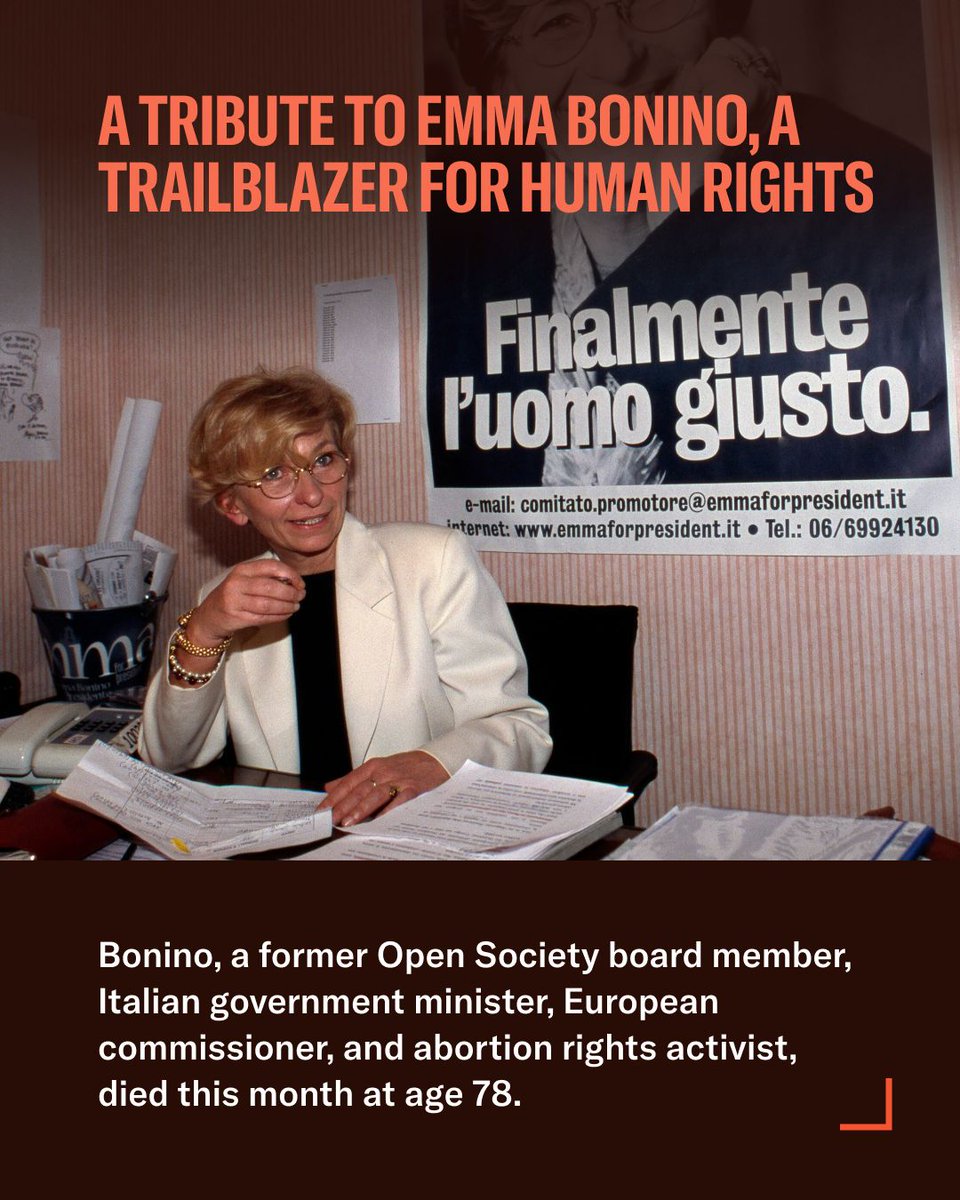
Emma Bonino, the pioneering Italian politician, trailblazing human rights advocate, and a former Open Society board member, died on September 11, 2026, at the age of 78. She was committed to the humane treatment of all, from those in jail to migrants to women seeking safe abortions and beyond, writes Aryeh Neier, president emeritus of the Open Society Foundations.
Bonino first gained prominence in her native Italy by leading the campaign to legalize abortion. She drew national attention after turning herself in to the police for seeking a clandestine abortion and helping other women do the same. She later became involved in the Radical Party, which was dedicated to advancing civil rights. Her political career included leading Italy’s ministries of trade and European affairs and serving as the country’s foreign minister. She also served as a member of the European Commission and helped drive efforts to establish the International Criminal Court.
Despite decades of supporting abortion, divorce, and assisted dying in opposition to the Catholic Church, she counted Pope Francis among her close friends. Francis called her “one of Italy’s greats.” Conservative Italian Prime Minister Giorgia Meloni said of Bonino, “Our stories and sensibilities have been distant, but this has never prevented me from recognizing her weight and role in our nation’s public life.”
At the recent #GWLVoices high-level event at #UNGA81, senior policymakers and multilateral leaders came together to reflect on the future of global governance and the importance of representation.
@SusanaMalcorra@HelenClarkNZ@nmusar
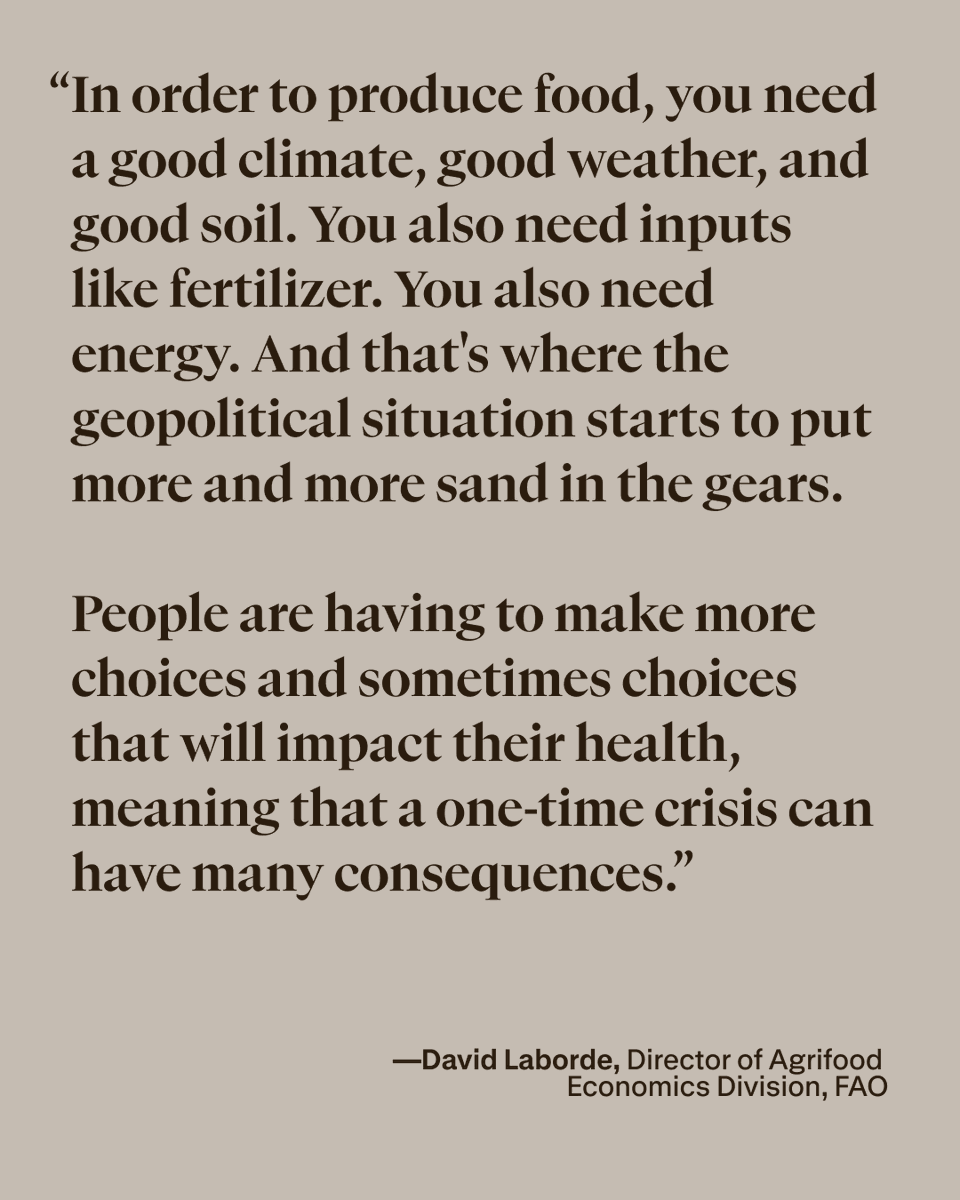
Violence in the Black Sea restricting grain exports and a strengthening El Niño are further compounding food insecurity in already vulnerable communities.
In response, a new multilateral system is emerging with the rising influence of an expanding group of middle powers, including ones in the Gulf and Africa, who are advancing new approaches to security.
Discussions at UNGA 81 called on the international community to address the war’s compounding shocks and repercussions.
Seven months into the U.S. war on Iran, fighting has widened and the consequences have spread far beyond Iran’s borders.
The closure of the Strait of Hormuz, rising insecurity in the Red Sea, and pressure on energy markets are felt in the Gulf, Lebanon, Syria, and the Horn of Africa.