An in-depth analysis of the Rudram family, covering anti radiation seeker architecture, SEAD/DEAD roles, range variants & induction bottlenecks. By @Spacewalker75
Read in Detail:
https://t.co/GfSzlgF6cD
India’s indigenous Air Independent Propulsion (AIP) system for the Indian Navy’s diesel-electric submarines reached a key milestone with the inauguration of the Setting to Work Phase-2 (STW-2) activity for its energy module
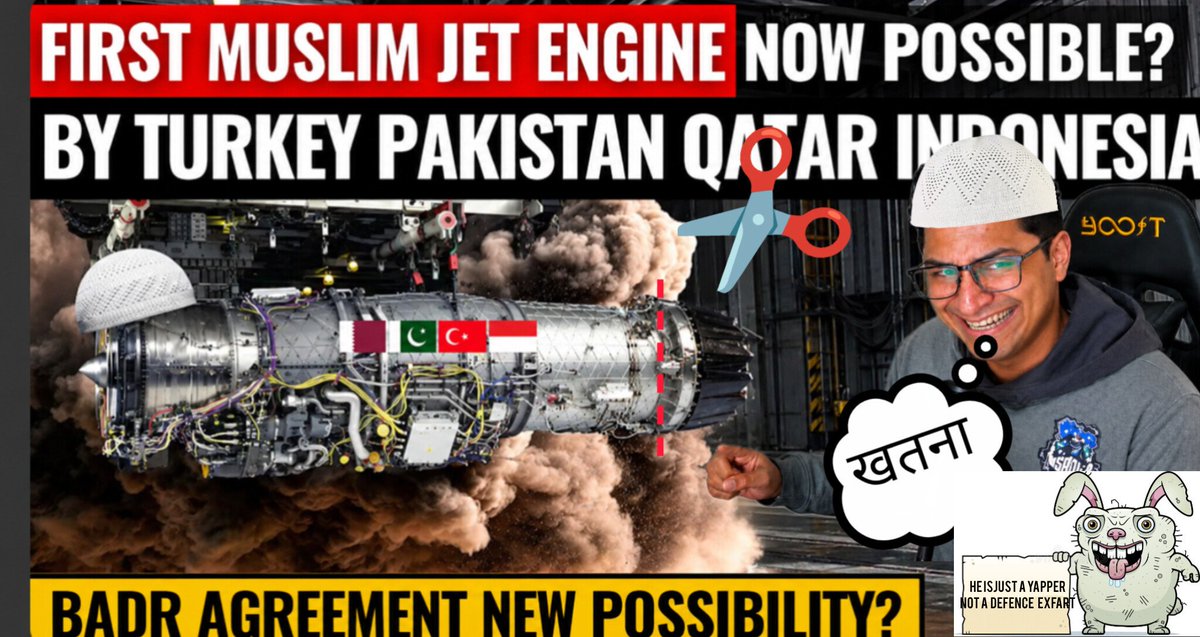
btw the original thumbnail was 👇🏻made by defence outpost aka 70Cc IQ outpost who wants to just like matrix 😁 :)
fun fact :- same guy who cant even do basic maths properly despite using chatgpt for its script !
you might also know him as "matrix" from "meesho" 😌
We would take one year in getting CCS approval for the sticks also, only to then float a tender for a JV with a foreign partner, because it has to be the best stick on the world.
@sssdefence@sssdefence team, a humble request that the website still has none of the weapon videos on it
So, please do update it whenever you get a moment
Close-ups are unforgiving. Every mark, every fit, every finish shows.
That’s why we shot the @sssdefence M72-I this way.
When you make everything yourself, down to the magazine that feeds both NATO & INSAS rounds, there’s no wide shot to hide behind.
Look closer. We did.
Continuing with the untold stories from the Kashmir invasion of October 1947:
A platoon locality lay at Bhattika, north of Muzaffarabad, along the IB. The approach to the platoon was via the track connecting Muzaffarabad with Tithwal, further north and northeast, and along the Kishanganga River. A foot track at Maira connected the post with the main track. The platoon, consisting of Dogra soldiers and a few Muslim ones, all from the 4 JAK Infantry, was commanded by Subedar Hukma Singh, a WW II veteran.
Another platoon post, in depth, at Gohari was commanded by a Muslim JCO, Subedar Mir Waz, from 4 JAK Infantry itself. That platoon included Muslim soldiers from ‘D’ Company.
No attack or fire assault happened against the post on 22 October. However, from his commanding position, Subedar Hukma Singh could see smoke pillaring up at Muzaffarabad and then at Domel. Long bursts could also be heard intermittently. The JCO tried to contact his company HQ, co-located with the battalion HQ at Domel, but to no avail.
Sometime in the afternoon, he received an urgent call from Subedar Mir Waz, requesting reinforcements and assistance because, as the caller alleged, his platoon post was under attack from all sides. However, there was no sound of firing or any such noise, though the Gohari post was much closer to Bhattika than Muzaffarabad. Guided by his intuition, Subedar Hukma Singh politely declined, saying his post was also under attack and everyone was committed. During the night of 22/23 October, all Muslim soldiers of his platoon, except one, simply walked away.
The platoon commander, now isolated and out of contact with his superior, kept his platoon's morale high throughout the day on 23 October and decided to move north to Tithwal. He made this decision because, from his vantage point, he could see the destruction in Muzaffarabad and Domel, which, in his view, meant the end of his battalion's command structure. However, at 1700h, about 500 invaders, including Muslims deserters from his own platoon, surrounded the post and asked for surrender. The platoon fired back in response. Soon, all hell broke loose, and the platoon came under heavy 3-inch mortar fire. The Dogras, however, held their nerves and repulsed the attack. It was dark by then, and the enemy pulled back into the dominating hills around, leaving seven dead behind. Many soldiers, too, had been wounded but were in a position to walk.
By now, the ammunition had reached a critical level; at about 2300h, he ordered his platoon to evacuate the post. The platoon moved out silently and was soon out of the loose circle created by the invaders around the post. The platoon took a cross-country route to maintain surprise. However, somewhere near Bafal, the lone Muslim soldier, Sepoy Lal Din, slipped away and ran to the post at Gohari without anyone coming to know about his exit. He updated Mir Waz on the state of ammunition, the plight of the wounded, and the platoon's plan to head towards Tithwal.
Just before first light on 24 October, the platoon was ambushed near Pahalakar. Many of the attackers were men from Mir Waz’s platoon. A bitter fight ensued, but soon, the platoon ran out of ammunition. Most of the men, including Subedar Hukma Singh, were caught alive and marched down to the riverbed. They were made to line up, stripped to their underwear, humiliated and then shot in the cold blood one by one. One sepoy, Sansar Singh, however, decided to take his chances and dived into the freezing and fast current of the Kishanganga River before he could be shot. He was washed away but managed to emerge on the opposite bank about a mile downstream. He then made it back to safety and lived to tell the tale of an unparalleled treachery and inhuman treatment meted out to the unfortunate platoon.
(One clarification about yesterday's post about Kotli and Naik Sant Ram: this Kotli is different from Kotli town which is closer to Mirpur)
@vasilyaarkhipov The Rafale M does exactly what it was made to do
The French built it for the French, and for them it is flawless
The criticism aimed at the jet is never about the jet itself, only about how well it truly fits us
And that fit, that gap, is our own doing and ours alone to close
It's remarkable how the entire defence discourse has settled into one comfortable refrain: it's time to wake up, or we'll never catch up with China
As if the alarm just went off
As if we're standing at the start line.
A handful of people,thankfully, most of my mutuals among them, understand the truth, which is far uglier
The time to wake up was twenty years ago
That was when we should have rubbed our eyes, brushed our teeth, had breakfast, and gotten to work
It's midnight now
The window for a measured, leisurely build-up is gone
What's left is to throw everything we have at the problem, the kitchen sink included and pray we claw our way to something resembling parity
Because every single day we don't, the gap widens to heights that may be unclimbable
And yet the majority, including the big defence handles, the supposed masters of their fields, remain wrapped in the same comforting delusion: that better tactics and harder-earned experience will paper over our material deficiencies
Nobody denies the value of skill, Nobody
But somewhere along the way that argument stopped being analysis and became a coping mechanism, a blind faith that ability alone translates into outcomes, physics and arithmetic be damned
So let me ask the obvious questions
How do you engage a target you cannot lock on to?
How does your air defence intercept anything when it doesn't have enough interceptors to fire? How do you replenish munitions, spares, and operational equipment mid-conflict when the stockpile simply isn't there?
How does even the finest soldier fight when he's denied the equipment that lets his skill matter in the first place?
And the much-celebrated foreign acquisitions?
Look at them honestly
They're either not the force multipliers we needed, or they exist in numbers too small to multiply anything
Now imagine wartime
Where do their spares come from? Do we genuinely believe a foreign government will ramp up its production lines out of sympathy for our predicament?
Or is it far more likely they'll see exactly what we are, desperate and price accordingly?
It gets worse
These imported systems don't even talk to each other, because we've sourced our arsenal from a hundred different places with a hundred different philosophies
So we can't use them to their full potential
Their running costs are astronomical
And every upgrade requires us to get on our knees and empty the treasury at the feet of a foreign OEM who knows we have nowhere else to go
So please, someone explain to me again how these are force multipliers??