Today, we share a breakthrough on the planar unit distance problem, a famous open question first posed by Paul Erdős in 1946.
For nearly 80 years, mathematicians believed the best possible solutions looked roughly like square grids.
An OpenAI model has now disproved that belief, discovering an entirely new family of constructions that performs better.
This marks the first time AI has autonomously solved a prominent open problem central to a field of mathematics.
“My opinion has always been that AI is a great tool, but it's a tool, and when I see people saying ‘99% of our code is written by AI,’ I literally get angry, because I pretty much guarantee that 100% of their code is written by compilers.”—Linus Torvalds #OSSummit
I strongly believe there are entire companies right now under heavy AI psychosis and its impossible to have rational conversations about it with them. I can't name any specific people because they include personal friends I deeply respect, but I worry about how this plays out.
I lived through the great MTBF vs MTTR (mean-time-between-failure vs. mean-time-to-recovery) reckoning of infrastructure during the transition to cloud and cloud automation. All those arguments are rearing their ugly heads again but now its... the whole software development industry (maybe the whole world, really).
It's frightening, because the psychosis folks operate under an almost absolute "MTTR is all you need" mentality: "its fine to ship bugs because the agents will fix them so quickly and at a scale humans can't do!" We learned in infrastructure that MTTR is great but you can't yeet resilient systems entirely.
The main issue is I don't even know how to bring this up to people I know personally, because bringing this topic up leads to immediately dismissals like "no no, it has full test coverage" or "bug reports are going down" or something, which just don't paint the whole picture.
We already learned this lesson once in infrastructure: you can automate yourself into a very resilient catastrophe machine. Systems can appear healthy by local metrics while globally becoming incomprehensible. Bug reports can go down while latent risk explodes. Test coverage can rise while semantic understanding falls. Changes happens so fast that nobody notices the underlying architecture decaying.
I worry.
Over the past month, some of you reported Claude Code's quality had slipped. We investigated, and published a post-mortem on the three issues we found.
All are fixed in v2.1.116+ and we’ve reset usage limits for all subscribers.
As coding agents have become the standard for developing software, we've transformed Sierra's engineering interview process to be AI-native. We've documented our lessons here, and very curious how others in the industry are navigating https://t.co/xbqM5bzvUg
This 2 hour Stanford lecture shows exactly how Stanford trains it's engineers to build AI systems. It's more practical than every Claude tutorial & prompting threads you've seen.
Bookmark & give it 2 hours, no matter what. It'll be the most productive thing you do this weekend.
The Linux kernel AI guidelines are the first sane that I read. It is not a coincidence. Where high level work is done, high level work is pretended, regardless of the tools. https://t.co/yMqJZtOBU1
Wrote up about my personal journey from AI skeptic to someone who finds a lot of value in it daily. My goal is to share a more measured approach to finding value in AI rather than the typical overly dramatic, hyped bait out there. https://t.co/SpiIy7DEc9
The Kiro AI-powered IDE, built by AWS, introduced “powers” extensions this week at re:Invent. HashiCorp is a powers launch partner with the launch of our Terraform power extension for Kiro. https://t.co/tm4gO0BJU5
OpenAI shipped a HUGE upgrade to ChatGPT Code Interpreter and failed to document it (even in the release notes) - but ChatGPT can now pip/npm install packages and run code in Python, Node.js, Bash, Ruby, Perl, PHP, Go, Java, Swift, Kotlin, C and C++! https://t.co/El5osALZGx
Faccio un thread tecnico sull'USB-C ma penso che sarà l'ultimo thread divulgativo che faccio su questa piattaforma perché oggi (giorno in cui sono tutti diventati ingegneri elettronici a quanto pare) abbiamo veramente toccato il fondo. 1/tanti
Vercel for Platforms is here.
Build multi-tenant or multi-project platforms with programmatic deployments, unlimited custom domains, and isolation per customer.
https://t.co/NHZYCznshV
Most people think of Go as a web server language. But Go is actually a fantastic systems language!
u-root leverages this perfectly. It allows you to build a fully functional, bootable Linux userspace in just 3 commands.
It compiles a set of Go tools (ls, ip, init, shell) into a single cpio archive.
* Because it's Go, it compiles quickly (10–20 seconds).
* Because it's static, it has zero dependencies.
Here is the entire process to build a userspace capable of connecting to the internet:
1. go install https://t.co/J5OVIUlIZy
2. git clone https://t.co/1vFRiNf21d
3. u-root
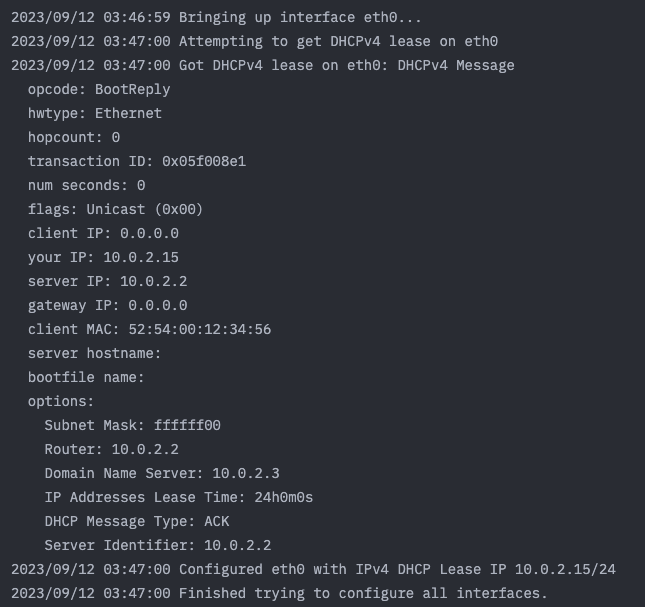
That's it. You now have an initramfs.linux_amd64.cpio ready to boot with QEMU.
When you boot this, you aren't getting a "toy" shell. You get a full Go-based environment.
Need to check the network? ip (written in Go)
Need to download a file? wget (written in Go)
It’s a Linux distro where the "GNU" parts are replaced by "Go".
I added a bonus section to my "Micro Linux Distro" guide showing exactly how to execute this. We go from an empty folder to a QEMU VM connected to the internet in under a minute.
Check it out here: https://t.co/EOP8mQQPRU