Author release checks: 45 core software tests passed. That is not model accuracy. Long-run stability, battery use and human factual review remain unverified.
Android 14+; v1.3.2 prerelease debug APK. Model import required:
https://t.co/Pqg8AYfQar
A full day. A blank diary.
Karl-XZ’s Blackbox Diary uses Spark-X2.5-4B on Android to turn saved material into a daily summary. The screenshot uses 12 synthetic notes—not a real user diary.
https://t.co/EK3agZsMRJ
You also choose what stays.
Voiceprint enrollment is optional; matching is tentative, not identity authentication. The deletion screenshot shows a date-range dialog only—no deletion was performed during capture.
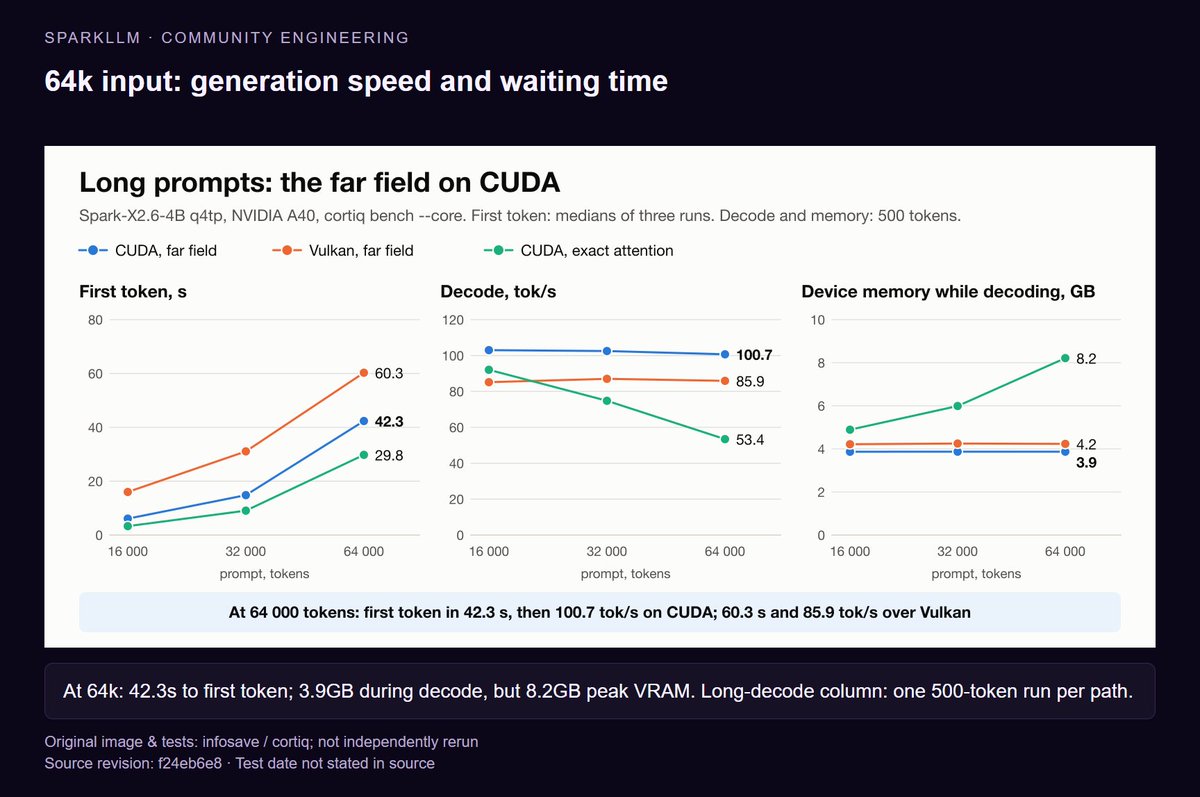
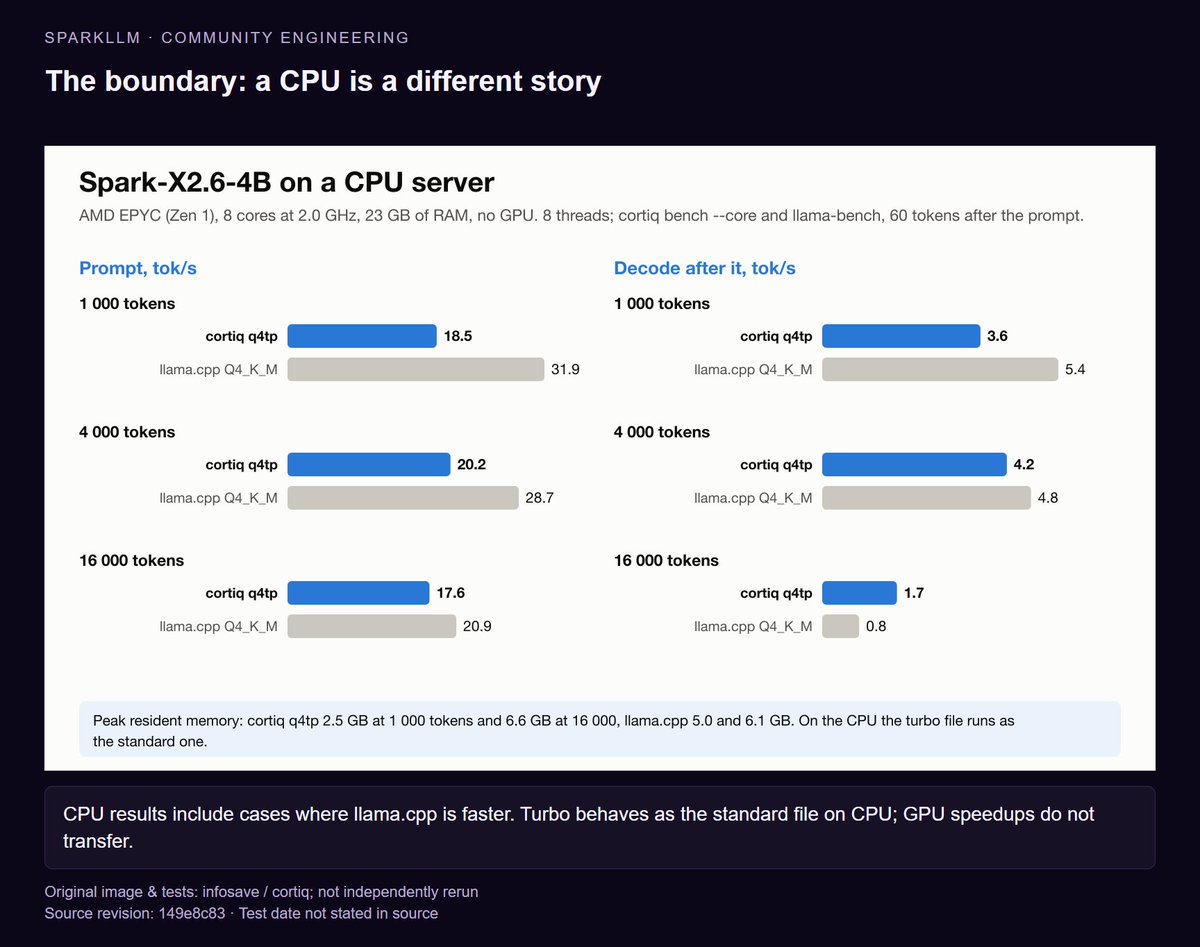
Try cortiq 0.8.67+ built with --features cuda and CUDA 12.x runtime libraries. This backend is experimental, tested on one A40, and has no speculative decoding. Original charts and setup by infosave:
https://t.co/eITFISfcNY
Same A40. Same Spark-X2.6-4B file. A new CUDA path.
infosave reports 111.5 vs 80.2 tok/s after 4k tokens (4-bit, CUDA vs Vulkan). At 64k: 100.7 tok/s, 42.3s to first token, 8.2GB peak VRAM. Author tests; charts below.
https://t.co/eITFISfcNY
The CPU chart stays in the story too: llama.cpp is faster in some tested conditions. Turbo runs as the standard file on CPU. Choose a backend for your actual device and document, then measure waiting time and answer quality as well as tok/s.
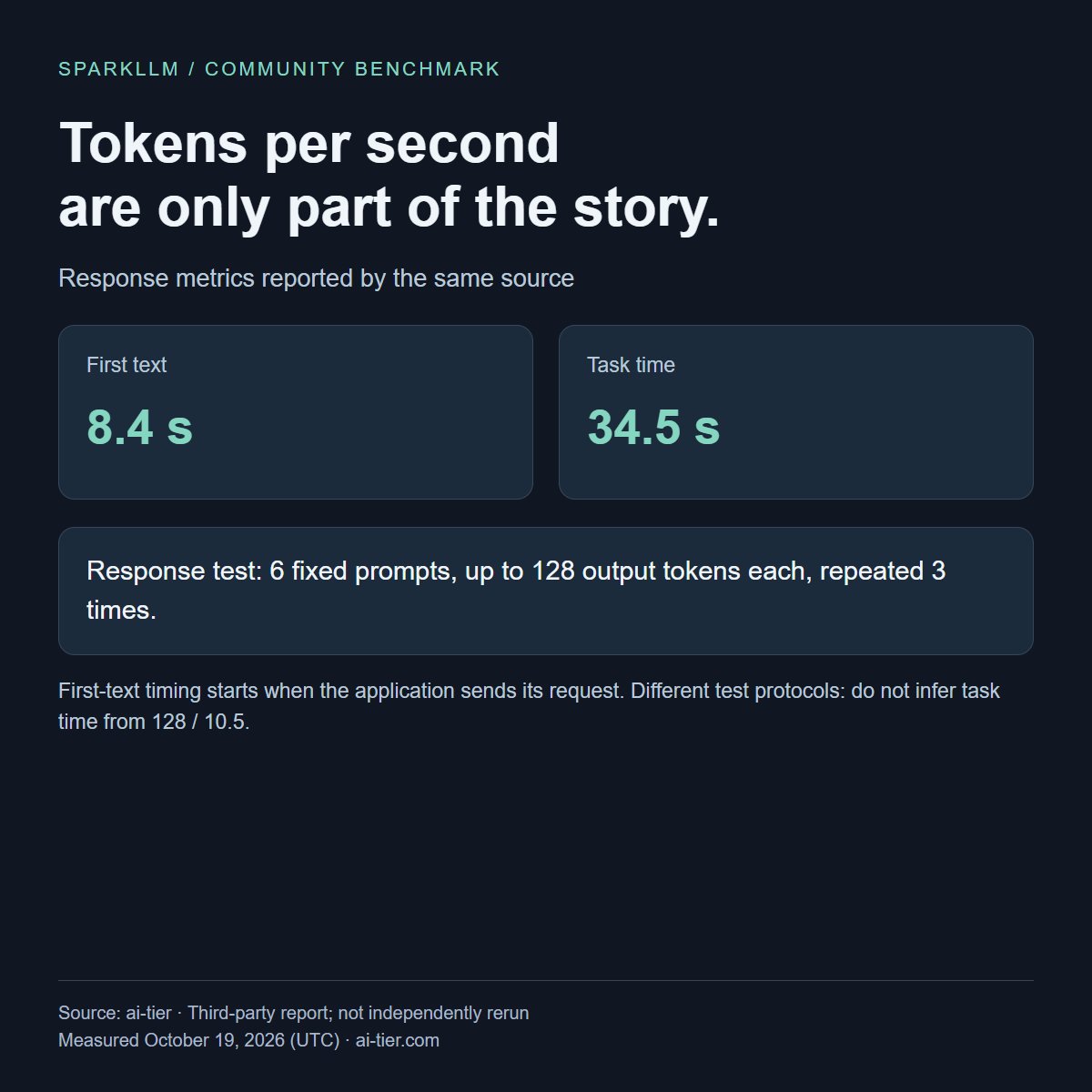
Speed is only part of the story: the response test reports 8.4s to first text and 34.5s task time.
Measured October 19, 2026 (UTC). Bring your own task and measure the wait, too.
https://t.co/JKu1bb99nV
No discrete GPU. A Raspberry Pi 5. What can local AI do?
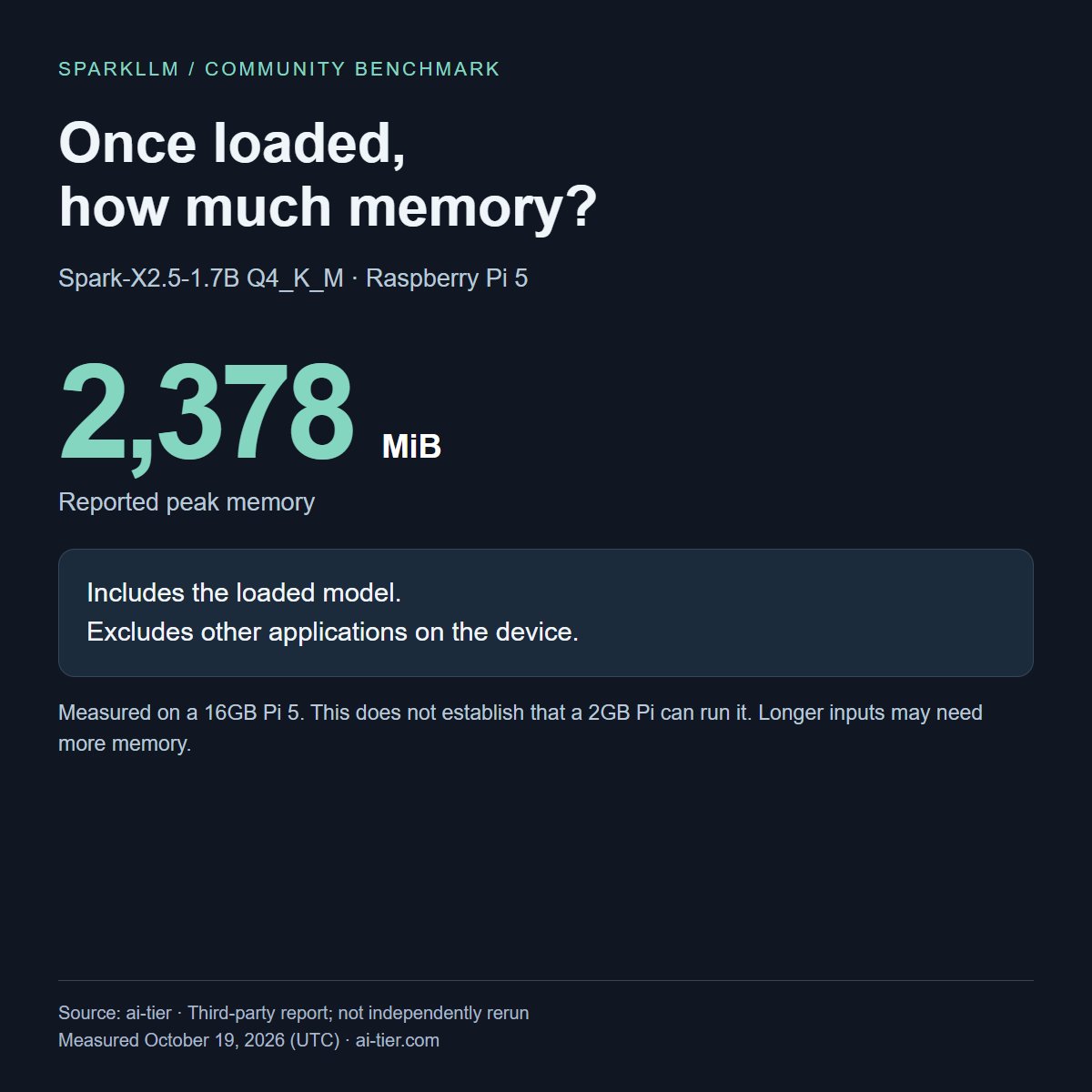
ai-tier reports Spark-X2.5-1.7B Q4_K_M at 10.5 tokens/s on a 16GB Pi 5.
4,096 context, reasoning off; short-input test. Third-party results, not our rerun.
The memory result: 2,378 MiB peak, including the model and excluding other apps.
That is a measurement on a 16GB Pi, not proof that a 2GB Pi will work. Longer inputs may need more memory.
Small models. More possibilities.
Explore Spark 4B / 1.7B, pick a format, and show us what you build:
https://t.co/jqyxlezZmM
Snapshot: Nov 8, 2026 UTC. Totals include pulls and approximate counts; platform methods differ. Not unique users.
A model release is only the beginning.
276 community derivatives later, Spark X2.5 + X2.6 have passed 5M downloads/pulls across six platforms.
Thank you for making Spark your own. 💜
https://t.co/UgMPZSxQiE
The community now accounts for 57.1% of the tracked total:
Official channels: ~2,189,056
Community derivatives: 2,912,337
HF official + derivatives alone: 5,050,020
From GGUF to MLX and ONNX, open weights become more ways to build.
Credit: hotocooo, using Spark-X2.6-4B-Base. Original renders preserved; data/layout cards by SparkLLM. We have not rerun the tests.
Try the author's completion prompt and share what you build:
https://t.co/SPwx6nyV8G
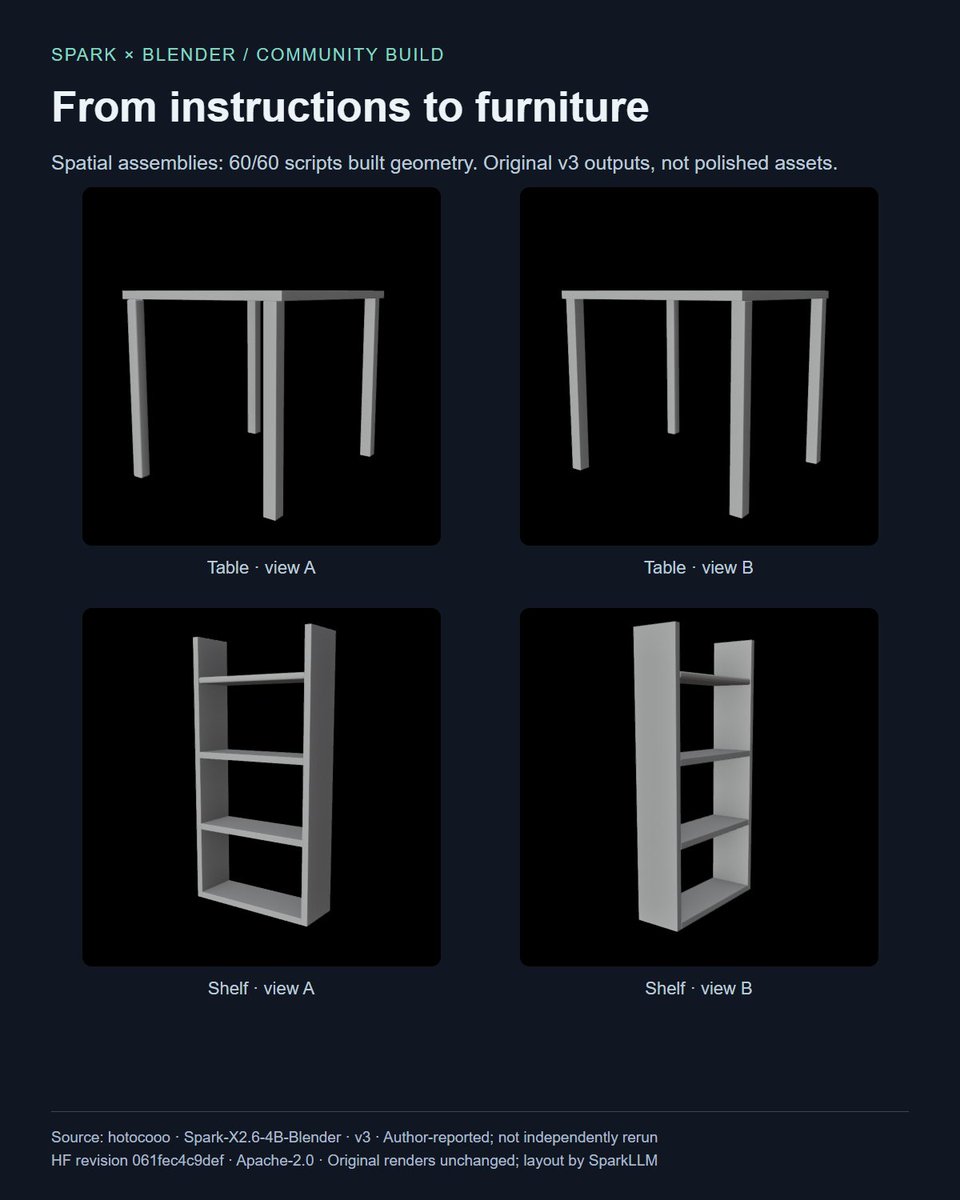
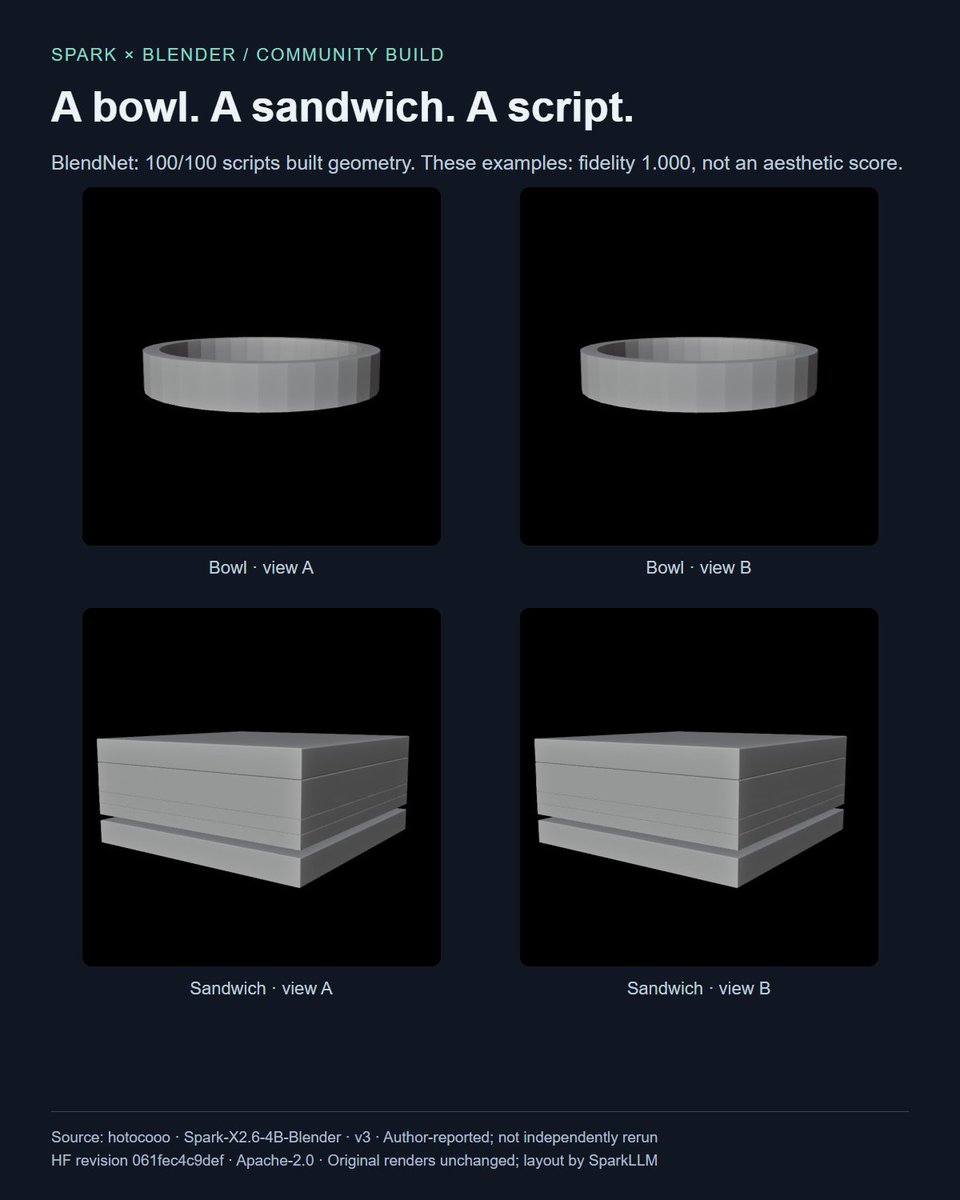
Ask for a bowl. Get Python. Run it in Blender.
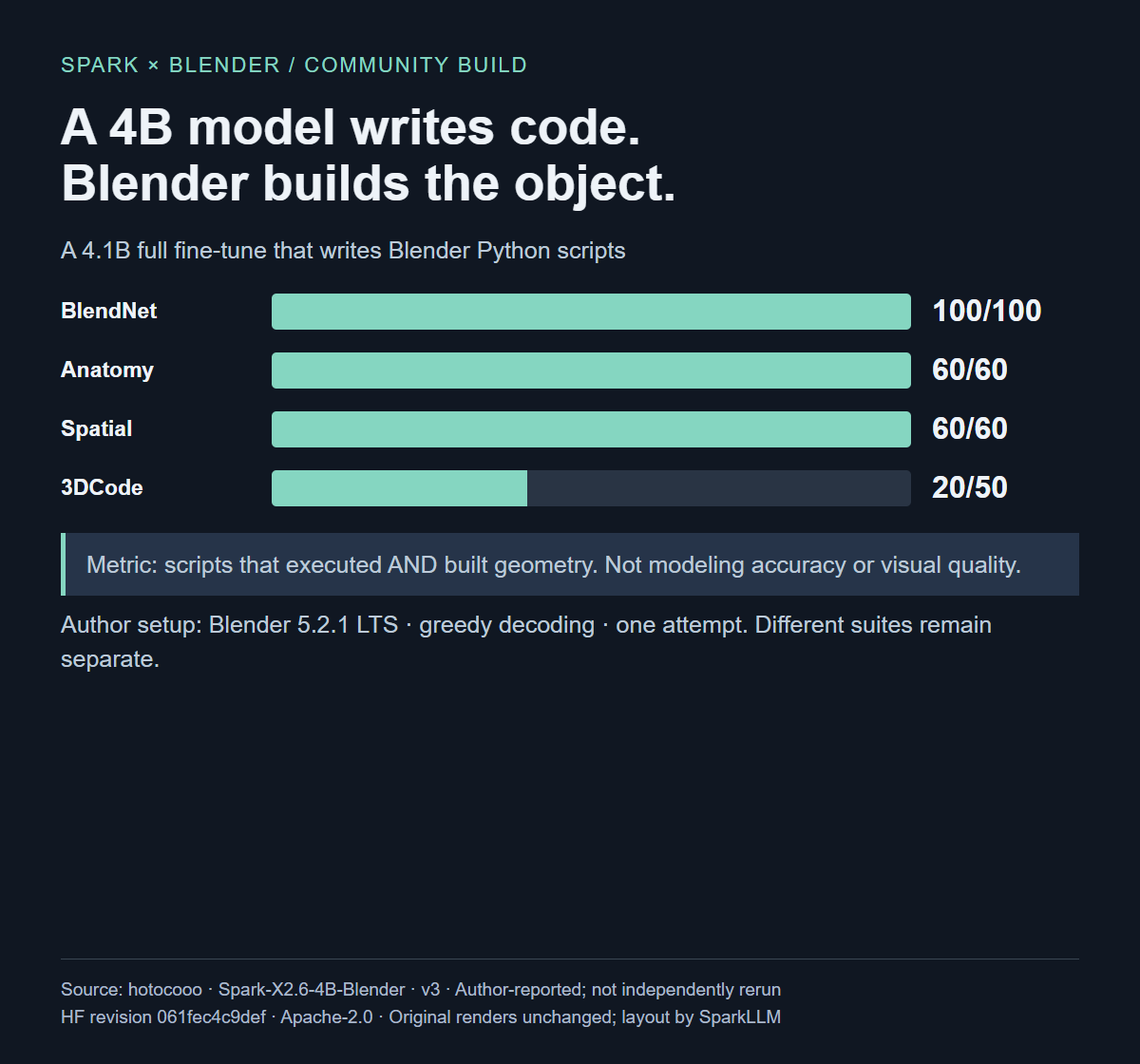
hotocooo tuned Spark 4B for this loop. Author-reported v3: 100/100 BlendNet scripts built geometry; 3DCode: 20/50.
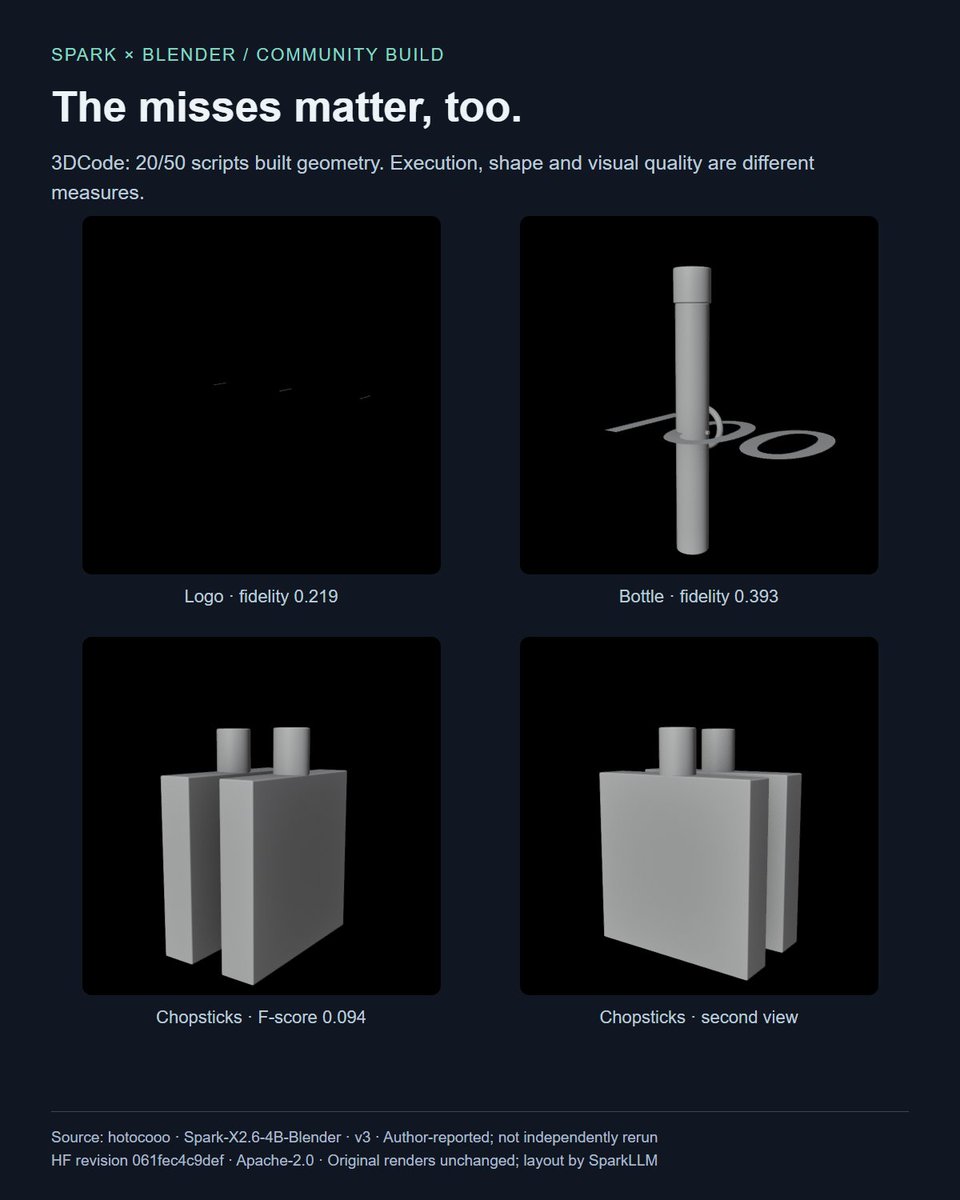
Four image cards show the results and the misses. Execution is not visual quality.
The weaker outputs belong in the story: logo fidelity 0.219; bottle 0.393. That measures agreement on size, proportions and part count, not beauty.
Only 20/50 scripts built geometry on 3DCode. Specialization still has limits.