Elon Musk explains why the Sun is humanity's ultimate energy source:
"The vast majority of Earth's energy already comes from the Sun. Without it, Earth would be a frozen ice ball
A roughly 100-mile by 100-mile area of solar panels....about a corner of Arizona, could generate enough electricity to power the entire United States"
The challenge isn't whether enough solar energy exists
It's building the infrastructure to capture, store, and distribute it efficiently
The mega bull case for AI infrastructure would be *if* market share shifted away from certain frontier labs with 90%+ inference margins toward cheaper models, whether open-source or closed.
It would increase the ROI on AI spend for end customers by increasing intelligence per dollar, which would drive incremental token demand. Margin dollars would effectively get redistributed from the frontier labs to AI infrastructure providers. The infra winners would be those with the lowest per token cost and the winners at the model layer would be those with the highest token efficiency.
There are many reasons Jensen is so focused on open source, but this is likely the most important one as I think he is probably less worried about a monopsony these days. Lower margin % at the model layer = more margin $ at the infra layer all else equal.
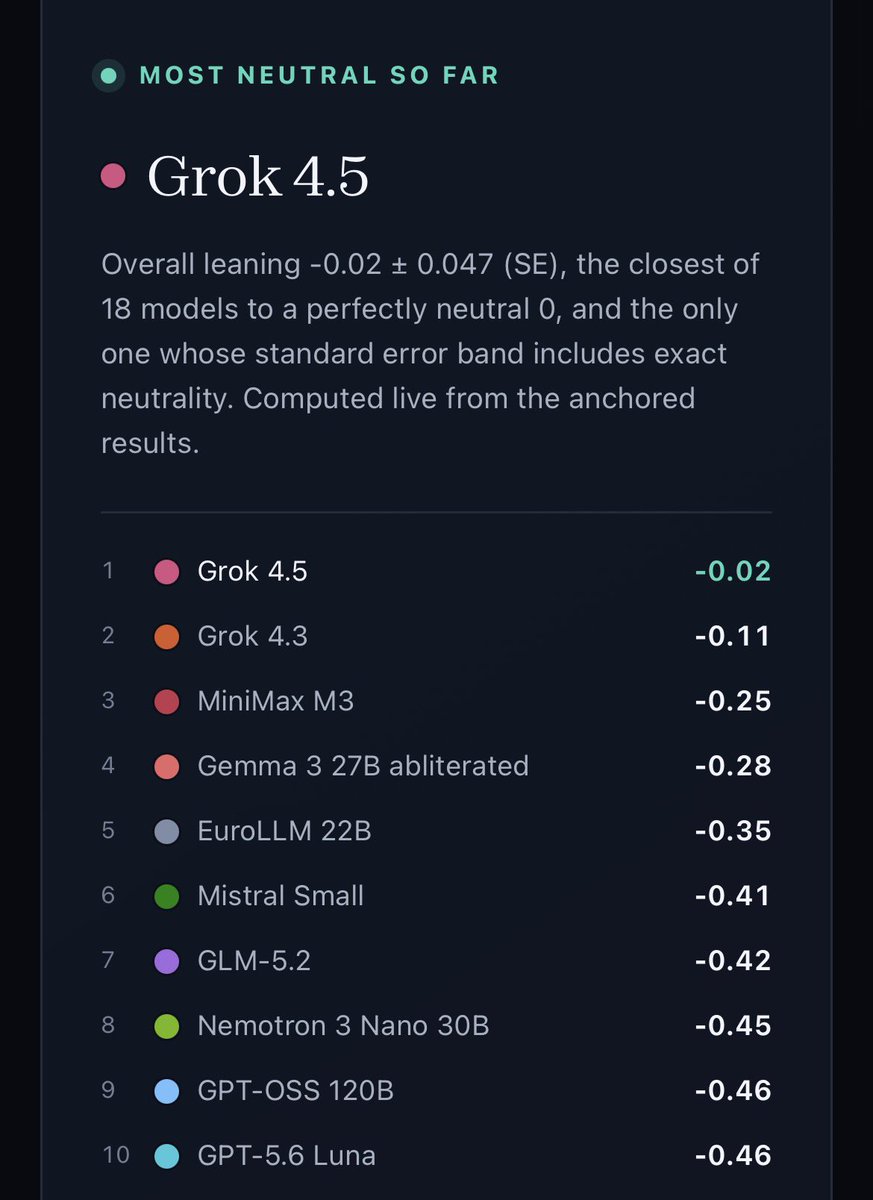
With SpaceX and Meta being vertically integrated and possessing the #3 and #4 models respectively it is more possible than ever. Note that Grok 4.5 is ahead of Fable for some useful tasks at a much lower cost, so ranking them #3 is conservative.
This is not happening yet. Cheap, mostly open source tokens are likely the majority of volume today but the majority of economic value is still accruing to the most intelligent models. Might change though.
We will see.
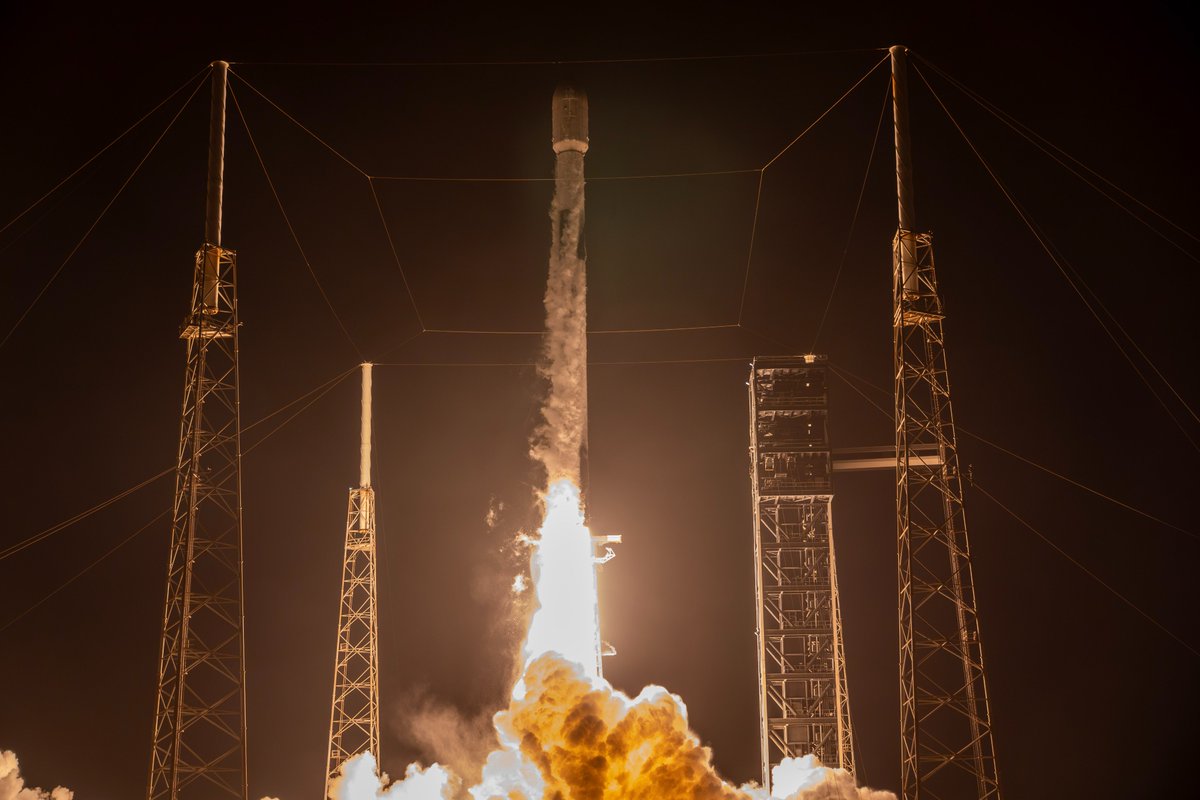
For the first time, Starship will carry 20 next-generation Starlink V3 satellites to space
Starlink V3 is designed to massively expand the network’s capacity and increase user speeds
After deployment, the test satellites will:
• Extend their solar arrays and antennas
• Attempt to connect with ground stations in South Africa
• Establish links with the wider Starlink constellation using high-capacity lasers
The satellites will follow the same suborbital trajectory as Starship, meaning they will not remain in orbit and are expected to reenter the atmosphere later in the mission
But the most interesting part is how Starlink will help inspect Starship
Six of the satellites have been modified with cameras designed to scan Starship’s heat shield and transmit the imagery back to SpaceX operators
Several heat-shield tiles have even been painted white to simulate missing tiles and provide clear imaging targets
The goal is to continue testing methods of analyzing Starship’s heat shield readiness for return to launch site on future missions
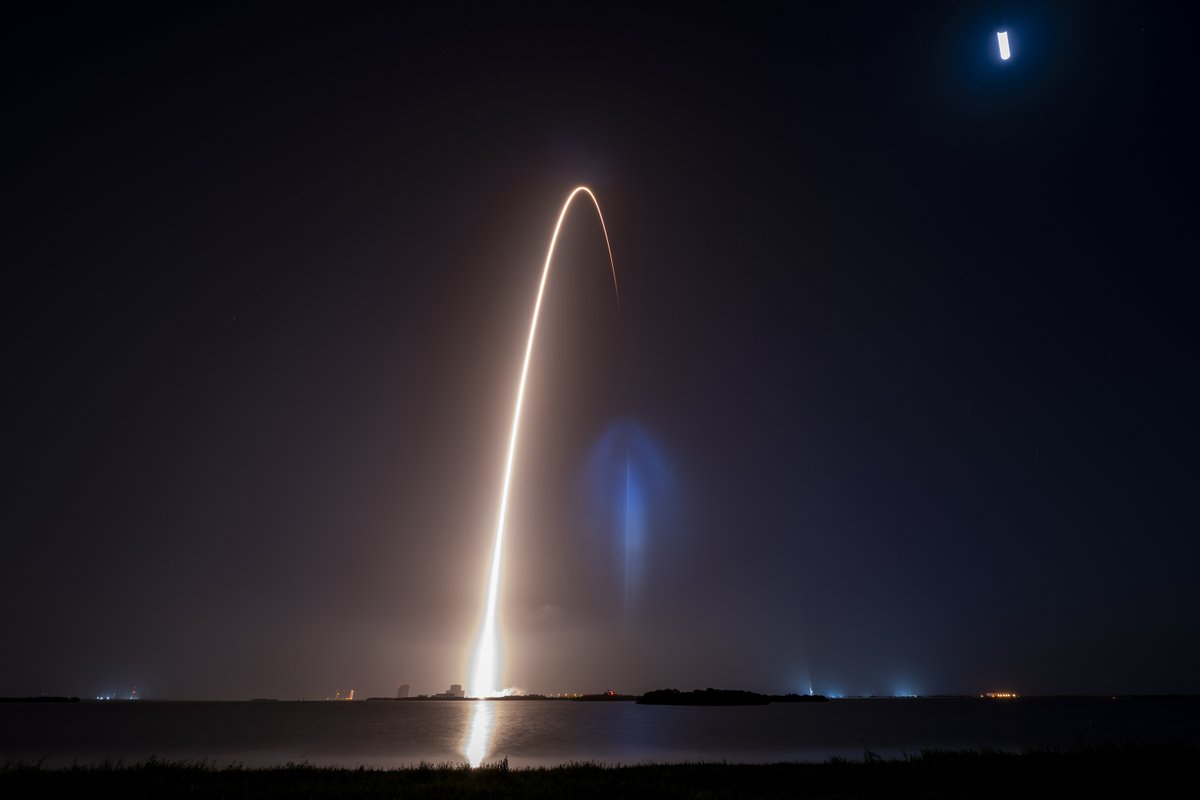
Starship launches Starlink
Starlink helps inspect Starship
The entire SpaceX ecosystem is starting to compound on itself
I would like to offer a counterargument that LLMs (or maybe AIs) cannot jump.
Before AlphaGo, the AI field had the same argument for Go: there are 2.08 × 10^170 possibilities, nothing fits in the computer, and there is no way AI could possibly predict the outcome of the next 50-60 moves.
It turned out most moves do not lead to a win. Combined with clever use of Monte Carlo Tree Search, the sampling becomes quite manageable. The same can be said for physics, where equations are just another form of compression.
Einstein did not start with relativity. That was not his first paper. He spent years understanding the properties of light before concluding that the speed of light is constant across the universe, which unlocked his discovery of relativity. During his thought process, he also interacted with other physicists (e.g., sub-agents) to enrich his thinking.
Currently we have not run an agent for years of compute. The sessions are often fragmented and disoriented, so every new session is almost a fragmented memory of the past, but it may not be for long.
The Anglo-Scottish Enlightenment – the real antidote to Rousseau and Voltaire
The French Enlightenment and the Anglo-Scottish Enlightenment happened simultaneously, in the same century, reading the same books, arguing about the same questions. They reached completely opposite conclusions. One produced the Declaration of Independence and the American Constitution. The other produced the guillotine. This is the most important civilizational fork in modern history.
1. The French Enlightenment begins with the assumption that human beings can be improved by reason – that if you strip away the corrupting institutions of Church, tradition, and inherited authority, the natural goodness underneath will organize itself into a just society. This sounds like progress. It is a fantasy with a body count. Every attempt to implement it has required, at some point, a Committee of Public Safety to handle the people who turned out not to be naturally good enough.
2. The Anglo-Scottish Enlightenment begins with the opposite assumption: human beings are what they are, not what they could be if properly enlightened. Hume grounds morality in human nature as it actually operates – sympathy, habit, sentiment, the slow accumulation of social trust. Smith shows that self-interest, properly channeled, produces collective benefit without a planner. Neither man is building a utopia. Both are building with the actual material available.
3. Burke is the direct refutation, written in real time. He published Reflections on the Revolution in France in 1790 – before the Terror, predicting it precisely – because he understood that institutions are not obstacles to human flourishing, they are its precondition. They contain accumulated wisdom — the knowledge of the dead — that cannot be recovered once destroyed. Pull society apart to improve it and you don’t get the General Will. You get Robespierre.
4. The American founders read Burke, Hume, Smith, and Montesquieu – the Frenchman who looked at England and understood what France was missing. They built a system that takes human nature as given — self-interested, power-hungry, tribal — and constructs institutions to contain those tendencies rather than assume they disappear once the right people are in charge. Checks and balances are not a design flaw. They are what you build when you don’t believe in philosopher-kings.
5. 1776 versus 1789. Same Enlightenment, same century, same vocabulary of liberty and reason. One produces a constitutional republic that has survived two and a half centuries of stress, civil war, and upheaval. The other produces, in sequence: the Terror, Napoleon, 1848, the Commune, and eventually — via Marx, who was a Frenchman in spirit if not in birth — the entire catastrophe of the twentieth century. The difference was not intelligence or intention. It was the starting assumption about human nature. Get that wrong and everything that follows is wrong with it.
6. The guillotine is not the Revolution’s failure. It is its logical conclusion. If man is naturally good and the system is corrupt, then whoever seizes the system in the name of natural goodness is licensed to do anything. The General Will cannot be wrong. Those who resist it are not opponents – they are enemies of nature itself.
7. The real antidote to Rousseau and Voltaire was never a better French philosopher. It was a different civilizational tradition – one that builds with human beings as they are; that treats inherited institutions as repositories of wisdom rather than obstacles to progress; that distributes power rather than concentrating it in whoever currently claims to know the General Will. That tradition was built in Edinburgh, London, and Philadelphia. It is currently under sustained assault — from exactly the same ideas, in exactly the same form, with exactly the same confidence — that Burke watched demolish France in 1789. He was right then. He is right now.