Passionate about numbers and empowering businesses! 💼 Proven track record in maximizing deductions and optimizing #finances. Let's elevate your financial game.
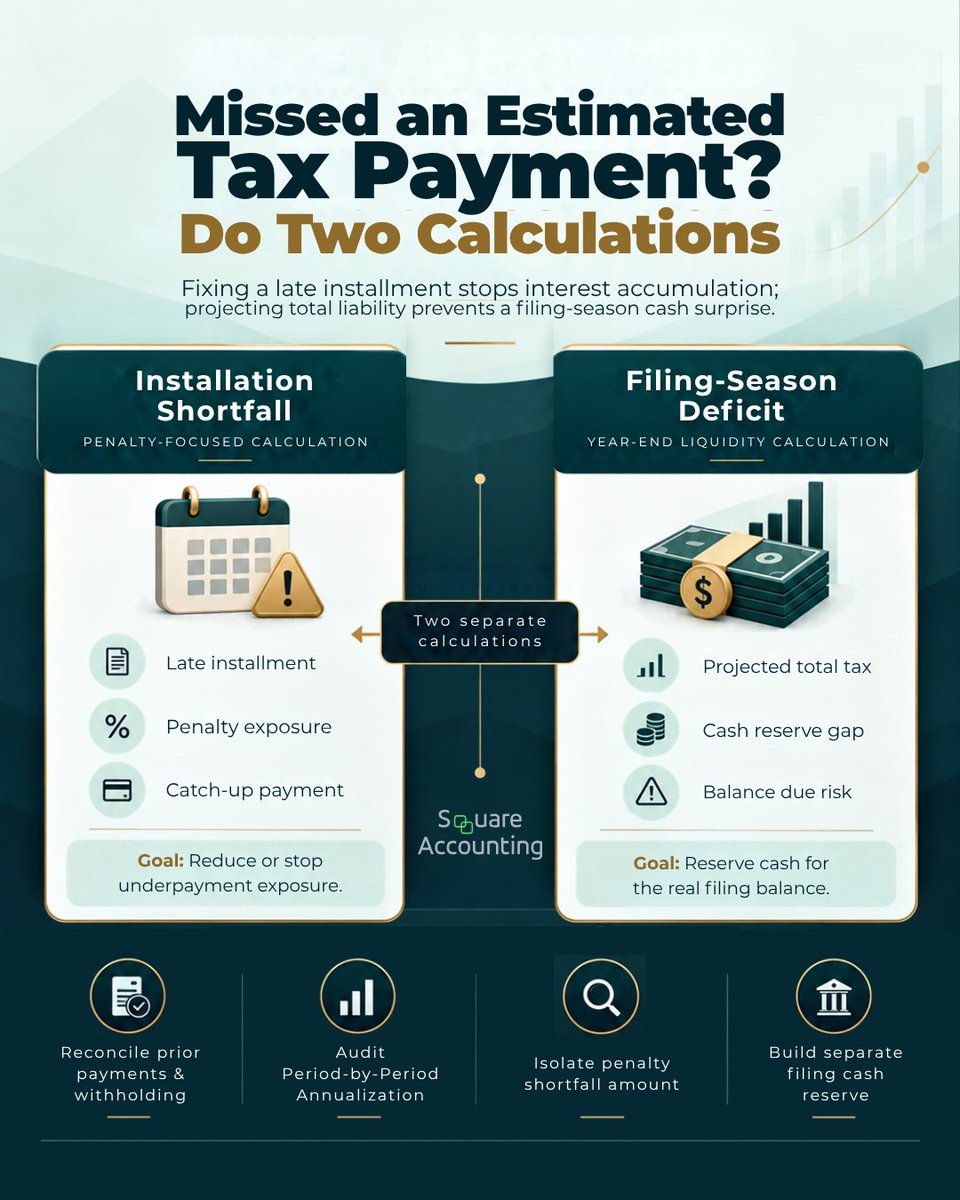
Keep three figures distinct: projected total tax, remaining required installments, and cash reserved for filing.
A larger current-year tax could also affect next year’s benchmark.
Does your updated forecast account for all three?
#TaxPlanning#CashFlowPlanning
A missed estimated tax payment can leave two cash questions: Was an installment short, and how much tax may still be due at filing?
Payment dates answer the first; the full-year forecast informs the second.
https://t.co/cJe6MpldMX
#EstimatedTax
Meeting a required prepayment target does not settle the projected tax bill.
When profits rise, an owner may avoid a larger installment shortfall and still owe substantial tax at filing.
That balance needs its own cash forecast.
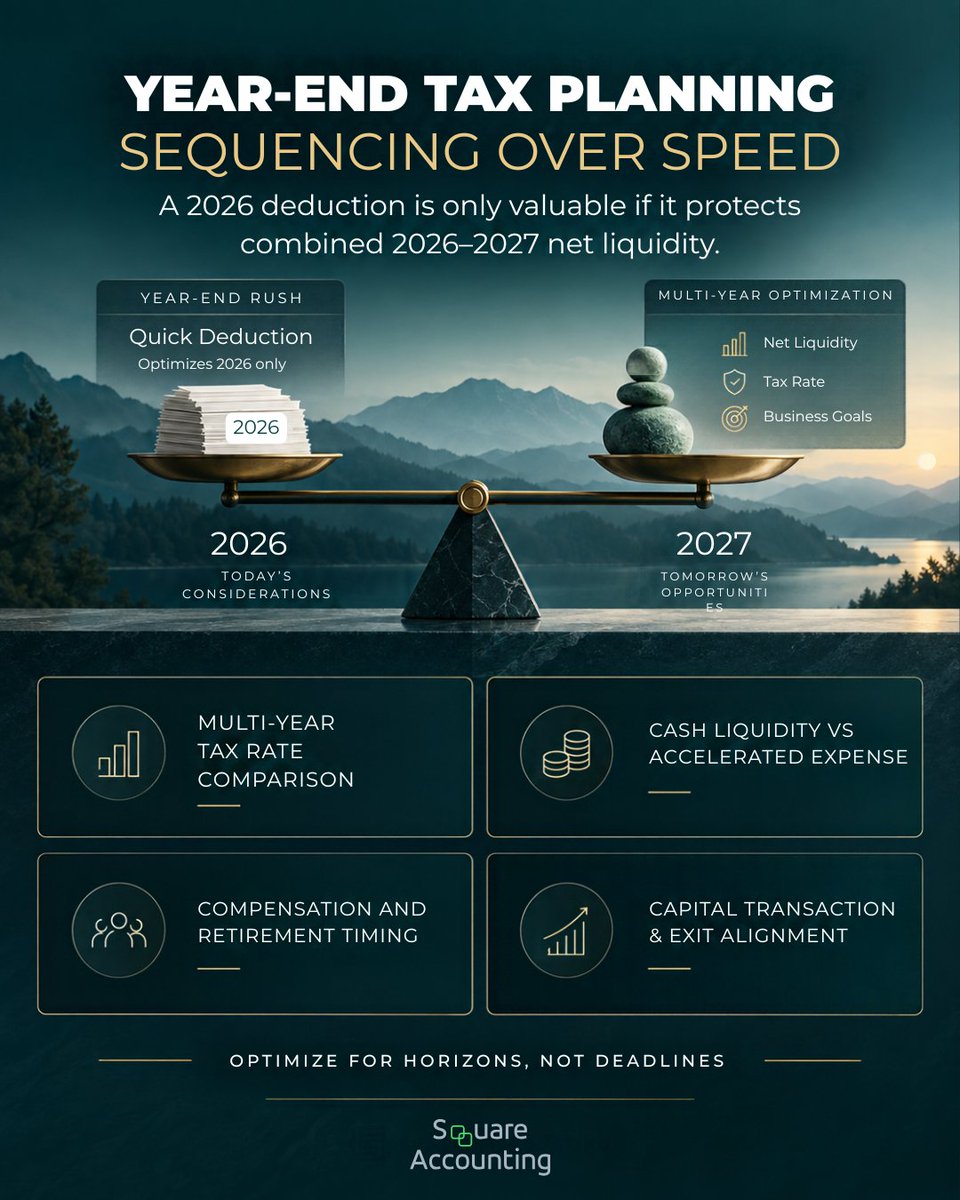
A strong year-end decision should still make sense after tax effect, liquidity, implementation, and the likely exit path are considered together.
Before moving a purchase into 2026, have you tested all four?
#BusinessOwners#YearEndPlanning
A practical review lens:
What event controls the tax year?
What is the current-year tax effect?
What changes in 2027 or later?
What documentation or operational step must be completed before the position is ready to implement?
Later consequences matter too.
Accelerated depreciation can affect basis, and a later disposition can raise depreciation-recapture or gain-characterization issues.
That belongs in the analysis before the purchase date changes.
The overlooked variable is often liquidity.
A tax deduction may improve the current-year result while using cash or financing capacity that the business expects to need for hiring, financing, or another planned business decision.
Change the facts and the conclusion can change.
If 2027 income is expected to rise, cash is needed for hiring, or a business sale is being considered, the same accelerated deduction may be less attractive.
Consider a planned equipment or technology purchase.
If 2026 income is unusually high, 2027 income is expected to fall, working capital is strong, and no near-term sale is planned, accelerating the purchase may improve deduction timing.
A year-end tax planning checklist for business owners should do more than identify deductions.
A planned purchase can look attractive in 2026 and still weaken liquidity or a later sale.
https://t.co/0gY601Gg0V
#TaxPlanning
The practical takeaway: track both the safe-harbor target and the projected balance still unfunded.
Are your 2026 payments based on a current projection, or on assumptions that no longer fit the year?
#TaxPlanning#FloridaBusiness
Timing can change the analysis too.
Uneven income may support an annualized-income calculation, while a later payment does not automatically erase an earlier underpayment period.
Entity structure also matters because the taxpayer responsible for the obligation can differ.
For Florida owners, no personal state income tax does not eliminate separate federal or Florida corporate estimated-tax obligations.
A stronger review separates three numbers: projected total tax, required annual prepayment, and tax cash reserve.
They are connected, but they do not answer the same planning question.
That distinction matters when current-year income rises above the assumptions behind prior-year vouchers.
A technically sufficient payment can still leave a meaningful cash requirement later.
Safe harbor answers a penalty-management question: have you prepaid enough under the applicable rules?
It does not necessarily tell you whether the year's projected tax is fully funded.
2026 quarterly estimated tax payments for business owners can meet a safe-harbor target and still leave a large filing-season balance.
https://t.co/KHz9uPpshM
#EstimatedTaxes