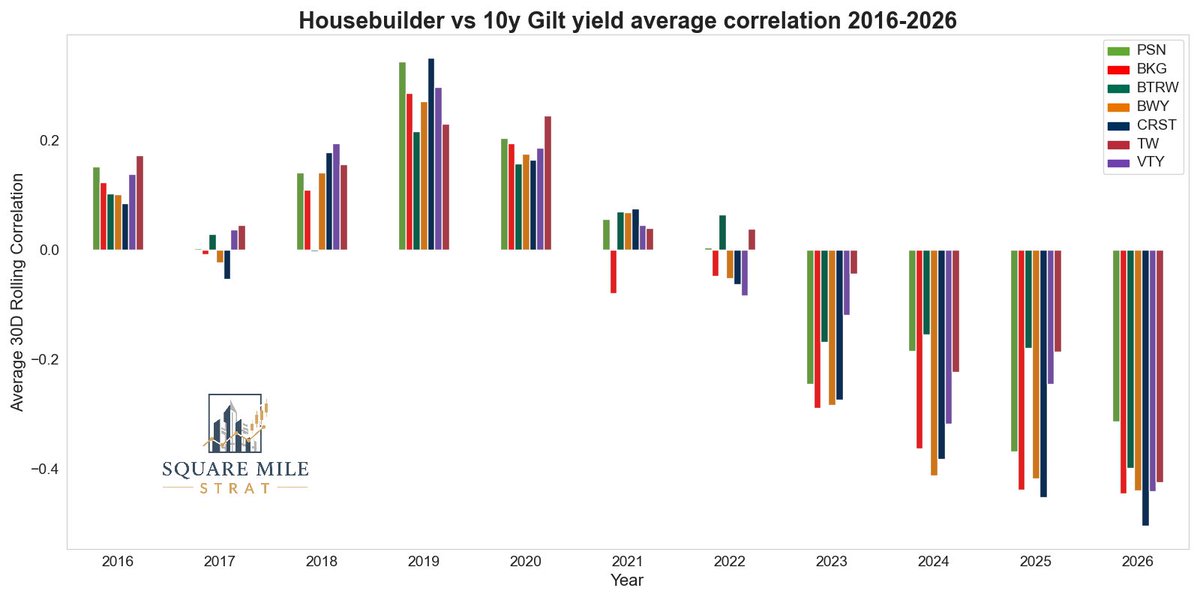
Counterpoint - From 2022, housebuilders have traded as a Gilt yield proxy
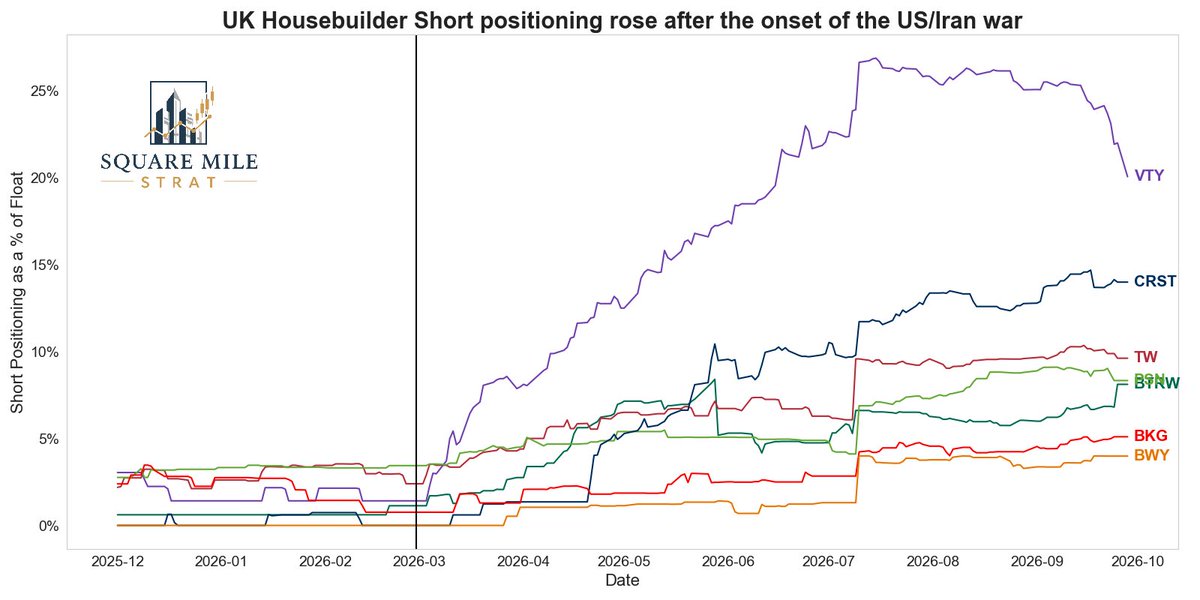
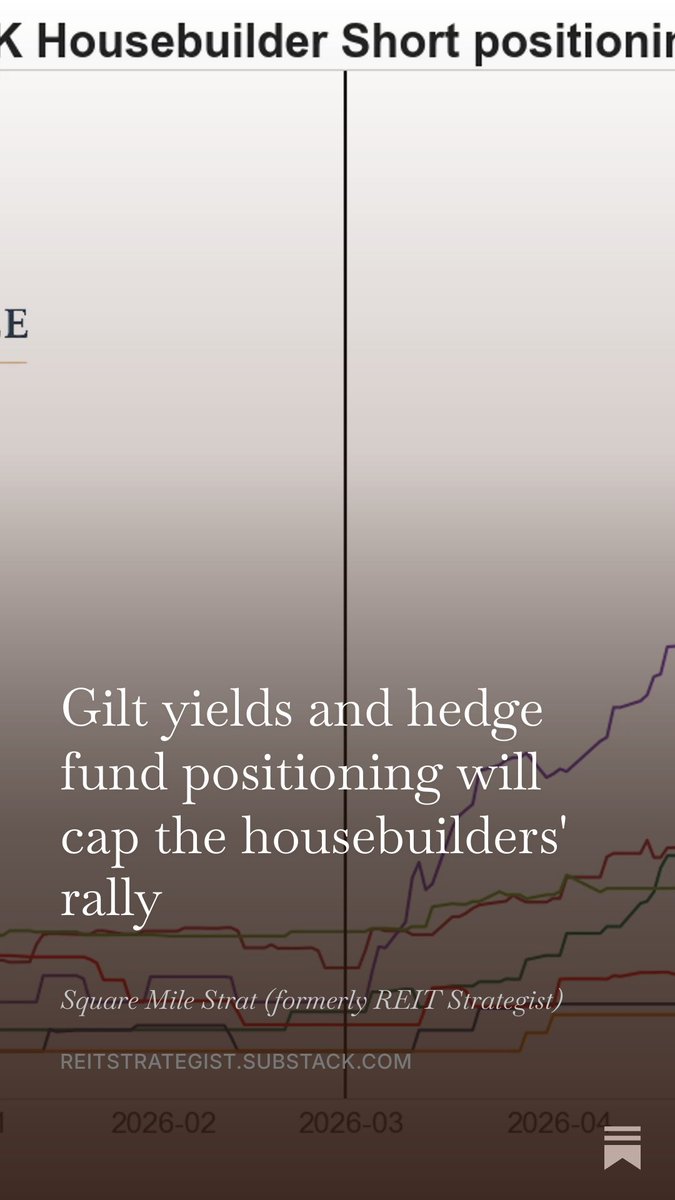
Hedge funds have caught on to this, increasing short positioning from the start of the US/Iran war
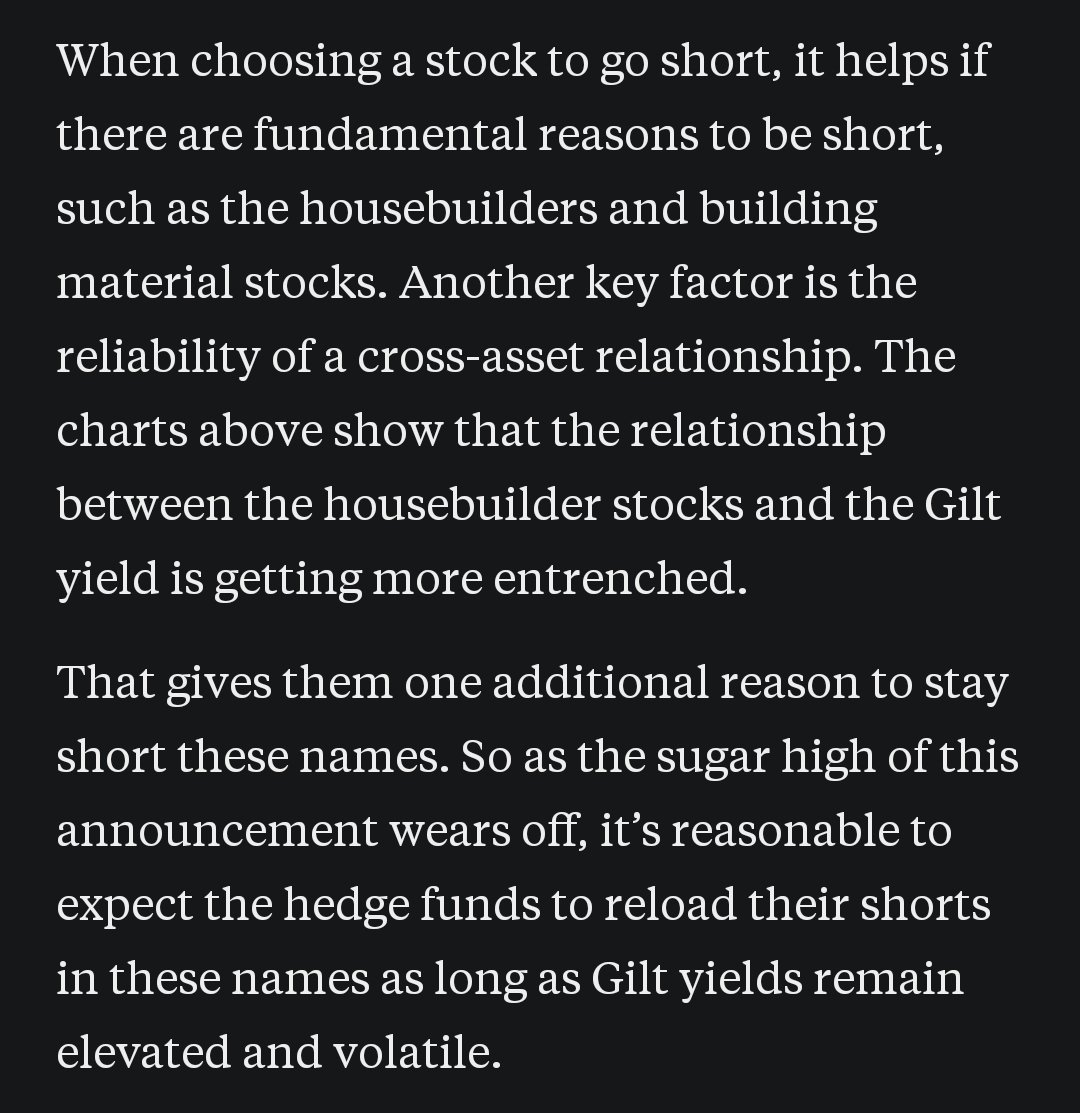
The durability of this rally depends on Gilt yields more than on the policy
Link to my full write-up 👇
@MarketBlondes@rcolvile The market is arguably already pricing that in but the likelihood of growth being just good enough to suppress debt-to-GDP is a positive development that I think is possible and underpriced
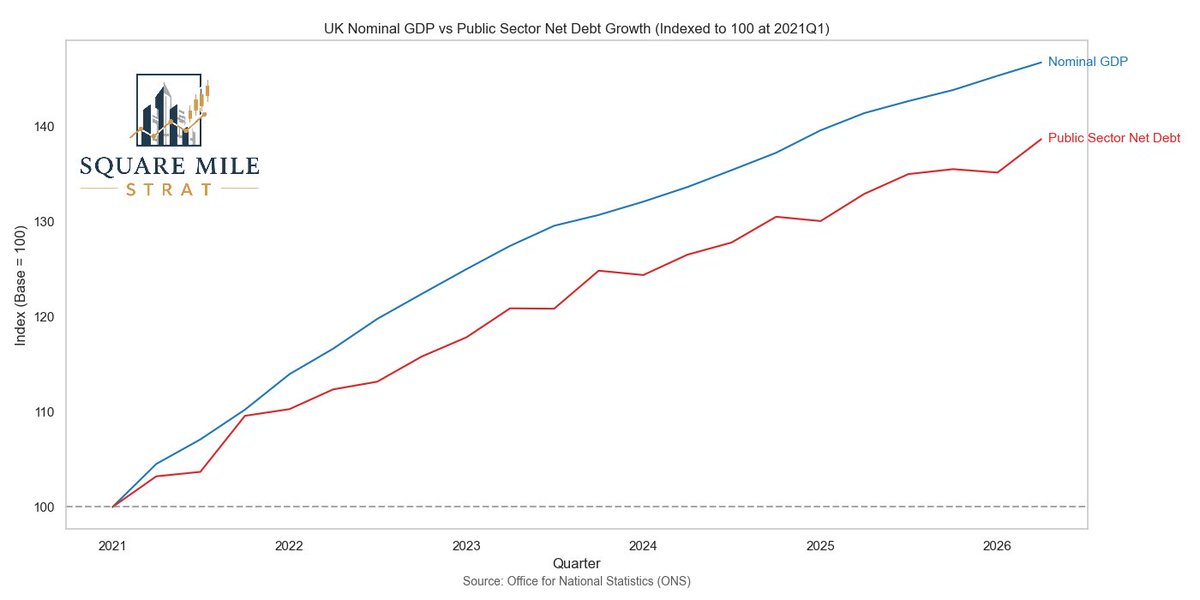
Over the past 5 years, nominal GDP growth has outpaced growth in public sector net debt thereby tempering the UK's Debt-to-GDP ratio
The UK's debt sustainability has and continues to be a lot better than anyone will ever admit
It will be interesting to see how this develops...
Over the past 5 years, nominal GDP growth has outpaced growth in public sector net debt thereby tempering the UK's Debt-to-GDP ratio
The UK's debt sustainability has and continues to be a lot better than anyone will ever admit
It will be interesting to see how this develops...
Bond bulls rejoice.
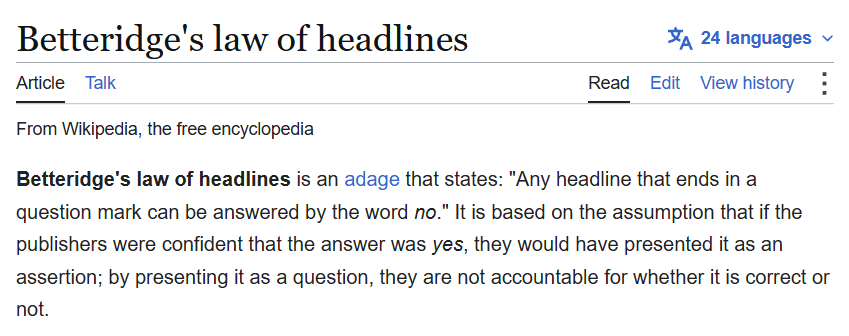
This is does not qualify as a signal for Magazine Cover Capital because the cover is in the form of a question, not a directional statement.
But this is pretty damn close to the exact thing bond bulls were hoping for! Funny thing is, @theeconomist also invokes Betteridge’s Law here LOLLLL.
If you are not familiar with the Economist Cover Indicator, google "Magazine Cover Indicator Spectra" and read my full article. It has worked in and out of sample for ~30 years.
@ukhpinfo The interesting dynamic that I am gaining conviction on is that a BoE rate hike would serve to bring volatility and IRS levels lower
So a rate hike, given how stretched Gilt yields are today, could counterintuitively bring fixed mortgage rates lower
The 10y Gilt yield's term premium vs the BoE base rate is the highest it's ever been in hiking cycles (ex. 2022 mini-budget which had no useful market signal)
I'm getting more certain that the BoE will hike on Nov 5th
Here's why I think so 🧵
(Chart dated 7th Oct '26)
I have written what I thought was a well thought out piece on why Gilt yields move lower and this happens 🙃
That's one less thing I have to do I guess
(I'm kidding, I'm still going to post it tomorrow because I've already written it so why not 🤷)
Bond bulls rejoice.
This is does not qualify as a signal for Magazine Cover Capital because the cover is in the form of a question, not a directional statement.
But this is pretty damn close to the exact thing bond bulls were hoping for! Funny thing is, @theeconomist also invokes Betteridge’s Law here LOLLLL.
If you are not familiar with the Economist Cover Indicator, google "Magazine Cover Indicator Spectra" and read my full article. It has worked in and out of sample for ~30 years.
The market is already pricing in a high probability of a Nov hike
However, I'm actually looking for a reason to take the other side and go long Gilts at these levels and that will follow in a subsequent post
5/end
https://t.co/8Zgvxsr92g
The 10y Gilt yield's term premium vs the BoE base rate is the highest it's ever been in hiking cycles (ex. 2022 mini-budget which had no useful market signal)
I'm getting more certain that the BoE will hike on Nov 5th
Here's why I think so 🧵
(Chart dated 7th Oct '26)
The rationale detailed by Catherine Mann could easily resonate with at least one of those swing voters who currently don't see second order inflation effects but are concerned they'll arrive if energy prices continue to stay elevated
https://t.co/oeE3S9p16J
4/n
@John_Stepek I personally have no opinion there unfortunately
Although I'm surprised that real estate wasn't mentioned - for instance Bay Area real estate defied higher mortgages and elevated rates and still rose and performed well
But the answer is always banks (as you mentioned)
@ukhpinfo Excuse me as I YOLO my ISA into #NWG, #LLOY and #BARC...
On a serious note, we could realistically come through this with minimal damage to growth and unemployment and these banks are going to be higher a year from now
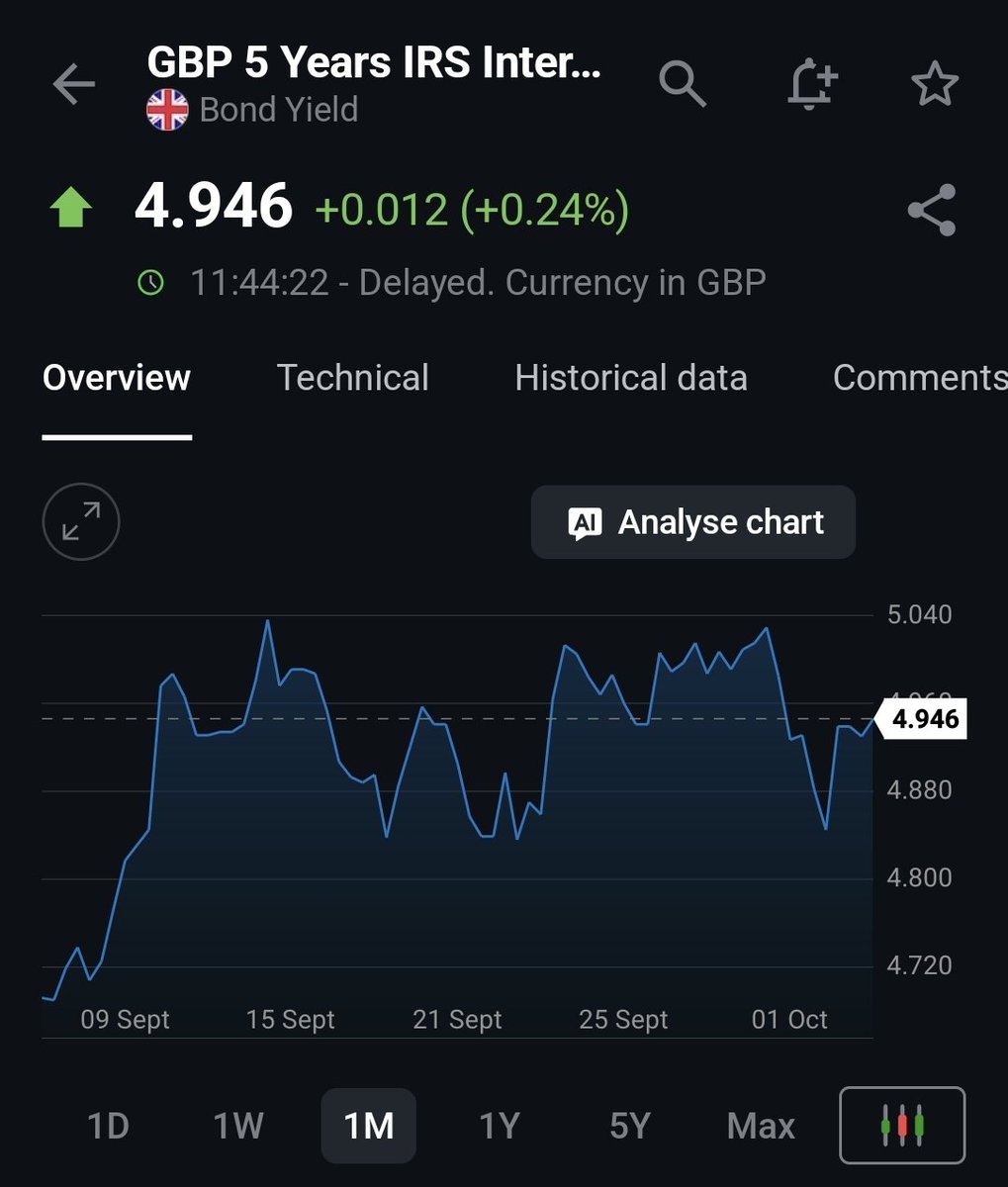
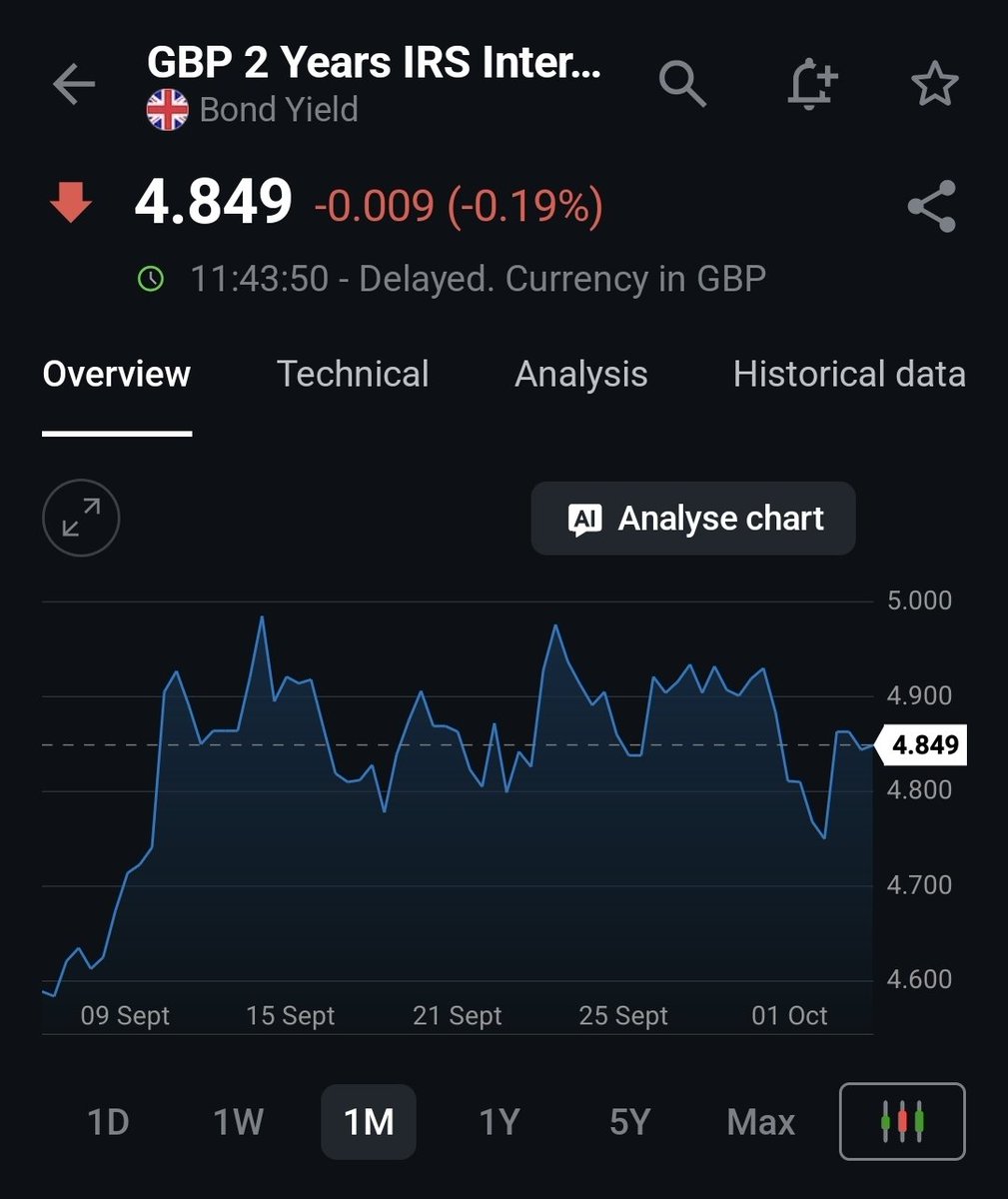
Meanwhile, here's the levels of the Interest Rate Swaps which are used to hedge fixed rate mortgages (not sure if there's a better source)
If the borrowers fixing on these 5%+ mortgages can successfully make payments, British banks should post strong returns
Another staggering property stat, this one with more relevance to us mere mortals: the number of sub-5% fixed-rate mortgage deals is down 99% since the start of last month, reports Moneyfacts. (You can still get sub-5% variable loans but clearly, rate risk is then on you).
I'm by no means a corporate bonds expert but a podcast from an asset manager focused on the space provided a lot of insight on the spike that's we see right now (don't think it has anything to do with the market's perception of any entity's creditworthiness)
A summary if you're interested -
1. Hyperscalers (who became a material part of IG issuance this year) are less rate sensitive than the average borrower and offers concessions to existing holders of their debt which can push yields on hyperscalers' debt even higher
2. The hawkish turn from the Fed put other borrowers on alert as they tried to cram in their borrowing before a potential new hiking cycle
3. Incomplete M&A deals tried to get pushed through before the midterms and a potential change in the administration's view on competition and consolidation
If they really did try to rush issuance, perhaps they'll quieten down over the next few months, eventually giving sovereign yield volatility to calm down a bit before trying again
Full podcast link - https://t.co/DsSabb2YKS
@John_Stepek While painful, it seems like we will be able to get past this period without too much damage via the mechanism that Simon has detailed below
I am irresponsibly underweight UK Banks given what's happening 😶
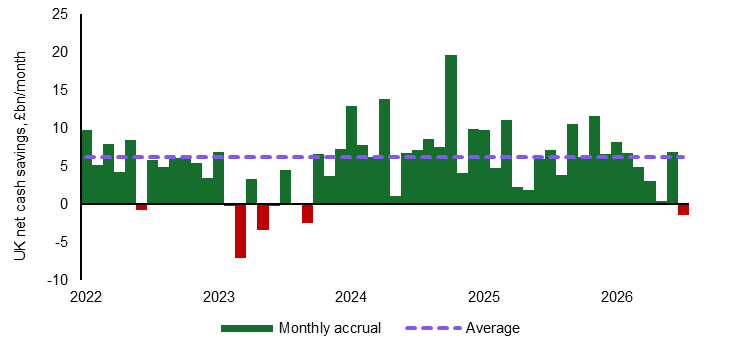
Away from the Gilt market, and rather more encouragingly July saw the first reduction in UK household cash balances since September 2023. Still up at just over £2tn in total, but the consumption smoothing that helped the UK economy avoid a prolonged recession in 2023 is showing tentative signs of happening again. Consumption smoothing in the face of a real income shock is always preferable to the alternative...
@ukhpinfo This was my expectation too unfortunately - the inverse correlation between Gilt yields and housebuilder share prices is too strong and tempting for hedge funds to resist the short
This was the topic of my latest long form post quoted here -