Lecturer, Faculty of Political Science and Public Administration, Chiang Mai University | Research Chair on Forced Displacement in Southeast Asia, RCSD.
After launching it last week, let me share our report on 'Student Migration from Myanmar to Thailand after the 2021 Coup'.
รายงานเรื่องการย้ายถิ่นฐานของนักศึกษามหาวิทยาลัยจากเมียนมาสู่ประเทศไทยภายหลังปี 2564 มีภาษาไทยแปลประกบกับภาษาอังกฤษด้วยนะคะ
https://t.co/F1otnne8lK
Fulcrum Commentary by Akanit Horatanakun (@akanit153) - As the People’s Party moves towards elite accommodation and electoral pragmatism, it is facing a growing crisis of identity and legitimacy. #Thailand https://t.co/Tpxx1iloQt
A must-read analysis on People’s Party by @akanit153
“As PP shifts towards elite accommodation and electoral pragmatism, it faces a growing crisis of identity and legitimacy, alongside a dilution of its party’s brand.”
https://t.co/c7zdlhgbfd
My op-ed "The Davos Man, and the end of an illusion", @timesofindia
Apologies to PM Carney, whom I personally admire and who is brave enough to acknowledge the illusion and hopefully will carry on with the new direction. Hopefully those Western leaders applauding his speech will do likewise.
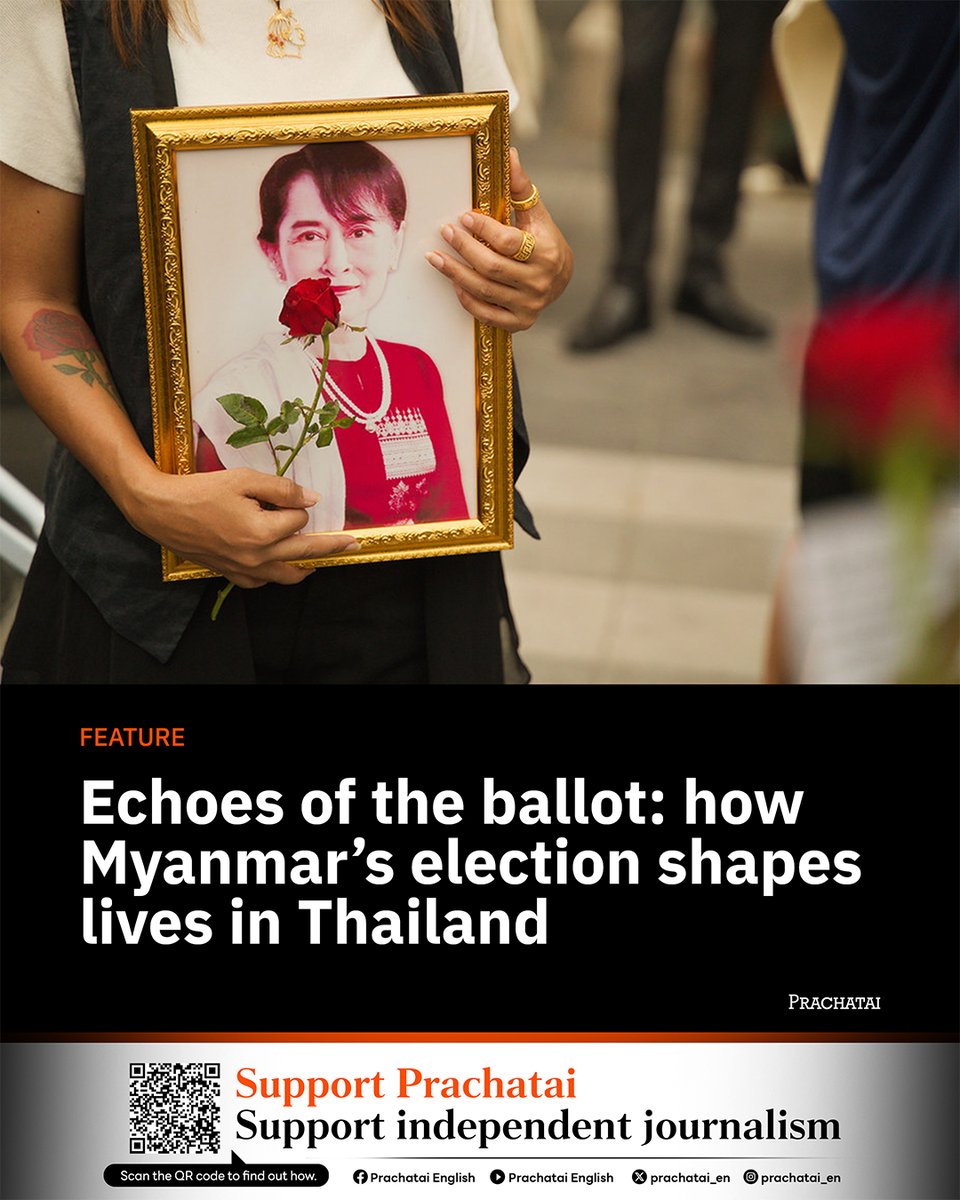
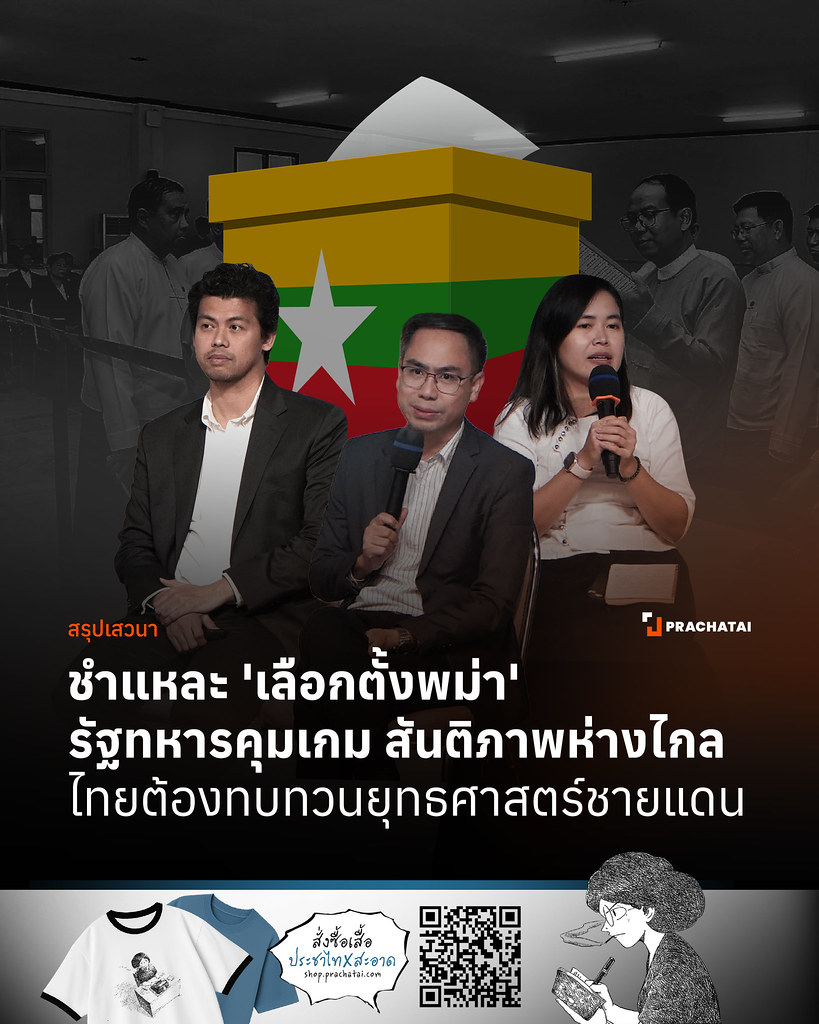
On 28 December, Myanmar will be holding its first general election since the February 2021 military coup. The election has been called a sham and a tool for the junta to maintain control, and many Myanmar migrants in Thailand are refusing to participate in it. Nevertheless, some have expressed concerns over their own safety if they do not vote.
Link in reply.
Chinese state-backed company behind expanded rare earth and gold mines along Kok River in eastern Shan State https://t.co/qmt9DWXyj3 via @shanhumanrights Shan Human Rights Foundation (SHRF)
Want to know how the @IDRC_CRDI Research Chairs on Forced Migration have been spending their time? Here's our Year 3 update video: https://t.co/jl9OoJeU5C
Call for Chapters: Displacement in Southeast Asia under Neo-geopolitics: Conceptualizations, Intersectional Perspectives, and Creative Responses https://t.co/0e15OL0kcR
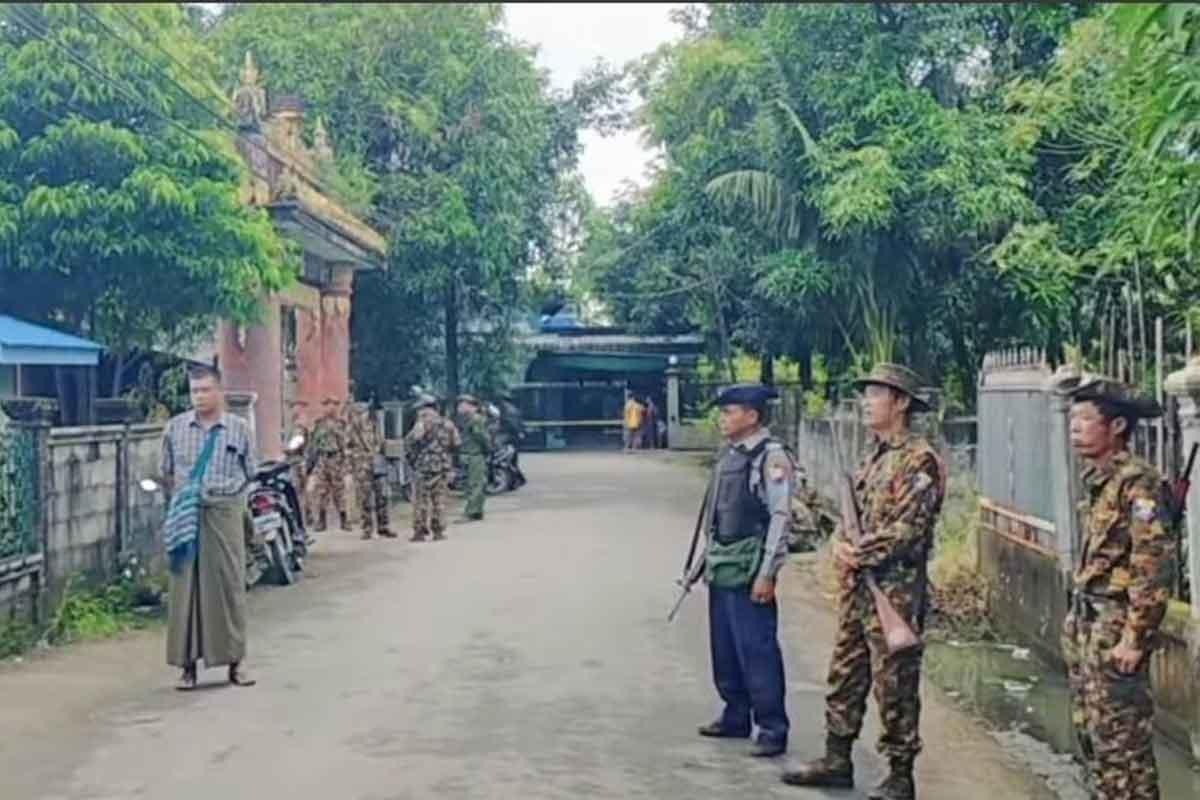
Local people in Mon State report that so-called dalan (informers/collaborators), often operating with the junta-backed and armed Pyu Saw Htee militias, are becoming more abusive and exploitative of civilians. Acting as the Junta’s shadow police, these groups collaborate closely with soldiers and police, spying on neighbours, reporting “suspicious persons,” and using intimidation to control communities.
Residents say the problem has worsened since the Junta’s election commission instructed informers to immediately report any unfamiliar people in villages and wards ahead of the planned sham election. This order has emboldened them to act with greater impunity.
According to locals, informers are extorting large sums of money from traders, shopkeepers, and small businesses. Imported goods are seized under the pretext of being “illegal,” while restaurant and accommodation owners are pressured to pay bribes. Even ordinary villagers are targeted with arbitrary accusations of being suspicious to justify arrests.
A resident from Mudon described how the extortion now extends even to migrant workers:
“These informers have started demanding money from people preparing to go to Thailand for work. They ride around on motorbikes asking for payments. If goods come from the Thai side, people can’t cross at Sanpya Bridge anymore. They have to use rafts, and then when the cars pick up the goods, the informers demand money again. Now they are even extorting ordinary workers heading to Thailand.”
Reports from Mawlamyine tell a similar story:
“In plain words, they are secret police or thugs. They have become more arrogant and are always looking for ways to cause trouble. The worst is when administrators or ward offices no longer resolve disputes in villages, but by these informers. Whoever can pay a bribe wins. Justice is gone. It is happening in many villages across Mon State. The junta is rewarding these groups with power because they want to ensure their sham election goes ahead.”
Residents also described how informers, sometimes accompanied by Pyu Saw Htee militias, stop motorbikes at junctions, check licenses, seize vehicles, and demand money. If anyone resists or even looks at them in the wrong way, they are beaten. Young people in particular are being targeted as “suspicious” and handed over to security forces.
Small business owners, including bars, restaurants, and karaoke shops, are being forced to make payments under various pretexts. Complaints about extortion go unanswered, and instead of taking action, local authorities side with the informers. “Not only are they ignoring the abuses, but we also have to put up with their intimidation,” one villager said.
This system is not new. In Mon State, as well as in Karen and Tanintharyi Regions, the Junta has long relied on groups of informers, militia, and loyalists who function like a shadow police force. They are not official soldiers, but they act as the eyes and ears of the military.
Villagers describe them as the Junta’s “secret police” because of the way they operate in the shadows, instilling fear and mistrust in communities.
By using these collaborators, the Junta extends its reach into every ward and village, creating a climate of constant surveillance and intimidation. For ordinary people, the presence of these informers is a symbol of repression. They represent the brutal, hidden machinery of dictatorship — a system designed not to protect communities, but to control them, silence dissent, and enforce loyalty to an illegitimate regime.
In previous years, many informers were forced into hiding after local resistance groups carried out “dalan clearance” operations. But recently, residents say, they have resurfaced with renewed boldness. During the Junta’s rule in Mon State, more than a hundred informers have been eliminated, mostly in areas where resistance forces are active.
Still, the fear of these collaborators remains strong, and their abuses continue unchecked, leaving ordinary civilians trapped in fear and exploitation.