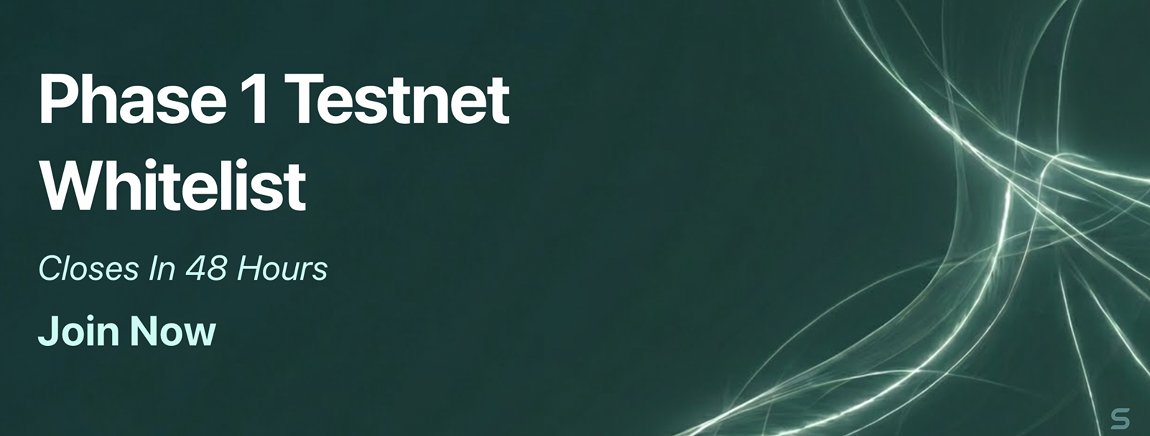
⚡ PHASE 1 TESTNET WHITELIST IS NOW OPEN ⚡
Whitelist registration is open for 48 hours.
Experience zero-slippage execution firsthand.
Complete Phase 1 testing → receive an exclusive NFT + special rewards 🏛️
Register: https://t.co/p29oCgqzoE
It all starts now ✨
⚡ PHASE 1 TESTNET WHITELIST IS NOW OPEN ⚡
Whitelist registration is open for 48 hours.
Experience zero-slippage execution firsthand.
Complete Phase 1 testing → receive an exclusive NFT + special rewards 🏛️
Register: https://t.co/p29oCgqzoE
It all starts now ✨
Prediction markets and learning algorithms seem unrelated at first glance. One lives in finance, the other in AI.
But @gensynai’s latest post points out a surprising truth: Both systems work by turning thousands of noisy signals into a single, evolving belief about the world.
Traders update prices.
Models update weights.
Different mechanics, same underlying logic. Iterative learning through feedback.
This perspective matters because Gensyn isn’t just building decentralized compute. It’s building an ecosystem where collective intelligence can emerge.
Understanding how markets learn helps explain how distributed ML systems might scale, adapt and refine themselves over time.
When you see the parallel, it becomes clear. The future of open AI may look less like a single model and more like a dynamic market of interacting signals.
Prediction markets are messy, human systems where people buy shares in claims such as “Dodgers will win 2025 World series”
Large-scale ML is often a wall of GPUs quietly grinding through trillions of tokens
The two are solving the same problem
https://t.co/bSi7qSbbaV
Modern ML models don’t have to learn as a single, monolithic system.
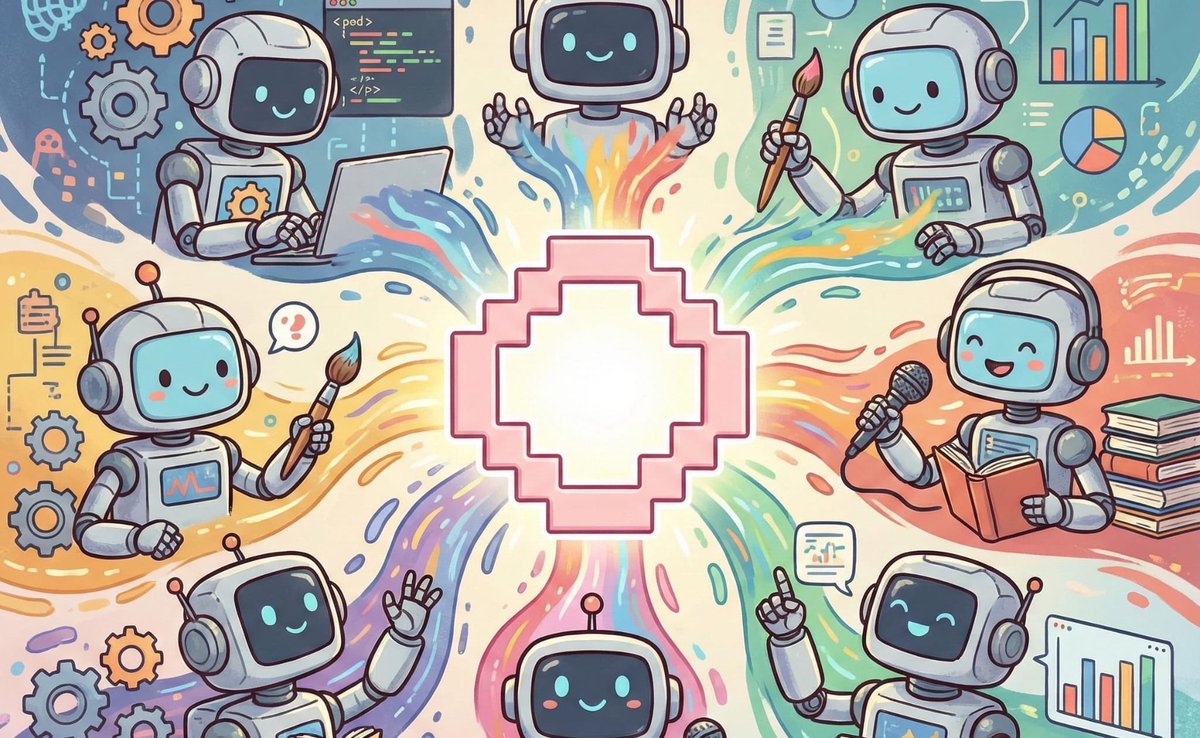
@gensynai’s Diverse Expert Ensembles explore a different idea: Letting multiple specialized models contribute their strengths.
Instead of forcing one model to handle every pattern, task or input distribution, an ensemble can combine different expert behaviors into a stronger overall output.
The research highlights how mixing diverse experts helps improve robustness, reduce bias toward a single solution path and produce more reliable predictions across varied inputs.
It’s a simple principle:
When different models see the world differently, combining them leads to better outcomes. And in Gensyn’s ecosystem, ensembles become an important step toward more adaptable and resilient ML systems.
The timing couldn’t be better. One last chance to get everything crystal clear before the year closes.
With the registration window extended and the allocation boosted for X creators, this AMA feels like the moment where all the pieces finally click together.
If you’re building, creating or just trying to understand how to maximize your place in the @SentientAGI ecosystem, tomorrow’s call is the one you don’t want to miss.
I’ll be there. Notebook open, questions ready.
Let’s wrap up 2025 the right way.
Community Call in 24hs 🎙
We’ve extended the registration window to help everyone claim, as well as increasing the airdrop allocation for eligible X creators.
Drop your questions and tune into 2025’s final Community AMA to get absolute clarity on how to maximize your rewards 🔥
In distributed training, most systems rely on heavy all reduce steps that force every worker to stay perfectly in sync.
Gensyn’s NoLoCo takes a different path.
Instead of full global synchronization, NoLoCo uses lightweight pairwise exchanges and a routing method that lets models share updates without constant coordination.
The research shows this approach reduces communication overhead while keeping training stable compared to traditional data parallel methods.
It’s a practical way for @gensynai to push distributed learning forward not by adding more complexity but by lowering the cost of moving information across many workers.