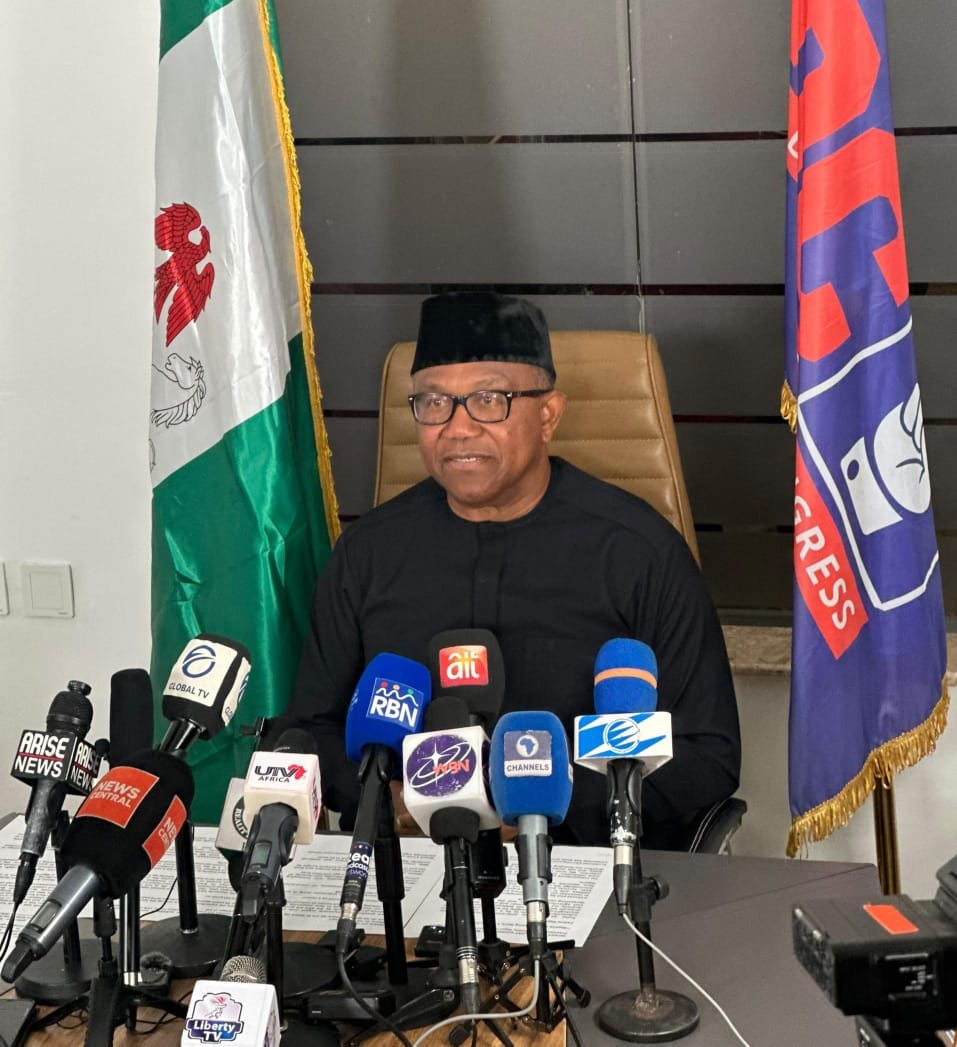
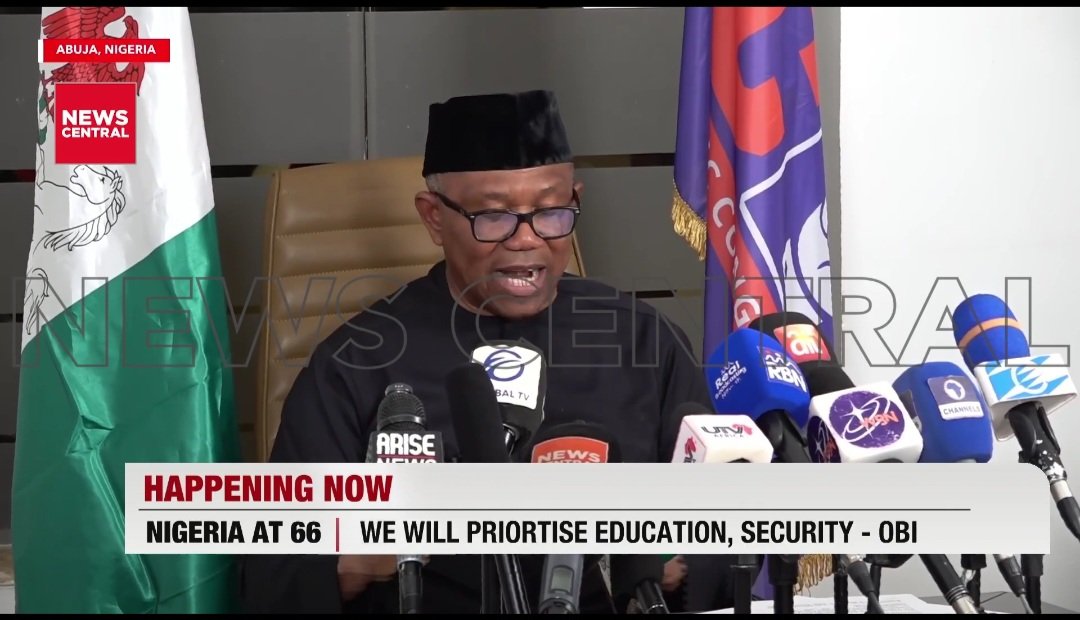
Throughout the event today , no one really said what the party has achieved in the last 4 years , NONE of them could mention one thing , including BAT himself
I’m extremely disappointed in us as Nigerian youths. Extremely.
I woke up this morning to get ready for work without electricity and without water. The last time we had power in my area was Saturday morning. This is Abule Ijesha, Lagos.
I work a 9–5. I earn a substantial amount every month, and yet I’m still dealing with something as basic as the lack of electricity and water.
And meanwhile, young people on Twitter are still allowing tribal sentiments and religious affiliations to divide us in 2026.
Do you people not understand how limited you are compared to young people in developed countries? Do you not understand that if anything happens right now, the politicians who are the most privileged among us have the means to leave this country while the rest of us remain here to deal with the consequences?
Do you genuinely think the elites care about the tribal and religious divisions they use to keep us fighting each other?
Your Commissioner of Environment and Water Resources in Lagos can be online flaunting a Patek Philippe while young people are struggling with basic infrastructure. And this is just a Commissioner.
They know exactly what they’re doing. They know that as long as we’re distracted by tribe, religion, sex, politics and whatever other silly division they can exploit, we won’t look up and ask the people actually responsible for our living conditions the difficult questions.
This is disgusting.
And honestly, we should be ashamed of ourselves.
Not because we are powerless, but because we have failed woefully to recognize where our collective interests lie.
We keep fighting each other while the people benefiting from this dysfunction continue to live above the consequences of it.
We need to do better.
"Inherited a collapsed economy" yet secured a new private jet, an Escalade, a presidential yacht, and a ₦21B official residence for the VP.
And people are still buying the "sacrifices must be made" story?
Independence Is Meaningless Without Real Freedom
As we continue to reflect on Nigeria’s Independence, we must remember that independence means very little if citizens cannot freely express themselves, within the bounds of the law, without fear.
Reports that some Nigerians in Akwa Ibom were arrested simply for identifying with the Obidient Movement should worry every Nigerian who believes in democracy and freedom, especially when such identification is a constitutional right.
One of the greatest tragedies of our society is that people who once described themselves as freedom fighters can become defenders of oppression when they eventually occupy positions of authority. Those who once complained about injustice can become comfortable with injustice when it is being perpetrated against people they disagree with. That must not be the Nigeria we accept.
Our independence must ultimately mean freedom from fear, injustice, intolerance and abuse of power.
Nigeria must belong to all of us. -PO
Nigeria at 66: Looking Back, Looking Forward
Fellow Nigerians,
Today we mark the sixty-sixth anniversary of our independence. It ought to be a day of celebration and thanksgiving to God Almighty for the gift of life and for the immense blessings He has bestowed on our nation—our diversity, our abundant human and natural resources, our vast agricultural potential, and the relative absence of devastating natural disasters.
It should also be a day of appreciation and patriotism: a day to remember our founding fathers and all those who made selfless, and in many cases supreme, sacrifices for the birth, survival and growth of our dear nation. We must acknowledge the efforts of past and present leaders who have laboured, however imperfectly, to build a better Nigeria.
Yet independence anniversaries must never be reduced to mere celebration. They are moments for honest national reflection. We must look back, examine where we stand today, and ask ourselves whether we are moving in the direction our founding fathers envisioned.
In national planning and strategy, every serious nation must continually ask three fundamental questions:
Where are we today?
Where do we want to be?
How do we get from where we are to where we want to be?
These questions are especially urgent now. Despite the enormous promises made by the APC-led government in 2023, our nation continues to face deepening challenges across virtually every critical sector of national life.
Today we stand before the world as a nation:
With an extraordinarily large population living in poverty and severe hardship; over 140M
With one of the largest populations of out-of-school children in the world; over 18M
Where insecurity, terrorism, banditry and kidnapping continue to threaten lives and livelihoods, just recently 37 young Nigerians in their productive age lost their lives
Where millions of Nigerians struggle with hunger and food insecurity; over 40M Nigerians will be in extreme hunger by the end of 2026.
With unacceptably high rates of infant and maternal mortality; Nigeria today is the worst place to be born.
Where youth unemployment and underemployment remain alarmingly high; over 35M
Where drug abuse and substance misuse increasingly threaten our young population; today 14% as against global average of 6%
Where life expectancy remains among the lowest globally, today 54 years against global average of 74 years
And the list goes on.
This reality demands serious, sober and honest reflection. Socrates taught that “the unexamined life is not worth living.” By the same principle, an unexamined nation cannot successfully chart its future. We must therefore ask ourselves: Are we cursed, or have we become the curse through the choices we have made and the failures we have tolerated?
The answer cannot be that Nigeria is cursed. We are a nation immensely endowed and blessed. Our greatest problem is not a lack of resources; it is the failure to convert our enormous resources into human development, productivity, security and shared prosperity.
Only yesterday, Senator Rabiu Kwankwaso and I returned from a two-day visit to Sokoto State. We held extensive consultations with people from different parts of the state on insecurity, out-of-school children, poverty, youth unemployment, drug abuse and other challenges confronting our people.
In concluding the visit, we went to the Internally Displaced Persons camp at Ramin Kura within Sokoto metropolis. What we saw was deeply troubling. Thousands of women and children live in deplorable conditions, displaced from their homes and deprived of the basic necessities of life. Many of the children have no access to education. Mothers and children have limited access to basic healthcare. These are Nigerians who should be living in their communities, going to school, farming their land, conducting their businesses and contributing to the economy. Instead, they live as displaced persons in their own country.
I bought fuel yesterday in Toronto, Canada, at $1.7999 CAD per litre, and it cost about $98.95 CAD to fill up my tank. This should ideally last me about a week or more.
Now, the minimum wage in Canada is $17.95 CAD per hour, which means someone who works an average of 8 hours a day will earn $143.60 CAD before tax. A day's salary is enough to fuel his or her car for 2–3 weeks. This means that even one of the lowest earners in Canada can afford to own and drive a car daily without the cost of fuel becoming an overwhelming burden. Public education for children is also free and of high quality.
In Nigeria, fuel is about ₦1,300 per litre. It would cost about ₦88,000 to fill up a similar tank. The minimum wage in Nigeria is ₦70,000 per month. This means that an entire month's minimum wage cannot even fill the tank once.
A minimum-wage earner in Nigeria cannot realistically afford to own, fuel, and maintain a car. The same person still has to afford food, rent, children's education, healthcare, electricity, transportation, and other basic necessities. The list goes on.
In fact, even a bank manager in Nigeria earning ₦1 million monthly could still struggle to maintain a decent standard of living after covering these basic expenses.
This is one reason poverty is so widespread in Nigeria. The cost of basic living is simply too high relative to what the average person earns.
You don't just have an income problem in Nigeria. You have an affordability problem.
For millions of Nigerians, simply living a decent life has become too expensive and increasingly impossible.
Borgu: We Must Never Normalise the Killing of Nigerians
The reports emerging from Borgu, Niger State, are becoming increasingly difficult to comprehend and deeply painful to contemplate. On 27 August, I expressed my anguish over the reported abduction of about 600 Nigerians, many of them women, children and elderly people, alongside the killing of others. I described it then as “one case too many” and urged that it be treated with the urgency it deserved.
Today, that anguish has become even deeper. We are now confronted with continuing reports of the gruesome killing of some of those abducted, while many others remain unaccounted for.
In another disturbing incident, a bandit group reportedly beheaded a Nigerian and sent his severed head to a community leader over a ₦50 million levy. If the reported killing was intended to increase pressure on the community and extract more money for those still being held, then we must recognise the terrible reality before us: human life is being deliberately turned into a bargaining instrument.
One person is killed to terrorise an entire community, while others are kept alive as hostages for more ransom. This is not merely criminality; it is the systematic devaluation of human life. These are not statistics. They are Nigerians. They are mothers, fathers, children, brothers, sisters and elderly people. Their only offence was to live in communities where the protection of the state has become increasingly inadequate.
We must therefore ask ourselves a fundamental question: At what point do we, as a nation, decide that this is no longer acceptable? We cannot continue to normalise the kidnapping of hundreds of citizens, the killing of innocent people, the imposition of levies on communities, the displacement of entire populations and the payment of ransom as though these are unavoidable features of Nigerian life.
The consequences of insecurity go beyond those abducted or killed. Families are displaced, farms abandoned, businesses destroyed, children deprived of education, and citizens forced to seek safety elsewhere. Insecurity ultimately destroys both lives and public confidence in government.
Nigeria cannot continue reacting only after lives are lost. We need intelligence-led operations, stronger community security, rapid response, better coordination and equipment for our security forces, effective border protection, and sustained action against criminal networks.
The primary responsibility of government is the security and welfare of its citizens. While politicians prepare for elections, Nigerians are asking for something more fundamental: the right to live. We must never accept a Nigeria where kidnapping, ransom, criminal levies and the killing of innocent citizens become normal. Every Nigerian life matters. Every victim deserves justice. Every community deserves protection.
Our prayers must be matched with action. No criminal group should determine who lives or dies anywhere in Nigeria. Nigeria must restore security, justice, and the dignity of human life.
A New Nigeria is POssible. -PO
LET OTHER GOVERNORS, FROM 1999 TILL DATE, HAVE THE COURAGE TO PUBLISH THEIR HANDOVER NOTES TO THEIR SUCCESSORS, AS PETER OBI HAS DONE. BE ACCOUNTABLE TO THE PEOPLE.
Who you support is a reflection of your own principles and values. I may not entirely be a good person, but I’m happy that I got it right with Peter Obi.
Peter Obi has made me understand something.
1. You can do politics with clean hands.
2. A lot of civil servants are very corrupt.
3. A lot of federal govt officials don't want Obi.
Peter Obi should actually be a case study for Christians who are politicians and civil servant.