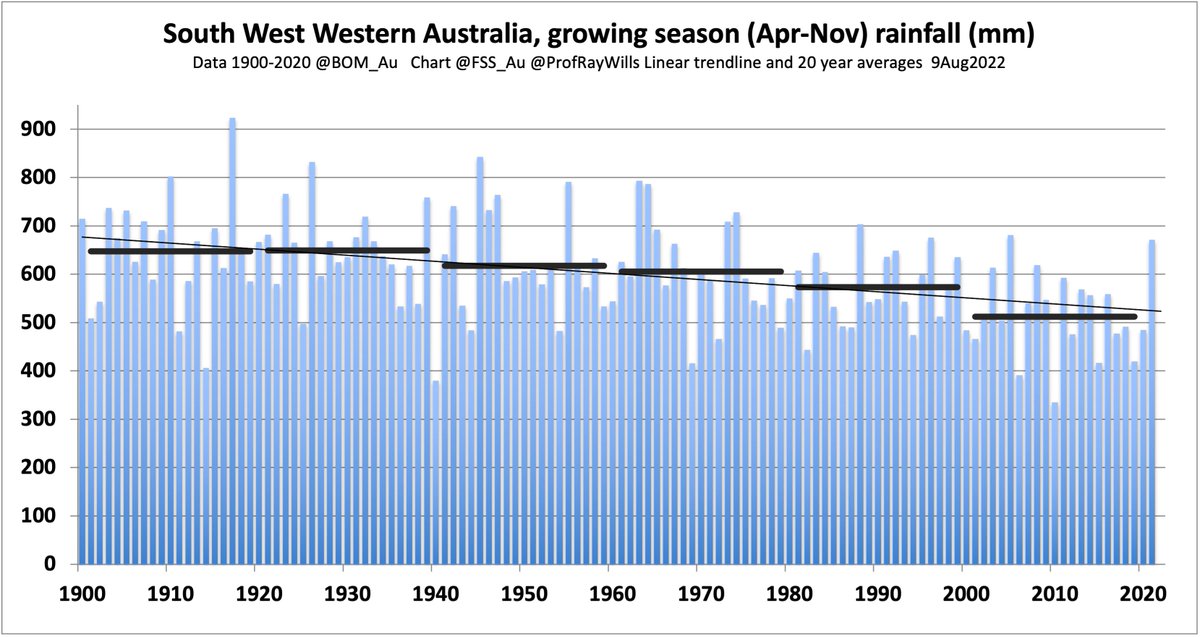
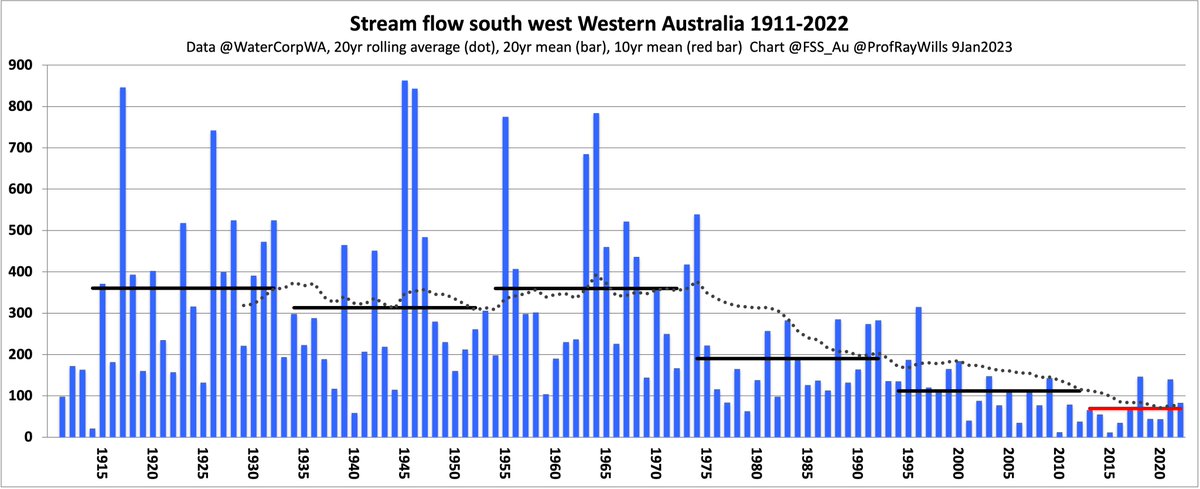
There has been a decline in rainfall recharge to groundwater over the last ~20 years due to reduced rainfall which is unprecedented for the last 800 years!
Get the low down at: https://t.co/SNIdMtDwpq
Thank you @baker_and @ClimateNerilie @kmeredith11 and non-twittering coauthors
Despite how simple it sounds, there's still a lot we don't know about the water cycle. Especially when it comes to groundwater. 💧
That's why we're part of a team of researchers from @UNSW, @Flinders, and @Deakin exploring a new approach to groundwater. https://t.co/YLyE9dTJCL
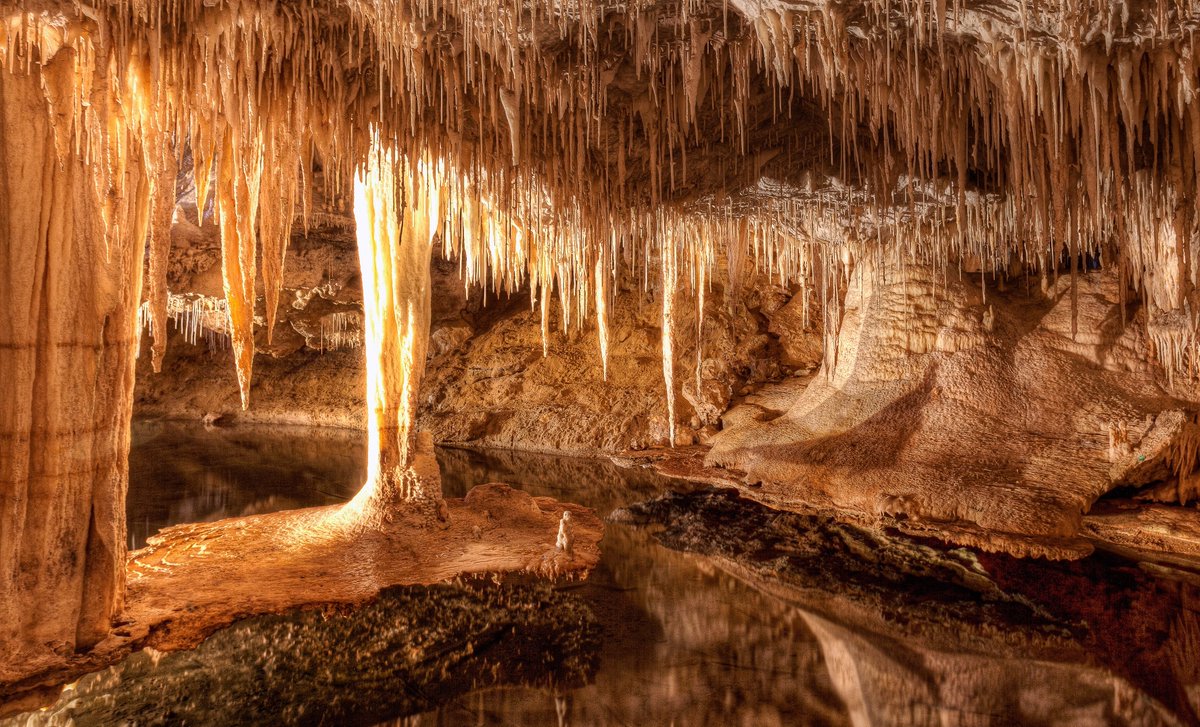
A new way to understand groundwater replenishment by monitoring the water moving from the surface to the water table by using underground spaces - tunnels, mines, caves, etc. - as 'observatories of groundwater recharge' is presented at https://t.co/846QcKilFT
Comments welcome!!
We've been exploring caves to unlock the secrets of groundwater.
In a world-first study, we've used caves to show the decades-long decline in rainfall in south-west Australia has reduced the replenishment of groundwater in the region to an 800-year low. https://t.co/8Ioddsticb
South-west Australia relies on groundwater for three-quarters of its water use.
But a new study of the region’s caves by @StacePriestley + colleagues has found a drying climate is having a dramatic impact on this precious resource.
@CSIRO@UNSW@ANSTO
https://t.co/ayoECdTjro
The current level of rainfall recharging #groundwater in southwest WA is at its lowest for at least the last 800 years. A pioneering technique developed at ANSTO, experts in water resource analysis, was crucial in this research.
Learn more: https://t.co/orSp6RBU7o
1/5 Southwest WA is experiencing its lowest level of groundwater recharge from rainfall in at least 800 years, according to @CSIRO, @ANSTO & @UNSW research:
https://t.co/0EAONbNcig
3/5 The study led by Dr @StacePriestley, along with Prof. Andy Baker (@baker_and) and Dr Pauline Treble, is a world-first in its analysis of cave stalagmites as records of groundwater replenishment.
Learn more about this novel approach, here:
https://t.co/DFXmNuOlTH
Over the course of her career, Dr Karina Meredith has designed, led, and delivered #research projects using chemical and isotopic tracers in water to investigate water resource sustainability in natural environments in Australia and globally.
Learn more: https://t.co/ArzU8X4Zqd
South-West Western Australia decline in rainfall over last 20 years unprecedented for last 800 years!
Cave study on groundwater recharge
https://t.co/7h7of0ZTG5
@StacePriestley @baker_and @ClimateNerilie @kmeredith11 + others
swWA rain and streamflow records added
#climatechange
How have rainfall and groundwater recharge rates changed in southwestern Australia over the past 800 years?
Stacey Priestley @StacePriestley explains why speleothem records can be used to reconstruct these changes
https://t.co/NCKQR9t28c
There has been a decline in rainfall recharge to groundwater over the last ~20 years due to reduced rainfall which is unprecedented for the last 800 years!
Get the low down at: https://t.co/SNIdMtDwpq
Thank you @baker_and @ClimateNerilie @kmeredith11 and non-twittering coauthors
Fantastic to see this critical research published as part of our #ProjectCoorong trials and investigations program. Great work @envir_scientist + team!
We also have exciting news coming soon regarding further work in the Coorong, Lower Lakes and Murray Mouth region...stay tuned!
Long term water quality datasets are extremely valuable. In this work lead by @envir_scientist we look at trends in water quality over a >20 year period to see the effects of reduced flushing on eutrophication on the Coorong https://t.co/xWOFiQYUOg
The Coorong is a special and unique estuary at the end of Australia's largest river system, in our new study we document how reduced flushing has led to a long term decline in its water quality and sediment health @UofA_SET@goyderinstitute @SAEnvirWater https://t.co/dlXuTBg1zX
Video with some key messages from our just finished ‘Nutrient Dynamics’ project in the special place which is the Coorong @StacePriestley@goyderinstitute@UofA_SET#Vimeo https://t.co/MqMd5sceyq
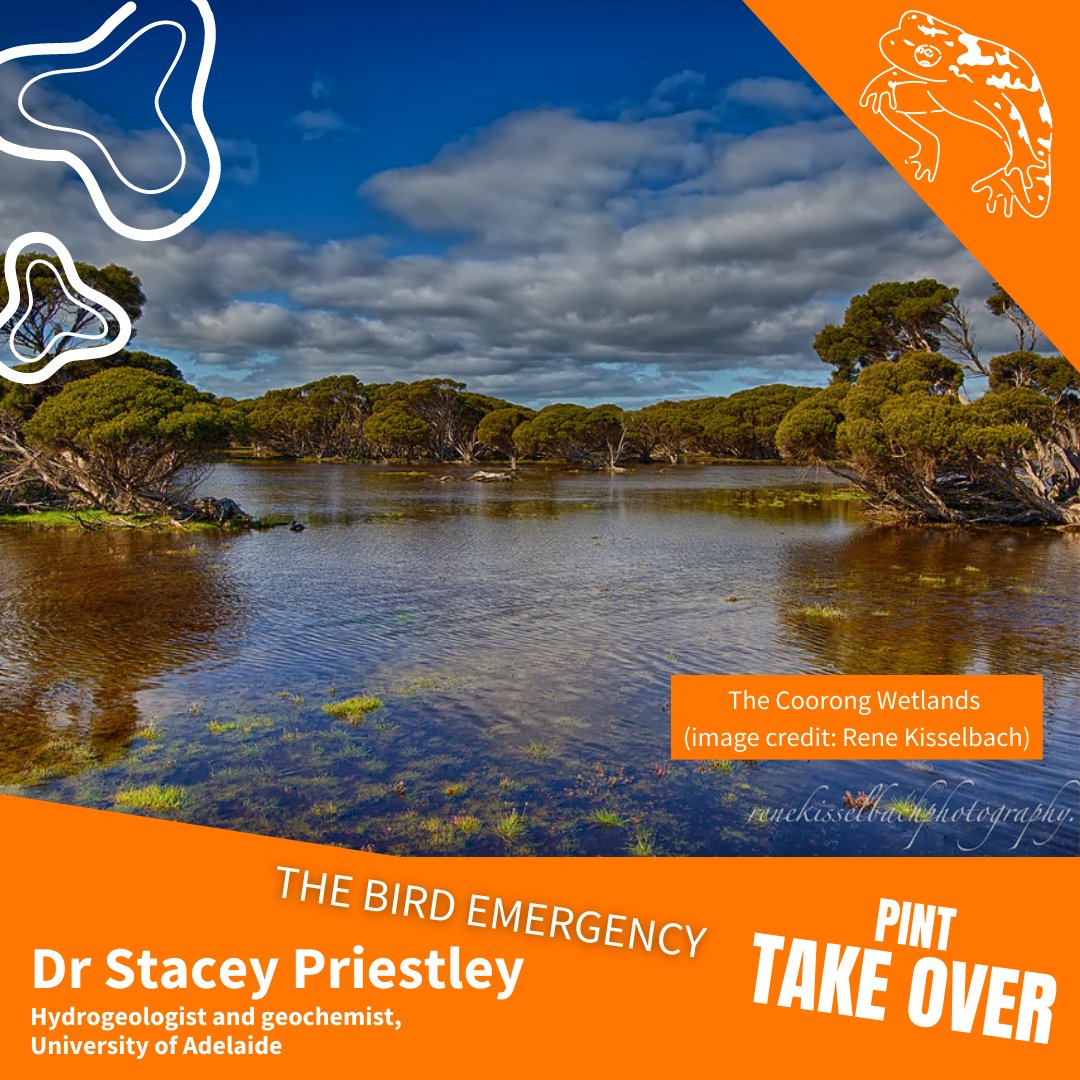
Hydrogeologist, geochemist and guardian of our natural resources Dr Stacey Priestley of @UofA_SET features on the @birdemergency, explaining innovative new methods of tracking environmental changes in the Coorong Lagoon system. Tune in here: https://t.co/bxhiZ9e6Dh