I’ve spent many days mapping what it will actually take us to reach AGI. Not just models, but the entire physical stack behind them:
Energy → raw materials → chips → data centres → networks → models → robots.
Today, I’m launching Stack to AGI:
https://t.co/xAOJtFqDwe
An interactive map of the technologies, resources and companies building the road to artificial intelligence.
I’ll be publishing new research, visualisations and investment insights often.
Follow the stack. Find the bottlenecks. Understand who captures the value.
#AI, #AIInfrastructure, #Semiconductors, #DataCenters, #Energy, #Robotics
WHO GETS PAID TO BUILD A HUMANOID ROBOT
Who builds the robots | $TSLA, $XPEV, $MBLY, $CCXI
These are companies designing & assembling finished robot that ultimately gets deployed into factories, warehouses & eventually consumer environments.
Who gives the robot intelligence & compute | $NVDA $GOOGL $META $INTC $QCOM
These are companies building AI models, software & silicon that allow humanoids to understand instructions, reason through tasks, process their surroundings & control movement in real time.
Who lets the robot grip & feel | $NOVT, $VPG
These are companies building dexterous hands, force sensors & tactile systems that allow humanoids to grasp objects, control pressure & perform really precise physical tasks
Who lets the robot see | $OUST, $INVZ, $AEVA
These are companies supplying cameras, LiDAR & 3D sensing systems that allow humanoids to recognize objects, measure distance, navigate environments & understand whats happening around them
AMD ALERT🚨🚨: On Kimi K3 2.8T, AMD has even better profit margins per gigawatt compared to B300, GB200 NVL72, and B200. This is due to AMD's lower TCO and better performance, leading to better profit margins of 53.6% on Mi355X compared to 44.3% on GB200 NVL72. This is from our open-source Agentic Inference benchmark, AgentX.
Shoutout to @roaner & @EmadBarsoumPi 10x engineers for optimizing this 2.8T model!
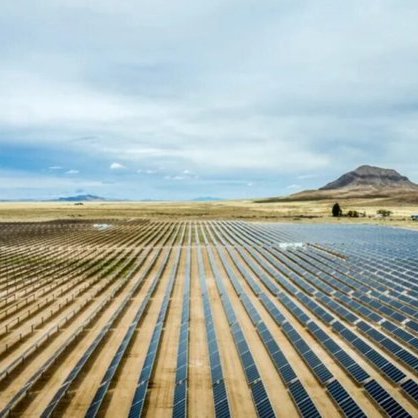
$TSLA signs a long-term deal to buy 90% of a 509 MW solar and 360 MW battery project in Arizona.
The KKR-backed facility is expected online in 2028 as AI data center growth tightens U.S. power markets.
$AVGO launched its AI XPV platform with $APO and $BX to help deploy more than 20GW of AI compute capacity by 2028.
The first $35B tranche will back Anthropic’s 1GW+ AI infrastructure buildout using Broadcom XPUs and networking.
Optical interconnect names are running because $NVDA CEO Jensen Huang basically validated the future AI architecture where copper wins inside the rack but optics becomes unavoidable as AI clusters scale across full data centers.
Thats why optical components, transceivers, DSPs, silicon photonics & testing names are getting re-rated today:
• $MRVL +30%
• $AEHR +21%
• $COHR +16%
• $LITE +12%
• $VIAV +11%
• $AAOI +10%
• $CRDO -1% (due to earnings)
THE OPTICAL PHOTONICS BOTTLENECK
As AI clusters scale past copper’s physical limits, the bottleneck shifts to optical & these are the companies building that layer across the stack:
1. $AAOI building the transceiver layer of the AI network through vertically integrated U.S.-based InP laser manufacturing. It has already secured over $200M in its first volume 1.6T order from one hyperscale customer followed by another $124M in 800G orders from a second.
2. $AEHR building the reliability layer for the optical & AI hardware stack through burn-in & test systems. It just received a record $41M follow-on order from its lead hyperscale customer reinforcing the idea that Sonoma is becoming a key production burn-in platform for high-power AI ASICs.
3. $CRDO building the connectivity layer that helps AI clusters move data faster through active electrical cables, retimers & high-speed interconnect silicon. The DustPhotonics acquisition also extends that platform into silicon photonics before copper becomes a real constraint.
4. $LITE building the laser layer of the AI optical stack through EMLs, optical components & optical switching exposure. The setup is backed by a $2B $NVDA strategic investment & optical circuit switch backlog above $400M with orders reportedly extending through 2028.
5. $VIAV building the testing & validation layer of the optical stack through network instrumentation & photonics measurement tools. It is the picks-and-shovels layer of the transition because every high-speed optical buildout still needs to be tested regardless of which transceiver vendor wins.
6. $COHR building one of the core photonics bottlenecks through indium phosphide lasers, optical engines & communications components tied to next-gen AI networking. It also has a $2B $NVDA strategic investment behind it & is doubling InP device capacity into the 1.6T ramp.
7. $MRVL building the DSP & optical infrastructure layer through electro-optics, PAM DSPs, interconnect silicon & custom networking chips. The Celestial AI deal & NVLink Fusion exposure both strengthen its position as photonics becomes more central to AI cluster design.
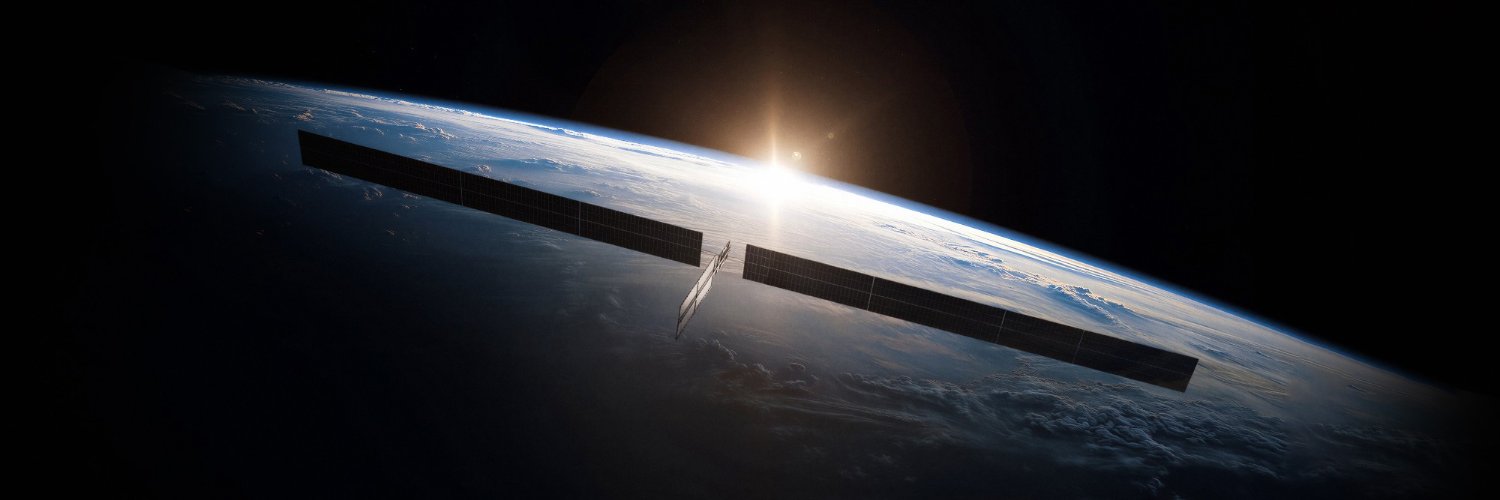
SpaceX just filed with the FCC to launch up to 1M satellites designed to function as solar-powered orbital data centers creating massive AI compute capacity in space.
Elon wants to use Starship’s low launch costs and laser-linked satellites to scale AI compute without stressing Earth’s power grid.
Every new AI generation requires more HBM per GPU which means more revenue per chip for $MU.
Just yesterday, $TSLA unveiled Cortex 2, a massive AI compute cluster to train Optimus humanoid robots and power an end-to-end neural network for Cybercab autonomy.
The AI economy is becoming memory-first which helps explain why Micron stock is up ~5x over the past year.
Tesla’s chip game is no joke.
AI5 chip will be roughly comparable to a Nvidia Hopper Chip in a single SoC, and Blackwell class when you run two of them together.
Those AI chips from Nvidia run ~$25K-$50K each. AI5 will run at ~250W compared to H100’s 700W or Blackwell’s 1,000W+ in full spec.
Tesla is LOCKED IN.
Micron $MU has officially broken ground on its new $100 Billion memory manufacturing complex in New York, calling it the largest semiconductor facility in the United States 🇺🇸
Here are a bunch quotes from the press release
Jensen Huang, Founder and CEO, NVIDIA:
“As AI transforms every industry, advanced memory has become essential. By bringing manufacturing to the U.S., Micron is strengthening America’s AI infrastructure and supply chain resilience to power the next wave of AI breakthroughs.”
- Tim Cook, CEO, Apple:
“Apple is bullish on the future of American manufacturing, which is why we launched the American Manufacturing Program as part of our $600 billion commitment to the U.S. For more than two decades, Micron has been an important partner, providing memory technologies for Apple products people use every day all over the world. We’re proud to support Micron as they make new investments to further strengthen leading-edge memory manufacturing and R&D here in America.”
- Satya Nadella, Chairman and CEO, Microsoft:
“We’re entering an era where AI is being built into every application and every workflow, and memory is foundational to delivering that intelligence with the performance and efficiency needed at scale. Today, Micron is taking an important step towards increasing critical memory capacity and strengthening America’s leadership in advanced manufacturing.”
- Mark Zuckerberg, Founder and CEO, Meta:
“Advancing AI depends on having a strong, reliable supply chain, and cutting-edge memory technology is a key part of that. Micron’s new manufacturing complex in New York is a big milestone for U.S. manufacturing, and it’s going to help deliver the performance and scale we need for the next generation of AI. It’s great to see Micron making this kind of investment in infrastructure — it’s the kind of progress that will accelerate innovation for everyone in the industry.”
- Secretary of Commerce Howard Lutnick:
“Today’s groundbreaking is more proof that American greatness is back. Under President Trump, we’re done outsourcing our future and, instead, we’re building it right here at home. Micron’s investment in New York means tens of thousands of great American jobs and strong supply chains finally back in the USA. We are committed to bringing back American leadership in semiconductor manufacturing.”
- Michael Dell, Chairman and CEO, Dell Technologies:
“Micron’s investment in U.S. memory manufacturing is a major win for the technology ecosystem and for the customers we serve. Advanced, domestically built memory will be foundational to the AI-driven future. We’re excited to support Micron as they expand America’s leadership in this critical technology and accelerate innovation across industries.”
- Matt Garman, CEO, AWS:
“Micron’s investment in expanding memory manufacturing capacity is critical to ensuring the performance, reliability, and scale that our customers depend on. As AI workloads grow rapidly, advanced memory technologies play an essential role in enabling the cloud infrastructure of the future. AWS welcomes this milestone and applauds Micron for strengthening their semiconductor capabilities.”
- Dr. Lisa Su, Chair and CEO, AMD:
“Advanced memory plays a critical role in unlocking the potential of AI and high-performance computing. Micron’s New York megafab is an important investment in strengthening the U.S. semiconductor supply chain and American manufacturing. We value our long-standing partnership with Micron and look forward to continued collaboration across the AI ecosystem as demand for AI compute continues to accelerate.”
Rene Haas, CEO, Arm:
“Micron’s New York fab marks a major step forward for the U.S. semiconductor ecosystem. As AI scales, memory bandwidth and system-level innovation are becoming foundational to next-generation compute from cloud to edge. Arm is proud to partner with Micron as they expand U.S. leadership in advanced memory manufacturing.”
- Thomas Kurian, CEO, Google Cloud:
“High-performance memory is foundational to the AI platforms and enterprise solutions we deliver worldwide. Micron’s New York megafab will strengthen the domestic supply chain and support the innovation required to meet accelerating AI demand. We’re proud to partner with Micron as they expand U.S. leadership in this critical technology.”