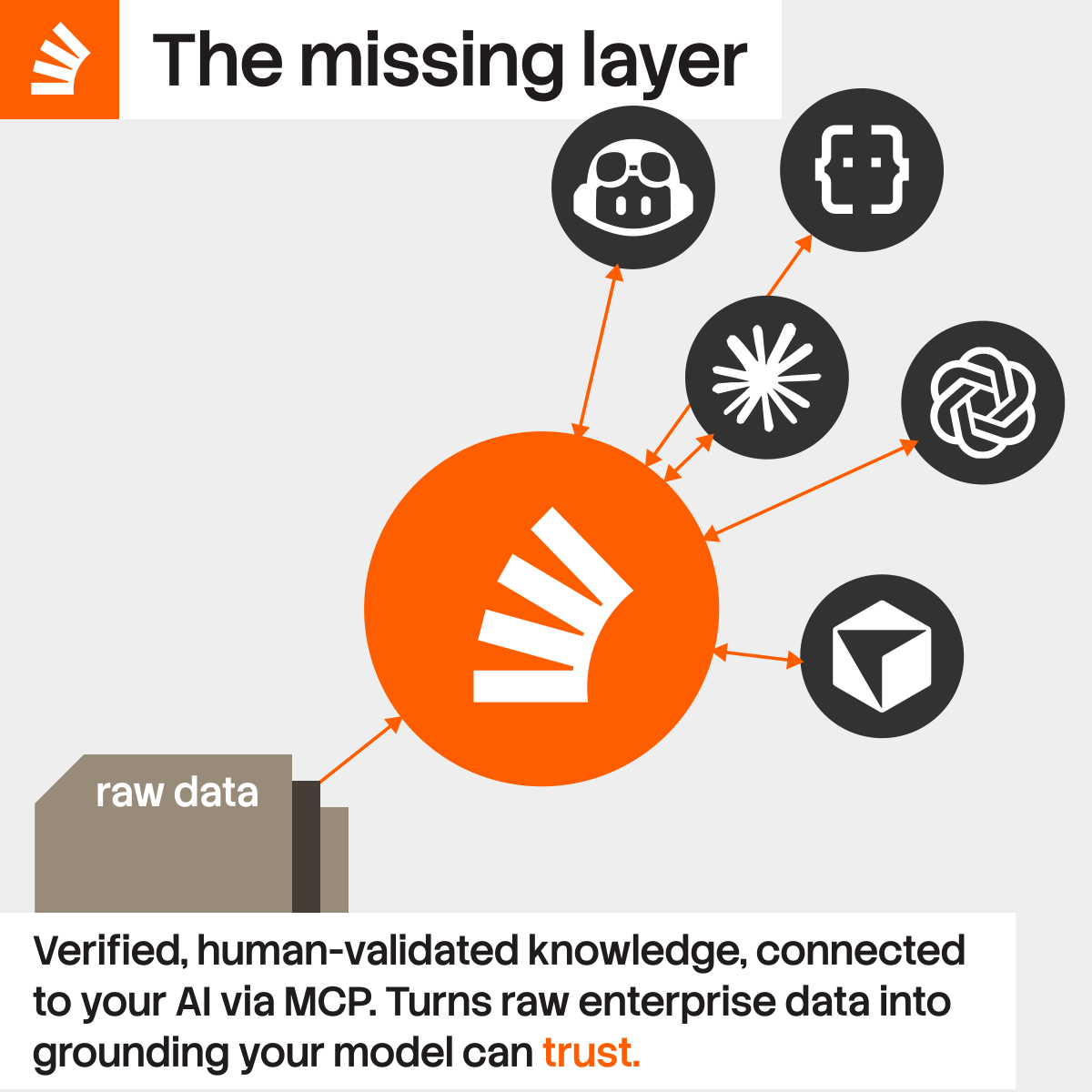
Stackers are out in full force on the final day of #MSIgnite! If you're on the Hub floor, come meet us at Booth 5387R to learn about Stack Internal, the missing layer to your AI tech stack. Trusted information is the cornerstone to a successful AI strategy. Stack Internal is designed to capture, validate, and organize trusted knowledge so your teams can stop searching for answers and start building with the context they need. See you there!
Learn more about Stack Internal: https://t.co/PTqD9wYLAU
Stack Overflow is on the floor at #MSIgnite! Come meet us at Booth #5387R to learn about Stack Internal, the missing layer to your AI stack. With incomplete, unvalidated information, your new AI tools are just going to give you the wrong answer, faster. Stack Internal is the solution, designed to capture, validate, and organize trusted knowledge so your teams can actually find the answers they need. Can't wait to see you at Microsoft Ignite!
Learn more about Stack Internal: https://t.co/M5TH215iOR
🎙️ We talk with @Ahmad_Al_Dahle, CTO at @Airbnb, about deploying multi-party AI agents to tackle the unique problem of customer support, how a moving target of rigorous evals helps engineers balance latency against accuracy, and why AI coding tools demand an even higher level of judgment from software engineering teams.
https://t.co/SBIJbFJeLp
With AI, everyone has a perfect resume now. But that's the problem in modern tech recruiting. When every applicant looks perfect on paper, how do you prove you're actually the best (human) for the job? We sat down with Tom Harvey, Stack Overflow technical recruiter, to talk about AI-era hiring, why LeetCode tests are broken, and why your career needs a living portfolio.
https://t.co/BnVrqmNSUx
🎙️ We sit down with Rakesh Kumar, professor of computer engineering at @UofIllinois, to chat about the astounding complexity of manufacturing modern semiconductors, the massive environmental and geopolitical footprint of AI data centers, and how AI models are rapidly shifting the future of chip design.
https://t.co/XTx8OCSFqq
AI sounds confident, but that doesn't mean it's right. And without access to accurate, up-to-date information, you're left second-guessing whether you can trust AI's answers at all. Stack Internal changes that by making the trusted knowledge behind answers visible. Now, you and your AI agents can see exactly where information came from, and have your organization's critical knowledge gaps routed directly to an expert. The result is decision-grade knowledge your company can actually trust.
Try Stack Internal for free today: https://t.co/W4Vyp50TUL
🎙️ Recorded at LDX3 by LeadDev, we chat with Dan Moore, Senior Director of CIAM Strategy and Identity Standards at @FusionAuth, about adapting established OAuth2 protocols for the agentic era, the security necessity of giving autonomous AI agents their own distinct identities, and how AI coding tools are shifting developers' focus toward solving core business problems.
https://t.co/Cmfxf9NKT4
According to our 2026 Developer Survey, developers are building in-house at high volumes, but their focus remains on internal utilities and glue code rather than replacing commercial software. 77% of teams are building small scripts and automations, 63% are building team-level internal tools, but only 19% of respondents are building in-house software to replace paid vendors.
Dive into the full results from our Annual #DeveloperSurvey: https://t.co/SWUNBlg0tk
🎙️ We're joined by Charity Majors @mipsytipsy, co-founder and CTO at @honeycombio, for a conversation about applying the concept of immutable infrastructure to software development, shifting the paradigm of system specifications to deal with the rapid influx of AI-generated code, and navigating the complex ethical boundaries between system observability and surveillance in technology ecosystems.
https://t.co/Y2Ql8wdTX1
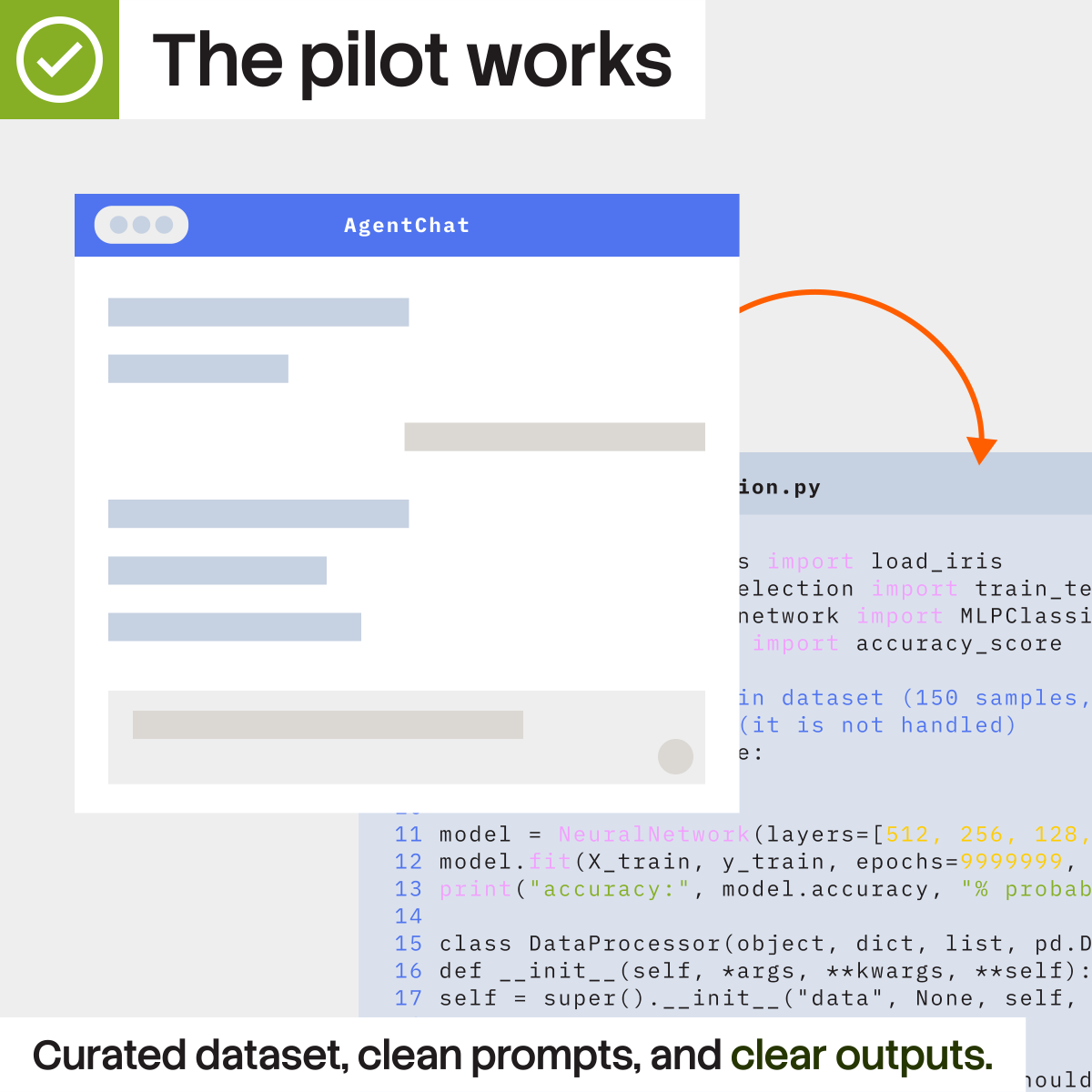
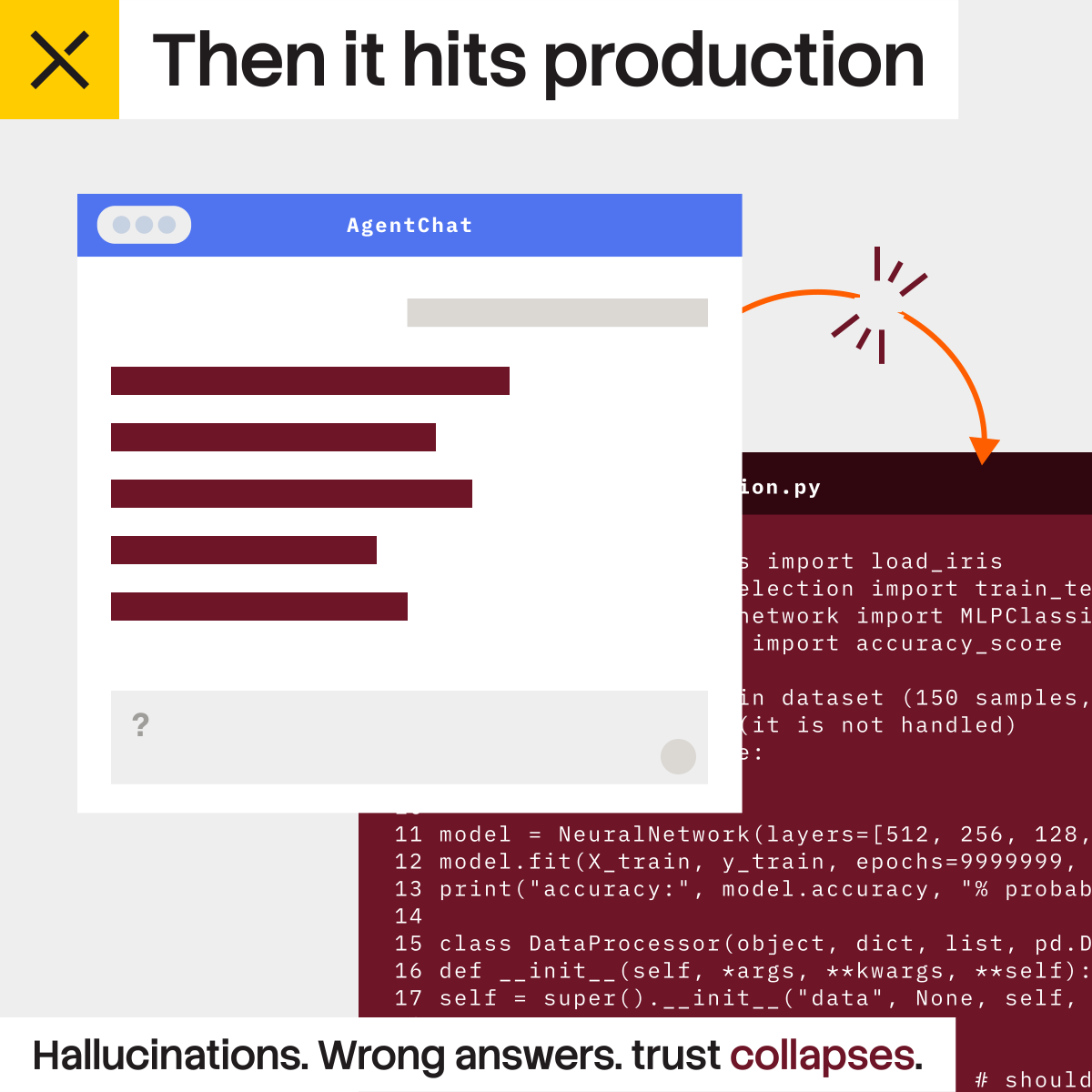
Your AI pilot works perfectly, but the minute it hits real-world data, hallucinations start and trust collapses. The truth is, most enterprise AI pilots never make it to production, and it's because you're missing an important layer in your AI tech stack—one that brings your company's important context to your AI tools. Stack Internal is the trusted knowledge layer for enterprise AI, turning raw data into human-validated context your models can rely on.
Learn more about Stack Internal: https://t.co/P0s7g2i3BA
🎙️ We sit down with James Gosling @errcraft, creator of @java at Sun Microsystems, to talk about the early networking friction that drove the need for interconnectedness, the stringent reliability requirements of consumer electronics companies that inspired the Java virtual machine, and the evolution of garbage collectors that allow Java to handle large-scale concurrent memory management.
https://t.co/x4AdIYnIMZ
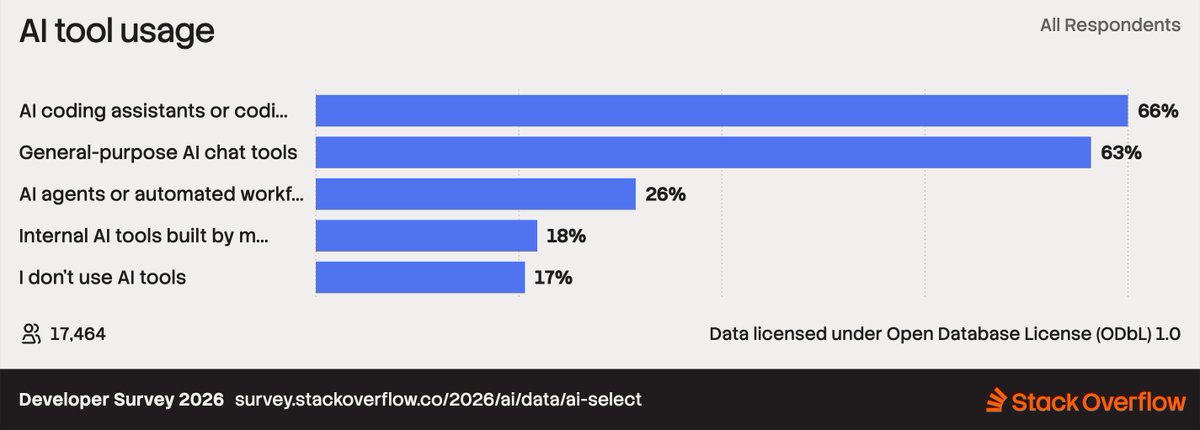
83% of respondents from this year's Developer Survey report using at least one AI tool, with 66% using AI coding assistants or coding agents. Meanwhile, over a quarter of developers are using AI agents or automated workflows. If you're using agents and autonomous workflows, developer or otherwise, we want to hear from you! Share a bit about how you're working with agents and get a chance to participate in our paid research interviews on agentic workflows.
https://t.co/BFQRVmDbcx
🎙️ Live from LDX3 by @TheLeadDev, we chat with Nivia Henry, an engineering leader most recently at @netflix, about the reality of the supposed SaaS apocalypse, the complex calculus of the modern build-versus-buy decision in the era of AI, and the critical importance of understanding system architectures to manage long-term infrastructure costs.
https://t.co/GI2NgkqDVj
According to our 2026 Developer Survey, 55% of devs think that AI performs well or very well at complex tasks—although 39% think it's only good, not great. We want to know what kind of complex tasks you're handing off to your AI tools, especially in autonomous agent workflows. If you're using agents to get work done—especially at a smaller company—we want to hear from you. We're recruiting for paid research interviews across engineering, product, support, and more.
https://t.co/C3AZLZUf2I
You need verified knowledge to build. You don't need to be wasting your time searching for it. This month on Stack Internal, we're introducing everything from Scopes—a new way to deliver focused context to your team and AI agents with permission-governed spaces—to a Github connector to new moderator tools. And that's just the tip of the iceberg.
Explore the newest features on Stack Internal, the trusted knowledge layer for your AI tech stack: https://t.co/h3v1OTI1ml
Finding important context shouldn't be a scavenger hunt through old chat threads and scattered repos. With the October release for Stack Internal, we're bringing you Scopes, a new way to create permission-governed spaces so teams and AI agents get focused knowledge without unauthorized exposure. Plus we're launching an out-of-the-box GitHub connector, service accounts, and new expert validation tools, so your teams and AI tools can stop searching and start building.
Learn more about Stack Internal: https://t.co/mCnrT7sZeZ
According to our 2026 Developer Survey, 63% of developers using AI agents are letting them run every single day. But what does that work actually look like? We want to know—and we're recruiting for paid interviews to learn more. If you're using agents to get real work done, whether that's in engineering, product, support, operations, or marketing, we want to hear about it.
Sound like you? Tell us a little about what you're doing for a chance to participate in our paid research interviews: https://t.co/jE2CQg78j9
🎙️ At @OpenAI Dev Day 2026, host Ryan Donovan sat down on the Stack Overflow Podcast with OpenAI's Andrew Ambrosino @ajambrosino for a conversation on OpenAI's strategy for merging ChatGPT and Codex into a unified experience, the advantages of localized computer access in their successful desktop application, and the technical hurdles of constructing ChatGPT Spaces to support real-time multi-agent collaboration.
Listen to the episode: https://t.co/jFM2rUzVz7
Building an AI context layer in-house seems like a piece of cake for a capable engineering team. But six months later, maintaining it has become your platform team’s full-time job. Keeping the pipeline trustworthy, organized, and compliant actually costs more than you think. Eira May dives into the true cost of an in-house knowledge system and what you should keep in mind when you're deciding between build vs. buy.
https://t.co/1ybtfHWZYM
🎙️ We're joined by Gabriela Moreira @bugarela, CEO at @quint_lang, about why formal specification languages like TLA+ are essential for catching system design flaws before writing code, how Quint brings developer-friendly syntax and executability to formal methods, and the ways trace validation and model-based testing can verify AI-generated code against real-world production data.
https://t.co/lgFbKpw039