A scientific journal designed for ethics and ease. Publishing open-access articles, Special Issues, and entire journals. More active on 🦋.
Learn More ⤵
1,500% more photos. Zero added scientific insight.
New research by Jody Tucker from @usfs_rmrs and colleagues analyzed >1 million camera trap photos and found that more data isn't always better.
#CameraTraps#Ecology#WildlifeResearch
https://t.co/GLfvUi0Nyb
Did you see the new research in @StacksJournal from the @MartesGroup that found 10 of 11 Guloninae species (weasels, martens, wolverines, etc.) are threatened by climate change?
https://t.co/qQz2Rb8Phn
Did you see the new research in @stacksjournal from @MartesGroup that revealed pine martens & sables in Siberia may be hybridizing more often than we thought?
Using microsatellites, researchers found that nearly 20% of individuals were actually hybrids.
https://t.co/8Cmw7S5mJF
✨ Did you know @StacksJournal partners with organizations to create collaborative & engaging Special Issues?
They’re an affordable and #OpenAccess way to share your community’s research — & we just partnered with 2 more orgs to put some together!
https://t.co/jrVj6BhwW8
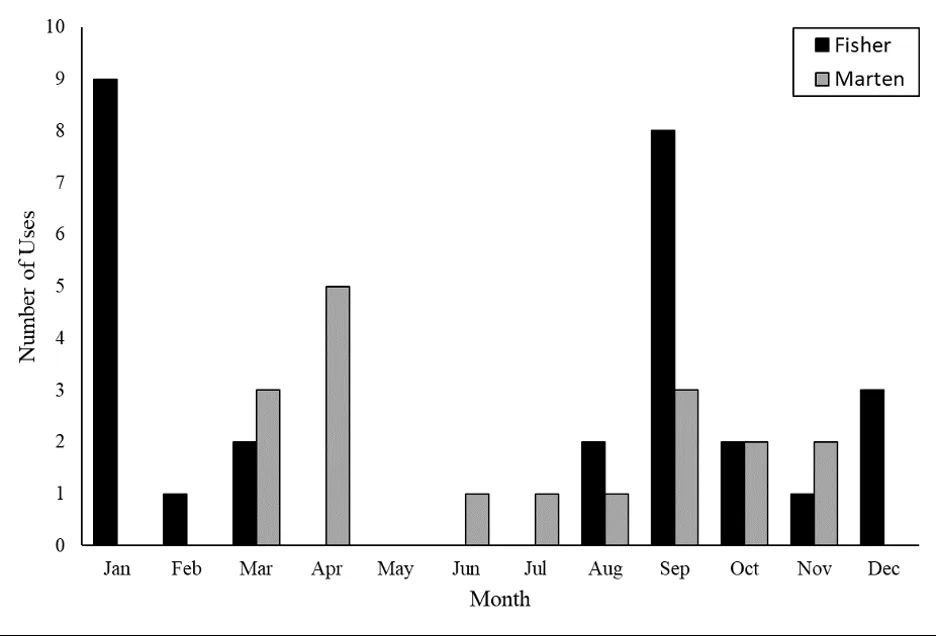
New research experiments with a low-cost way to monitor den-box use by martens & fishers – temperature loggers
By analyzing the rate of temperature change, researchers identified every fisher & marten den visit—and even distinguished the two species!
https://t.co/8PmkaWU07C
You can read the full article in @stacksjournal at the link below. It's one of the latest articles from @MartesGroup's Special Issue.
It’s #OpenAccess and went through our new model of peer review that is ethical and transparent.
🧪🦊🌍
🔗 https://t.co/qQz2Rb8Phn
The pine marten, fisher, wolverine, & similar species are facing more than habitat loss — they also occupy environments threatened by climate change.
New peer-reviewed research in @stacksjournal assesses the future of the Guloninae across the globe. The outlook is rough.
A 🧵
📣 Just published: Three new articles in the Special Issue from @MartesGroup.
With contributions from leading researchers across Europe, Asia, and North America, this is quickly becoming a comprehensive & important collection.
#Martes#Ecology
https://t.co/sov8T8VMfA
You can read the full article in @StacksJournal at the link below -- it's the latest installment from the @MartesGroup Special Issue.
It’s #OpenAccess and went through our new model of peer review that is streamlined and ethical.
5/5
🔗 https://t.co/8PmkaWU07C
💡 What if monitoring wildlife was automatic and could even differentiate among species?
New research in @StacksJournal shows a novel idea: using the rate of temperature change in den boxes to track martens, fishers, and even sometimes squirrels.
A 🧵
#WildlifeConservation
This new technique could be really helpful for other non-invasive monitoring because it is:
💰 Cost-effective: Only one temperature logger needed
🦊 Efficient: Detects when animals are inside, not just nearby
📈 Scalable: Automatable—ideal for long-term monitoring
4/
You can read the full article and learn more in @stacksjournal at the link below.
It's part of the Special Issue from the Martes Working Group, #OpenAccess, and went through our new model of peer review that is streamlined and ethical.
5/5
🔗 https://t.co/8Cmw7S5mJF
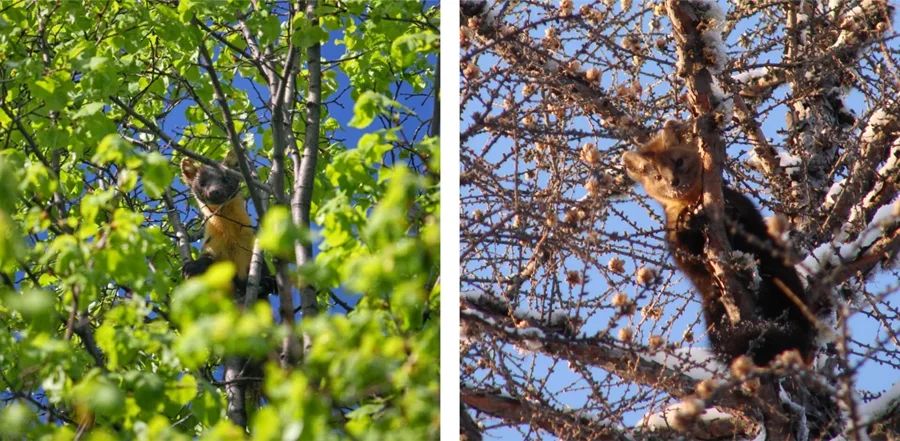
Do you think you can always tell a sable from a pine marten just by looking at it? 👀
In the Ural forests, it may be harder than you think.
New research reveals how genetic tools can uncover surprising levels of hybridization in the wild.
🧬🦊🌍🧪
A🧵
Why does this matter?
Because how we define species has real consequences and can lead to:
🧩 Misidentification
📉 Misguided conservation
🧪 Missed ecological complexity
This work deepens our understanding of interspecies gene flow in wild mustelids.
4/