1/ AI agents are booking flights, paying bills, buying groceries with your money.
When they show up at a website, the website has no way to verify who sent them, what they're allowed to do, or whether to trust them.
I built a spec to fix that. 🧳
1/ AI agents are booking flights, paying bills, buying groceries with your money.
When they show up at a website, the website has no way to verify who sent them, what they're allowed to do, or whether to trust them.
I built a spec to fix that. 🧳
1/ AI agents are booking flights, paying bills, buying groceries with your money.
When they show up at a website, the website has no way to verify who sent them, what they're allowed to do, or whether to trust them.
I built a spec to fix that. 🧳
8/ This is an RFC, not a finished product.
I want to know:
→ Is the problem framing right?
→ What fields are missing?
→ Is anyone building something that already solves this?
If you're working on agent identity, trust, or agentic commerce — I'd like to talk.
1/ AI agents are booking flights, paying bills, buying groceries with your money.
When they show up at a website, the website has no way to verify who sent them, what they're allowed to do, or whether to trust them.
I built a spec to fix that. 🧳
7/ What's published today:
→ Full technical spec
→ JSON Schema (v1.1)
→ Python + Node.js SDKs
→ Express middleware
→ Interactive passport generator
→ Security threat model
→ Registry API reference
All open. MIT / CC BY 4.0.
https://t.co/AxEqOrdiKj
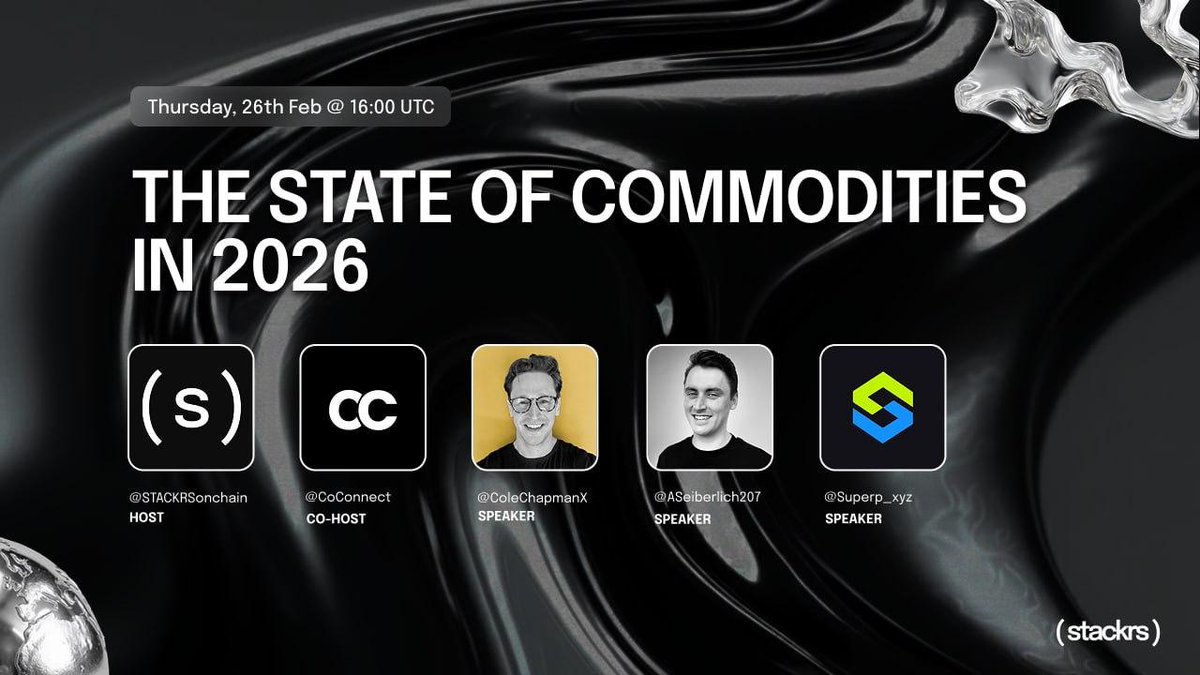
Join us as we speak about the state of commodities, and why now is the time to stack silver.
🗓 Thu, Feb 26 | 4PM UTC
🎙 Featuring:
@STACKRSonchain@ColeChapmanX@ASeiberlich207@Superp_xyz@CoConnect_
We're also giving away 2 $STACKRS airdrop codes to 2 lucky listeners!
🔔 Tune in: https://t.co/3dF5xTCwAC