Świetny artykuł który pokazuje jak wejść na wyższy poziom jeżeli chodzi o prace z agentami
pstack jest super! więc jeżeli budujesz aplikacje z AI to jest must have
polecam lekturę oraz obserwować Panią @poteto po więcej przydatnej i wartościowej wiedzy
wprawdzie 0 m, ale w czasie może osiągnąć wartość kilku godzin).
Warto mieć również zapasowe kółko do myszy i sprawny palec wskazujący, bo podróż z jednego krańca skali do drugiego wymaga niemałego wysiłku.
2/2
https://t.co/G5l26JdETZ
Free Foundations of Robotics
https://t.co/98FIUh88Ko
Good starting point if you want to move from "I want to learn robotics" to actually building robots.
@oprydai
F*ck it
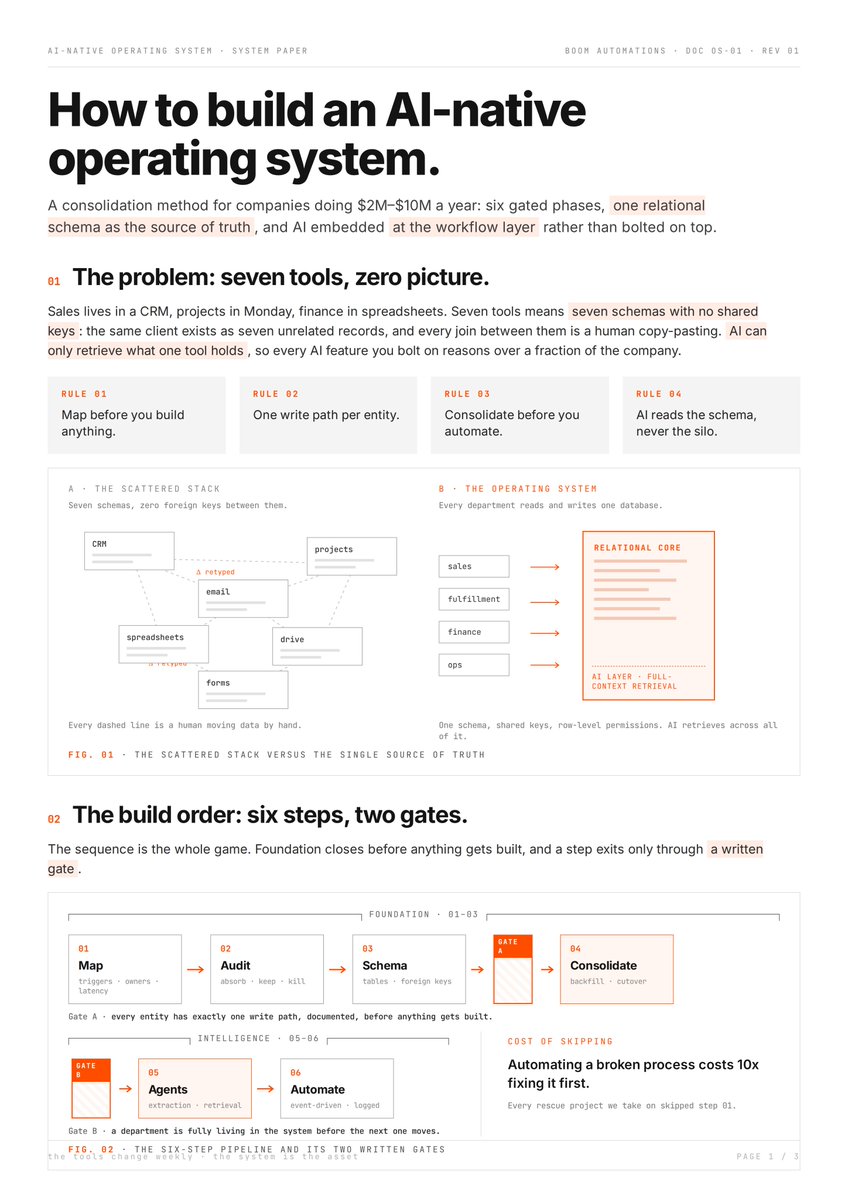
I'm giving away the internal doc we use at Boom on every $25-$60K operating system build.
Steal the system:
- Map every workflow before touching a tool, and time the manual hours (if you follow me, you already know this)
- Sort your stack into 3 buckets: absorb, keep, kill
every entity gets exactly one write path, in writing, before anything gets built
- Consolidate one department at a time. Automate nothing yet
- 4 agents go on top in a specific order (intake always first)
- Route simple tasks to cheap models, save frontier models for reasoning. Cuts token spend 80%+
The full system paper is below. The deep dive on every step is in the article 👇
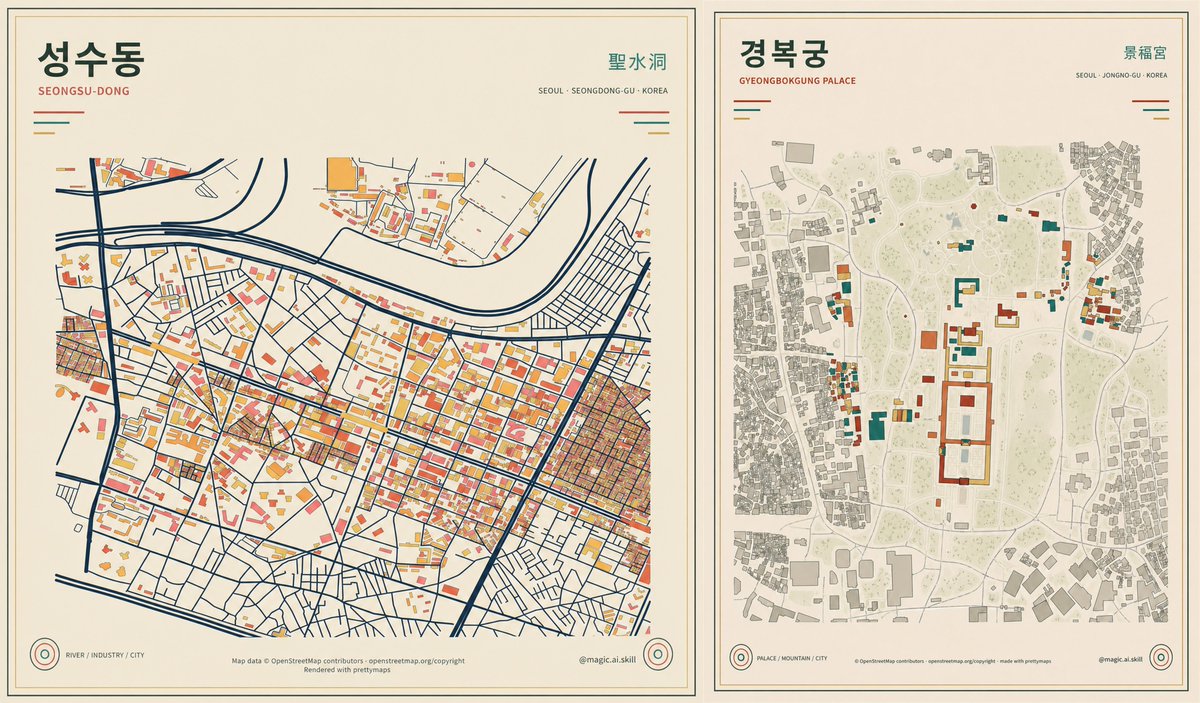
지도를 작품처럼 그려주는 오픈소스를 찾음!!
우리 동네를 감성 있는 지도 포스터로 만들어 줌
장소명이나 지도 스크린샷만 있으면 끝,
도로, 건물, 공원, 물길까지 예쁘게 표현해줌
단순히 AI로 만든 지도보다 이런 감성이 훨씬 잘 먹히죠
콘텐츠 만드는 사람이라면 일단 꼭 공유 & 북마크!
https://t.co/08V1CZ41QD
제작자: marceloprates
Robotics is awesome! 🤩
So if robotics is awesome, you need awesome resources.
This repo with over 6k ⭐️ is even named 'awesome'.
Coincidence? I don't think so! 👀
Awesome Robotics is a curated collection of robotics courses, books, software, papers, conferences, and resources.
Basically, it's organized into practical categories that cover the entire robotics learning path:
→ Courses: Udacity's AI for Robotics, MIT's Underactuated Robotics, Stanford's Introduction to Robotics, edX's Autonomous Navigation, Coursera's Modern Robotics specialization, and UC Berkeley's Advanced Robotics.
→ Books: Probabilistic Robotics, Introduction to Autonomous Mobile Robots, Planning Algorithms (free), Introduction to Modern Robotics (free PDF), Programming Robots with ROS, and Behavior Trees in Robotics and AI.
→ Software & Libraries: ROS, ROS2, Gazebo, Drake, V-REP, Webots, MRPT, Robotics Library, YARP, Unity Robotics Hub, and OpenAI's Roboschool.
→ Conferences: ICRA, IROS, RSS, Humanoids, ISRR, ISER, and major journals like The International Journal of Robotics Research, IEEE Transactions on Robotics, and Journal of Field Robotics.
→ Competitions: DARPA Robotics Challenge, RoboCup, ICRA Robot Challenges, First Robotics Competition, RoboMasters, and Eurobot.
What makes this valuable is the quality curation. Each category has the essential resources, not every possible link. The 32 contributors have filtered for what's actually useful for learning and building robots.
It's MIT licensed, actively maintained, and points to related awesome lists for AI, computer vision, machine learning, deep learning, and reinforcement learning.
If you're starting in robotics or looking to fill knowledge gaps, this is the bookmark you need.
It's the map of what to learn, where to learn it, and what tools to use. 🗺️
As a 'thank you', you can ping me when you are building something cool in robotics or physical AI space ;)
Here it is: https://t.co/LG7XBkmMjV
~~
♻️ Join the weekly robotics newsletter, and never miss any news → https://t.co/GoA3ZuwoPB
the reason humanoids stayed in labs was never the software. it was that one actuator could cost more than a used car.
berkeley humanoid lite gets around that entirely. here's the move:
> the gearboxes are 3d-printed and modular
> the whole bill of materials is off-the-shelf hobby parts
> cad, firmware, and the rl training stack all provided
so the thing that used to gate you, a five-figure parts order, just becomes a weekend of printing.
a full humanoid, under $5k
that's the difference between reading about humanoid robots and having one on your bench.
🚨BREAKING
Bill Ackman, billionaire and CEO of one of the biggest hedge funds in the world just disclosed 6 new positions.
We read the 30 pages document so you don't have to.
Here are the stocks and his explanation to why he invested in them:
this is f*cking insane paper.
Georgia Institute of Technology just dropped a paper that should terrify every passive investor.
They handed the keys to five frontier AI models and made them trade the S&P 500.
Bookmark and read the paper to level up in trading.
The era of AI trading is here.
This paper is f*cking genius
Stanford Systems Intelligence Lab just published the definitive survey on Multi-Agent Orchestration (Router, Planner-Worker, Supervisor, Hierarchical)
The result: a complete breakdown of the core orchestration loop (Intake, Plan, Execute, Merge, Evaluate) and shared state engineering
crazy part is how standard multi-agent handoffs quietly degrade context at every node, causing complex tasks to fail in production
Shared memory stores, message schemas, observability logs, and guardrails form the baseline substrate for production orchestration
Most agent developers chain sub-agents together without understanding why context decay and token blowout break downstream reasoning
This paper maps out every major orchestration architecture alongside its hidden systems trade-offs
Read the complete paper + article below
Bookmark it for future reference
This paper is f*cking brilliant
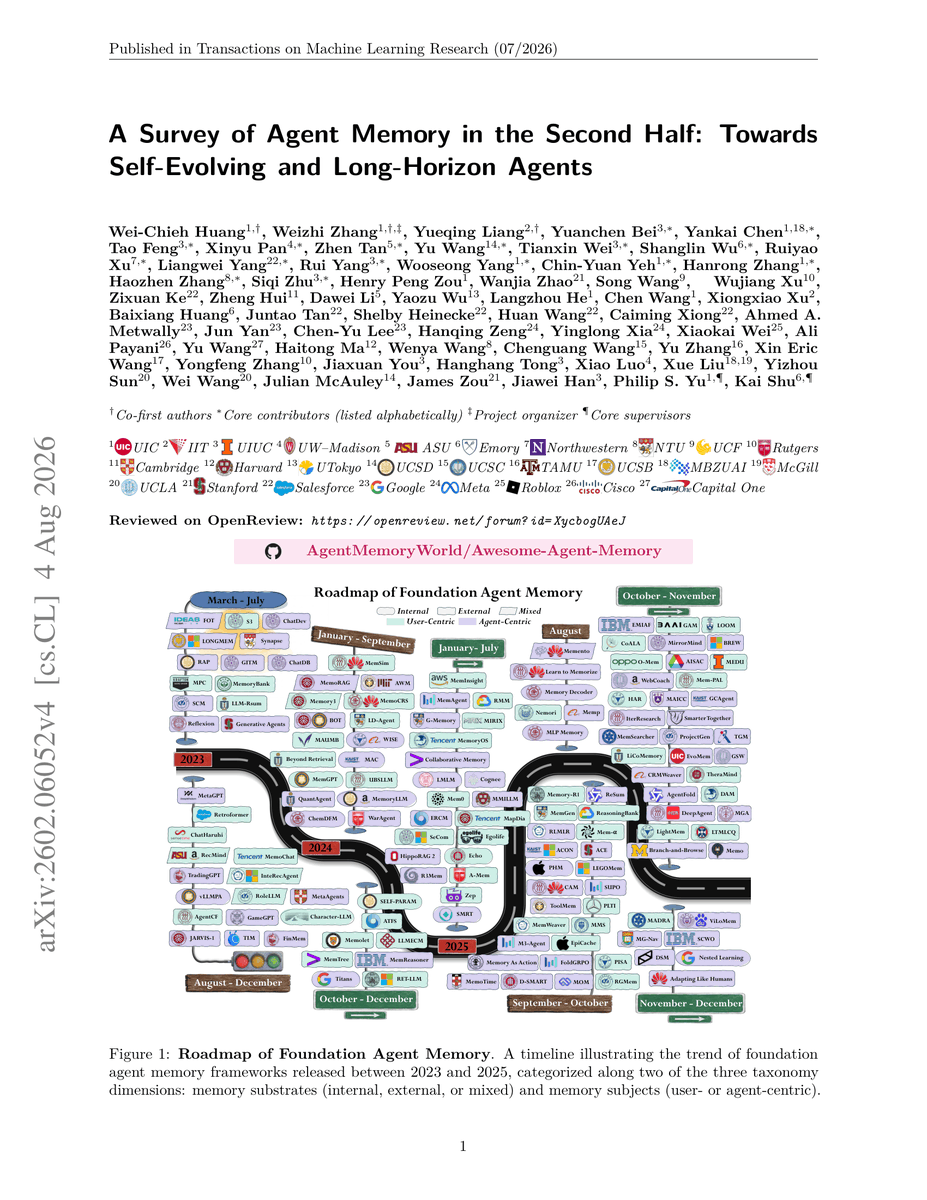
A computer science survey mapped 150+ agent memory architectures across 90 pages to build self-evolving long-horizon agents
The result: a 3D taxonomy showing action-based memory and self-evolving structures boost long-horizon retention by 50%
The crazy part is memory is no longer just a passive database lookup
It also trains models to execute tool actions, update parametric weights, and consolidate episodic traces into skills
Most memory surveys analyze static database retrieval
This one maps the entire self-evolving agent operating system
Read the complete paper + article below
Bookmark it for future reference
Jak powinniśmy projektować sandboxy dla agentów?
Od zera do AI Engineer #23
Agent w sandboxie VS agent używający sandboxa jako narzędzia
Może się wydawać, że różnica tutaj jest subtelna i poświęcenie czasu, żeby to jasno wyjaśnić, jest bez sensu - nic bardziej mylnego :)
W obu przypadkach agent może uruchamiać kod, pracować na plikach, korzystać z shella czy testować swoje rozwiązania. Jednak filozofia tych dwóch podejść jest znacznie inna i warto to zrozumieć, jeżeli na poważnie buduje się agentów AI.
1. Agent w sandboxie
To podejście traktuje sandbox jako środowisko, w którym żyje agent (klatka, w której jest zamknięty).
Upraszczając, tutaj sandbox jest traktowany jak komputer agenta, gdzie:
- agent działa w sandboxie
- ma tam swój filesystem
- uruchamia tam kod
- korzysta z shella
- przechowuje pliki
- wykonuje swoje zadania
Sandbox jest częścią świata, w którym żyje agent. Jest to bardzo naturalne podejście, szczególnie jeżeli chodzi o coding agentów.
2. Agent używa sandboxa jako narzędzia
Agent już nie jest uwięziony w sandboxie - działa poza nim, a sandbox jest jednym z jego narzędzi.
Agent → tool call → sandbox → wynik → agent
Więc zamiast przebywania w środowisku agent:
wywołuje execute() → sandbox uruchamia X → zwraca wynik → agent analizuje wynik → podejmuje kolejną decyzję
To podejście daje nam możliwość oddzielenia „mózgu” od „rąk”, gdzie:
Mózg to:
- model
- state
- pamięć
- planowanie
- permisje
- tool routing
Ręce to:
- filesystem
- shell
- packages
- procesy
- kod
- repo
Dzięki temu rozdzieleniu agent może przetrwać restart sandboxa. Sandbox może być też tymczasowy możemy go stworzyć, wykorzystać, zamknąć i utworzyć ponownie. Agent przeżyje.
Jest to też o wiele bardziej modułowe podejście, gdzie agent oprócz klasycznych narzędzi typu search_tool, database_tool albo browser_tool może mieć sandbox_tool i wtedy sandbox staje się kolejną umiejętnością, którą agent może wykorzystać.
Kolejnym plusem jest bezpieczeństwo. Gdy agent żyje w sandboxie, może mieć potencjalnie dostęp do sekretów znajdujących się w tym środowisku. Gdy traktujemy sandbox as a tool, możemy trzymać te credentials poza nim.
Dlatego rozdzielenie agenta od środowiska, w którym pracuje, jest interesujące z perspektywy budowania realnych agentów.
Trade offem jest latency.
Do zapamiętania
Agent w sandboxie - sandbox jest środowiskiem agenta (żyje w komputerze).
Agent używający sandboxa jako narzędzie - sandbox jest jedną z możliwości agenta obok innych narzędzi (ma dostęp do komputera, kiedy go potrzebuje).