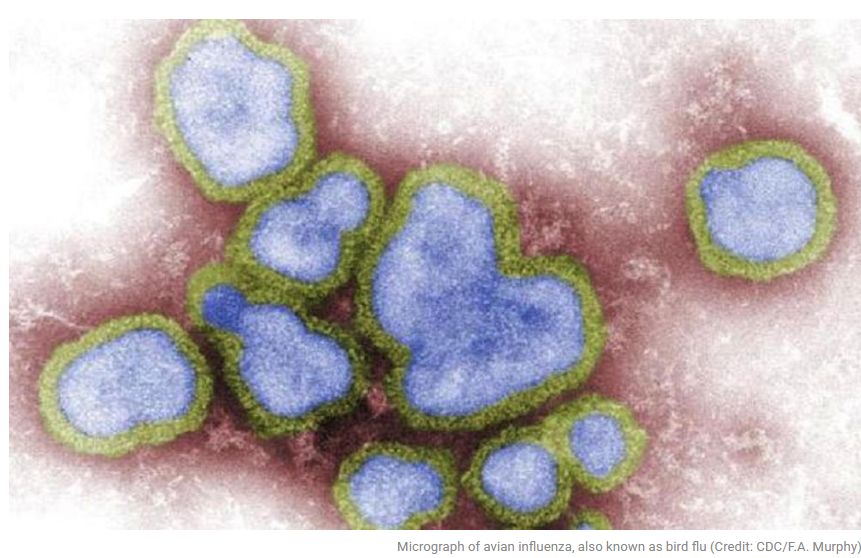
15 workers develop symptoms after H5N1 bird flu exposure at zoo in Mexico
State health officials identified 29 workers who were exposed
Samples from the workers with symptoms were sent to Mexico’s national reference laboratory for testing
https://t.co/HNaz6NMgVm
USDA notes more H5N1 avian flu on poultry farms
The agency also noted a new cattle detection Texas.
Read more: https://t.co/mzBqxPknIa
📷: USDA, Lance Cheung / Flickr cc
#H5N1
[No word on symptoms.]
⚠️
➡️ Washington: Human case of bird flu confirmed in Yakima County; person was exposed to infected cow
—person who was exposed to infected dairy cows has bird flu in Yakima County, local health officials confirmed.person who was exposed to infected dairy cows has bird flu in Yakima County, local health officials confirmed.—person who was exposed to infected dairy cows has bird flu in Yakima County, local health officials confirmed.
- A person who was exposed to infected dairy cows has bird flu in Yakima County, local health officials confirmed.
- The person is isolating at home and ➡️ hasn’t experienced severe illness or been hospitalized, according to a news release from the Yakima Health District.
- Avian influenza, also called bird flu, is caused by viruses that primarily circulate among wild birds but can also infect other animals such as poultry and dairy cattle. On rare occasions, the viruses infect people and make them sick.
- ➡️ Bird flu was confirmed at two dairy farms in Yakima County earlier this month, the first detection in Washington state. The dairies weren't identified. Dairy cattle in 19 states have been infected since the outbreak began in March 2024.
- In Washington state, this strain of bird flu was first identified in a backyard flock in May 2022. The first human case was identified in October 2024 and was linked to close contact with birds and their environment during a commercial poultry outbreak, according to the state Department of Health.
- ➡️ Bird flu was also detected in a flock of backyard poultry in Kittitas County on Oct. 9, according to the health department there.
Risk low to general public
- The risk of avian influenza infection to the general public remains low, a news release from the health district said. People at greater risk include dairy workers and others who have close or prolonged contact with infected animals or environments contaminated with the virus. Most human infections have occurred following close or prolonged contact with infected animals or environments contaminated with the virus.
- Human-to-human spread is extremely rare and has never been documented in the U.S. ➡️ Local public health officials are reaching out to anyone who has been in close contact with the patient to monitor for symptoms.
- The health district is working with state and federal partners to provide guidance and testing, and make sure dairies have access to personal protective equipment for workers.
Symptoms
- Symptoms of avian influenza in people can include eye redness or irritation, fever or feeling feverish, cough, sore throat, runny or stuffy nose, muscle or body aches, headache, and fatigue. More severe illness can occur. People can become infected when virus enters their eyes, nose, or mouth.
- People who may have been exposed to sick animals are advised to get a flu vaccine. While it will not prevent bird flu infection, it reduces the risk of becoming sick with both human and avian influenza viruses at the same time. The flu vaccine is recommended for everyone 6 months and older, the health district said.
- People who work on a dairy farm and develop symptoms after potential exposure to infected cattle, should contact a healthcare provider or the Yakima Health District at (509) 249-6541.
Avoid raw dairy products
- Pasteurized milk and dairy products remain safe to consume. Pasteurization inactivates bird flu virus and other harmful pathogens. People should avoid raw milk and unpasteurized dairy products because they may contain harmful germs, the health district said. Do not feed pets raw milk, unpasteurized dairy products, or raw meat, including raw pet foods.
https://t.co/1iRc9hcedI