Bridging chemistry, engineering, biology & medicine to advance human health, transform research, and train the next generation of scientific leaders @Stanford
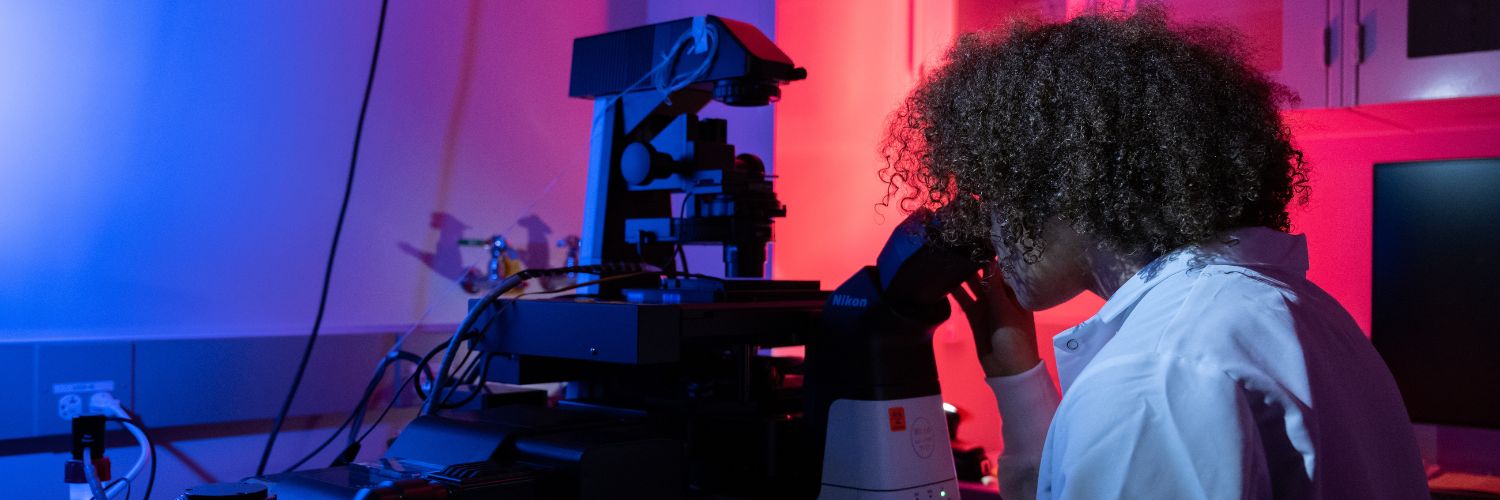
Institute Scholar @StevenMBanik, Melissa Gray & team built a new high-throughput tool to detect tiny changes in cellular protein levels, which could hopefully accelerate discovery of degrader drugs that fight diseases like cancer: https://t.co/wwlpOsU9D6
Congrats to Laura Dassama, recipient of the @ASBMB Walter A. Shaw Young Investigator Award in Lipid Research! Her discoveries in bacterial lipid transport and metabolism are advancing research on host-pathogen interactions and anti-infective therapies. #StanfordChem#SarafanChEMH
Congratulations to our Institute Scholar Laura Dassama on being awarded the 2027 @ASBMB Walter A. Shaw Young Investigator Award in Lipid Research, recognizing her outstanding research contributions in the area of lipids: https://t.co/sBouTJZyHE
The Banik Lab has developed a high-throughput tool to screen hundreds of drugs in parallel, accelerating the discovery of therapies that degrade disease-causing proteins: https://t.co/xXek9wEiGj
#StanfordChem#BanikLab
📢 We’re hiring! The Stanford Chemistry Department is now actively conducting faculty searches (open area) - term to start on 9/1/2027:
- Assistant Professor in Chemistry
- Senior Faculty Position in Chemistry (Associate Professor or Professor)
Learn more: https://t.co/D7Ndqq5xBE
Excited our ratiometric transcriptional activation (RTA) work led by @Melissa_Gray234 is out online today @CellCellPress! Measurements determine what we can discover in biology; we use RTA to turn protein abundance changes into amplified signals.
https://t.co/3rRhr2pjhu
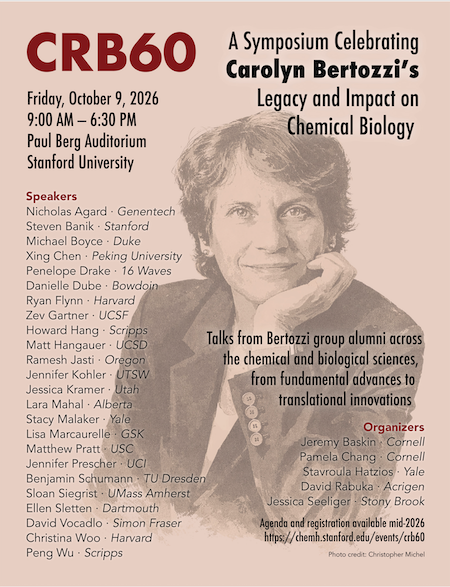
Join us for the CRB60 Symposium, celebrating our director Carolyn Bertozzi's legacy and impact on chemical biology, with talks from her lab alumni!
Oct 9, 2026, Paul Berg Auditorium, Stanford.
Register here: https://t.co/6n723bh0tp
@UCB_Chemistry
Heloise Hoffmann '26 isn’t afraid to fail.
Former Sarafan ChEM-H Undergraduate Entrepreneurship Program (UEP) trainee plans to continue researching a cure for a rare form of muscular dystrophy: https://t.co/i2rDNSpsnF
cGAMP helps immune cells fight tumors, but in the brain it may worsen neuroinflammation. In this Q&A, CBI trainee Dayanne Carvalho, @li_lingyin lab, talks about her research on cGAMP in neurodegenerative diseases like MS, her journey as a chemist, & more: https://t.co/VB66if2s9G
Could pythons hold a clue to weight loss? Institute Scholar Jonathan Long @longlabstanford explains how the dramatic metabolic changes pythons undergo after eating could reveal new pathways for understanding appetite and metabolism: https://t.co/NlFwOIPztV
@StanfordMed
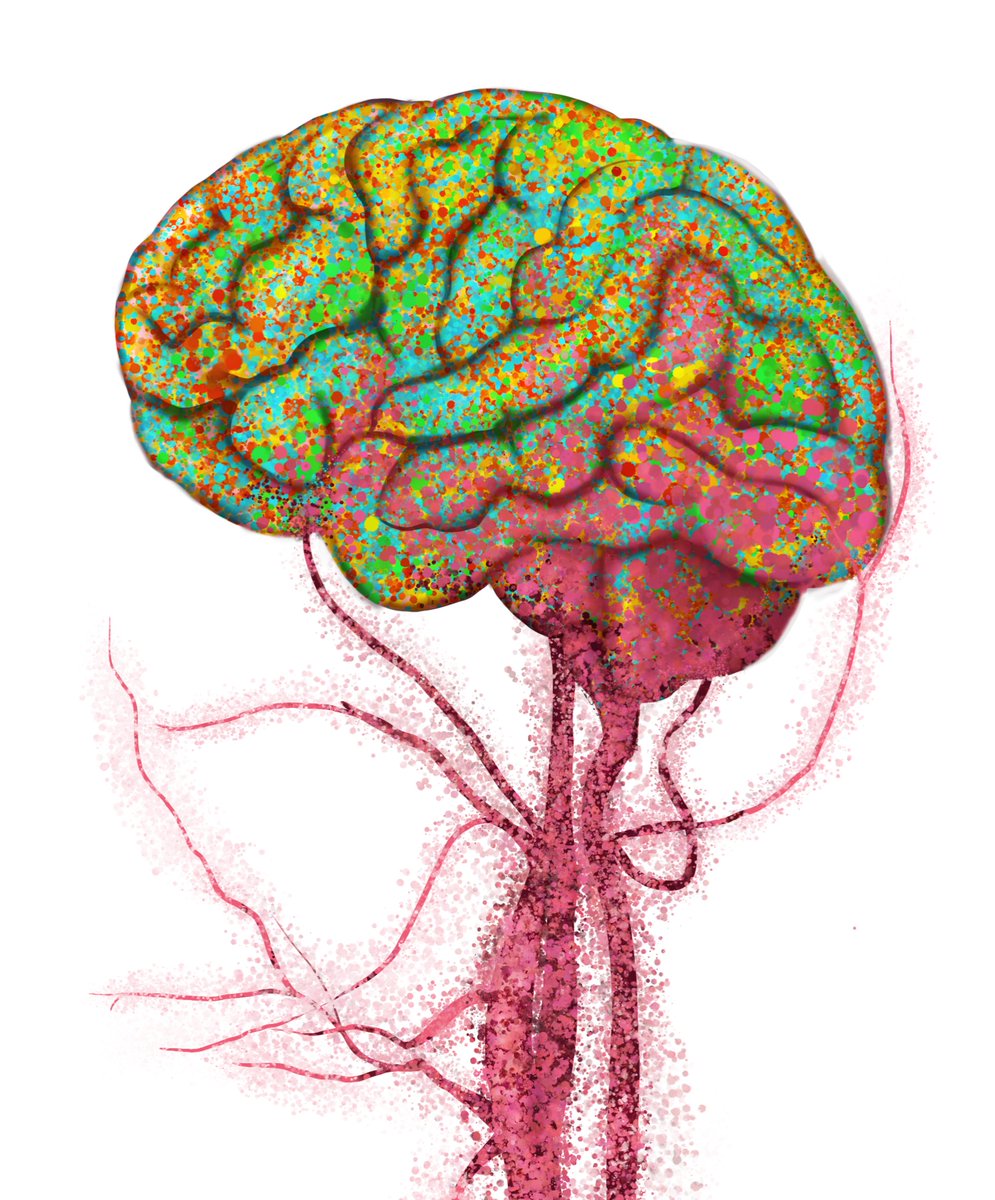
The brain's immune system was thought to exist independently. @juliabelk, a former CBI trainee, and team found otherwise: aging lets new immune cells move into the brain from the blood, opening new ways to treating neurological disease such as Alzheimer's: https://t.co/vsln7eYMhS
.@corsellos, Institute Scholar Nathanael Gray, Stephen Hinshaw & team solved the structure of a molecular glue in complex with its two protein partners, a discovery they hope will lead to more effective drugs to treat pancreatic cancer: https://t.co/W1LZIX39kz
Looking for a summer read? Here's the Sarafan ChEM-H community's list of favorites from last year! It includes memoirs to science fiction, with a note on why each one stuck with them. https://t.co/SGWvIHBZxZ
Peptides peptides peptides… Seems like everybody wants to inject something these days. But what is the state of the science? @SvenssonLab and I share our thoughts in this article from Rachel Tompa @StanfordMed@StanfordPath@Stanford_ChEMH
https://t.co/vP8aHjMqx1
On International Youth Day, take a look at some of our Nobel Prize laureates in their younger years.
Photos: Katalin Kariko as a toddler. Mary Brunkow with her family's first dog, Maggie. Carolyn Bertozzi around the age of 8 or 9 with her cat Fluffy.
A decade of the CBI Program, promising advances in cancer and IPF therapies, insights into neurodegeneration, the latest news from across our community, and more in this new edition of The ChEM-H Quarterly: https://t.co/TdsxaryNsE
Don't miss the ACS Infectious Diseases Early Career Award session on Monday, August 24 in Conference Center room S106a from 8-12 PM as part of #ACSFall2026!
The brain's immune system has long been thought to operate largely independently from the rest of the body. New research finds immune cells from the blood can enter the human brain during aging and transform into specialized microglia.
Learn more: https://t.co/Qj4fUt0qRB
What can pythons teach us about fat and metabolism? A Stanford Medicine researcher studies the dramatic metabolic shifts pythons undergo after eating — and what they could reveal about appetite, metabolism and weight loss in humans. https://t.co/p1UkXoXWTB
@StanfordBrain