#OTD 1/16/1861 @baltimoresun notes the passing of George Roberts, a free African American seamen on the privateer CHASSEUR who participated in several battles at sea. He proudly participated in Baltimore's annual #Warof1812 Defenders Day parades until his death at 95 @PrideofBalt
#OTD 1/13/1814 the CHASSEUR is advertised for sale in Bmore. The vessel eventually sold at auction & Thomas Boyle took command. A few weeks later, he would proclaim a 1-ship blockade of the British Isles. https://t.co/MVD3Fomgmd @PrideofBalt@bmorenha@bmoreheritage#Warof1812
Answer to yesterday's trivia question: what is the name of the foundry attacked by the British on 5/3/1813? Principio Furnace! After raiding the town of Havre de Grace, the British went to Principio Iron Works & captured a 5-gun battery & destroyed the foundry complex #Warof1812
#OTD 10/271814: Approximately 300 British troops attack Town Point & Herring Creek (Traceys Landing, MD). They overpowered militia & torched a warehouse & a home, raided gardens, and reveled in a church. Several enslaved people also escaped with the British.
Happy belated birthdays to the @NavalAcademy & @USNavy! During the #Warof1812, the navy's role in national security was forged. The slogan “Don’t Give Up the Ship” adorned a flag as a battle signal by Americans in 1813 & is still a rallying cry for the U.S. Navy.
#onthisday 10/12/1825 - Thomas Boyle, best known as the captain of the privateer CHASSEUR, dies. During the #Warof1812, Boyle was a successful privateer who in 1814, launched a one-ship blockade of the British Isles. Learn more: https://t.co/Qbm9PUlLqn @PrideofBalt
#OTD 10/2/1968: the National Trails System Act was signed into law. National historic trails (like #StarSpangledTrail) recognize original trails or routes of travel of national historic significance that include exploration, migration & military action. https://t.co/sTckuWapNG
Thomas Boyle, captain of privateer CHASSEUR, infamously posted a proclamation at Lloyd’s Coffee House in London, announcing a blockade of all British ports. Merchants, afraid their products would be seized, stopped shipping their goods. image credit: @MDHistory#NationalCoffeeDay
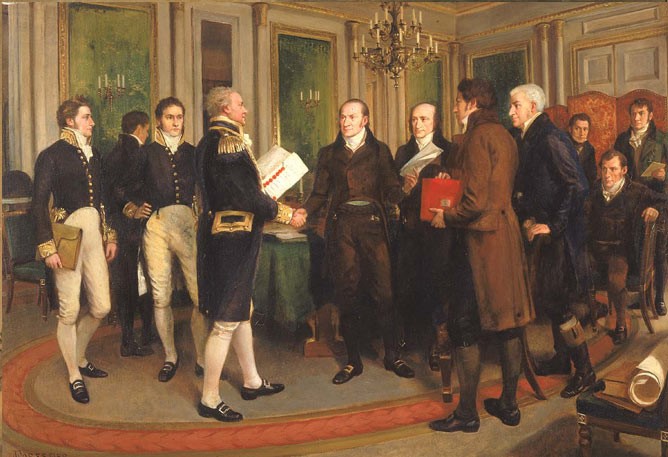
The Treaty of Ghent officially ended the #Warof1812 on 2/17/1815. It was the last peace treaty between the US and UK. Gradually, the two English-speaking countries found common interests and became close allies, as they are today. #InternationalDayofPeace
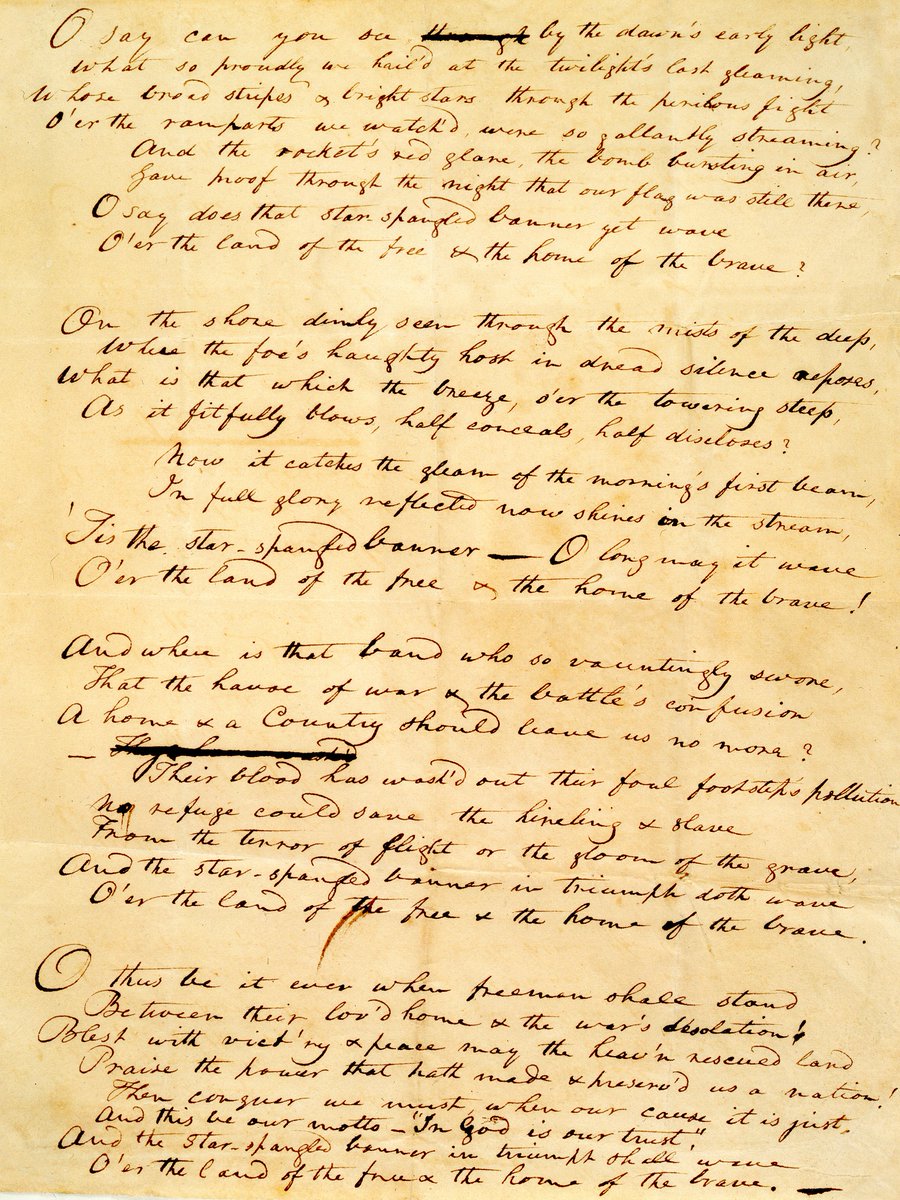
#onthisday 9/20/1814 - The "Baltimore Patriot and Evening Advertiser" was the first newspaper to publish “The Defence of Fort M’Henry.” The song grew in popularity & was eventually re-titled “The Star-Spangled Banner.” It became the U.S. national anthem in 1931. @FortMcHenryNPS
#DYK? US #privateers during the #Warof1812 were private ships sanctioned by the gov't to harass, damage, & capture British merchant ships. 1 famous privateer--the CHASSEUR--was known as the “Pride of Baltimore." Today's @PrideofBalt is modeled from that ship. #TalkLikeAPirateDay
#OTD 9/16/1814 After 10 days aboard a ship & witnessing the bombardment of Ft McHenry, FS Key spent his 1st night ashore at the Indian Queen Tavern, located in Baltimore, MD. Key used this time to finish writing what would become US national anthem #Warof1812#StarSpangledTrail
#OTD Sept 14, 1814: At "dawn's early light," the Francis Scott Key, seeing the huge 30x42-foot American flag flying over Fort McHenry following the 25-hour British bombardment, is moved to write the words that would become the U.S. national anthem. #Warof1812@FortMcHenryNPS
#OTD 9/13/1814: British ships began a 25-hour bombardment on Fort McHenry. The fort defended the water approach to Baltimore & the future of the city, and possibly the U.S., depended on the outcome..... @FortMcHenryNPS image credit: Peter Rindlisbacher
#OTD 9/12/1814: The #BattleofNorthPoint took place in what is now Dundalk, MD. When the smoke cleared, the Americans had retreated but not before inflicting many British casualties, including the death of the Maj Gen Robert Ross. #DefendersDay@MDStateParks#Warof1812
To sail the Potomac River in late summer 1814, the British navy was forced to use kedge anchors to ease their warships over the shallow & ever-changing Kettle Bottom Shoals. This effort continued uninterrupted for 5 successive days; each ship went aground at least 20 times.
#OTD- 9/5/1814 Capt. Oliver Hazard Perry, the celebrated hero of Lake Erie, leads the Indian Head gun battery (Charles Co, MD) & attempts to harass a British squadron as it sails down the Potomac River. Outmatched by the British, the exchange of fire lasted only about an hour.
#OTD Sept. 3-8,1814: American forces harass British ships on the Potomac River by sending fire ships against the enemy naval squadron. All of the efforts failed because the wind either died or changed direction or the British were able to pull away or fend off the burning vessels