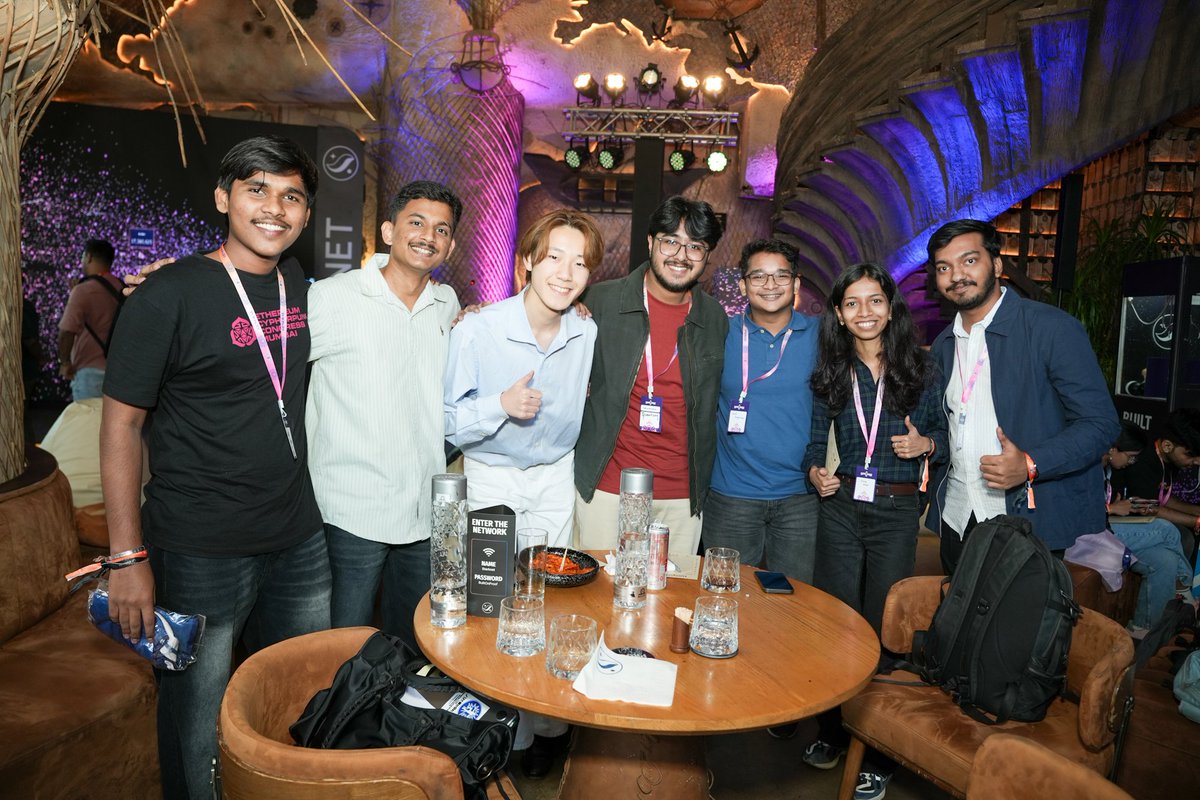
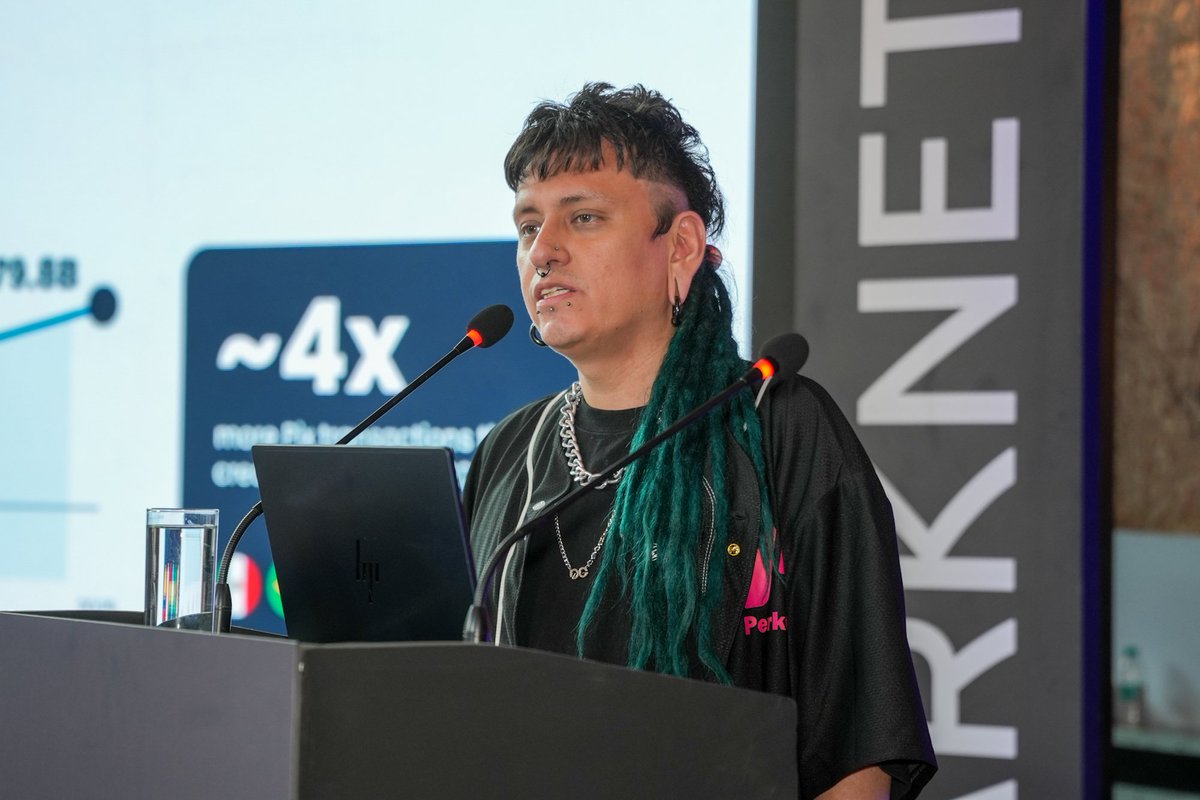
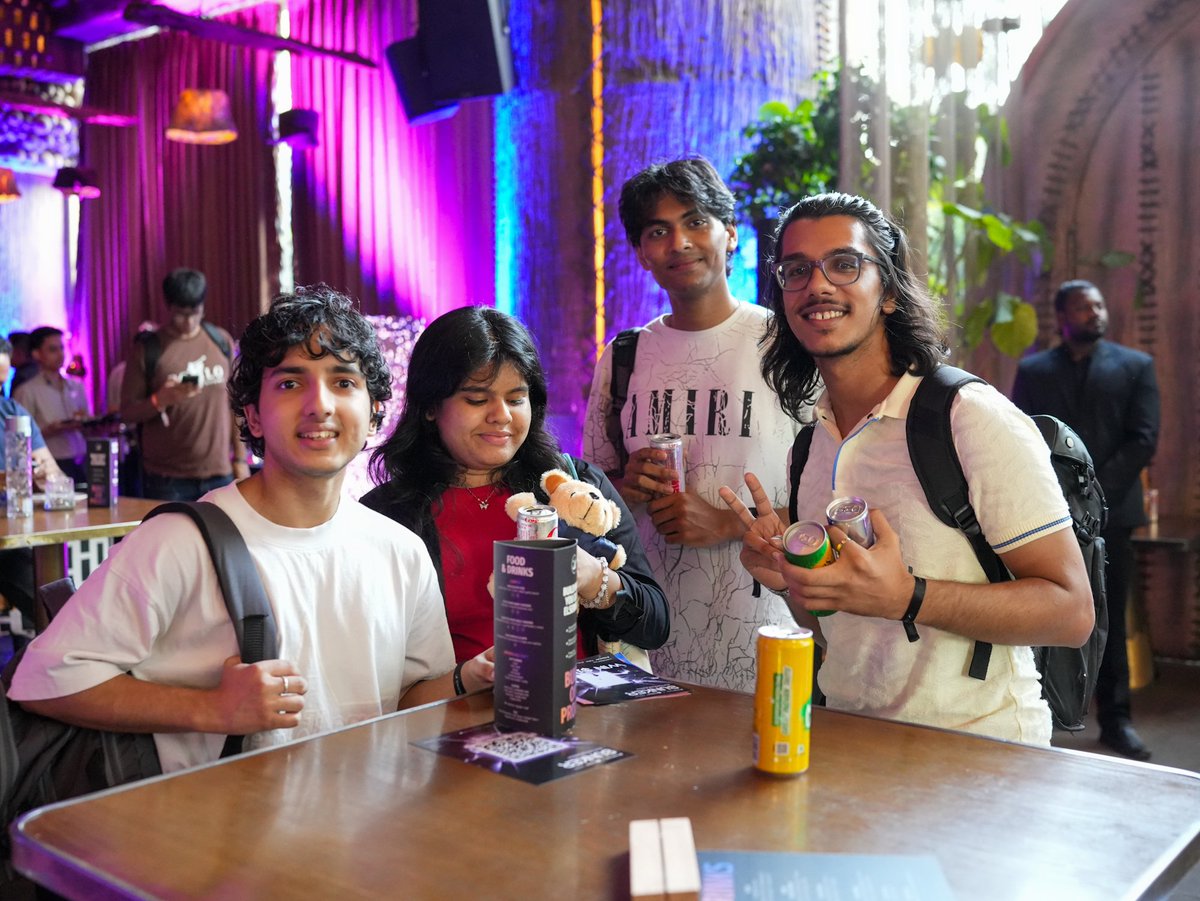
187 adventurers entered Realms Frontier at @EFDevcon Game Zone.
Their @Starknet wallet? Created invisibly in the background.
Let's see what they got up to. 🧵
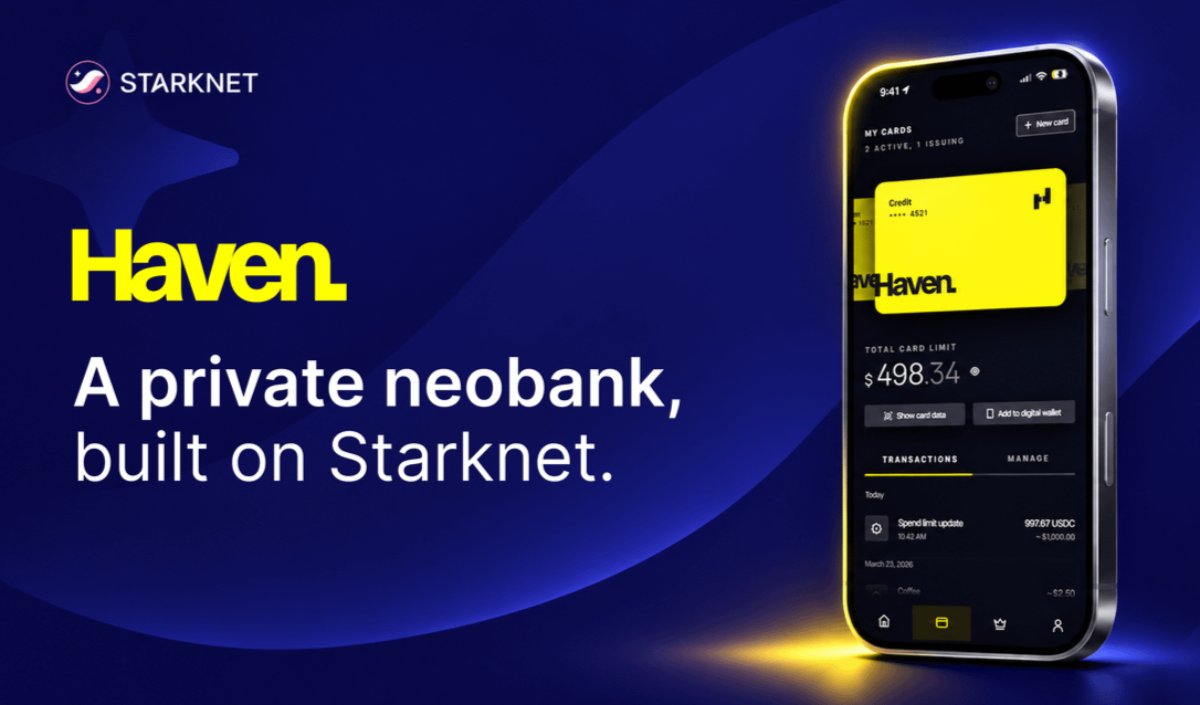
Haven is a private crypto neobank built on Starknet.
You hold your own funds, spend with a Visa card and keep supported payments confidential.
More than 2,500 people have joined since launch, including 950 in the last 30 days.
Here's what makes Haven different ↓
Most staked STRK is not represented in governance today. SNIP-45 proposes a fix.
Validators would vote with delegated stake by default. Delegators stay in control and can opt out, vote directly or hand their vote to anyone, anytime.
Discussion is open ↓
https://t.co/DSHTs0FrPM
Your Bitcoin shouldn't depend on one key, one device or one person.
Multisig is now live on Xverse Extension.
Joint Bitcoin accounts with up to 20 co-owners. Nothing moves until enough of you approve.
Multisig is now live on @Xverse extension.
Hold BTC with your co-signers, swap it to strkBTC and shield it.
Shared control on Bitcoin. Privacy on Starknet.
Your Bitcoin shouldn't depend on one key, one device or one person.
Multisig is now live on Xverse Extension.
Joint Bitcoin accounts with up to 20 co-owners. Nothing moves until enough of you approve.
What if people choose convenience over decentralisation?
@EliBenSasson calls it the biggest risk to his vision:
“Maybe the world is happy with having a very small number of very large companies that we entrust everything with them.”
That’s the challenge facing his work on @Starknet: making privacy and individual control practical enough for people to choose.
His conviction remains:
“Democracy, decentralization, empowerment of individuals is going to win. It’s better for humanity and I’m fighting for that.”
@Starknet
The Future of Money Is Being Built, and Most People Haven’t Noticed
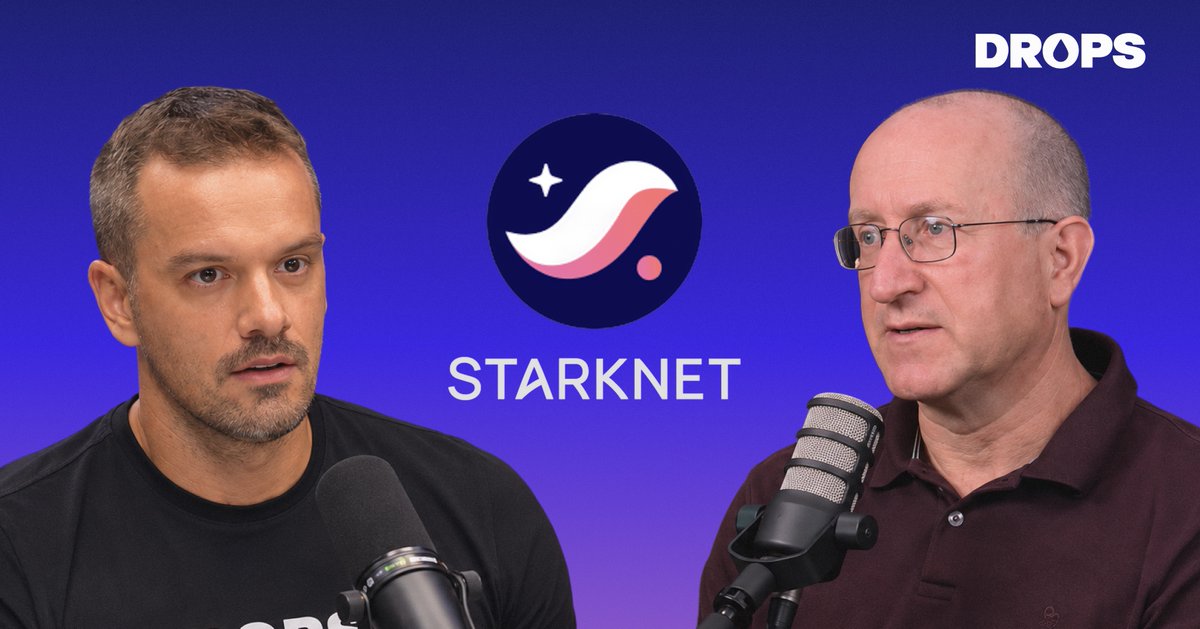
In this episode of Drops, I sit down with @EliBenSasson, co-founder of @Zcash, @StarkWareLtd, and @Starknet, to explore why he believes blockchain will become the foundation of how people and AI agents transact. We discuss his journey from academic research to building some of crypto's most influential technologies, the limitations of Bitcoin, the growing importance of financial privacy, and why quantum computing could force the industry to rethink how digital assets are secured.
For Eli, the biggest change happening in crypto has little to do with fluctuating token prices. "This is the future. And most people just don't realize that," he says. "The infrastructure for the global economy is being rebuilt as we speak."
From Abstract Mathematics to Building Zcash
In 2013, Eli was a professor of theoretical computer science working on zero-knowledge proofs, a cryptographic technique that allows someone to prove a statement is true without revealing the underlying information. Although he recognized the mathematical significance of his research, he struggled to identify compelling real-world applications.
That changed when he attended a Bitcoin conference in San Jose. After presenting his work to a relatively small audience, several Bitcoin developers approached him with an unexpected question: "Where's the code?" Eli realized that zero-knowledge proofs could address two fundamental problems facing Bitcoin: privacy and scalability. He eventually co-authored an academic paper proposing privacy improvements for Bitcoin, but when integration proved difficult, he partnered with developers to help create Zcash, a cryptocurrency designed to bring privacy to digital money.
Why Privacy Is Essential to the Future of Money
Bitcoin introduced the possibility of transferring value without relying on a central financial institution, but its public ledger makes it fundamentally incompatible with everyday financial activity. Eli compares this to announcing every purchase you make, including information about how you paid for it.
While transaction transparency can help trace illicit financial activity, it also exposes ordinary users to surveillance and financial profiling. For individuals, privacy protects spending habits and personal financial information. For businesses, it can be essential to maintaining confidentiality around salaries, suppliers, and commercial relationships. Zcash was built to address this problem by allowing transactions to be verified without exposing sensitive details.
Yet widespread appreciation of financial privacy took longer than Eli anticipated. He attributes this to several factors, including Bitcoin's resistance to major changes, the difficulty of using early privacy tools, and regulatory uncertainty surrounding privacy-focused cryptocurrencies. As those conditions have evolved, the need for privacy has become increasingly apparent.
The Quantum Threat and Bitcoin's Resistance to Change
Eli's concerns extend beyond privacy to whether today's blockchains can remain secure in the decades ahead with the threats of quantum computers and advances in artificial intelligence. When asked whether Bitcoin held for another 20 years would remain safe, Eli acknowledges the uncertainty. "I wouldn't say it's 100% safe." His greater concern, however, is Bitcoin's reluctance to change.
Although Bitcoin's conservative approach to upgrades is often seen as a strength, Eli believes it could become a vulnerability if emerging threats require significant modifications. This concern helps explain his work on ZK-STARKs, a class of cryptographic proofs designed to offer scalability and resistance to quantum attacks.
To explain their usefulness, Eli introduces an unusual example involving Darth Vader. Imagine asking Darth Vader to process an entire day's worth of Bitcoin transactions. You wouldn't trust his account of the results. But with a STARK proof, you could independently verify that the computation was performed correctly without repeating all the work. The technology makes it possible to verify complex computations efficiently, without needing to trust whoever performed them, and combining this capability with quantum-resistant cryptography creates a stronger foundation for future financial infrastructure.
Starknet and the Next Evolution of Digital Money
Eli sees Starknet as the next step in a progression that began with Bitcoin. Bitcoin introduced scarce digital money, then Ethereum made digital assets programmable, enabling lending, borrowing, trading, and other financial applications, Zcash added privacy, and Starknet aims to bring these capabilities together while improving scalability, usability, and cryptographic security. Starknet's approach also makes it easier to adopt different security mechanisms without rebuilding the surrounding infrastructure.
His team is also exploring whether Starknet should become an independent Layer 1 blockchain, reducing its reliance on Ethereum and potentially allowing it to respond more quickly to emerging threats. But he acknowledges that technical superiority alone doesn't guarantee adoption, and the market may not ultimately choose Starknet. What he does know is the kind of technology he wants to build is private, programmable, adaptable, and resilient against future security threats.
Why AI Agents Could Accelerate Blockchain Adoption
As AI agents increasingly manage purchases, services, and other economic activities, they will need financial infrastructure that allows them to transact efficiently. Eli argues that blockchains are better suited for these interactions than conventional financial systems, particularly when privacy, scalability, and programmability are built into the underlying infrastructure.
He envisions AI agents adopting blockchain-based payments first, followed by humans and eventually traditional financial institutions. The practical applications are already emerging, with StarkWare supporting confidential stablecoin payrolls, an application that demonstrates how blockchain could eventually be adopted into everyday business operations.
Who Will Control the Digital Economy?
Despite his confidence in the technology, Eli recognizes that centralized systems are convenient, and people may ultimately prefer relying on a handful of powerful corporations rather than managing decentralized alternatives.
He sees a similar possibility emerging in AI, where a small number of companies could come to control the systems people depend on. For Eli, the question extends beyond which blockchain succeeds. It concerns whether the next generation of financial infrastructure will empower individuals or concentrate control in increasingly powerful institutions.
His motivation remains rooted in the same belief that has guided his work for more than a decade: technology should give people greater autonomy. Whether Starknet becomes the dominant platform is ultimately less important to him than the success of decentralized technology itself.
"I just want decentralization, blockchain, the use of good technology that empowers individuals. I want that to win."
👉If you enjoyed reading the summary, head over to When Shift Happens on YouTube or your favorite podcast platform to access the full convo.
that's the week on starknet ⚡️
privacy. bitcoin. post-quantum.
the chain is building in every direction, and we'll keep covering all of it.
follow for the recap every sunday.
explore the ecosystem 👉 https://t.co/UB9oJ7zAPT
nfa, just starknet gm.
happy sunday ☕️