Your EDR sees a node process making API calls. The process tree ends there.
The prompts, model invocations, security evaluations, policy decisions: all invisible.
Prompt lineage is the process tree for AI. Every request, model call, and policy decision in a single trace from first prompt to final token.
Your EDR sees the process. Starseer sees the reasoning.
https://t.co/CQdLBDqXAt
We beat full fine-tuning with 31% fewer layers.
On GSM8K math reasoning, full LoRA across all 32 layers of Llama-3.1-8B produced:
→ 59.2% exact match
→ 34.8% answer found
Starseer's combined interpretability signal, using 22 layers:
→ 60.7% exact match (+103%)
→ 58.6% answer found (+168%)
Fewer layers. Better results. On both metrics.
The conventional assumption is that more adapters equal better performance. Our data shows the opposite. When you can see inside the network and identify which layers actually encode the target behavior, you stop wasting compute on layers that add noise instead of signal.
This isn't just about cost savings (though 31% fewer trainable layers is significant). It's about better outcomes from the same model, achieved by understanding what's happening inside it.
Interpretability isn't just for alignment research. It's a production optimization tool.
Learn more: https://t.co/FdVSzRRxTo.
#AI #FineTuning #MachineLearning #LLMs #ModelOptimization
3 layers. 17 models. 7 architectures. 85%+ accuracy.
We tested jailbreak detection using just 3 layers selected by activation patterns, across every major open-source model family: Mistral, Llama, Qwen, Olmo, and others. Models ranged from 0.5B to 32B parameters.
The accuracy held between 85.2% and 87.1% across all of them.
Here's the part that surprised us: in most cases, using all layers actually performed worse. The full network introduces noise from layers that aren't relevant to the classification task. Targeted selection removes that noise.
This means the method is architecture-agnostic. The signal Starseer identifies isn't specific to one model family. It's structural. When your model stack evolves, the same interpretability approach transfers without a rewrite.
3 layers out of 24 to 64. That's not a shortcut. That's precision.
Full results in our latest research: https://t.co/6ovD13Bw0K.
#AI #ModelOptimization #AISafety #Interpretability #MLOps
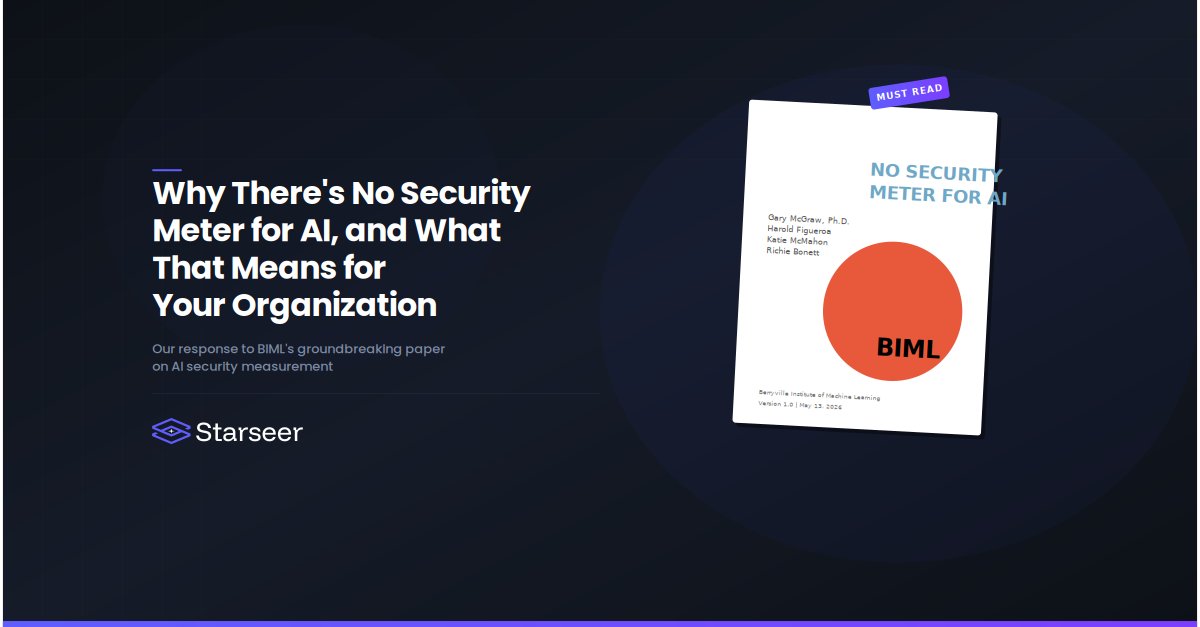
"No Security Meter for AI" from BIML is the most important AI security paper this year.
Benchmarks don't measure security. Output monitoring misses threats by design. The only way forward is getting inside the model.
Starseer was built on that thesis. BIML's independent research just validated it.
Our takeaways: https://t.co/od3CNvFslY
Your guardrail is slower than your model.
Most AI safety stacks run a separate 7–9B parameter guard model alongside production inference. ShieldGemma-9B adds 570ms. WildGuard-7B adds 106ms. Every request, every time.
Starseer's interpretability-based probe runs in ~38ms.
Same task. Near-identical accuracy (0.9918 vs 0.9953 AUC). Roughly 1,000x fewer parameters.
The difference: instead of running a second model, we read the activation patterns already present in your model's inference pass. The signal is already there. We just extract it.
2.7x faster than the best open-source guard model. 15x faster than the slowest. At production scale, that latency gap compounds into real cost.
Full benchmark comparison in our latest blog post. Learn more at [email protected].
#AI #AISecuirty #Guardrails #ModelOptimization #Interpretability
You're running 7 billion parameters to do what 3 layers can handle.
That's the finding from our latest research at Starseer. We used interpretability signals to look inside neural networks and identify exactly which layers, neurons, and activation patterns drive specific behaviors. Then we stripped away everything else.
The results:
→ Jailbreak detection at 99.2% accuracy, ~38ms latency, ~1,000x fewer parameters than the leading 7B guard model
→ Fine-tuning that exceeds full-layer LoRA performance using 31% fewer layers
→ 85%+ safety classification accuracy across 17 models from 7 different families, using just 3 layers
The industry default is brute force: run every layer, fine-tune every adapter, deploy a dedicated guard model. Our research shows that most of that computation is noise for any given task.
Interpretability isn't a research exercise. It belongs in your ops stack.
Full benchmarks and methodology in our blog: https://t.co/eoZ1lCRN9z
How exposed is your AI stack?
It's the question every security leader is being asked right now, and most don't have a clean way to answer it. Shadow AI is everywhere. Governance policies are half-drafted. Agents are running in production before anyone has audited their credentials.
The 2025 IBM Cost of a Data Breach Report put numbers on what that looks like at scale. Across 600 organizations studied:
→ 97% of those that had an AI-related security incident lacked proper AI access controls
→ 63% had no AI governance policy at all
→ Organizations with shadow AI breaches paid $670K more per incident on average
We built a 4-minute diagnostic scored against eight failure modes from that research: access controls, governance maturity, shadow AI visibility, supply-chain exposure, data sensitivity, agent identity, incident readiness, and high-stakes AI decisions.
You'll see your risk posture, your top 3 gaps with the specific research behind each, and a recommended next step.
No email required to see your results.
Take the diagnostic: https://t.co/nkFHuj1t4S
hashtag#AIsecurity hashtag#AIgovernance hashtag#ShadowAI hashtag#CISO
"Evidence, not inference."
Here's what AI security looks like when it's built on interpretability instead of guardrails alone:
> Before deployment, AI-Verify examines models against approved baselines, known safe models.
> At runtime, AI-DE engineers detection logic grounded in activation analysis and behavioral baselines, not just output pattern matching.
> In production, AI-EDR runs those detections continuously, monitoring inference chains end-to-end and containing threats before they cause damage.
Three products. Zero handoff gaps. Full coverage from deployment to operations.
Most AI security vendors focus narrowly: a prompt guard here, an access control there, a red team engagement once a quarter. These are useful capabilities. But they're disconnected, and they all share the same fundamental limitation: they can only see inputs and outputs.
Starseer looks inside.
The result is AI security you can defend — to your board, your regulators, your auditors, and your customers. Not "we passed a test." Not "our guardrails didn't fire." Instead: "here is the evidence of what this model learned, how it behaves, and what our detections cover."
That's the difference between security built on inference and security built on evidence.
→ https://t.co/hWgcKclA3U
#AISecurity #MechanisticInterpretability #DetectionEngineering #AIGovernance #Starseer
"Detection that traces the decision, not just the output."
Validating a model before deployment is critical. But models don't operate in a vacuum.
They encounter new data. They drift. Agents make autonomous decisions across multi-step chains. The conditions of production are not the conditions of testing.
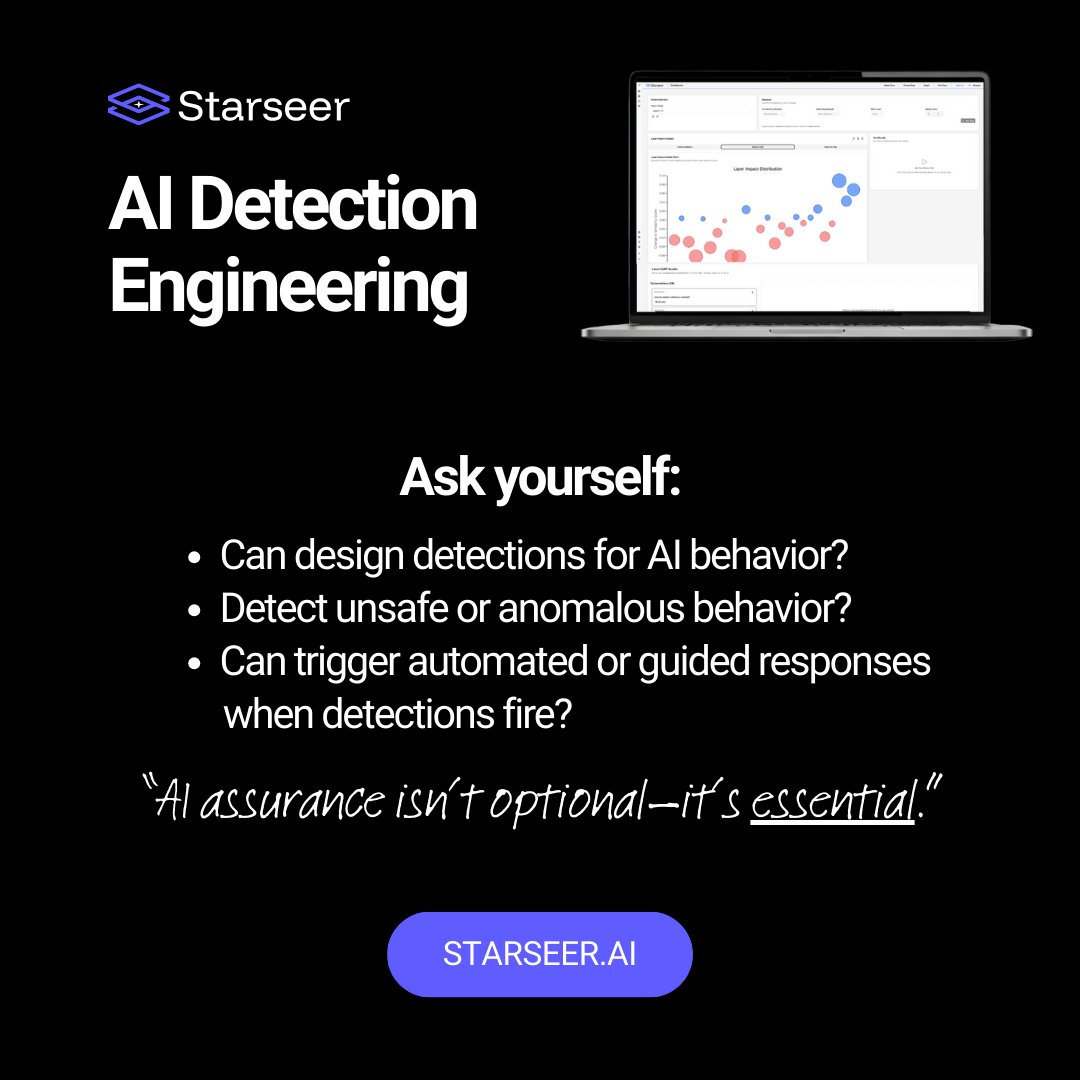
This is where AI Detection Engineering (AI-DE) and AI Endpoint Detection & Response (AI-EDR) take over.
AI-DE engineers the detection logic that watches your models in production:
→ Establish behavioral baselines, by defining what "normal" looks like for this model's activations and decisions
→ Profile activation patterns to define what safe operation actually looks like at the internal level.
→ Build adaptive detections that evolve as your model's operating environment changes.
AI-EDR runs those detections continuously against live models and agents:
→ Monitor the full inference chain, not just final outputs, but intermediate reasoning and decision paths.
→ Detect drift, anomalies, and unsafe behavior as they emerge.
→ Contain threats and trigger response workflows before they impact real-world systems.
The difference from traditional monitoring: when something goes wrong, you don't start an investigation. The answer is already there, in the activation data, the detection history, and the behavioral telemetry.
Root cause becomes a lookup, not a forensic exercise.
#AISecurity #DetectionEngineering #EDR #AIMonitoring #RuntimeSecurity #Starseer
Your engineering team is burning $2,000/month per developer on AI tokens.
Are you sure every one of those tokens is going to the right model?
Here's what we're seeing across the industry:
→ Uber exhausted its full-year AI budget by April
→ A 4-person startup spent $113K in a single month on AI
→ Goldman Sachs found enterprises overrunning AI budgets by orders of magnitude
→ Engineers are "tokenmaxxing," gaming usage metrics with zero productive output
Usage caps don't work. Seat-based licensing doesn't work. You can't solve a routing problem with a billing policy.
What's missing is an intelligent layer between the user and the model. One that classifies intent, enforces policy, and sends each request to the optimal endpoint.
That's the Starseer Intelligent Router. Checkout our latest blog on intelligent routing: https://t.co/P1a1q9WvCN
"Know what's inside before it ships."
You wouldn't deploy software without reviewing the source code for vulnerabilities.
So why do organizations deploy AI models after testing only their outputs?
Behavioral evaluation, running test prompts, checking for toxic outputs, benchmarking accuracy, is necessary. But it only tests what you think to ask. It can't find what it doesn't know to look for.
That's where AI-Verify comes in.
AI-Verify applies interpretability techniques to examine what your model actually learned during training:
→ Are there backdoor circuits, learned pathways that activate only under specific trigger conditions?
→ Does the model encode hidden capabilities beyond its intended function?
→ Do the model's internal representations align with what you expect, or has it learned something different from what your training data intended?
These aren't theoretical risks. Supply chain attacks on open-weight models are increasing. Fine-tuning can introduce unintended behaviors. And models trained on poisoned data can appear to perform perfectly, until they don't.
AI-Verify surfaces these issues before deployment, giving you verifiable evidence of what's inside your model rather than just confidence that it passed a test suite.
Most AI security failures start before deployment. Validation should too.
#AISecurity #ModelValidation #AIVerification #SupplyChainSecurity #Starseer
Your AI guardrails read the prompt.
Ours determine its intent.
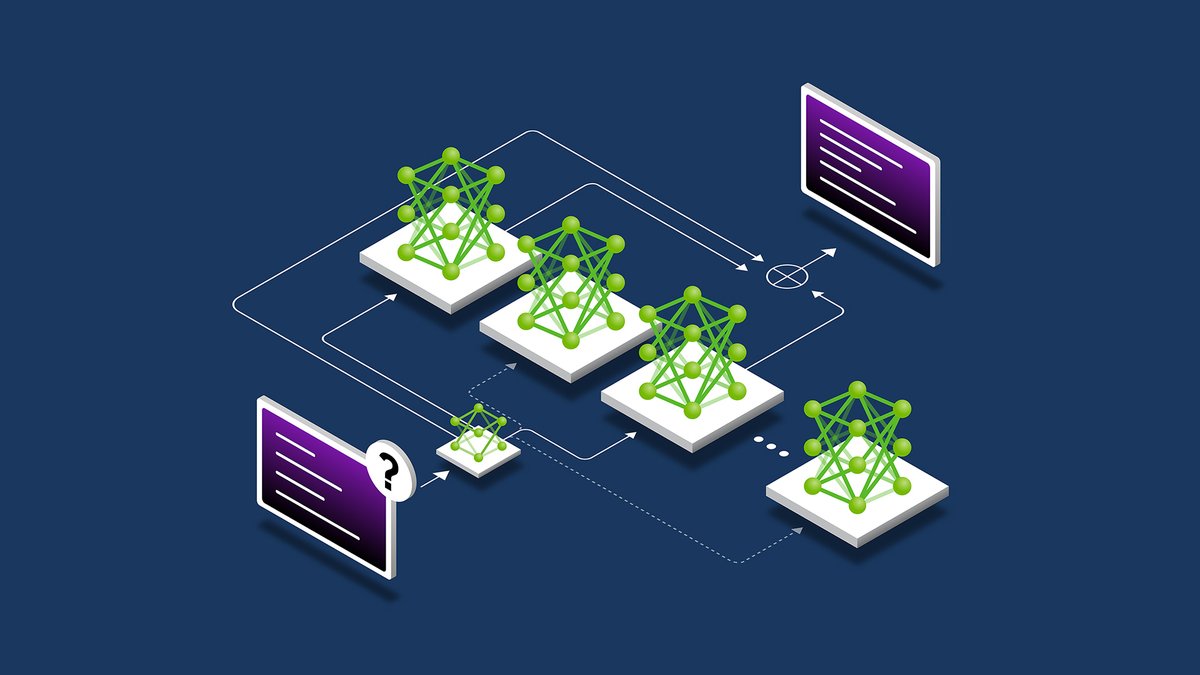
Starseer places an interpretability-instrumented canary model at the gateway, monitoring activations, not text, to catch threats that surface-level filters miss, route requests intelligently, and cut inference costs in a single pass.
Same activation data. Three outcomes. One architecture.
Read the full technical deep dive: https://t.co/goSEpzzQE4
#AISecurity #Interpretability #EnterpriseAI
"What if you could look inside the model instead of just watching the door?"
In traditional cybersecurity, we don't just monitor network traffic at the firewall, we inspect processes, analyze memory, and trace execution paths. We look inside.
AI security hasn't caught up. Until now. Mechanistic interpretability is a set of techniques that open the black box and examine what a model actually learned, not what it outputs, but how it reasons:
→ Activation analysis reveals which internal representations fire during inference and what concepts they encode.
→ Circuit tracing maps the pathways a model uses to arrive at a decision.
→ Behavioral probing tests whether specific capabilities or knowledge exist inside the model.
This isn't explainability for a compliance checkbox. It's a fundamentally different threat detection surface.
When you can see the internal computations, you can detect a backdoor before it fires. You can identify a hidden capability before it's exploited. You can verify that a model's learned representations actually align with your intended use case.
Starseer was founded by cybersecurity practitioners who recognized the value AI interpretability can bring to security, but no one had applied it.
That's what we do. We bring the security operator's mindset to the interpretability researcher's toolkit.
The result: AI security grounded in evidence, not inference.
#AISecurity #MechanisticInterpretability #DetectionEngineering #AITransparency
"Your AI guardrails have a blind spot."
Here's the uncomfortable truth about how most organizations secure AI today: They watch the inputs. They watch the outputs. And they call it security.
Input filters catch prompt injections. Output monitors flag toxic content. Guardrails enforce policy boundaries. It feels comprehensive, but it's perimeter defense around a black box.
The problem? The most dangerous threats don't show up at the perimeter.
Backdoors embedded during training or changed and posted as a newer version produce clean outputs, until they're triggered. Hidden capabilities sit dormant inside model weights, invisible to behavioral testing. Misaligned representations shape every decision the model makes, but never generate a flag.
These threats pass every evaluation. Every red team exercise. Every guardrail you've deployed. It's the equivalent of airport security that scans your bags but can't see what's already inside the terminal.
AI security needs to go deeper than the perimeter. It needs to go inside the model.
#AISecurity #AIRisk #Guardrails #ModelSecurity #Cybersecurity
⚠️ What if attackers weaponize your AI agents’ approved skills?
By abusing trusted tools and permissions, they can exfiltrate data, bypass controls, trigger fraud, and hide in “normal” workflows.
If you’re not testing agent abuse, you’re already exposed.
#AISecurity#AgenticAI
AI is now a major attack surface.
Agents, copilots, and local models are already being targeted via prompt injection, agent hijacking, and model tampering.
Most security tools weren’t built for this. AI needs detection engineering.
🔗 https://t.co/hgF3NP57xd
#AISecurity
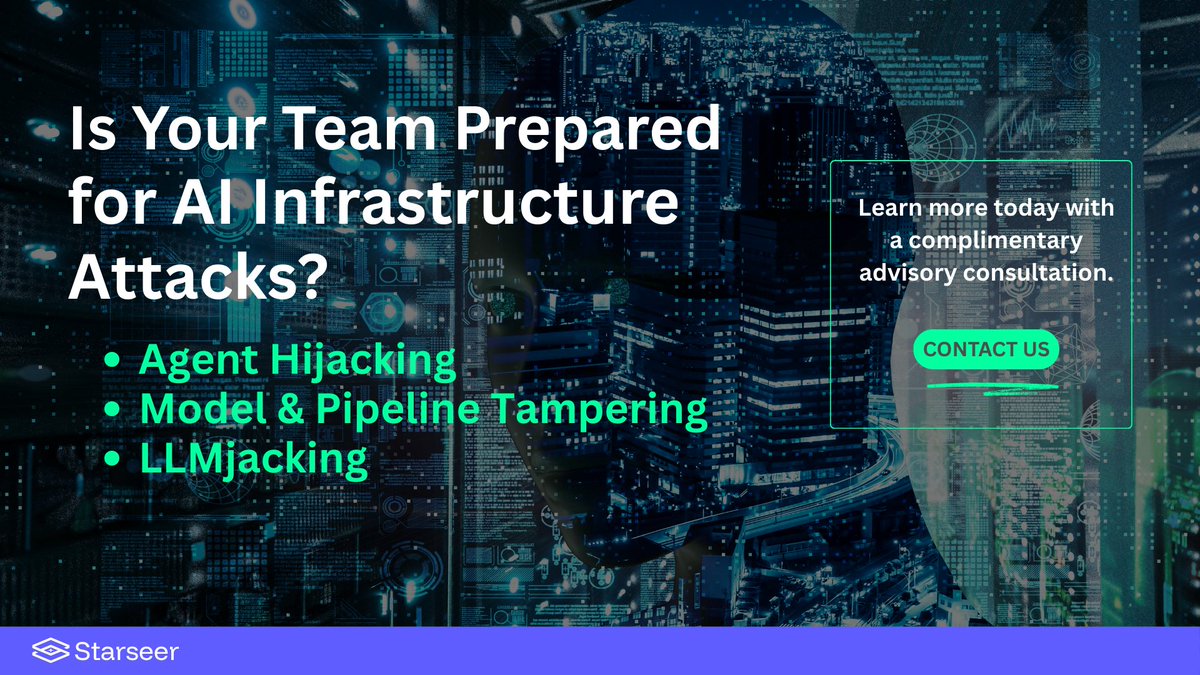
🔓 Is your team prepared for AI infrastructure attacks?
From agent hijacking to model tampering and LLMjacking, adversaries are already abusing enterprise AI systems.
Defenders must emulate, detect, and respond fast.
Book a free advisory: https://t.co/SiZIHM6Dho
⚠️ What if attackers weaponize your AI agents’ approved skills?
By abusing trusted tools and permissions, they can exfiltrate data, bypass controls, trigger fraud, and hide in “normal” workflows.
If you’re not testing agent abuse, you’re already exposed.
#AISecurity#AgenticAI
🌟 Big news from Starseer! We’re excited to welcome Dr. Gary McGraw to our Advisory Board.
A pioneer in software & ML security, Gary brings decades of experience securing complex systems and managing AI risk.
Helping organizations deploy AI with confidence.
https://t.co/2uAwLLqyL2 🔒
#AISecurity #Cybersecurity