Our work highlights the fundamental role of physical cues during host-pathogen interactions and introduces a framework that opens the door to study mechanobiology on deformable tissues.
https://t.co/XKPs5gvQBQ
No doubt others have made these points in all the @eLife change commentary, but there are human factors it may neglect: the joy and satisfaction of having a paper accepted— one of the few ways we get concrete rewards— and the sense of closure of the review/acceptance process
We propose a robust method based on the combination of multitasking learning and unsupervised domain adaptation for segmentation of amoeboid cells in brightfield microscopy.
A strong point is the way the hyperparameters of the model are estimated.
https://t.co/GdEkSY1TEo
Don't miss this Special Issue on Spatial Analysis
Please contact editors Ed Cohen ([email protected]) or Thibault Lagache ([email protected]) for any further question and manuscript proposal.
@blg_journal @StatBioImag
3D cell morphology detection by association for embryo heart morphogenesis https://t.co/R1KS94KoS5
Collaborative work between development biologists and computer scientists. Congrats to all authors
#pluridisciplinarity @INCEPTIONProjet
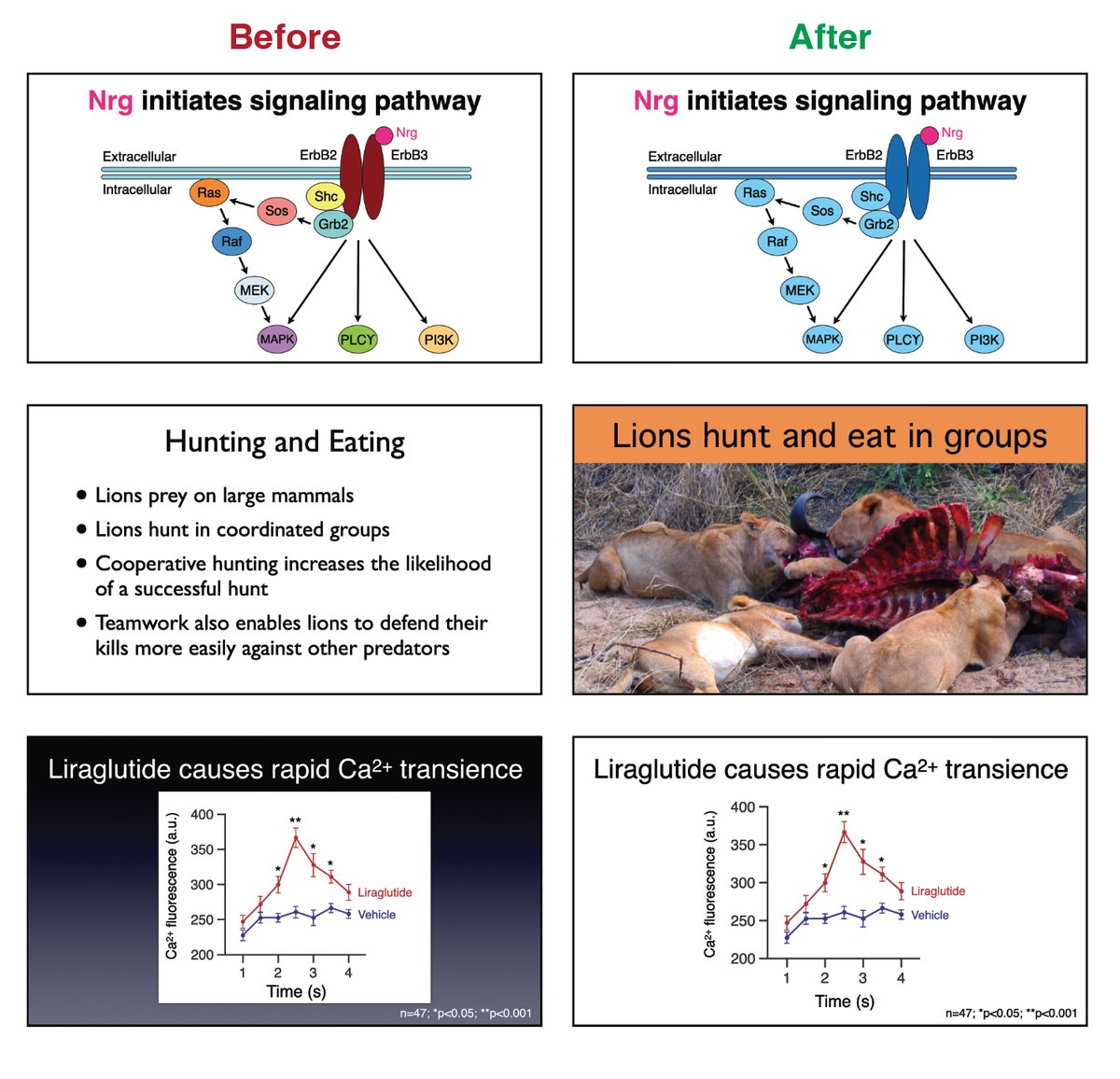
A thread on designing visually appealing slides. There are lots of great books/websites/videos about making slide presentations—this thread will focus on quick visual design tips that are easy to employ. Compiled by @__Matt_Carter__ . 🧵1/25
Our paper "Intrinsic excitability mechanisms of neuronal ensemble formation", describing a non-Hebbian "iceberg" mechanism of ensembles emergence, is published in @eLife https://t.co/xOdzmEWac7