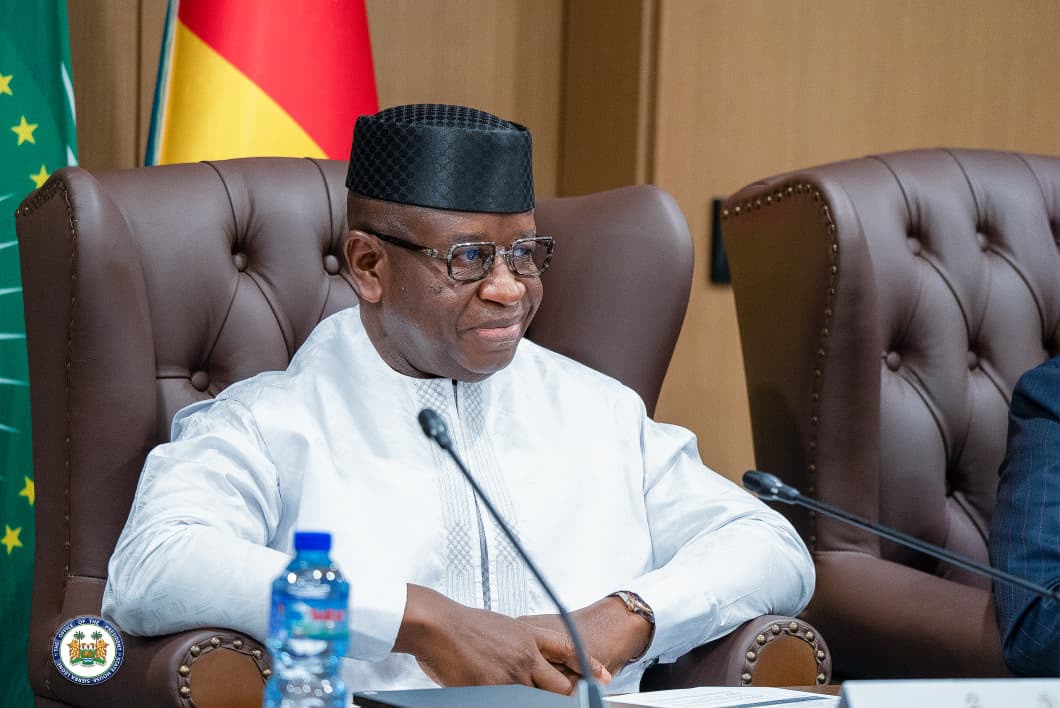
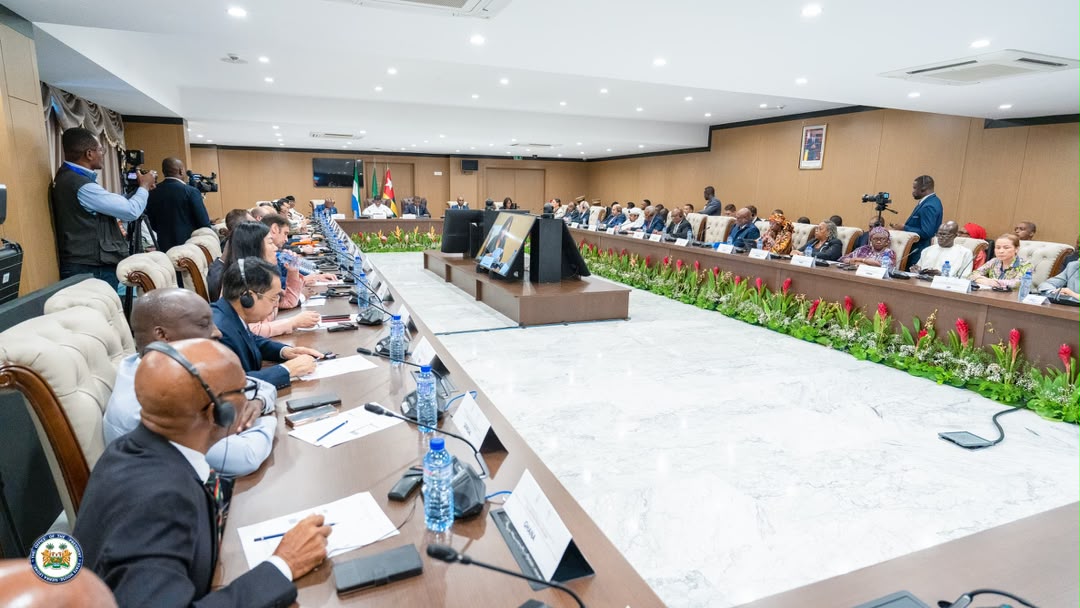
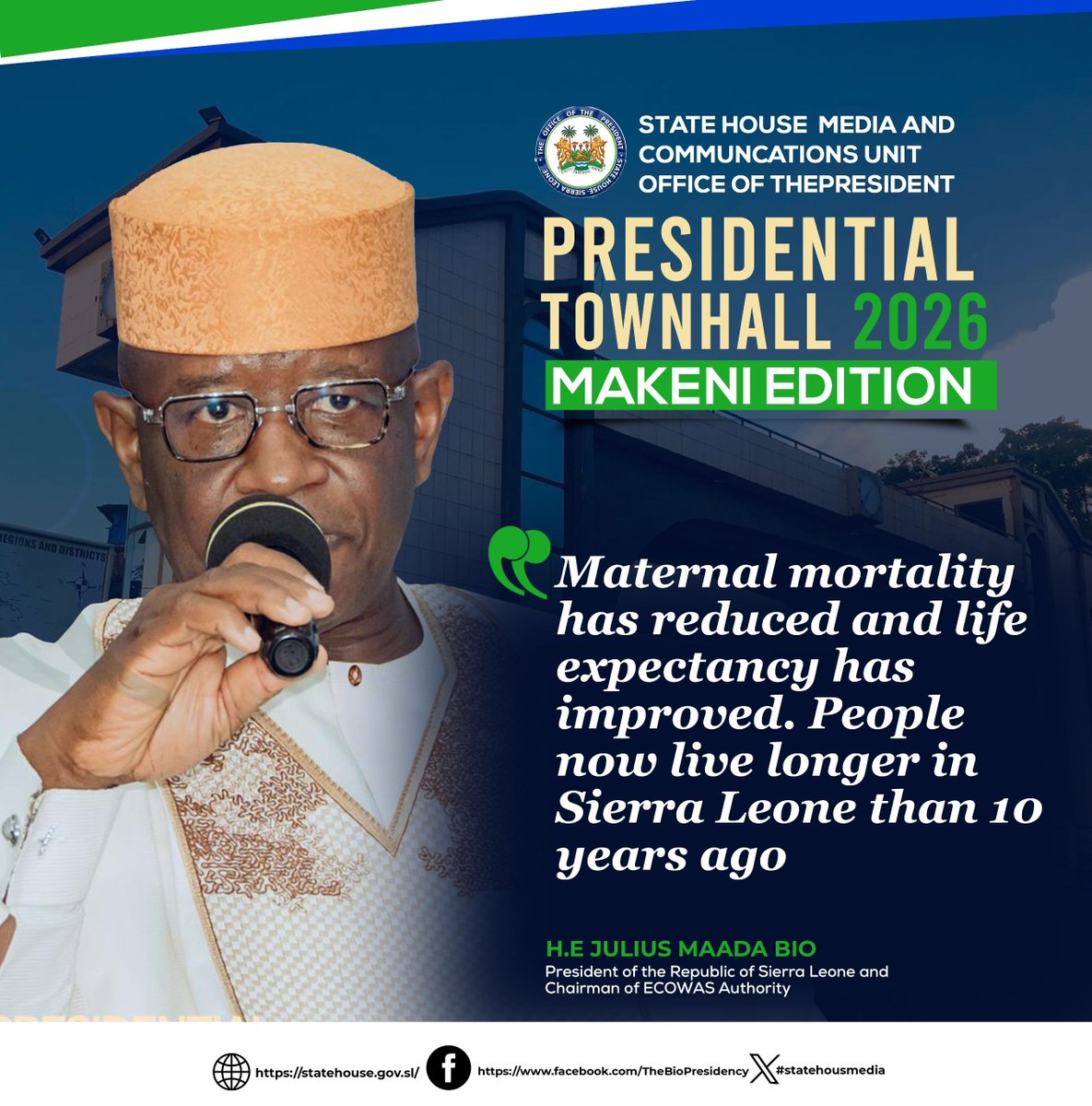
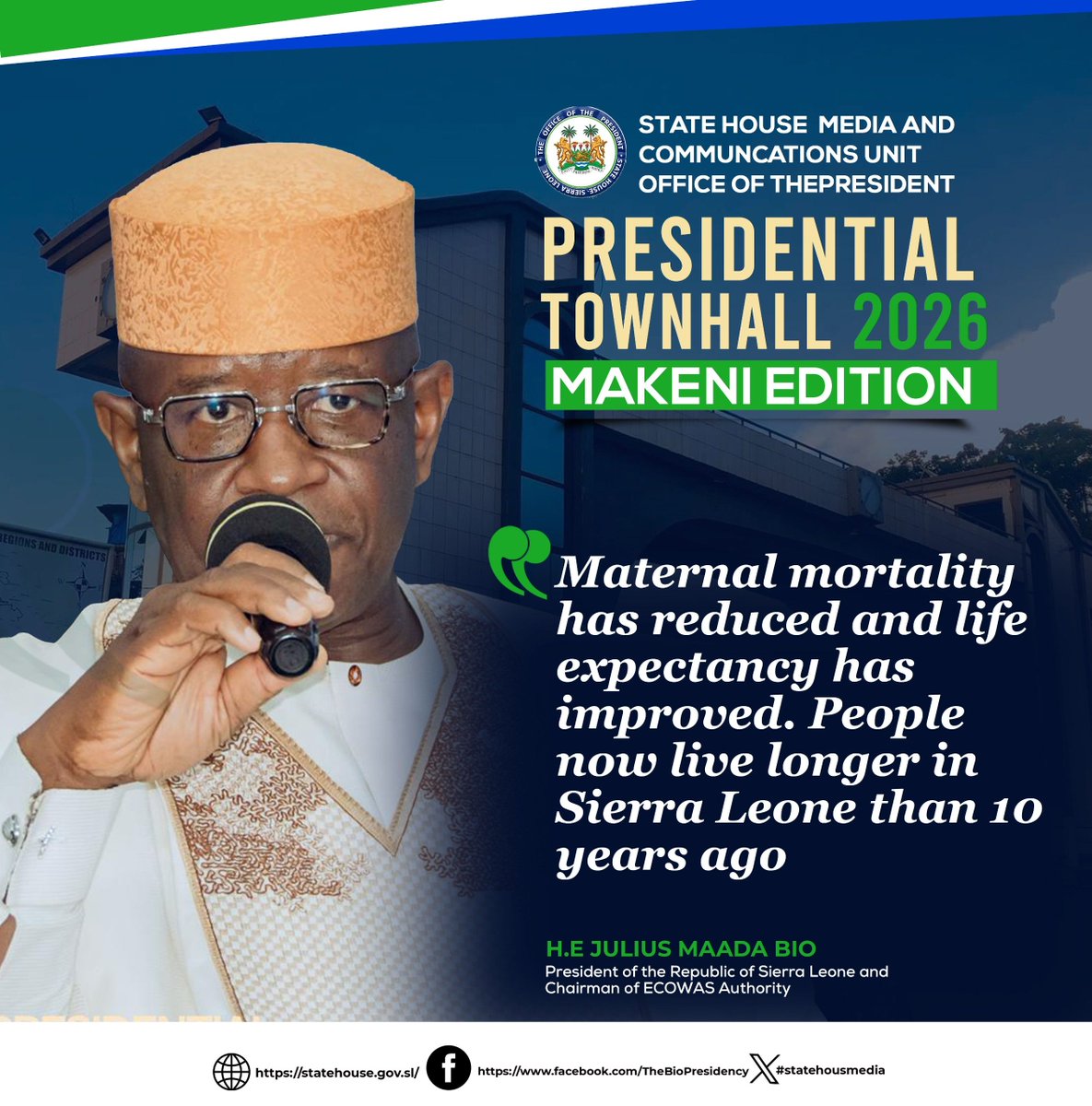
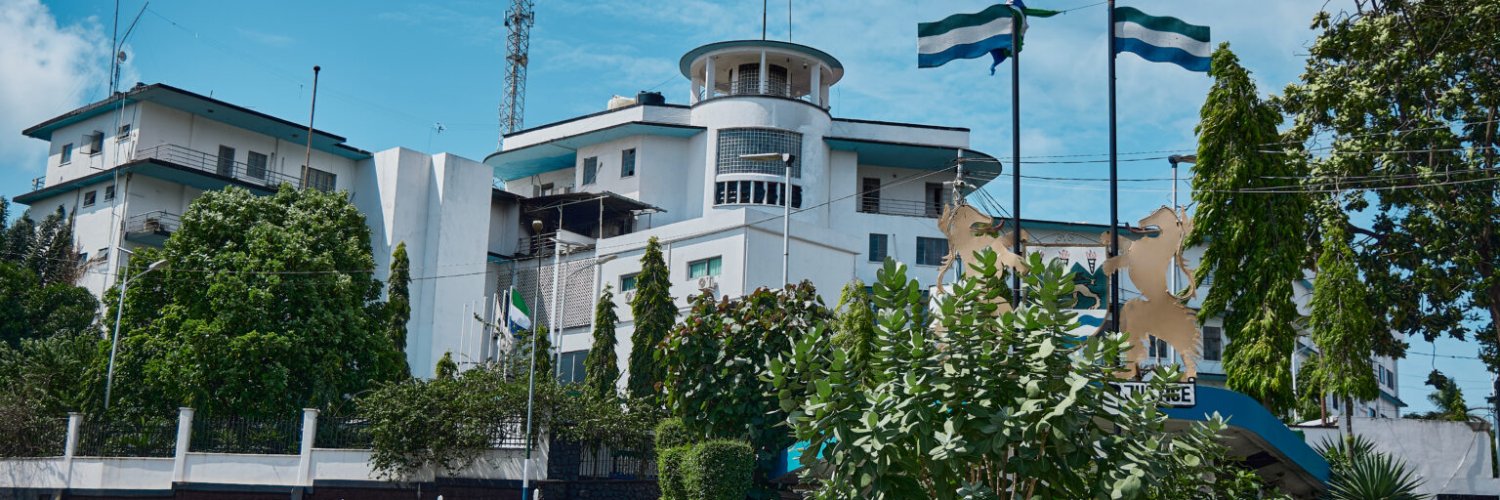
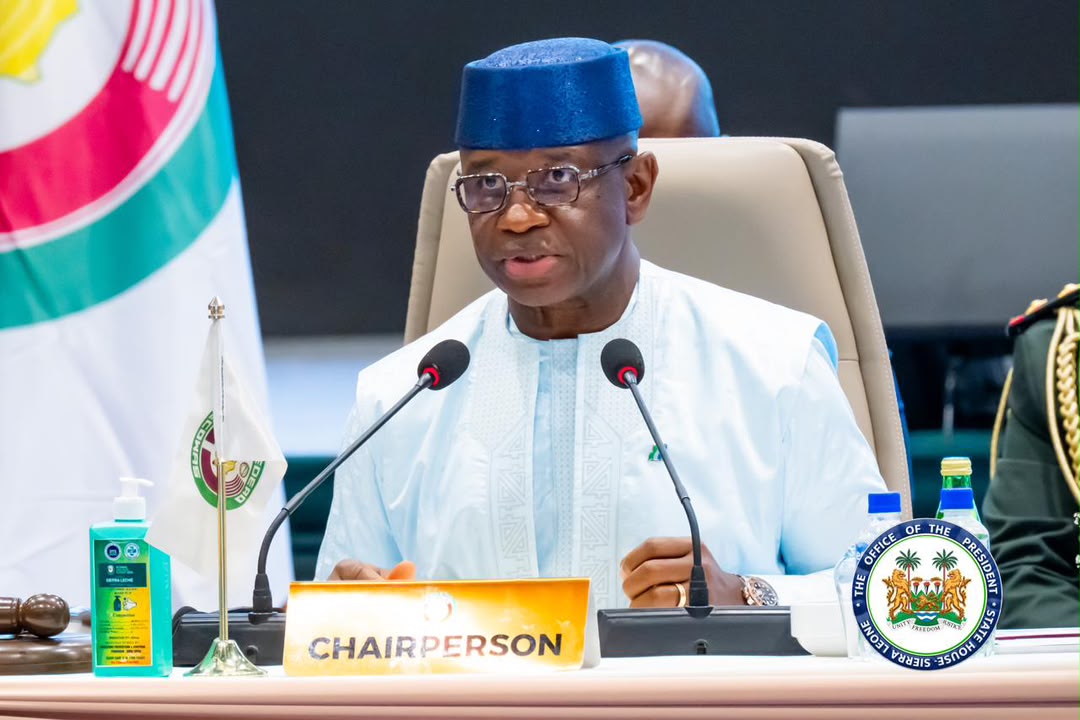
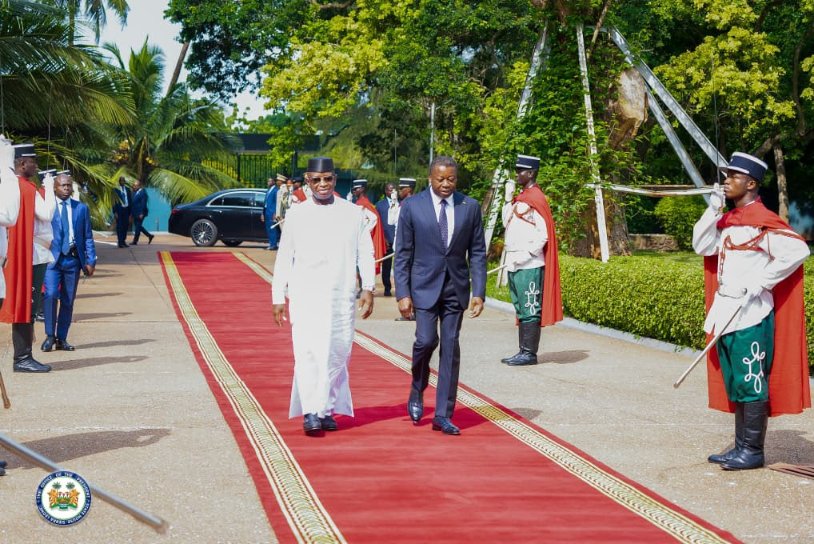
The commissioning of the @julius_maadabio International Conference Centre and the @ecowas_cedeao Logistics Depot during the ECOWAS Mid-Year Summit 2026 marks a defining moment in Sierra Leone’s journey as a trusted hub for dialogue, investment and regional integration.
SIXTY-NINTH (69TH) ORDINARY SESSION OF THE ECOWAS AUTHORITY OF HEADS OF STATE AND GOVERNMENT LUNGI, REPUBLIC OF SIERRA LEONE, 19 JULY 2026 - FINAL COMMUNIQUE. Download full communique
https://t.co/kmNBuHHHcU
Sierra Leone’s President Julius Maada Bio Concludes Transformational @ecowas_cedeao Chairmanship, Commissions Landmark Regional Infrastructure and Hands Over Leadership to Senegal’s President @PR_Diomaye@julius_maadabio International Conference Centre, Lungi, Port Loko District | 18–19 July 2026 - His Excellency President Dr Julius Maada Bio has concluded a landmark tenure as Chairman of the ECOWAS Authority of Heads of State and Government following the commissioning of transformative regional infrastructure that cements Sierra Leone’s position as a hub for diplomacy, peace and regional integration, and a renewed call for West African leaders to invest in their people as the foundation for the region’s future.
The historic events unfolded in Lungi during the ECOWAS Mid-Year Summit 2026, where President Bio officially commissioned the Julius Maada Bio International Conference Centre and the ECOWAS Logistics Depot on the 18th July and on the 19th July, presided over the Summit of the Future on Regional Integration and the 69th Ordinary Session of the ECOWAS Authority of Heads of State and Government, where he formally handed over the Chairmanship of the regional bloc to the President of the Republic of Senegal, Bassirou Diomaye Faye.
The Summit also witnessed the appointment of General Birame Diop, former Minister of Defence of Senegal, former Chief of Staff of the Senegalese Armed Forces and former Military Adviser to the United Nations Secretary-General, as the new President of the ECOWAS Commission.
Reflecting on his one-year stewardship of the regional body, President Bio called on ECOWAS leaders to match vision with action and place greater emphasis on investing in their citizens through resilience, food security, regional trade, peace and accountable governance.
“A region that thinks together strengthens every Member State. A region that acts together secures a more peaceful, prosperous and resilient ECOWAS for all its people. It is a future that we must build together,” President Bio said.
He stressed that sustainable development requires stronger disaster preparedness, improved early warning mechanisms and climate resilience, urging Member States to invest in climate-smart agriculture, expand regional food trade and strengthen strategic food reserves.
“Our decisions must be matched by clear responsibilities, adequate resources, realistic timelines and measurable outcomes. The next fifty years of ECOWAS will not be defined by the declarations we adopt but by what we deliver to our people,” he emphasized.
President Bio further noted that the true success of ECOWAS must be measured not by agreements alone but by implementation, industrial transformation and tangible improvements in the lives of West Africans.
A day earlier, while commissioning the Julius Maada Bio International Conference Centre and the ECOWAS Logistics Depot, President Bio described the two landmark facilities as symbols of a stronger Sierra Leone serving a stronger West Africa.
“Nations are remembered not only for the challenges they overcome but also for the institutions they leave behind. Today, Sierra Leone and ECOWAS are leaving two institutions that will become part of that enduring legacy,” he declared.
He explained that although the facilities have different ownership and purposes, they are united by a common vision of strengthening regional integration, peace, diplomacy and economic cooperation.
Describing Lungi as Sierra Leone’s principal international gateway, President Bio said the commissioning marked the beginning of a new chapter in the country’s development.
“From this gateway, Sierra Leone will increasingly connect West Africa to the world,” he stated.
He described the Julius Maada Bio International Conference Centre as a strategic national investment reflecting Sierra Leone’s growing confidence, ambition and influence within the region.
“For many years Sierra Leone was known principally for its recovery. Today,
President Julius Maada Bio welcomes fellow ECOWAS Heads of State and Government to Sierra Leone as the 69th Ordinary Session of the ECOWAS Authority officially opens. In his remarks, he calls for stronger unity, deeper regional cooperation and a shared commitment to delivering lasting peace, prosperity and progress for the people of West Africa. Watch short highlight…
https://t.co/HWKzVf0E2F
President @julius_maadabio’s Vision in His Own Words: Key reflections from a historic moment as Sierra Leone commissions landmark institutions that strengthen regional integration, diplomacy, and West Africa’s collective future.
As Sierra Leone hosts the inaugural @ecowas_cedeao Mediation and Security Council Meeting today, Wednesday 15th July, watch highlights from the Opening Session, featuring remarks by H.E Omar Alieu Touray, President of the ECOWAS Commission, and @TimKabba, Sierra Leone’s Minister of Foreign Affairs and International Cooperation. Learn more about the Summit: https://t.co/XbmMD9k8MT
Please follow this link to access all photos on the first and second days of the 39th Meeting of the ECOWAS Administration and Finance Committee (AFC)
https://t.co/0FJqC8wp7z
Speech bubbles from the Opening Session of the 39th Meeting of the Administration and Finance Committee, featuring Damtien L. Tchintchibidja, Vice President of the @ecowas_cedeao Commission, Sierra Leone’s Komba Momoh, AFC Chair, and Dr. Habibu Yaya Bappah, Commissioner Internal Services.
The countdown is over! @ecowas_cedeao Mid-Year Summit 2026 is underway!
Today, Freetown hosts the 39th Meeting of the Administration and Finance Committee, marking the start of a landmark week of dialogue, cooperation and decision-making for the future of West Africa.
Welcome to Sierra Leone, and best wishes for productive and successful deliberations.
Sierra Leone’s President Julius Maada Bio Urges Africa to Turn Global Crisis into Continental Opportunity at African Political Alliance Summit
*Lomé, Republic of Togo, 3 July 2026* – His Excellency President Dr. Julius Maada Bio has called on African leaders to transform global crises into opportunities for continental renewal, urging the continent to become an active architect of the emerging global order rather than a passive victim of geopolitical events.
Addressing the Extraordinary Conference of the African Political Alliance (APA) in Lomé under the theme "Africa and the Middle East Crisis: Impacts, Challenges and Strategic Responses," President Bio delivered a broad strategic vision for Africa's economic transformation, diplomatic coordination, security architecture and institutional reform.
Reflecting on the impact of the Middle East conflict on African economies, he noted that rising fuel prices, inflation, disrupted supply chains and reduced investment flows have demonstrated how deeply interconnected the global economy has become.
"The crisis in the Middle East is a stark reminder that, in today's interconnected world, no region is insulated from the consequences of conflict," he said, stressing that such challenges should strengthen Africa's resolve to build resilient economies capable of withstanding future external shocks. "No external crisis can define Africa's future. Only Africa can define Africa's future."
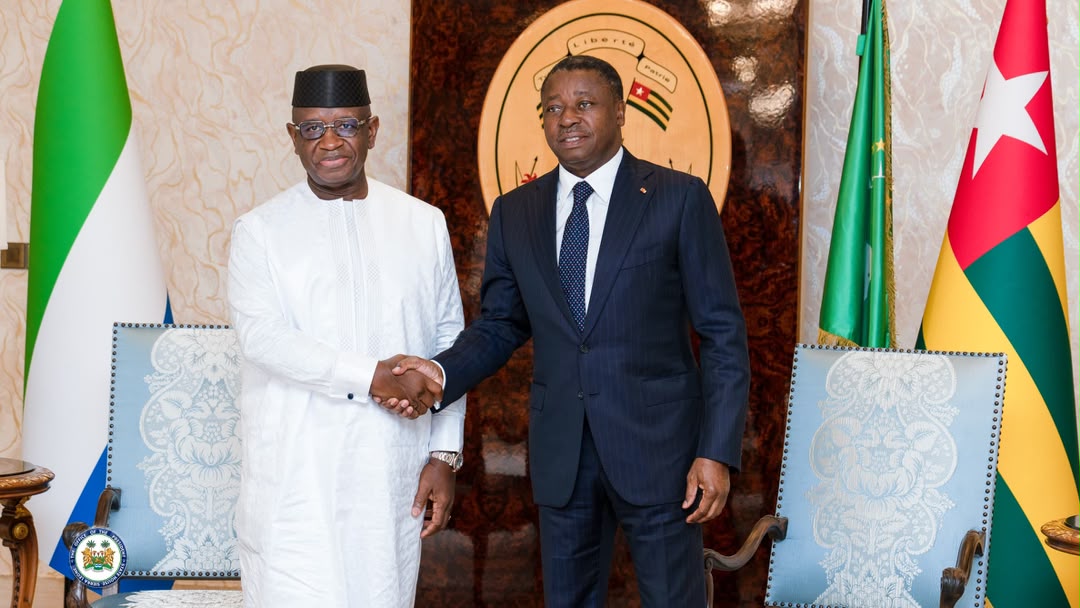
President Bio commended Togolese President Faure Gnassingbé for establishing the African Political Alliance, describing it as an important platform for strategic dialogue and stronger political coordination among African leaders. He maintained that Africa needs more mechanisms to harmonise its positions on global issues while pursuing solutions driven by African leadership.
He also urged the continent to avoid becoming entangled in geopolitical rivalries, insisting that Africa's priority should be protecting its own peace, security and development through diplomacy, international law and negotiated solutions rather than taking sides in global power contests.
Drawing on Sierra Leone's own post-war experience, President Bio underscored that lasting peace is achieved through reconciliation, inclusive governance and political dialogue, observing that sustainable stability cannot be secured by military means alone.
The ECOWAS Chairman devoted significant attention to Africa's economic future, arguing that the continent must end the long-standing pattern of exporting raw materials while importing finished products. He called for accelerated implementation of the African Continental Free Trade Area (AfCFTA), stronger regional manufacturing, expanded value addition, climate-smart agriculture, renewable energy, improved infrastructure and greater investment in domestic productive capacity to enhance economic sovereignty and reduce dependence on external markets.
He further challenged African governments to prepare for the Fourth Industrial Revolution by investing in education, digital infrastructure, innovation, research and entrepreneurship, noting that Africa's youthful population represents one of its greatest strategic advantages.
President Bio also reiterated Africa's longstanding call for reform of the United Nations Security Council in line with the Ezulwini Consensus and the Sirte Declaration, arguing that a continent representing nearly one-fifth of the world's population deserves fair representation in global decision-making.
Speaking as Chairman of the ECOWAS Authority of Heads of State and Government, he reaffirmed the regional bloc's commitment to peacebuilding, democratic governance, regional integration and sustainable development.
To strengthen Africa's collective response to global crises, President Bio proposed establishing a permanent continental mechanism for geopolitical risk assessment and early warning, alongside the development of a common African position on the Middle East crisis to enable the continent to engage international partners with one coherent voice.
Concluding his address, President Bio challenged African leaders to see global instability not simply as a threat but as an opportunity to accelerate industrialisation, strengthen institutions and expand Africa's influence in world affairs.
"The world is changing before our eyes," he said. "The question is not whether change will come. The question is whether Africa will shape that change or be shaped by it."
Reiterating the central message of his address, he concluded: "No external crisis can define Africa's future. Only Africa can define Africa's future."
*For media enquiries:*
*State House Media and Communications Unit*
[email protected]
WELCOME TO THE EIGHTH EDITION OF THE PRESIDENCY NEWSLETTER
We are pleased to present the eighth edition of The Presidency (3rd for 2026), highlighting key milestones in governance, diplomacy, and national development under His Excellency President Julius Maada Bio.
This edition captures progress in strengthening democratic institutions, advancing regional peace and cooperation, and deepening international partnerships.
It also highlights continued implementation of the Feed Salone agenda, major investments in health, education, agriculture, fisheries, and infrastructure, as well as ongoing economic reforms supported by key global partners.
Overall, it reflects Sierra Leone’s steady progress toward stability, inclusive growth, and sustainable development.
Download the Newsletter Below 👇
https://t.co/LYFMh7vgei
Warm regards,
SHMCU
President Julius Maada Bio Commissions Manowa Bridge, Connecting Communities and Unlocking Economic Opportunities in Eastern Sierra Leone
Manowa Town, Kailahun District, Saturday, 20 June 2026 – His Excellency President Dr. @julius_maadabi has formally commissioned the Manowa Bridge over the Moa River in Peje Bongre Chiefdom, Kailahun District, marking a major milestone in the Government’s efforts to improve connectivity, facilitate trade, and accelerate socio-economic development across Sierra Leone. Constructed under the World Bank-supported Smallholder Commercialisation and Agribusiness Development Project (SCADeP), the modern bridge spans the Moa River and is designed to serve communities safely and efficiently for generations to come.
The newly constructed two-lane bridge replaces one of the country’s longstanding ferry crossings and is expected to significantly strengthen connectivity between Peje Bongre and Upper Bambara Chiefdoms while enhancing access across Kpeje West, Upper Bambara, Penguia, and Luawa Chiefdoms. It will reduce travel time and transportation costs while improving access to markets, healthcare, education, and other essential services. The bridge will also enhance the movement of agricultural produce from eastern Sierra Leone, creating new opportunities for farmers and traders.
Speaking at the commissioning ceremony, President Bio reflected on the challenges that residents of Manowa, Pendembu, and surrounding communities had endured for decades as a result of inadequate transport infrastructure.
“For generations, the journey between these communities was never measured by distance alone. It was measured by whether the ferry was operating, whether the rains had arrived, and whether crossing the Moa River was possible at all,” the President recalled.
He noted that since Sierra Leone’s independence in 1961, communities on both sides of the river had depended on a manual cable ferry, which often limited access to markets, healthcare, education, and economic opportunities.
“Today, that changes. Today, we commission the Manowa Bridge, a modern, all-weather crossing that replaces uncertainty with reliability, isolation with connection, and delay with opportunity. This bridge is a declaration that no Sierra Leonean should be disadvantaged because of where they live,” President Bio stated. “A mother no longer has to wonder whether a ferry is operating before seeking medical care for her child. A farmer no longer has to risk delays in transporting cocoa, oil palm, rice, cassava, and other produce to market. This bridge will transform lives and livelihoods,” he added.
The President emphasized that the bridge is the result of a deliberate Government policy to connect isolated communities and invest in infrastructure that improves the daily lives of citizens.
“Through our partnership with the World Bank under SCADeP, we committed ourselves to replacing unreliable ferry crossings with resilient bridge infrastructure that can serve communities safely throughout the year. The Manowa Bridge is a flagship symbol of that commitment,” he said.
The President also recalled that in 2020, the Government secured a US$30 million World Bank grant to replace seven manual ferry crossings nationwide with modern bridges. He announced that four of those bridges, Manowa, Mattru-Senehun, Gendema, and Tomparie, have now been completed.
“These projects are part of a national programme to connect communities, unlock economic potential, strengthen resilience, and ensure that development reaches every corner of Sierra Leone,” he said.
First Lady Dr. Fatima Maada Bio described the bridge as another demonstration of President Bio’s commitment to national development and inclusive growth. She commended the Government’s efforts in replacing old ferry crossings across the country, noting that such investments improve the lives of ordinary citizens, particularly farmers and rural communities.