Governments and regulators globally increasingly shape what you can see, say, and share online.
Across the @StateDept, U.S. diplomats are championing free speech and privacy in digital spaces.
Follow @State_DF for the latest on our fight to defend digital freedom.
.@POTUS in China: "The United States is also proud to be the world leader in Super Intelligence... We oppose any form of globalist regulation or anything to control or stifle SI — and we won't allow that to happen."
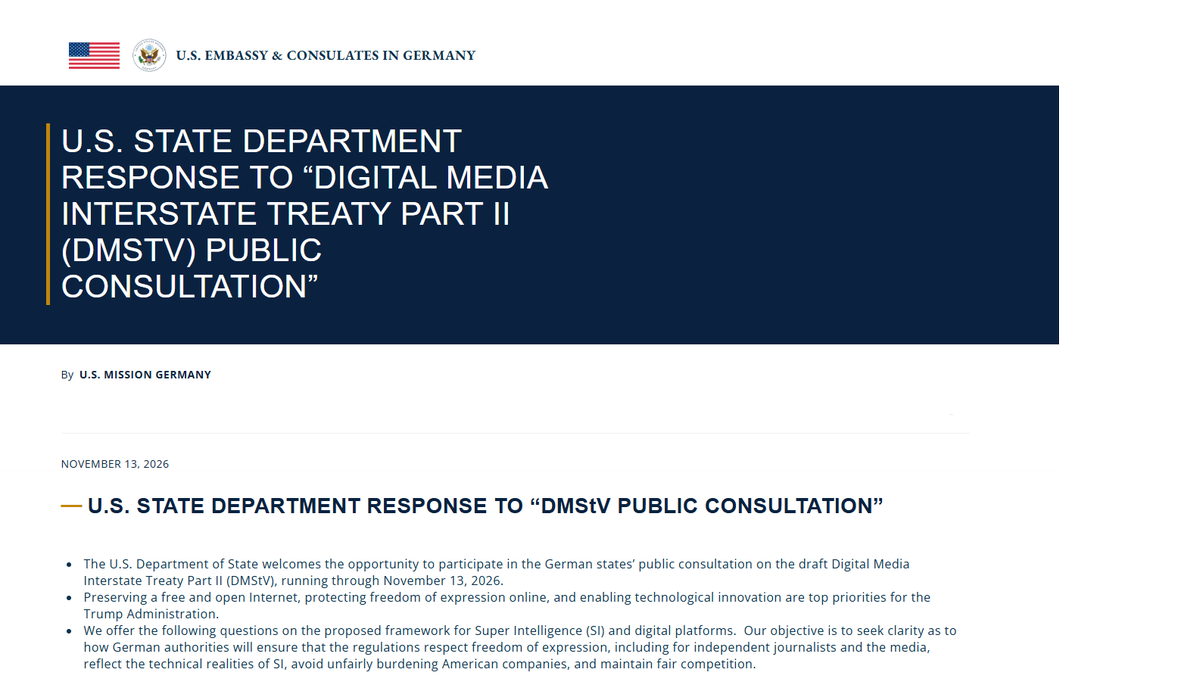
Germany’s 16 states are advancing amendments to the Digital Media Interstate Treaty (DMStV) that would significantly expand regulators’ reach over American social media and super intelligence companies - including requiring U.S. platforms to give preferential visibility to regulator-approved outlets.
The proposed changes could undercut independent journalism and content creators, impose sweeping compliance burdens, compel design changes to American platforms operating abroad, and invite viewpoint-based censorship.
The U.S. government welcomed the opportunity to pose several questions to the UK on their plans, and we look forward to them being addressed as part of the consultation record.
Our full response is available to the public @USAinUK:
https://t.co/xRqVNjVlkT
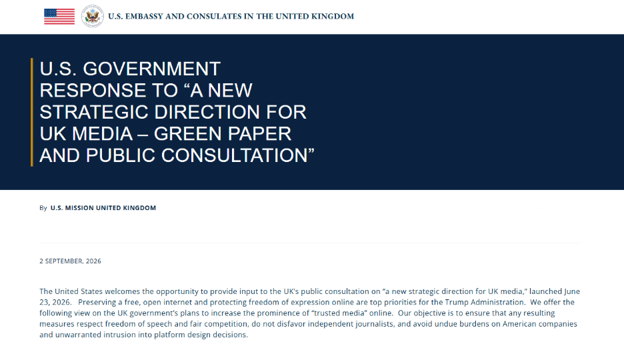
The UK government recently concluded a public consultation period on proposals that could require social media platforms to give greater visibility to UK public service media like the BBC and other “trusted news” sources in users’ feeds.
This week, the U.S. government provided formal input to the consultation and asked that the UK withdraw any plans to mandate that platforms algorithmically amplify government-preferred media. We raise serious free-speech and economic concerns about such plans and the potential impacts on users, independent journalists, and businesses beyond the UK’s borders.
YouTube has already warned that the proposed rules could result in downgraded visibility and stifle growth for creators, independent journalists, and outlets not designated as “trustworthy.”
Reporting like this is why it's dangerous for countries to force social media platforms to "prioritize" state and other establishment outlets, while suppressing independent voices.
Importantly, any organization interested in defending free speech and digital innovation can apply to FTEP. This is a great way for the government to take advantage of private-sector talent, and zero cost to the taxpayer. More here:
https://t.co/w3IeuhQS68
FTEP allows America’s foremost innovators – including those from cutting-edge tech companies like Palantir and Anduril – to serve the public while remaining employed and paid by their private firms.
The Intercept takes umbrage that the government would work with these companies (which are among the highest-profile government contractors), though its coverage curiously omits other great FTEP partners: @VoCommunism and @bitcoinpolicy
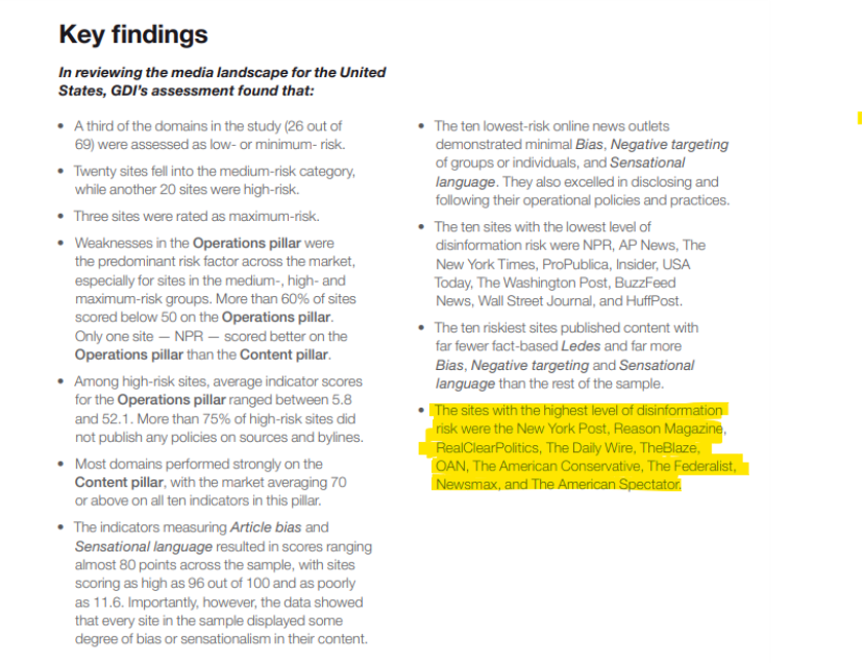
In 2020, the Knight Foundation funded the Global Disinformation Index (GDI), an organization that compiled exclusion lists for advertisers of news sites deemed high-risk for so-called disinformation.
In reality, GDI systemically throttled conservative American sites. GDI's 2022 list of the ten “riskiest” U.S. outlets consisted entirely of right-of-center outlets.
The Intercept misrepresents the @StateDept’s Freedom Tech Excellence Partnership and the organizations involved. We are deeply proud of this program and our partners, who will bring world-class technical expertise to the government and bolster our efforts to advance free speech and digital freedom.
Most importantly, we get top talent at zero cost to the taxpayer.