Clean cooking in urban Kenya rose from 63.3% of households in 2022 to 70.3% in 2025-26.
In rural areas, it stayed at about 9%, where most homes still cook with firewood.
Unmet need for family planning among sexually active unmarried women in Kenya rose from 19.2% in 2022 to 29.8% in 2025-26.
Among married women, it rose from 13.9% to 15.5%.
Share of people with at least basic drinking water service, by county, 2025-26.
1 Nairobi 97.3%
2 Kiambu 96.9%
3 Mombasa 96.5%
4 Uasin Gishu 89.7%
5 Nyandarua 89.1%
Lowest: Narok 26.1%, Kitui 31.3%
Kenya: 73.4%
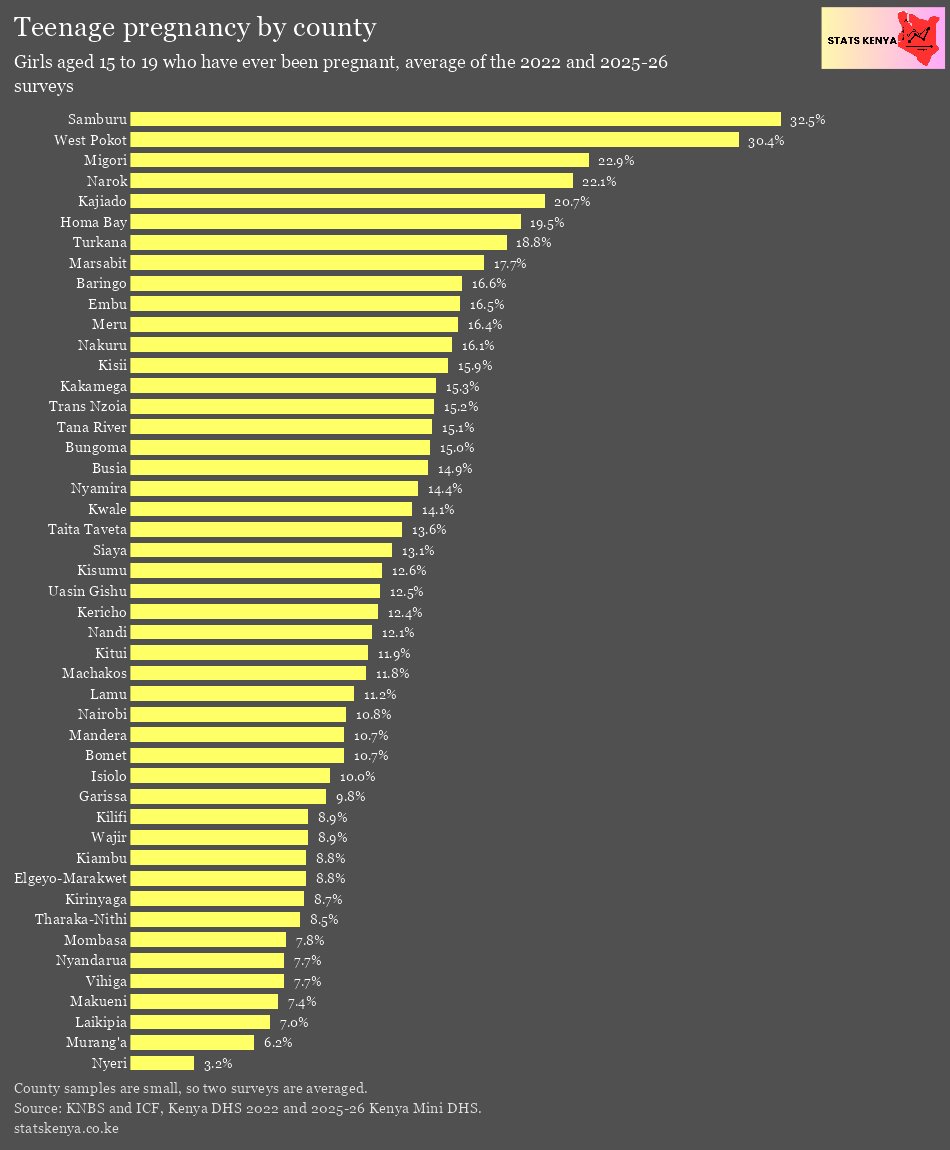
Share of girls aged 15 to 19 who have ever been pregnant, by county (average of the 2022 and 2025-26 surveys).
1 Samburu 32.5%
2 West Pokot 30.4%
3 Migori 22.9%
4 Narok 22.1%
5 Kajiado 20.7%
Lowest: Nyeri 3.2%, Murang'a 6.2%
Kenya's installed power capacity by presidential term.
- Kibaki added 548 megawatts to the grid in 10 years.
- Uhuru added 1,632 MW in 9 years.
Ruto found 3,321 MW in 2022. As of 2025, installed capacity had dropped to 3,237MW, or a drop of 84 MW.
HELB lent university students KSh 62.0 billion in 2025/26, more than four times the KSh 13.8 billion in 2022/23.
Universities enrolled 722,485 degree students this year.
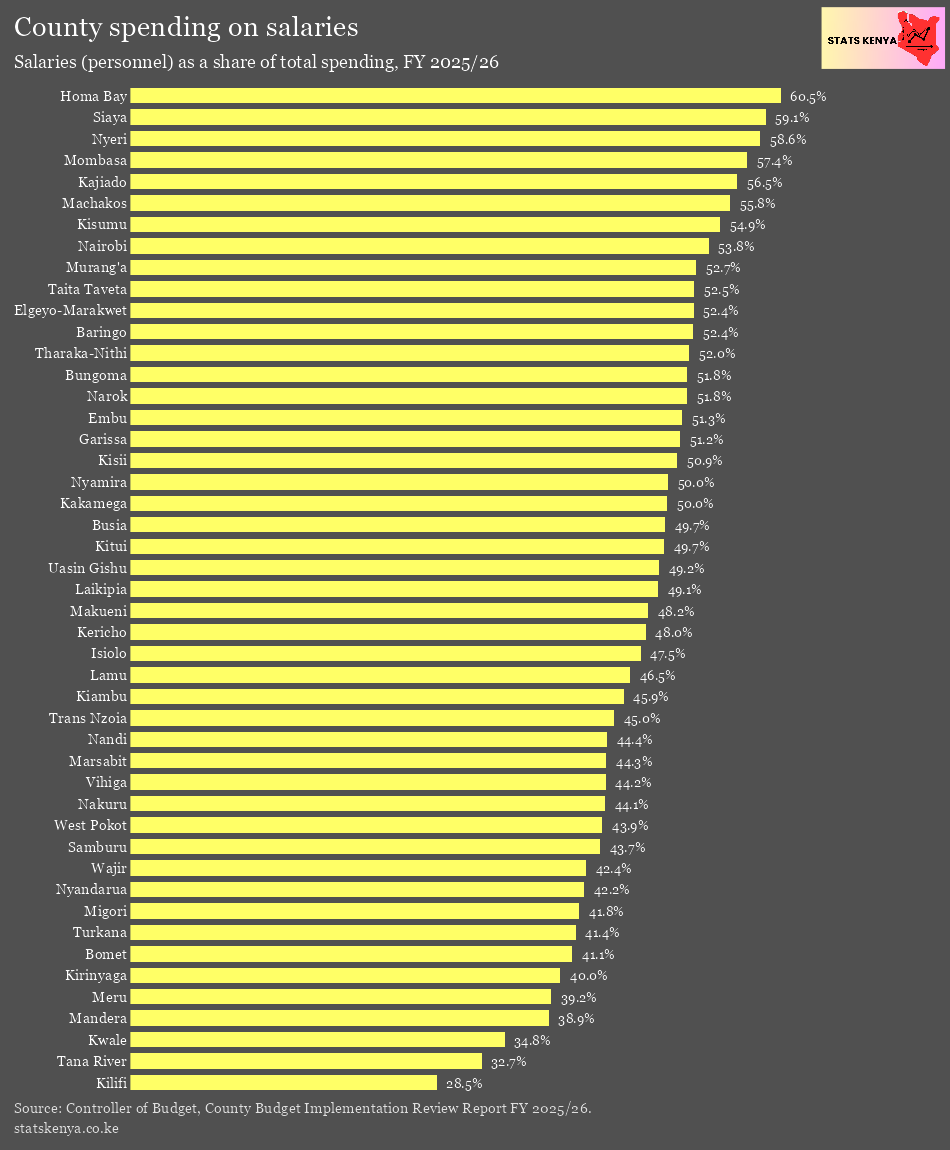
Share of county spending that went to salaries, FY 2025/26.
1 Homa Bay 60.5%
2 Siaya 59.1%
3 Nyeri 58.6%
4 Mombasa 57.4%
5 Kajiado 56.5%
Lowest: Kilifi 28.5%, Tana River 32.7%