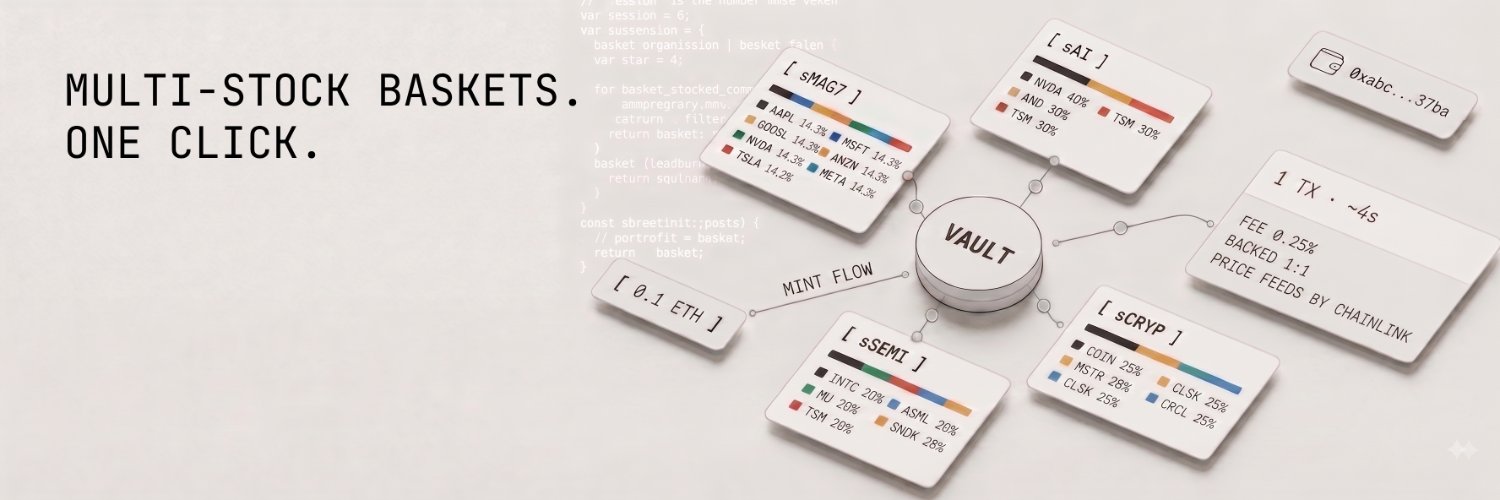
If you want exposure to seven stocks on-chain right now, you're making seven trades, paying seven fees, and rebalancing by hand forever.
Stax does it in one. Deposit USDG into a basket, the vault buys all the underlying stock tokens at Chainlink prices and mints you a single token for the position. Redeem it any time and it unwinds the whole thing back into USDG.
Rebuilt the core swap engine to route through Uniswap V4 directly, verified against real, successful on-chain transaction data.
Resolved and confirmed real liquidity pools for all 21 stock tickers across our current six baskets, checked directly against live chain data.
Security has been a heavy focus: automated static analysis, multiple independent rounds of adversarial review actively trying to find exploitable bugs, and a full invariant fuzzing campaign running hundreds of thousands of simulated transactions against the contract's core accounting. 37 tests passing.
Mainnet's getting closer. More soon.
Mag 7. AAPL, MSFT, GOOGL, AMZN, NVDA, META, TSLA - the seven companies that drive most of the S&P's movement. Equal weight, 14.3% each.
Buy it on-chain and that's seven trades, seven fees, seven positions to track. With Stax it's one deposit and one token, and the vault holds all seven for you until you want out.
One deposit, one transaction, and the vault does the buying for you. It splits your ETH across every ticker in the basket, holds the stock tokens, and mints you a single token for the position.
Getting out is the same path in reverse. No pool to exit through and nobody on the other side of the trade.
The interesting part of stocks going on-chain was never that you can buy AAPL on a DEX. It's that the fund wrapper stops being a company and becomes a contract.
That's Stax. Pick a basket, deposit ETH, and one transaction gets you every ticker in it. The vault holds the actual stock tokens, so what you own is a claim on real holdings rather than a promise from an issuer, and burning your token sells your exact share and sends the ETH back.