🌐 World crude steel output down 1.9 percent in April 2026
Global crude steel production in April this year decreased by 1.9 percent year on year to 153.4 million mt, according to the World Steel Association (worldsteel).
In the January-April period this year, global crude steel production decreased by two percent year on year to 613.3 million mt.
In April, crude steel output in Asia and Oceania amounted to 114.2 million mt, down 1.3 percent, with China’s output at 83.6 million mt, down 2.8 percent, with 6.6 million mt produced by Japan, increasing by 0.3 percent, 13.8 million mt produced by India, rising by 3.9 percent, and 5.2 million mt produced by South Korea, moving up by 4.8 percent - with all comparisons on year-on-year basis.
EU-27 countries produced 11.0 million mt of crude steel in April, down by 1.8 percent year on year. In the given month, Turkey’s output amounted to 3.3 million mt, up 9.4 percent year on year. Germany produced 3.2 million mt of crude steel in April with a 9.5 percent increase compared to the same month in the previous year.
The CIS registered a crude steel output of 6.0 million mt, falling by 13.4 percent on year-on-year basis, with Russia’s estimated output at 5.0 million mt, down 12.4 percent year on year.
In North America, in April, crude steel output totaled 9.4 million mt, up by 6.9 percent year on year, with the US producing 7.2 million mt, rising by 9.4 percent, both year on year. Crude steel output in South America in April amounted to 3.4 million mt, increasing by 3.1 percent compared to the same month in the previous year, with Brazil’s output totaling 2.7 million mt, increasing by 2.8 percent year on year...
📌 Check out the rest on https://t.co/807y2sku8E
The third and final day of the world's number one event for long steel products.
Panel with IREPAS Committee Chairmen
Moderator: Murat Eryılmaz, CEO, SteelOrbis
IREPAS Producers Committee: "Some reduction in steel exports from China are on the table."
IREPAS Raw Material Suppliers Committee: "There could be a slight downward pressure on iron ore prices after BHP’s agreement with China."
IREPAS Traders Committee: "With current uncertainties in the world, it is really impossible to give any predictions for the price direction, it will be the job of all of us to constantly evaluate the situation and analyze the impact."
📍Hydrogen-based DRI: Front Runner or Also Ran?
➡️Dr. John Atherton emphasized that the transition to greener production routes is being driven by both sustainability targets and the need to minimize the environmental impact of raw materials. However, he warned that the shift towards DRI and electric arc furnace (EAF)-based production could create new challenges, particularly regarding scrap availability and quality.
📍Changes in Chinese Steel Consumption Dynamics
➡️Yuan Wenjiong, President, Dao Fortune: "Although there are some early signs of stabilization in the real estate market, such as declining housing inventories and more stable prices, these improvements are not expected to significantly boost steel demand in the near term."
📍CBAM Unlocked: Risk, Opportunity, and the Road Ahead
➡️Jack Laing, Carbon Specialist, CarbonChain: "There is a significant cost difference between default values and verified actual emissions data under CBAM."
📍Steel at a Crossroads: India’s IF Advantage in a Low-Carbon Global Market
➡️Sumit Bhatia, Vice President – New Business Development & Strategy, ARS Steels: "Access to scrap is becoming increasingly decisive in the steel industry."
📍Hydrogen-based DRI: Front Runner or Also Ran?
➡️Dr. John Atherton emphasized that the transition to greener production routes is being driven by both sustainability targets and the need to minimize the environmental impact of raw materials. However, he warned that the shift towards DRI and electric arc furnace (EAF)-based production could create new challenges, particularly regarding scrap availability and quality.
📍Changes in Chinese Steel Consumption Dynamics
➡️Yuan Wenjiong, President, Dao Fortune: "Although there are some early signs of stabilization in the real estate market, such as declining housing inventories and more stable prices, these improvements are not expected to significantly boost steel demand in the near term."
📍CBAM Unlocked: Risk, Opportunity, and the Road Ahead
➡️Jack Laing, Carbon Specialist, CarbonChain: "There is a significant cost difference between default values and verified actual emissions data under CBAM."
📍Steel at a Crossroads: India’s IF Advantage in a Low-Carbon Global Market
➡️Sumit Bhatia, Vice President – New Business Development & Strategy, ARS Steels: "Access to scrap is becoming increasingly decisive in the steel industry."
"Steel derivatives gain traction as risk management and financing tool."
📌Panel: Hedging ferrous metals to unlock commodity trade finance solutions
•The Development of Futures Markets for Steel and Steel Scrap
•New Structured Trade Finance Solutions Tailored to the Steel Industry
•Trade Finance Practices Such as Hedging, Tripartite Agreements (TPAs) for Margin Funding and Unsold Inventory Financing
Moderator: Alberto Xodo, Product Specialist (Steel & Nickel), LME
- John Short, CEO, Boomer Commodities
- Phillip Price, Founder, Pool
"Steel derivatives gain traction as risk management and financing tool."
📌Panel: Hedging ferrous metals to unlock commodity trade finance solutions
•The Development of Futures Markets for Steel and Steel Scrap
•New Structured Trade Finance Solutions Tailored to the Steel Industry
•Trade Finance Practices Such as Hedging, Tripartite Agreements (TPAs) for Margin Funding and Unsold Inventory Financing
Moderator: Alberto Xodo, Product Specialist (Steel & Nickel), LME
- John Short, CEO, Boomer Commodities
- Phillip Price, Founder, Pool
Patrice Ollivaud, economist at the Organisation for Economic Co-operation and Development (OECD) highlighted Recent escalation of the conflict in the Middle East has become a key driver of global economic uncertainty, primarily through its impact on energy markets.
He emphasized that the Strait of Hormuz remains a critical chokepoint for global energy trade, accounting for two fifths of oil and gas flows.
Patrice Ollivaud, economist at the Organisation for Economic Co-operation and Development (OECD) highlighted Recent escalation of the conflict in the Middle East has become a key driver of global economic uncertainty, primarily through its impact on energy markets.
He emphasized that the Strait of Hormuz remains a critical chokepoint for global energy trade, accounting for two fifths of oil and gas flows.
"The steel industry is moving from a focus on efficiency toward security."
📌Long products market outlook
•Overview of Global Construction Sector
•Steel and Long Products Consumption
•Rebar Markets
•International Price Situation
Alex Gordienko, Export Director, Celsa Group
"The steel industry is moving from a focus on efficiency toward security."
📌Long products market outlook
•Overview of Global Construction Sector
•Steel and Long Products Consumption
•Rebar Markets
•International Price Situation
Alex Gordienko, Export Director, Celsa Group
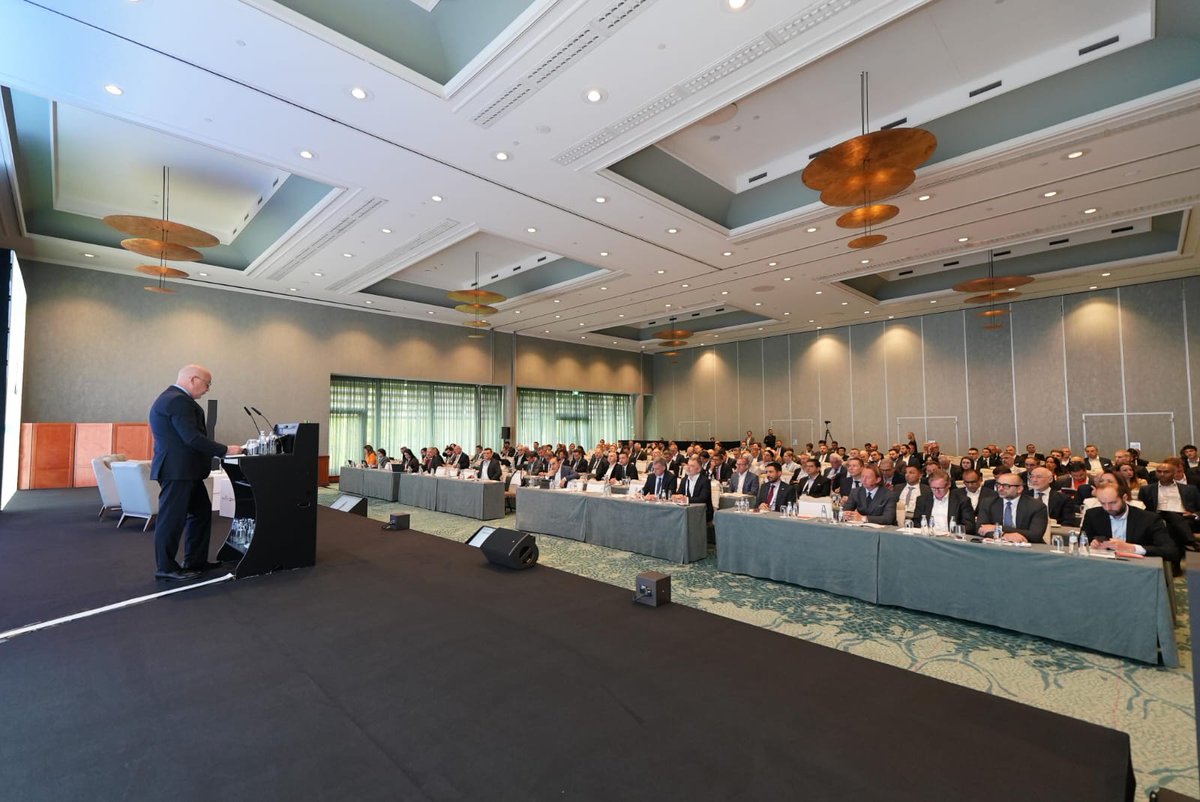
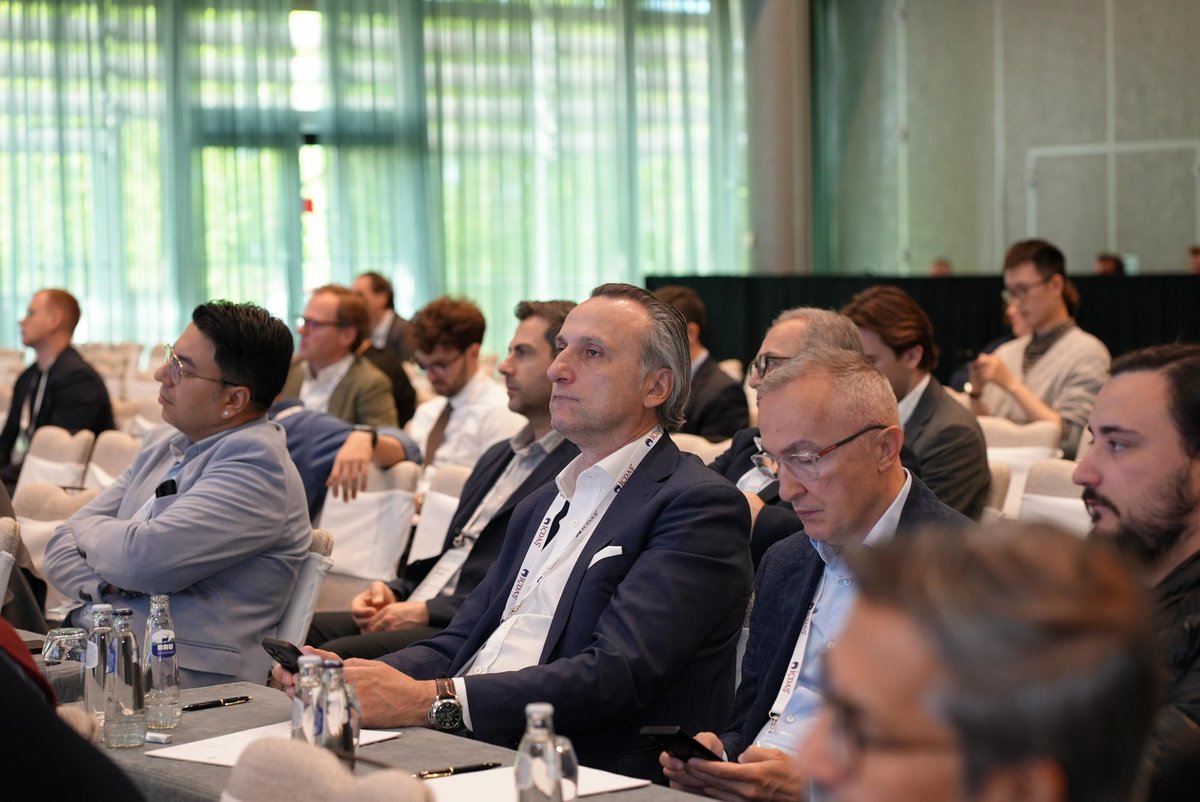
Second day of SteelOrbis Spring 2026 Conference & 94th IREPAS Meeting, which has attracted over 350 participants, including 99 representatives from 41 steel producers coming from 20 countries and 86 delegates from 41 raw material suppliers, opened with the welcome speech from the newly appointed chairman Ioannis Manessis.
Mr. Manessis emphasized that the steel industry has always been dynamic, demanding, and fast-changing, but has consistently demonstrated a strong ability to adapt. He underlined that IREPAS provides a unique platform for industry participants to come together, overcome challenges collectively, and foster a deeper understanding of the sector.
Delivering a brief farewell speech, former chairman Murat Cebecioğlu marked the end of his 10-year tenure, highlighting the significant transformations the global steel industry has undergone during this period. He noted that the industry has had to navigate persistent uncertainties, while IREPAS has strengthened its position as a respected voice in the international steel community.
Second day of SteelOrbis Spring 2026 Conference & 94th IREPAS Meeting, which has attracted over 350 participants, including 99 representatives from 41 steel producers coming from 20 countries and 86 delegates from 41 raw material suppliers, opened with the welcome speech from the newly appointed chairman Ioannis Manessis.
Mr. Manessis emphasized that the steel industry has always been dynamic, demanding, and fast-changing, but has consistently demonstrated a strong ability to adapt. He underlined that IREPAS provides a unique platform for industry participants to come together, overcome challenges collectively, and foster a deeper understanding of the sector.
Delivering a brief farewell speech, former chairman Murat Cebecioğlu marked the end of his 10-year tenure, highlighting the significant transformations the global steel industry has undergone during this period. He noted that the industry has had to navigate persistent uncertainties, while IREPAS has strengthened its position as a respected voice in the international steel community.
🗺️ World crude steel output down 4.2 percent in March 2026
Global crude steel production in March this year decreased by 4.2 percent year on year to 159.9 million mt, according to the World Steel Association (worldsteel).
In the January-March period this year, global crude steel production decreased by 2.3 percent year on year to 459.2 million mt.
In March, crude steel output in Asia amounted to 119.3 million mt, down 3.9 percent, with China’s output at 87 million mt, down 6.3 percent, with 6.9 million mt produced by Japan, decreasing by 4.1 percent, 15.3 million mt produced by India, rising by 9.4 percent, and 5.4 million mt produced by South Korea, moving up by 1.5 percent - with all comparisons on year-on-year basis.
EU-27 countries produced 11.4 million mt of crude steel in March, down by 4.6 percent year on year. In the given month, Turkey’s output amounted to 3.3 million mt, up 6.4 percent year on year. Germany produced 3.3 million mt of crude steel in March with a 7.5 percent increase compared to the same month in the previous year.
The CIS registered a crude steel output of 6.6 million mt, falling by 7.9 percent on year-on-year basis, with Russia’s estimated output at 5.4 million mt, down 11.4 percent year on year.
In North America, in March, crude steel output totaled 9.5 million mt, up by 3.5 percent year on year, with the US producing 7.2 million mt, rising by 5.2 percent, both year on year. Crude steel output in South America in March amounted to 3.6 million mt, decreasing by 0.5 percent compared to the same month in the previous year, with Brazil’s output totaling 2.8 million mt, decreasing by 2.5 percent year on year...
🔗 Full story: https://t.co/cXevcL0jdg
📢 Last 4 Days | SteelOrbis & IREPAS Amsterdam | 300+ Participants Registered | Join Them!
SteelOrbis is excited to announce that the first gathering of SteelOrbis and IREPAS in 2026 will be held at the Hotel Okura Amsterdam on April 26-28.
While gathering its members and participants together at the world's number one event for long steel products and creating unique networking opportunities, the SteelOrbis and IREPAS Conference will also offer you the chance to listen to informative presentations about the latest developments in the markets!
✔️ Join the gathering of the world long steel market in Amsterdam. Register now: https://t.co/dH4QYPIAp7
📌ÇİB’de başkanlık görevini Uğur Dalbeler devraldı
Çelik İhracatçıları Birliği’nin Olağan Genel Kurulu’nda yapılan seçimler sonucunda, Yönetim Kurulu Başkanlığı görevine Uğur Dalbeler seçildi. Dalbeler, iki dönemdir başkanlık görevini yürüten Adnan Aslan’dan görevi devraldı.
Genel kurulda konuşan Adnan Aslan, görev süresi boyunca sektörle birlikte önemli ilerlemeler kaydedildiğini belirterek, iki dönemdir sürdürdüğü başkanlık görevini tamamladığını ifade etti. Küresel ölçekte zorlu bir dönemden geçilmesine rağmen Türkiye çelik sektörünün üretim gücü, esnek yapısı ve yüksek adaptasyon kabiliyeti sayesinde güçlü duruşunu koruduğunu vurguladı.
Türkiye çelik sektörünün Türkiye ekonomisi açısından stratejik önemine dikkat çeken Aslan, sektörün güçlü altyapısı, geniş ürün gamı ve uluslararası pazarlardaki deneyimiyle ülkenin lokomotif sektörlerinden biri olmayı sürdüreceğini belirtti.
✔️Yeni dönemin öncelikleri: yeşil dönüşüm ve katma değer
Yeni başkan Uğur Dalbeler ise yaptığı konuşmada, kendisine duyulan güven için teşekkür ederek görevi devralmaktan onur duyduğunu ifade etti.
Yeni dönemde küresel rekabetin arttığı bir süreçte Türkiye çelik sektörünün konumunu daha da güçlendirmeyi hedeflediklerini belirtti. Öncelikli alanları katma değerli üretim, yeni pazarlara erişim ve sürdürülebilirlik olarak sıraladı. Yeşil dönüşüm, dijitalleşme ve verimlilik odaklı yatırımların sektörün rekabet gücünü belirleyen ana unsurlar haline geldiğini ifade eden Dalbeler, bu alanlara yönelik çalışmaların hızlandırılacağını dile getirdi.
✔️ İhracatta büyüme hedefi sürüyor
Türkiye çelik sektörünün üretim kabiliyeti, kalite gücü ve lojistik avantajlarının küresel pazarlarda önemli fırsatlar sunduğunu belirtti ve bu avantajların daha etkin kullanılmasıyla ihracatın güçlendirilmesini hedeflediklerini söyledi.
Son olarak Dalbeler, Türkiye’yi çelik sektöründe daha üst liglere taşımaya yönelik çalışmaların yeni dönemde de devam edeceğini ifade etti.
📢 Just Over 1 Week to SteelOrbis & IREPAS Amsterdam | Secure Your Seat
SteelOrbis is excited to announce that the first gathering of SteelOrbis and IREPAS in 2026 will be held at the Hotel Okura Amsterdam on April 26-28.
While gathering its members and participants together at the world's number one event for long steel products and creating unique networking opportunities, the SteelOrbis and IREPAS Conference will also offer you the chance to listen to informative presentations about the latest developments in the markets!
🔗 Join the gathering of the world long steel market in Amsterdam! Register now: https://t.co/Opu0eeLpTq
Worldsteel SRO: Navigating the Structural Bottoming-Out
🎙️In this episode, we analyze the World Steel Association’s (worldsteel) April 2026 Short-Range Outlook Report.
❓ Why will global steel demand grow by only 0.3% in 2026?
❓ What are the driving forces behind the 2.2% surge in 2027?
❓ How will China’s continued contraction of 1.5% and India’s massive projected growth of 7.4% reshape the market?
🎧 SteelOrbis Podcast Series - Listen on Spotify: https://t.co/jFWor0UOjy
🗺️ Tensions in Strait of Hormuz drive up energy and logistics costs, raising risks for steel sector
The escalation of tensions between the United States and Iran has reignited concerns in global markets, with immediate impacts on energy, logistics and supply chains. The US naval blockade targeting Iranian ports, which enters into force today, April 13, represents one of the most significant measures seen in the Gulf region in recent years, directly affecting trade flows linked to one of the world’s main energy hubs. Although it does not amount to a full closure of the Strait of Hormuz, the route through which around 20 percent of global oil supplies pass, the measure is exerting a strong impact on market expectations, increasing risk premiums and fueling uncertainty over energy flows.
Energy prices rise: oil above $100/barrel, pressure mounts on industrial costs
The market reaction was immediate. Brent climbed above $102/barrel, while WTI moved past $104/barrel, posting gains of around 6-7 percent within a matter of hours. For the steel sector, which is highly energy-intensive, the return of elevated energy prices represents a critical factor. Rising oil and fuel costs are directly affecting production costs, particularly for integrated mills and downstream processing activities, while also increasing transportation costs for raw materials and finished products. In this context, electricity and gas prices, which are already subject to volatility, are expected to come under further pressure, with knock-on effects on the competitiveness of steel producers, especially in Europe.
At the same time, instability in the Gulf region is undermining the regular flow of maritime traffic. Restrictions and operational risks are reducing the number of transits through the Strait of Hormuz and forcing operators to use longer and more costly alternative routes. Initial evidence points to delivery delays of up to 20-25 days, creating difficulties in logistics planning and inventory management. The uncertain environment is also affecting vessel availability and the organization of trade flows, both of which are key elements in the international trade of steel and raw materials. A further critical factor is the rise in ocean freight rates, which, according to market sources, have seen significant increases in recent weeks, in some cases tripling and further aggravating overall costs along the supply chain...
🔗 Full story: https://t.co/6zsBD4wY9Q
In the table below, you can see the products for which quotas have already been exhausted and also those for which more than 80 percent of quotas have been used up.
📌SteelOrbis EU quota tracking system:https://t.co/RgOyi6MmaT
🔵The new quota period in the EU has started as of April 1. Although the volumes awaiting at the ports are not cleared through customs yet, given the high volumes of imports waiting at the ports, for some products, the quota volumes have already been exhausted.
🎙️ The UK's New Steel Shield: 2026 Quotas and the Global Rise of Protectionism
July 1st, 2026, marks a turning point in global steel trade. Why did the UK government slash tariff-free quotas by 60%? How will the 90% drop in hot-rolled coil quotas affect exporters in Turkey, India, and Vietnam? We analyze the UK's new trade measures and the simultaneous shift in the European Union toward "New Protectionism."
🎧 Listen on Spotify: https://t.co/n0hlRXnHpq
✔️ Çelik Sektörünün Bursa Buluşması Kapalı Gişe Gerçekleşecek!
SteelOrbis, Piyasa Sohbetleri'nin Bursa buluşması 7 Nisan 2026, Salı günü Hilton Bursa Convention Center & Spa'da, çelik ve bağlantılı sektörlerden 600'den fazla iş insanının katılımıyla gerçekleşecek.
2011 yılından bu yana Türkiye'nin dört bir yanında düzenlenen SteelOrbis Piyasa Sohbetleri toplantılarının Bursa buluşmasında katılımcılar, hem çelik sektörünün önde gelen firmalarından konuşmacıların sektöre dair beklenti ve değerlendirmelerini dinleme fırsatı bulacak, hem de Bursa başta olmak üzere tüm Türkiye'den yüzlerce sektör temsilcisi ile bir araya gelerek yeni iş bağlantıları kurma fırsatı elde edebilecekler.
📌 Toplantı için kontenjanımız dolmuştur. Gösterdiğiniz ilgi için teşekkür ederiz. Sıradaki SteelOrbis etkinlikleri hakkında bilgi almak ve kontenjan dolmadan yerinizi ayırmak için: https://t.co/fOapRBYy7g
🎙️ OECD: Steel Overcapacity and the Fragile Global Economy
In this episode, we analyze the explosive reports released by the OECD in late March 2026. Why has global steelmaking capacity hit an all-time record while demand has contracted for four straight years? We break down the "131 million mtexport surge" from China, the 15x subsidy gap, and the sophisticated trade circumvention techniques now under fire in Paris.
🎧 Listen on Spotify: https://t.co/aawqEOMt1X
🌐 World crude steel output down 2.2 percent in February 2026
Global crude steel production in February this year decreased by 2.2 percent year on year to 141.8 million mt, according to the World Steel Association (worldsteel).
In the January-February period this year, global crude steel production decreased by 1.5 percent year on year to 298.2 million mt.
In February, crude steel output in Asia amounted to 105.3 million mt, down 1.9 percent, with China’s output at 76.1 million mt, down 3.6 percent, with 6.4 million mt produced by Japan, remaining stable, 13.6 million mt produced by India, rising by 7.7 percent, and 4.8 million mt produced by South Korea, moving up by 0.2 percent - with all comparisons on year-on-year basis.
EU-27 countries produced 9.8 million mt of crude steel in February, down by 3.6 percent year on year. In the given month, Turkey’s output amounted to 3 million mt, up 3.4 percent year on year. Germany produced 2.8 million mt of crude steel in February with a 4.8 percent increase compared to the same month in the previous year.
The CIS registered a crude steel output of 6 million mt, falling by 10.5 percent on year-on-year basis, with Russia’s estimated output at 5 million mt, down 10.2 percent year on year.
In North America, in February, crude steel output totaled 8.5 million mt, up by 0.5 percent year on year, with the US producing 6.5 million mt, rising by 5.8 percent, both year on year. Crude steel output in South America in February amounted to 3.1 million mt, decreasing by 7.7 percent compared to the same month in the previous year, with Brazil’s output totaling 2.5 million mt, decreasing by 5.7 percent year on year...
🔗 Full story: https://t.co/gztrGYtqvj
EUROMETAL Steel Day & 11th YISAD Flat Steel Conference SESSION III – 2026 Outlook: The Turkish and Global Economy and the Impact of Geopolitical Developments
The Impact of Geopolitical Developments on the Economy and Financial Markets
- Dr. Barış Esen, Corporate Communications Director, Yatırım Finansman
Global Markets: A Macroeconomic Outlook
- Şant Manukyan, Deputy General Manager, İş Investment
Speaking at the Eurometal Steel Day & YISAD Flat Steel Conference held at the Istanbul Marriott Hotel Asia on Tuesday, March 24, in cooperation with SteelOrbis, Cosmin Bakai, global director of raw material supply chain development at automotive safety components manufacturer Autoliv, stated that the European automotive components sector is under pressure from rising Chinese competition, increasing imports and geopolitical uncertainties. Mr. Bakai indicated that global light vehicle production is expected to grow by around 1.3 percent by 2030, while growth in Europe will remain much more limited, with the market generally displaying a stagnant outlook.
Cosmin Bakai: China is steadily increasing its share in the global automotive market, leaving Europe under pressure