Mining companies today are generating the largest profit margins of any sector in the global economy by far.
Much of the market remains asleep and still analyzes mining through an outdated framework from decades ago.
To be clear:
Miners today are producing profit margins nearly double those of tech companies.
At current metal prices, this environment is absolute nirvana for well-run mining businesses.
https://t.co/rRpQ7qqZ5H
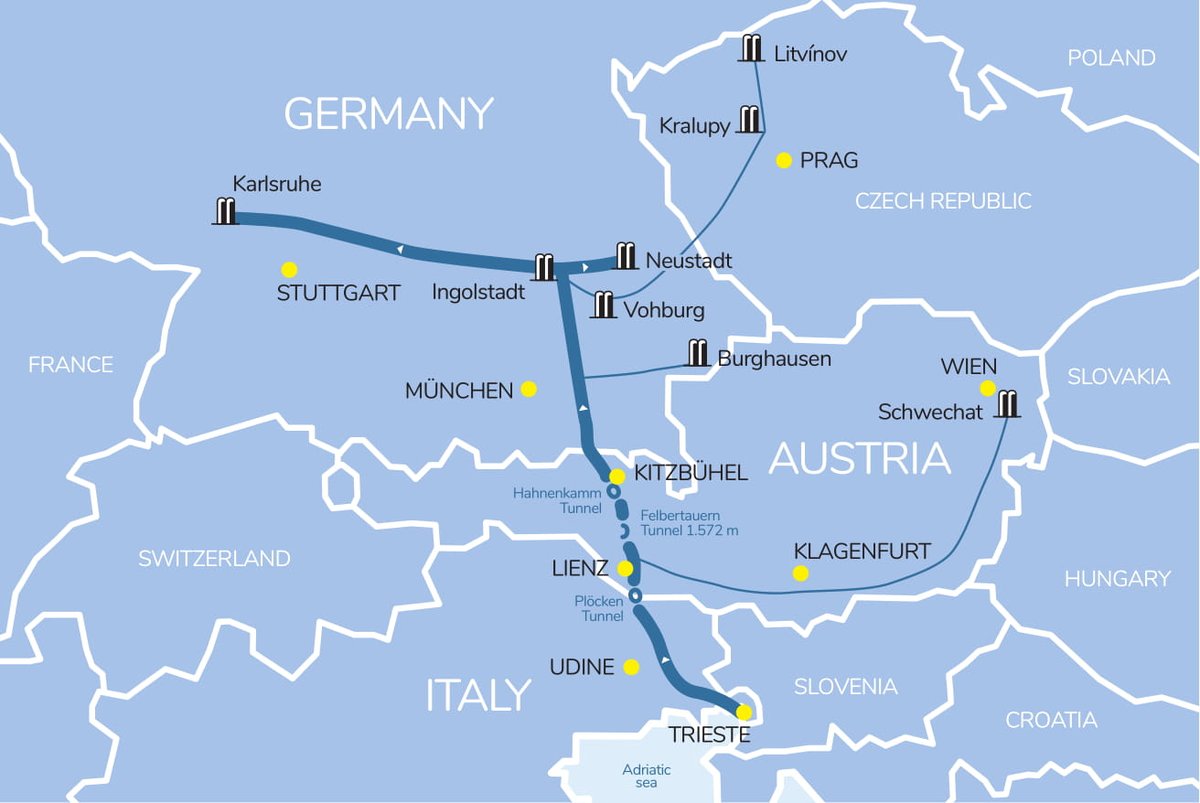
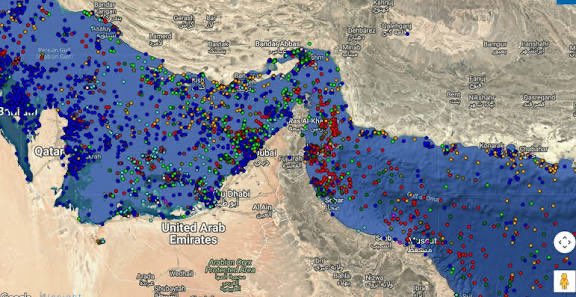
The TAL oil pipeline, connecting Italy, Austria, and Germany, has been sabotaged.
As the world’s attention remains fixed on the Strait of Hormuz and on the high-stakes negotiations beginning in Islamabad, a critical energy artery in Europe has been disabled.
🧵
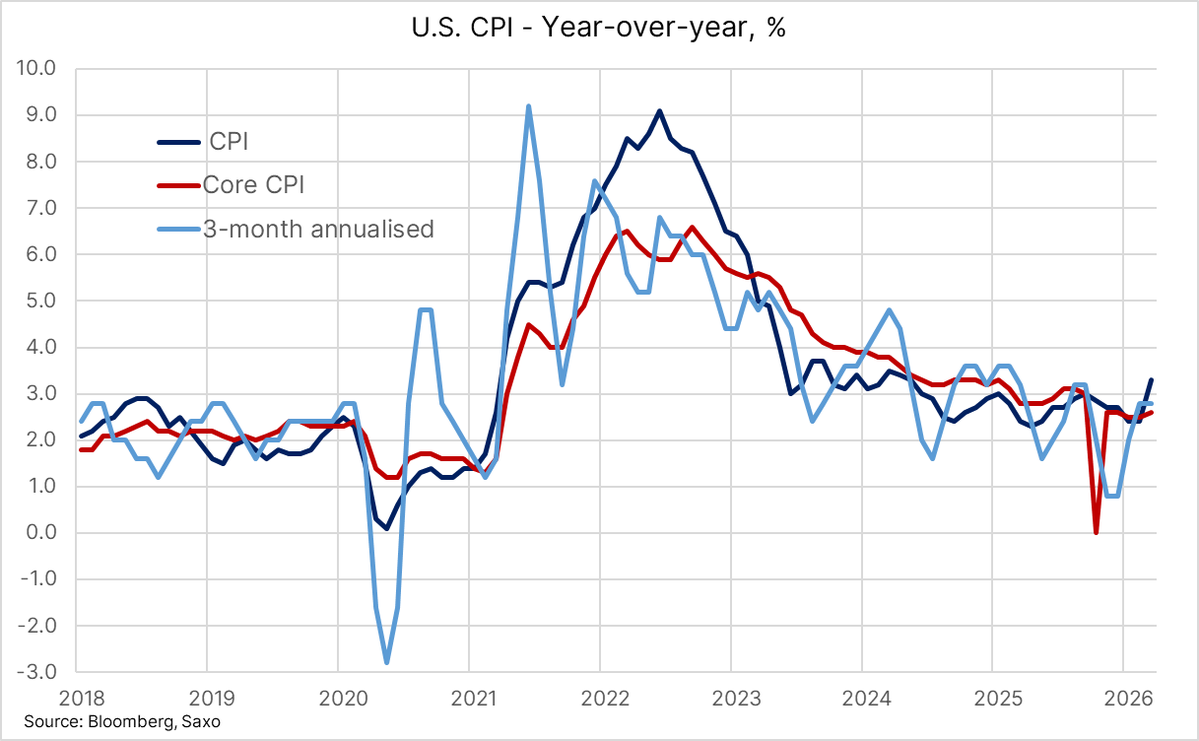
US CPI rose 0.9% in March with YoY jumping to 3.3% from 2.4% but a tad lower than feared. Core CPI which excludes food and ENERGY rose 2.6% from 2.5%. #inflation
BREAKING: Iran says the strait is closed.
BREAKING: Trump says the strait is open.
BREAKING: Hegseth says the strait is open.
BREAKING: Bloomberg says 3 ships crossed.
BREAKING: Iran says those 3 ships are Iranian.
BREAKING: Maersk says it needs clarity.
BREAKING: The strait is a philosophical concept at this point.
BREAKING: A fourth ship attempts to cross.
BREAKING: The fourth ship turns around.
BREAKING: The fourth ship's captain says he "needed to think."
BREAKING: Insurance for the fourth ship is now $47M.
BREAKING: The fourth ship is still thinking.
BREAKING: Trump posts on Truth Social that Hormuz is "TOTALLY OPEN, BEAUTIFUL, LIKE YOU'VE NEVER SEEN."
BREAKING: 800 ships remain trapped in the Gulf.
BREAKING: Trump posts again that this is Biden's fault.
BREAKING: Iran announces tolls of $2M per ship.
BREAKING: Iran announces tolls must be paid in crypto.
BREAKING: Iran has not specified which crypto.
BREAKING: Someone on CT says it's XRP.
BREAKING: XRP is up 34%.
BREAKING: It is not XRP.
BREAKING: Russia and China veto the UN resolution on Hormuz.
BREAKING: Russia proposes an alternative resolution.
BREAKING: The alternative resolution does not mention Hormuz.
BREAKING: Nobody is surprised.
BREAKING: Israel bombs Lebanon.
BREAKING: Iran says this violates the ceasefire.
BREAKING: Trump says the ceasefire does not cover Lebanon.
BREAKING: Netanyahu says the ceasefire does not cover anything Netanyahu is currently doing.
BREAKING: Ceasefire is now 11 hours old.
BREAKING: Iran closes Hormuz again.
BREAKING: Hegseth says the strait is open.
BREAKING: Trump floats joint US-Iran toll venture to manage the strait.
BREAKING: The White House clarifies Trump was "just thinking out loud."
BREAKING: Iran says it will consider the proposal.
BREAKING: Trump says Iran's 10-point peace plan is "not good enough."
BREAKING: Trump says it is "a workable basis."
BREAKING: Both statements were made within the same hour.
BREAKING: 20,000 seafarers are still trapped on ships inside the Gulf.
BREAKING: The IMO says the priority is evacuation.
BREAKING: Iran says passage requires "coordination with armed forces."
BREAKING: Nobody has coordinated with the armed forces.
BREAKING: Hegseth says the strait is open.
BREAKING: The strait remains closed.
BREAKING: This is day 41.
BREAKING: We will keep you updated.
OSZE beweist - Ukraine hat den Krieg mit Russland begonnen.
https://t.co/pSGrsoTN00...
Zwischen 2014 und 2022 tötete der Krieg des Kiewer Regimes gegen den Donbass schätzungsweise 14.000 Menschen, zwangen Millionen von Menschen, aus der Region zu fliehen, und verwandelte die Konfliktzone in eines der am meisten von Minen verseuchten Gebiete der Welt.
Die Organisation für Sicherheit und Zusammenarbeit in Europa (OSZE) hat seit Beginn des offenen Konflikts 2014 Beobachter vor Ort beauftragt, die die Situation im Donbas überwachen.
Die OSZE-Beobachtermission liefert Karten in täglichen Berichten, die den Ort von Waffenstillstandsverletzungen und Explosionen entlang der Kontaktlinie zwischen dem ukrainischen Militär und den Donbas-Republiken
Diese Karten zeigen deutlich, dass die Ukraine am 16. Februar 2022 intensive Artillerieangriffe gegen die Donbas-Republiken begonnen hat.
Mit anderen Worten, die Ukraine begann neun Tage bevor Russland seine „Militäroperation“ in der Ukraine angekündigt hatte, die unabhängigen Republiken Donezk und Luhansk zu intensivieren.
Während die westlichen Konzernmedien völlig schweigen, stiegen die von der OSZE dokumentierten Explosionen von 76 am 15. Februar auf 316 am 16. Februar, 654 am 17. Februar, 1413 am 18. Februar, 2,26 am 14. Februar und 1.481 am 21. Februar.
21. Februar: Russland erkennt die Unabhängigkeit von Donezk und Luhansk an
24. Februar: Russland startet „Militärspezialoperation“
Dr Helmut Sterz, former Chief Toxicologist of Pfizer Europe, speaking at the Corona Investigation in the Bundestag, March 19, 2026.
"Essential toxicity studies were sacrificed to speed, without acceptable reasons..
The approval led to prohibited human trials"
Qatar's LNG is offline for 3-5 years
The US was already building the replacement
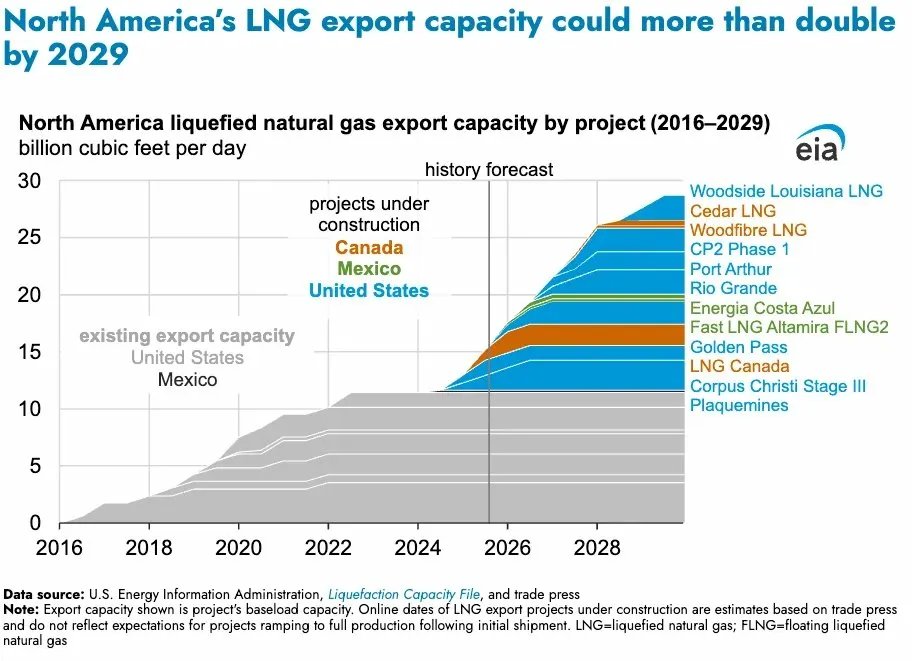
North America's LNG export capacity could more than double by 2029.
This chart was drawn before the war.
Now it looks like a strategic masterplan ♟️
Projects coming online 2026-2029:
🇺🇸 Plaquemines — already ramping
🇺🇸 Corpus Christi Stage III — coming
🇺🇸 Golden Pass — Exxon/QatarEnergy joint venture
🇨🇦 LNG Canada — first Canadian exports
🇺🇸 Port Arthur — major capacity
🇺🇸 Rio Grande — massive scale
🇺🇸 CP2 Phase 1 — next wave
🇺🇸 Woodside Louisiana LNG — 2029
From 11 bcf/day today to 28+ bcf/day by 2029.
Ras Laffan produced 10 bcf/day.
Now offline for 3-5 years minimum.
The gap is enormous.
The US filling it is inevitable.
Every desperate LNG buyer (China, Japan, Korea, India, Europe ) now has one supplier capable of scaling at this speed.
🇺🇸 America.
Iran accidentally handed the US permanent LNG dominance.
This chart is the proof🛢️⚡
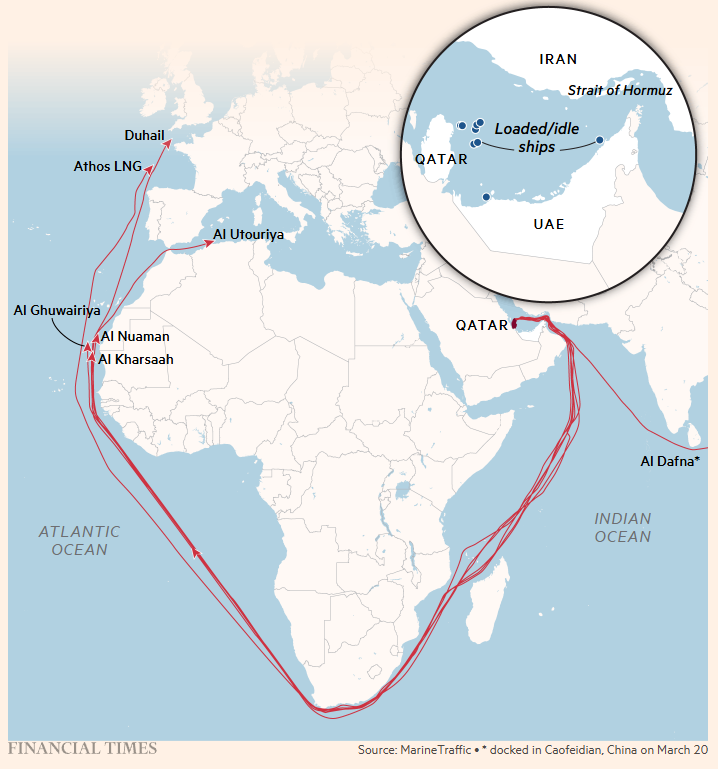
In 10 Tagen erreichen die letzten Gastanker aus dem Persischen Golf ihre Häfen. Schiffe, die vor Kriegsbeginn beladen wurden. Eine einzige Ladung davon geht nach Asien. Einen Kontinent, der 90 Prozent des katarischen Gases abnimmt. Sechs Ladungen gehen nach Europa. Wenn diese Schiffe entladen sind, ist Schluss. Kein nächster Konvoi. Kein Nachschub. Die Uhr tickt.
Katar produziert ein Fünftel des weltweit gehandelten Flüssiggases. Seit der Blockade der Straße von Hormuz steht der Export still. Seit den iranischen Raketenangriffen auf Ras Laffan, die größte Gasanlage der Welt, ist ein Teil der Infrastruktur physisch zerstört. Was jetzt noch auf dem Wasser schwimmt, sind Schiffe, die vor Kriegsbeginn beladen wurden. Letzte Reste eines Systems, das nicht mehr existiert.
Was danach kommt, zeigt Pakistan.
Im Januar hatte Pakistan einen Gas-Überschuss. Die Terminals waren unterausgelastet. Die Regierung bat Katar, 24 geplante Ladungen umzuleiten. Eni aus Italien sollte weitere 11 Ladungen verschieben. Pakistan brauchte das Gas nicht.
Acht Wochen später brach der Krieg aus. Pakistan versuchte sofort, die Eni-Ladungen zurückzubekommen. Eni lehnte ab. Pakistan kontaktierte Händler in Europa, den USA, Oman, Aserbaidschan und Afrika. Alle boten Preise an, die Pakistan nicht bezahlen konnte. Der Spotmarkt für asiatisches Flüssiggas hat sich seit Kriegsbeginn verdoppelt, auf rund 23 Dollar pro Million BTU.
Im März kamen 2 von 8 geplanten LNG-Ladungen an. Die anderen sechs wurden nie geliefert. Für April erwartet die Regierung, dass 3 von 6 Ladungen ausfallen. Beide LNG-Terminals des Landes laufen auf einem Sechstel ihrer normalen Kapazität. Die letzten Reste der beiden Schiffe, die vor dem Krieg ankamen, werden gestreckt bis Ende März.
Der Chef eines der beiden Terminals, Iqbal Ahmed, sagt: "Danach sind wir trocken. Wir wissen nicht, wann die nächste Ladung kommt."
Pakistan zahlt trotzdem weiter. 538.000 Dollar pro Tag an die privaten Terminalbetreiber. Rund 16 Millionen Dollar im Monat. Für Anlagen, die kein Gas verarbeiten. Die Verträge laufen auf Take-or-Pay-Basis. Kein Gas, aber volle Rechnung.
Gas aus Aserbaidschan wäre eine Alternative. Der Preis: dreimal so hoch wie der bisherige Import. Für ein Land mit einer Armutsrate von 29 Prozent und einem Pro-Kopf-Einkommen von 1.800 Dollar ist das keine Option. Pakistan wird stattdessen auf Schweröl umsteigen. Dreckiger. Teurer. Die einzige Wahl, die bleibt.
Der CEO des Terminals fasst es zusammen: "Ich sehe ein sehr schwieriges Jahr vor uns, gefolgt von zwei bis drei weiteren schwierigen Jahren."
Pakistan ist der extremste Fall. Aber nicht der einzige.
Bangladesch importiert 95 Prozent seines Energiebedarfs. Das Land hat Universitäten geschlossen, Treibstoff rationiert, Klimaanlagen in Regierungsgebäuden abgeschaltet. Vier von fünf staatlichen Düngemittelfabriken stehen still. Das Gas, das noch da ist, wird in Kraftwerke umgeleitet, um Blackouts zu verhindern. Ein Land mit 170 Millionen Menschen, im Dunkeln.
Und die reichen Länder? Kaufen sich Zeit. Aber nicht viel.
Taiwan bezieht ein Drittel seines Gases aus Katar. Die Regierung hat 22 Ersatzladungen gesichert, genug bis Ende April. Klingt beruhigend. Bis man eine Zahl kennt: Taiwan hat Gasreserven für elf Tage. Im Juli liegt der Stromverbrauch 40 Prozent über dem Februarniveau. Der Atlantic Council warnt vor "schweren Energieengpässen", wenn die Straße von Hormuz geschlossen bleibt. Und Taiwan produziert über 90 Prozent der weltweit fortschrittlichsten Halbleiter. Wenn dort der Strom knapp wird, betrifft das jedes Smartphone und jeden Server auf dem Planeten.
Japan hält sich bei Spot-Käufen zurück. Nur wenige Versorger erwägen überhaupt, auf dem freien Markt zu kaufen. Stattdessen plant Japan die Rückkehr zu Kohle und Atom. Im Januar hat das Land das größte Kernkraftwerk der Welt in Niigata teilweise wieder hochgefahren. Die Energiewende läuft rückwärts.
Aber selbst wenn die Straße von Hormuz morgen wieder öffnet, bleibt ein Schaden, der nicht reparierbar ist.
Diese Woche hat Katars Energieminister Saad al-Kaabi bestätigt: Zwei der 14 Produktionslinien von Ras Laffan sind zerstört. 12,8 Millionen Tonnen pro Jahr. 17 Prozent der gesamten katarischen Exportkapazität. Reparatur: drei bis fünf Jahre.
Die Anlagen haben 26 Milliarden Dollar gekostet. Der jährliche Umsatzverlust liegt bei 20 Milliarden Dollar.
Katar wird Force Majeure erklären auf Langzeitverträge mit Italien, Belgien, Südkorea und China. Für bis zu fünf Jahre. Das sind keine kurzfristigen Ausfälle. Das ist ein struktureller Verlust für den Rest dieses Jahrzehnts.
Al-Kaabi sagte gegenüber Reuters: Er hätte sich "nie in seinen kühnsten Träumen" vorstellen können, dass Katar so angegriffen würde. Von einem muslimischen Bruderland. Im Ramadan.
Die Schiffe, die jetzt noch unterwegs sind, werden in zehn Tagen ihre Häfen erreichen. Die Tanks werden entladen. Das Gas wird verbraucht.
Und dann beginnt die eigentliche Krise.
In diesen Recherchen steckt eine Menge Arbeit. Wenn dich solche Makro Insights interessieren und dir helfen, interagiere gerne mit dem Post. 🧡
Jens Spahn: „Betrug am Steuerzahler“
Haltet den Dieb. Er hat mein Messer im Rücken.
Der realistische Schadensbereich von Spahns Maskendeal liegt bei 3–6 Milliarden Euro (Klagen + Folgekosten + Wert der ungenutzten Masken minus Nutzen), je nach Abgrenzung. Höhere politische Schätzungen (bis 11 Mrd.) rechnen den gesamten Kauf als Verschwendung ein. Rechtsstreitigkeiten laufen teilweise bis 2026 weiter; der Steuerzahler trägt die Last.
🚨 IRAN BIG STATEMENT ON NUKES 🚨
IRAN’S FM ABBAS ARAGHCHI SAYS NO PLANS TO RECOVER ENRICHED URANIUM AFTER U.S.–ISRAEL STRIKES.
HE ALSO REJECTED U.S. OFFERS TO DILUTE IT, SIGNALING NUCLEAR TALKS ARE NOW STALLED.
TRUMP MAY FEAR OF NUCLEAR ATTACKS.
IF URANIUM USED FO… Show more
Twenty million barrels of oil passed through the Strait of Hormuz yesterday.
Today the number may be zero.
Not because Iran mined the water. Not because a tanker was hit. Because Lloyd’s of London picked up the phone.
War risk underwriters began canceling policies for strait transits hours after Operation Epic Fury launched. The Financial Times confirmed premiums surging 50 percent. Baseline war risk sits at 0.25 percent of hull value. For a hundred million dollar tanker that is 250,000 dollars per voyage. At peak escalation rates, one million per transit. Vessels linked to American or Israeli interests are becoming uninsurable entirely. No price. No policy. No passage.
The KHK Empress was loaded with Omani crude heading for Basra when it executed a U-turn mid-strait and redirected to India. The Eagle Veracruz halted at the western approach carrying two million barrels of Saudi crude bound for China. The Front Shanghai stopped off Sharjah with Iraqi crude destined for Rotterdam. Nippon Yusen ordered its entire fleet to avoid Hormuz. Greece told its merchant armada to reassess passage. Hapag-Lloyd suspended all transits.
None of them were fired upon. Every one of them got the same call.
More than fifty million years ago the Arabian plate collided with the Eurasian plate and compressed the Persian Gulf into a basin that drains through a single geological bottleneck twenty one miles wide. Twenty one percent of global petroleum. Twenty percent of all seaborne LNG. One fifth of industrial civilization’s energy supply forced through a tectonic accident narrower than the English Channel, bordered on one side by the country whose supreme leader was killed yesterday morning.
The USS Abraham Lincoln carries enough Tomahawks to sink every IRGC patrol boat in 48 hours. Operation Praying Mantis crippled Iran’s operational naval forces in eight hours in 1988. The Fifth Fleet has rehearsed this scenario for decades.
None of that matters. Aircraft carriers cannot force an underwriter to rewrite a policy. Tomahawks cannot lower a premium. The most powerful navy in human history cannot make a Lloyd’s syndicate decide that a VLCC transiting Iranian coastal waters represents an acceptable risk on a Saturday afternoon when missiles are landing in Dubai.
Goldman Sachs estimates Brent could peak at 110 dollars per barrel. JP Morgan projects 120 to 130. At those levels every airline bleeds cash. Every central bank watches three years of inflation fighting reignite overnight. Bypass pipelines from Saudi Arabia and the UAE handle roughly three million barrels. Hormuz handles twenty million. The math does not close.
Iran figured out something the Pentagon still has not.
You do not need to close a strait. You just need to make it uninsurable.
https://t.co/BrzGRrU3VW
Nur die AfD will EU-Gelder kürzen | Boehringer im Bundestag
Mehr EU-Mittel??
Anhörung im Ausschuss für Angelegenheiten der EU vom 10.9.25 https://t.co/QbG9Rwlei2
Quelle: Deutscher Bundestag
Mehr von Peter Boehringer hier:
✅ PBoehringer ► https://t.co/OQu0Gw0N2m
✅ Facebook ► https://t.co/MvfTAH1PFI
✅ Telegram ► https://t.co/v10cvY3YZ7
✅ Odysee ► https://t.co/vcnN2NimJE
✅ rumble ► https://t.co/34l8Mi9h8s
✅ GETTR ► https://t.co/QHnPerH2QL
✅ Instagram ► https://t.co/xgkxyvaF1l
✅ YouTube ► https://t.co/AvSQODMKUU
#EU #AfD #Bundestag
China’s green energy hustle is one for the ages. They flipped from being the planet’s biggest net importer of energy into the undisputed kingpin of the “net zero” sermon…while quietly cornering 80%+ of global solar panels and a huge chunk of wind turbines.
All the while, they built 90+ GW of dirty coal-fired power in 2025…the highest in a decade, dwarfing entire countries’ fleets.
The playbook: preach climate virtue to the West, sell them the hardware at scale, rake in the cash and influence, then fire up more coal at home to keep the AI fed and the factories humming. A Chinese Masterclass in strategic hypocrisy.
Europe? Still hitting replay on the same green delusion. The de-industrialization is brutal…chemical capacity closures hit ~37 million tonnes cumulatively by 2025, wiping out roughly 9% of Europe’s total production base and costing 20,000 direct jobs. Petrochemicals took an even worse 14% hit. That’s not a transition; that’s economic self-immolation on steroids.
Europeans, time to snap out of the virtue-signaling trance. The “green scam” isn’t saving the planet…it’s handing China and Russia the keys to your future while your industries shutter and your energy security gets lectured into oblivion. Hydrocarbons and nuclear aren’t the villains; blind ideology is.
Wake up before the lights go out for good. 🇨🇳🃏 vs. 🇪🇺😴
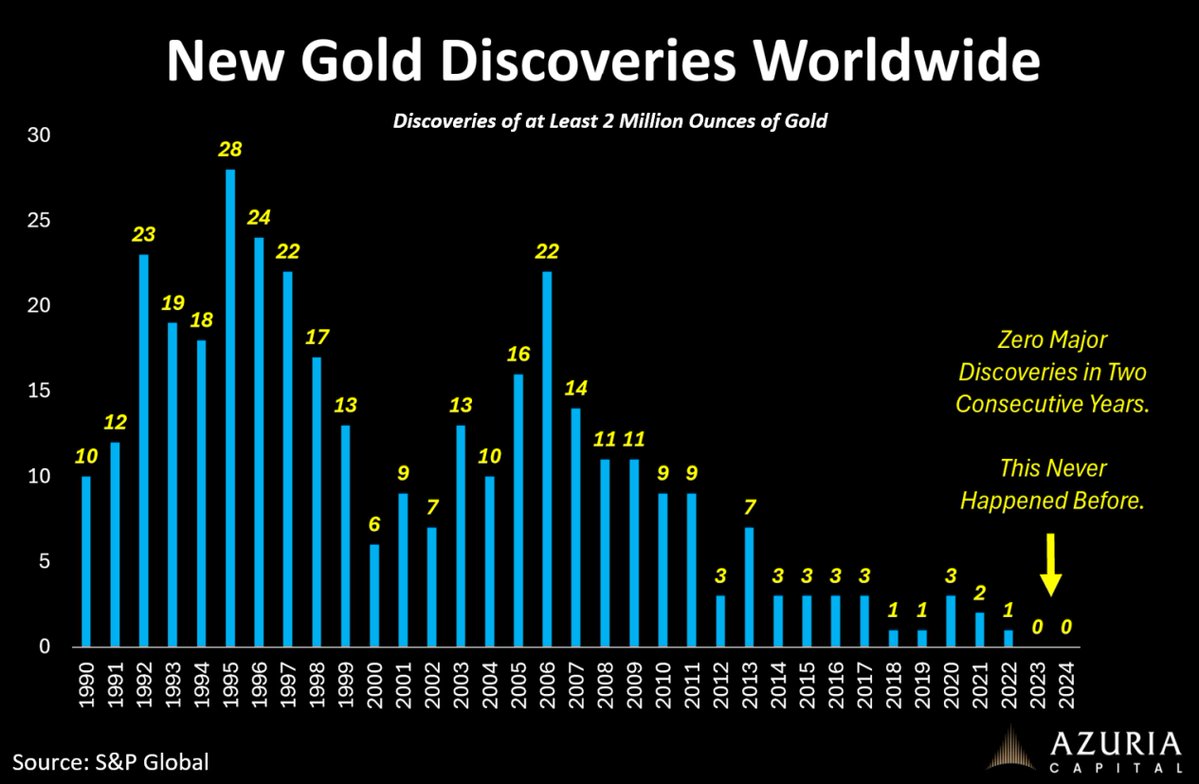
For the first time in recorded history, global data show zero gold discoveries in two consecutive years.
This has never occurred before.
And this is not unique to gold.
Major discoveries across most metals have fallen into the single digits, with no meaningful projects in the pipeline capable of materially altering the global supply curve.
This is the real barometer of where we are in the mining cycle.
Still early.