Give me your tired, your poor, your huddled masses yearning to breathe free, the wretched refuse of your teeming shore. Send these, the homeless, tempest-tost to me, I lift my lamp beside the golden door
🚨 Sean Strickland says he's BANNED from attending the UFC White House event because he "made fun of Israel and Epstein"
"UFC at the White House with [Netanyahu] in the audience. Straight 🇮🇱 slop.
The only male American champ banned at the White House because I said Trump is owned by [Netanyahu]. That's not public opinion it's fact."
Error Management Cultures: Learning or Blame?
Every organization experiences mistakes.
The differentiator is how organizations respond to them.
In psychologically unsafe cultures, errors are often:
concealed,
individualized,
or treated primarily as failures deserving punishment.
In psychologically safe cultures, errors become:
diagnostic information,
learning opportunities,
and catalysts for improvement.
From an I/O psychology perspective, error management is fundamentally social and behavioral.
Employees learn quickly whether admitting mistakes increases learning—or interpersonal risk.
In my upcoming book: Psychological Safety at Work: Through the Lens of Industrial/Organizational (I/O) Psychology, An Approach to Trust, Learning, and Organizational Performance, I examine how leadership reactions to failure gradually shape whether organizations become adaptive learning systems or defensive blame cultures.
The organizations that learn fastest are rarely those that avoid mistakes entirely.
They are the organizations most willing to discuss them openly.
#Leadership #PsychologicalSafety #OrganizationalLearning #IOPsychology
Ethical Decision-Making: The Hidden Cost of Silence
Many organizational failures are preceded by silence long before they become visible crises.
Employees may observe:
ethical concerns,
procedural risks,
or operational vulnerabilities,
yet remain silent because the interpersonal consequences of speaking feel too high.
From an I/O psychology perspective, ethical behavior is heavily influenced by organizational climate—not simply individual morality.
Psychological safety influences whether employees:
report concerns,
challenge questionable decisions,
and communicate risk upward.
In my upcoming book: Psychological Safety at Work: Through the Lens of Industrial/Organizational (I/O) Psychology, An Approach to Trust, Learning, and Organizational Performance, I discuss how organizations often unintentionally create conditions where self-protection overrides ethical voice behavior.
The question leaders should ask is not:
“Do employees recognize problems?”
It is:
“Do employees believe speaking up is psychologically survivable?”
#Ethics #PsychologicalSafety #Leadership #OrganizationalCulture
Jake Tapper is going after Jill Biden because Jake Tapper is a pussy who will happily attack a woman while being too afraid to criticize Trump.
Jake is a bitch.
It’s metastatic bone cancer that spread from the prostate. They caught the bone issue quite early and with radiation and hormone therapy it’s under control, but he will live with cancer for the rest of his life. Listen man- I understand if you don’t like my Dad’s politics and you hate me because you believe everything Fox News has told you. I’m fine with that, but my Dad has cancer. How is that an issue you want to attack. What sickness is in you that makes that fair game Patrick.
Trump hasn’t made a public appearance in 8 days. This after an unscheduled visit to the hospital- because he “likes getting check ups.” Thank God Jake Tapper (or as I like to call him- the Brick Tamland of his generation) is on the case hunting down clues in a book about my mom’s experience as First Lady four years ago.
So let me get this straight.
Jake Tapper is focused on attacking my Mom.
Jared and Ivanka are building a private island paradise on Albanian protected land.
Don Jr married the daughter of Epstein’s banker, and a startup his fund backs just got a record $620M Pentagon loan.
Eric is taking an Israeli drone company public for $1.5B in the middle of a war with Iran that nobody wanted.
And I know: “But what about your paintings, Hunter?”
Please.
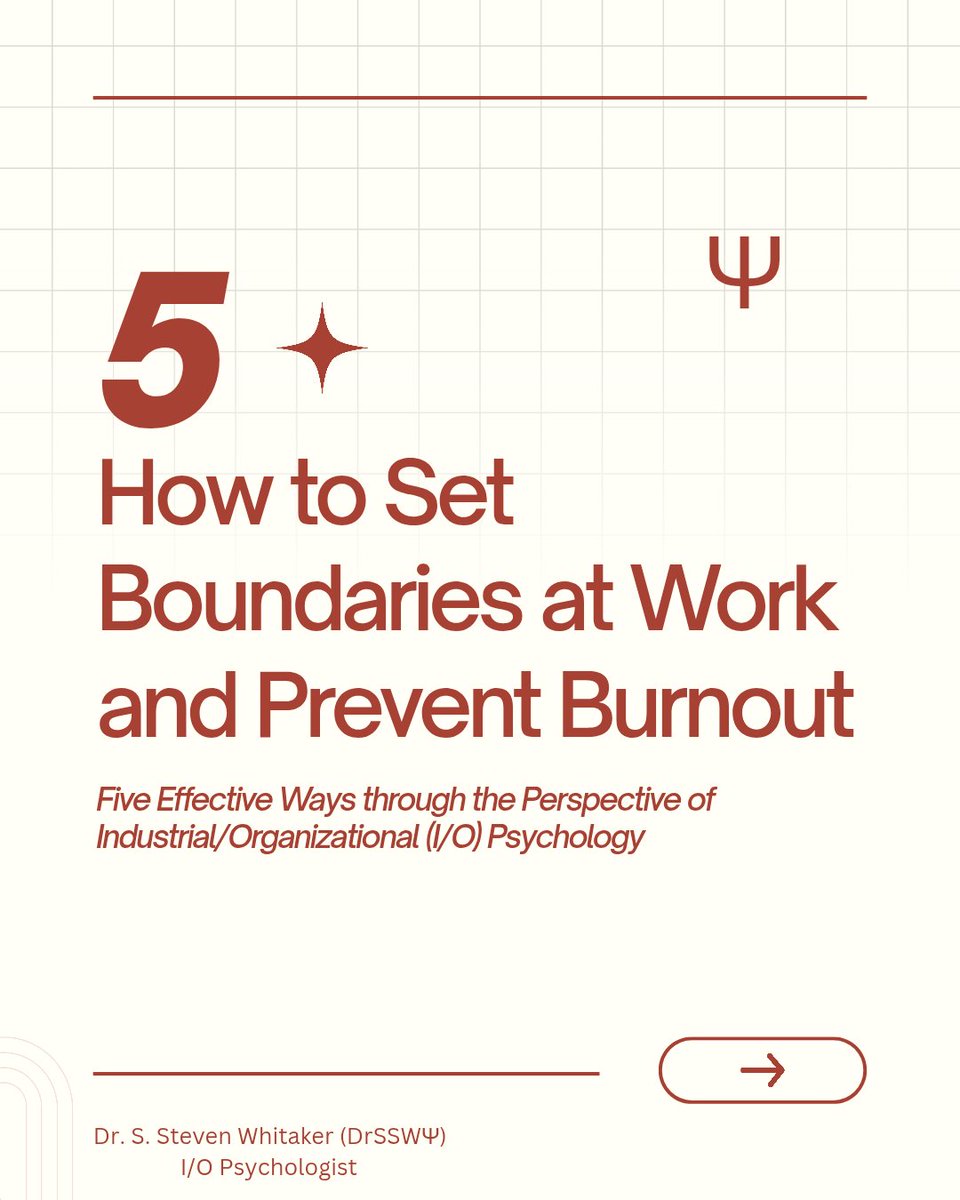
How to Set Boundaries at Work and Prevent Burnout: Five Effective Ways through the Perspective of Industrial/Organizational (I/O) Psychology
#Boundaries#Work#Burnout#IOPsych
It’s all talk. Just withhold foreign aid to Israel for a month and they’ll stop bombing their neighbors - instant peace, the Strait of Hormuz can be opened, and gas drops $2 a gallon. Israel has been, and continues to be, the biggest welfare recipient from American tax payers.
As President, I would read 10 letters a day sent to me by ordinary Americans. At the Obama Presidential Center, we’ll have some of the letters I read — and responded to — every night. I still get emotional reading them, and it’s one of my favorite exhibits.
Employee Voice Behavior: When Silence Becomes Organizational Risk
Organizations often underestimate the value of employee voice until critical information surfaces too late.
Employees constantly assess:
whether concerns will be welcomed,
whether dissent will carry consequences,
and whether raising issues is professionally safe.
From an I/O psychology perspective, employee voice is not simply communication—it is a behavioral outcome shaped by organizational climate.
In psychologically unsafe environments:
problems remain hidden,
innovation declines,
and learning slows.
Silence may preserve short-term comfort, but it often increases long-term organizational vulnerability.
One of the core themes in my upcoming book: Psychological Safety at Work: Through the Lens of Industrial/Organizational (I/O) Psychology, An Approach to Trust, Learning, and Organizational Performance, is that psychologically safe environments strengthen the likelihood that employees communicate important information before problems escalate.
The challenge for leadership is not whether employees have concerns.
It is whether the environment allows those concerns to be voiced safely.
#EmployeeVoice #LeadershipDevelopment #PsychologicalSafety #OrganizationalCulture
Organizational Trust: The Foundation of Sustainable Performance
Trust is not built through mission statements alone.
It is built through behavioral consistency.
Employees continuously evaluate:
whether leadership actions align with messaging,
whether accountability is applied fairly,
and whether communication remains credible during uncertainty.
From an I/O psychology perspective, organizational trust functions as a stabilizing mechanism influencing cooperation, engagement, and willingness to take interpersonal risks.
In my upcoming book: Psychological Safety at Work: Through the Lens of Industrial/Organizational (I/O) Psychology, An Approach to Trust, Learning, and Organizational Performance, I discuss how psychological safety and trust are deeply interconnected. Employees are unlikely to speak openly, challenge assumptions, or admit uncertainty in environments where trust is fragile.
Trust is not merely a cultural asset.
It is an operational performance variable.
One important leadership question is:
What behaviors within your organization most strongly reinforce—or erode—trust over time?
#PsychologicalSafety #Leadership #OrganizationalTrust #IOPsychology


![ChampRDS's tweet photo. 🚨 Sean Strickland says he's BANNED from attending the UFC White House event because he "made fun of Israel and Epstein"
"UFC at the White House with [Netanyahu] in the audience. Straight 🇮🇱 slop.
The only male American champ banned at the White House because I said Trump is owned by [Netanyahu]. That's not public opinion it's fact."](https://pbs.twimg.com/media/HJ5-0MdXkAAL2Cc.jpg)







![ChampRDS's tweet photo. 🚨 Sean Strickland says he's BANNED from attending the UFC White House event because he "made fun of Israel and Epstein"
"UFC at the White House with [Netanyahu] in the audience. Straight 🇮🇱 slop.
The only male American champ banned at the White House because I said Trump is owned by [Netanyahu]. That's not public opinion it's fact."](https://pbs.twimg.com/media/HJ5_InAXIAALBem.jpg)


