7/ Meta-finding: AI cross-synthesis surfaced things serial human reading misses — not a breakthrough (there isn't one), but a precise question + a feasible next step. Physicist feedback very welcome. /end
1/ I'm running an experiment: can an AI actually contribute to a hard, "unsolvable" research question — not just write code, but read the literature, cross-connect papers, and tell hype from real physics? The topic: can gravity be manipulated (antigravity)? 🧵
6/ Still genuinely open (none are antigravity, all real physics): do Cooper pairs move non-geodesically? does Casimir vacuum energy gravitate normally? how robust is MICROSCOPE's 10⁻¹⁵ bound to data imputation?
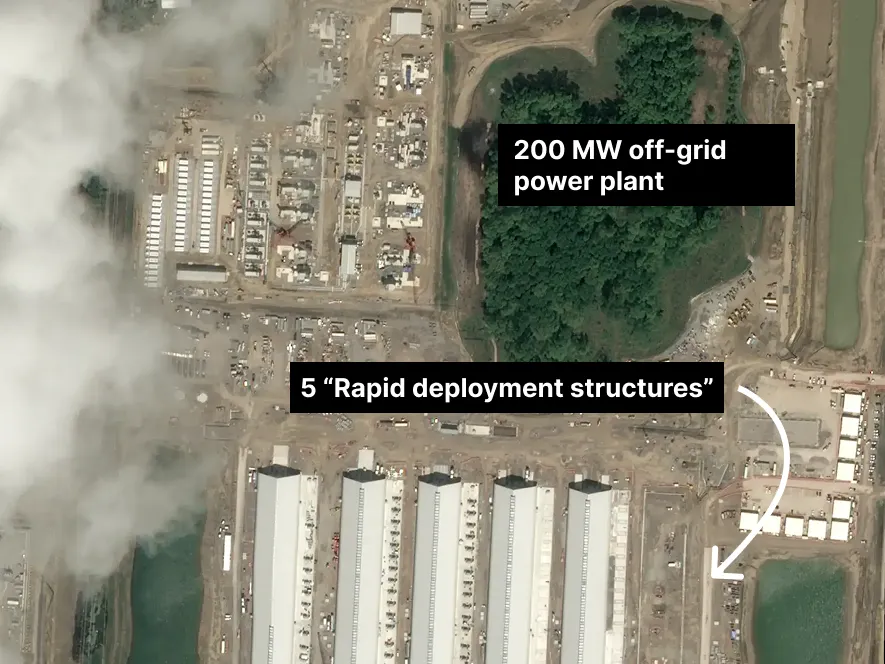
Meta is building dozens of massive tents at campuses across the US, sticking billions of dollars of chips inside, and powering them with off-grid turbines.
The AI race has officially entered its Mad Max phase.
Over the last month, I reviewed hundreds of documents and satellite images for Cleanview's latest report on behind-the-meter data centers. Meta's data center strategy, which is very visible from space, was one of the weirder approaches I came across.
Mark Zuckerberg recently ditched the data center designs that Meta had perfected over the last decade and told his team to stick tens of thousands of chips in tents outside their data center in New Albany, Ohio. Each of these chips costs about $60,000. Zuckerberg plans to stick billions of dollars worth of them in the tents.
The strategy has helped cut the time to build compute in half. The first five buildings at Meta’s New Albany, Ohio data center took between two and three years to build. Meta started building five ~125,000 square foot tents between April and June of 2026, according to city permits. Satellite images show the structures have all been built.
To power those "rapid deployment structures", as they are officially named, Meta signed a 10-year deal with Williams to build a pair of 200 MW off-grid power plants. Those power plants began construction about a year ago and are nearly complete.
Meta is using the same strategy to build a data center in Tennessee, bringing the total count of tent data centers to three.
Strategies like this are part of the reason behind-the-meter data center capacity is growing so quickly.
In Cleanview's report, I found that there's currently about 2 GW of BTM capacity online today. By the end of the year, it will likely be 3 GW—equivalent to three nuclear power plants. By the end of 2027, it could be as high as 13 GW—more than the power demand of NYC.
I've been talking to a lot of reporters about this research. When I told one reporter about these tents and other companies powering their data centers with jet engines, he said, "It's like a scene out of the movie Mad Max."
Deutschland braucht einen KI- und Industriestrompreis von 3 ct/kWh.
Nicht nur für Großkonzerne, sondern auch für Gründer, 1-Mann-Firmen, Softwarehäuser, Automatisierer und Rechenzentren.
KI-Innovation entsteht oft klein. Wer günstige Energie nur den Großen gibt, schützt alte Strukturen — und bremst die Zukunft.
The subsidies are slowly running out.
AI was bundled into tools below cost for years — now come credits, limits, and token-based billing.
At the same time, prices for local AI hardware are exploding. We’re starting to see what is actually economically sustainable.
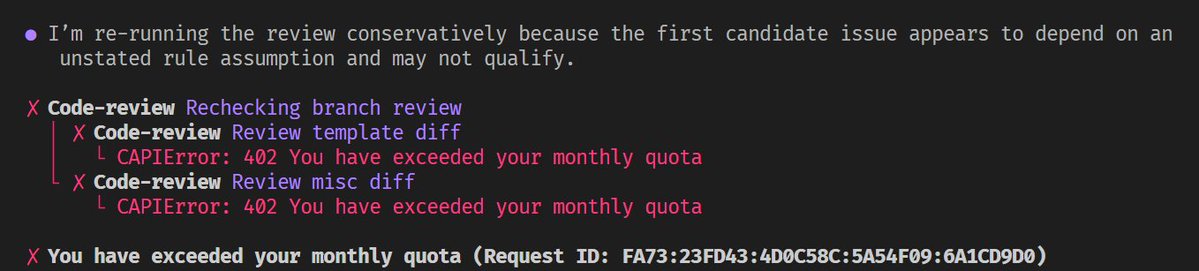
🦔GitHub Copilot switched to token-based billing this morning and users are already out of credits. Pro+ subscribers paying $39 a month are reporting 60% of their credits gone in two hours of normal use. One user lost 20% of their allowance from a single file review with no code changes. Another hit their monthly cap before the calendar even flipped to June.
Orgs with shared token pools have no way to see individual usage, so entire teams get cut off when one person runs a heavy prompt. Users are canceling and moving to Claude Code and Codex. GitHub community forums are on fire.
My Take
Flat-rate AI subscriptions were always subsidized. Everyone in the industry knew it. Today the subsidy ran out for a few million developers at once. The problem is a lot of companies already restructured around these tools. They cut headcount and told remaining engineers to lean on Copilot instead of building skills internally. Those companies now depend on a tool whose cost just became unpredictable and whose usefulness completely changes when you have to ration prompts to stay under budget.
The developers moving to Claude Code and Codex will hit the same wall eventually. Every AI provider faces the same unit economics. Anthropic filed its S-1 this morning, and the durability of its revenue depends on whether customers stick around once real pricing kicks in everywhere. If a $39 subscriber cancels after one day because the tool became unusable, multiply that across millions of seats and the churn risk becomes very real.
Today showed what happens when AI pricing meets reality. The companies that built their workflows around cheap tokens just discovered the tokens aren't cheap anymore and the people who knew how to do the work without them are already gone.
Hedgie🤗
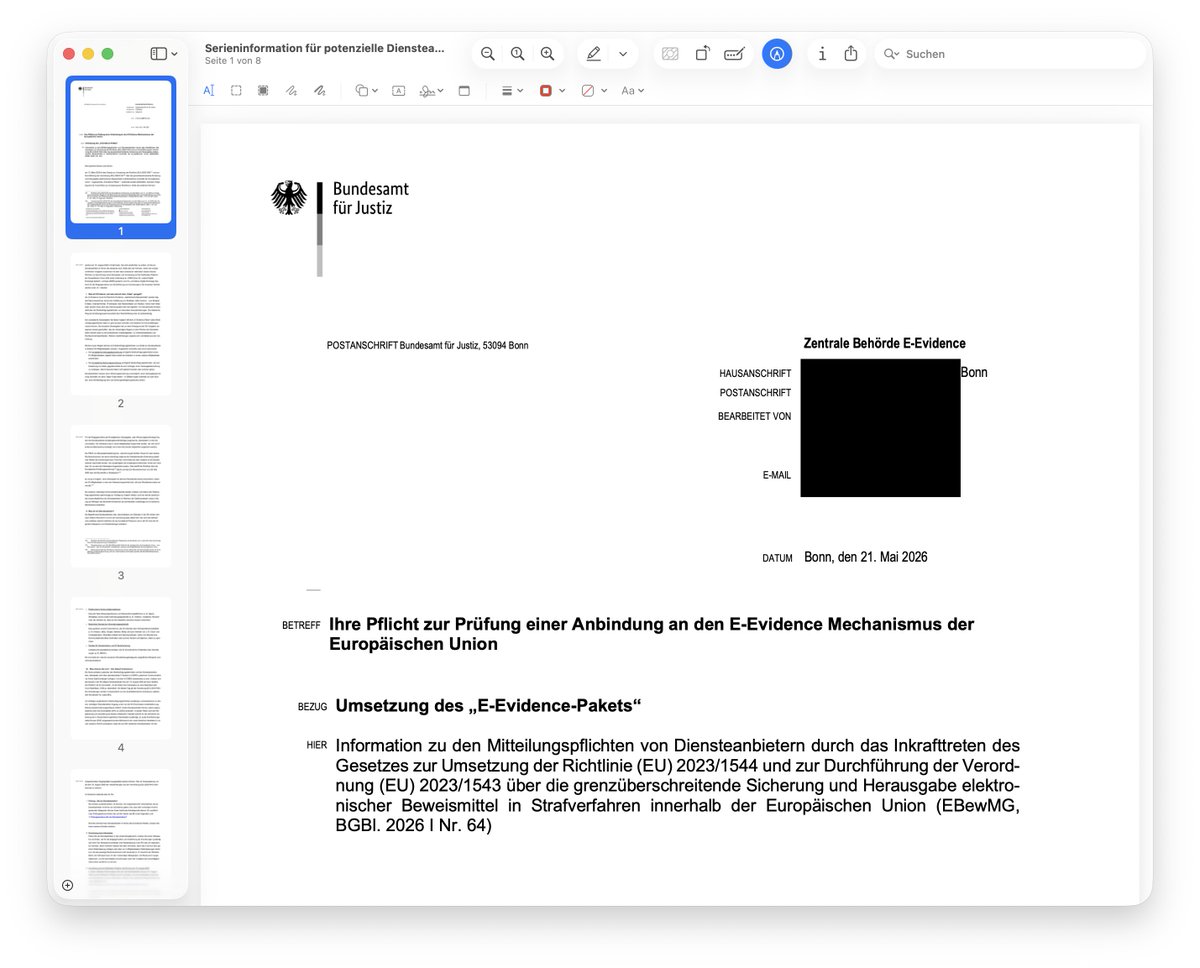
Betreibe einen kleinen unabhängigen Maildienst in Deutschland und bekomme jetzt Post vom Bundesamt für Justiz wegen des neuen EU-„E-Evidence“-Pakets.
Heißt konkret:
Registrierung bei EU-Plattform
Behörden-Schnittstelle
Herausgabeanordnungen
8-Stunden-Fristen im Eilfall
Die Regulierung trifft längst nicht mehr nur Google & Microsoft, sondern auch kleine Anbieter.
CHINA isn’t just making display screens — it’s building astonishing technologies that are waterproof, shatter‑resistant, stretchable and compressible, with ultra‑vivid colors and exceptional energy efficiency… and the features are far too many to count.
🇨🇳 NEW: Chinese cities are rolling out AI-powered robot barber kiosks that scan customers in 3D and cut hair with millimeter precision for just 60 yen per session.
Installing Paperclip today — a “company control plane” for AI agents.
Org charts, goals, budgets, heartbeats, governance.
Not just another bot, but agent teams working toward outcomes.
If it delivers, this could be a glimpse of AI-native companies.
I’ll share what I learn. 👀