AI Professor @UCIrvine | Associate Director, AI in Science Institute | Formerly @blei_lab, @Princeton | Chair @aistats_conf 2025 | AI Resident @ChanZuckerberg
Promoted from Associate to Full Professor. Fewer letters, more committees. 🙂 Thanks to all the graduate students, postdocs, and colleagues. I wouldn't have made it here without you!
If I had to bet on LLM infrastructure impact, this might become the most important paper from my lab. This ICLR paper intrinsically parallelizes language models, building on ideas from normalizing flows. 🚀
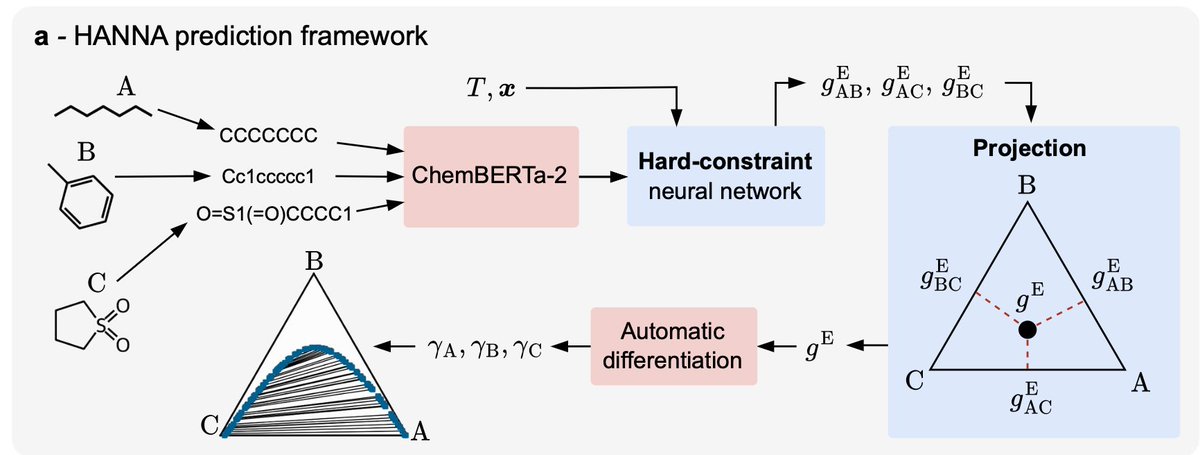
Excited to see seven years of work come together: we can now consistently predict thermodynamic properties of fluid mixtures directly from molecular structure using machine learning. 🧪🤖
Our latest work just got accepted at Nature Communications: https://t.co/UcvrKvhbjo (1/4)
Our latest model takes this to a new level: predicting excess Gibbs energies of mixtures from the SMILES representations of their constituents. This enables predictions across temperatures and compositions, central to chemical process and solvent design. (3/4)
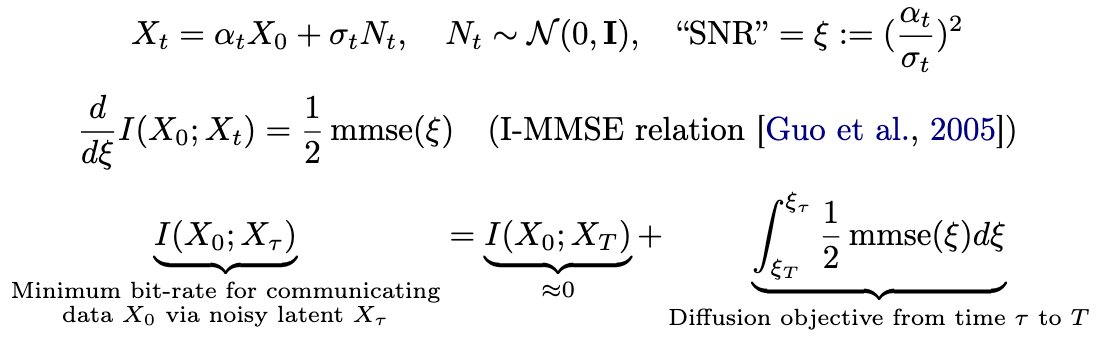
We've known that diffusion models are theoretically very good lossy data compressors , but how can we actually implement this idea in practice? I discuss this and related topics in a new review article on diffusion-based generative compression https://t.co/IEhezuxTB0
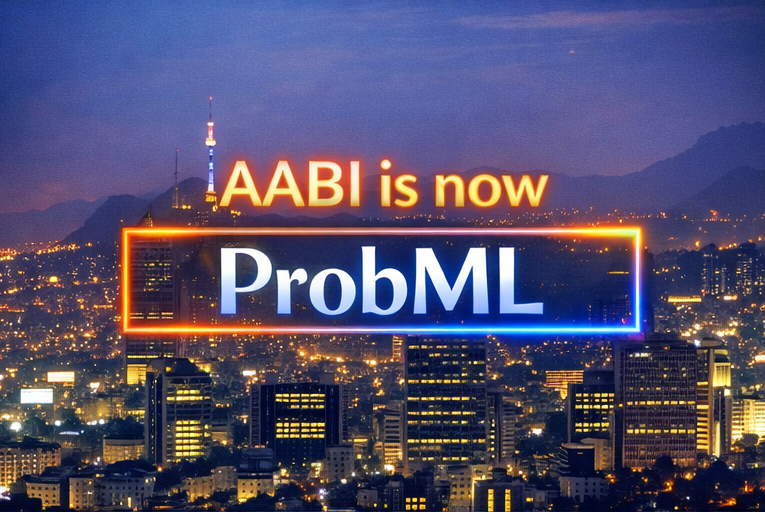
ProbML 2026 (formerly AABI) invites submissions on probabilistic ML (Bayesian & beyond), July 5 in Seoul (co-located with ICML). Website: https://t.co/ttTacxNCVn. Tracks: proceedings (PMLR), workshop, fast track. New focus includes healthcare & climate!
Submit by: 20 March 2026
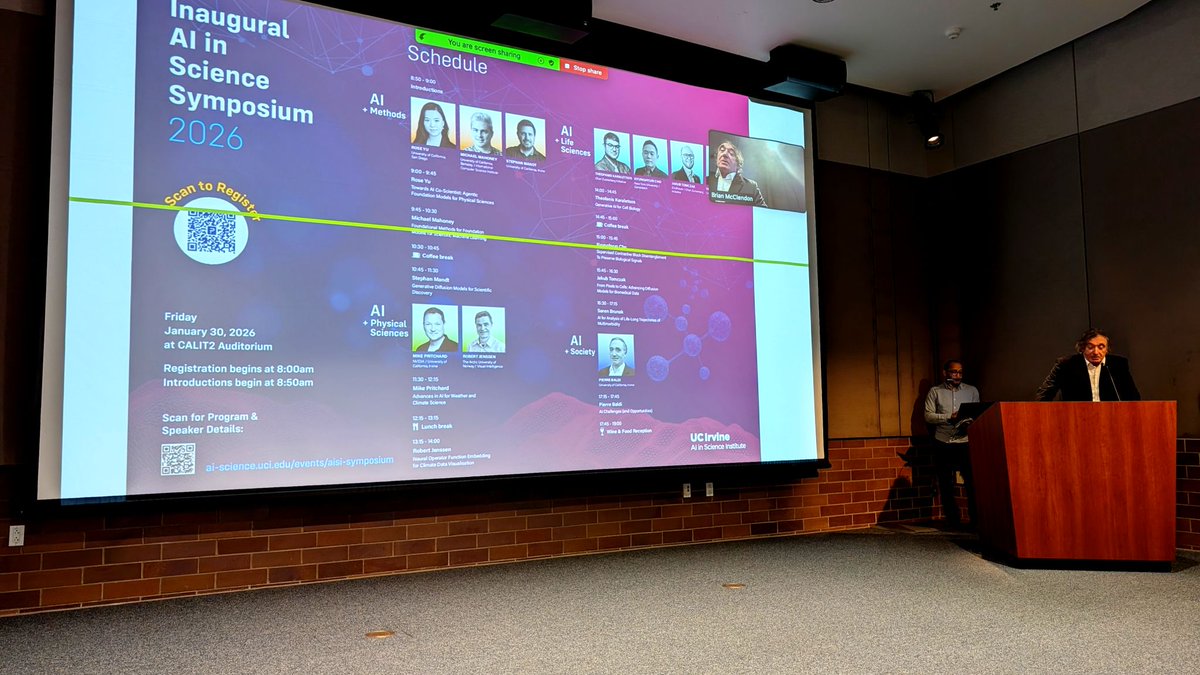
Excited to contribute to a growing scientific ecosystem in SoCal through our new AI in Science Institute at UCI.
Scientific AI raises long-term questions—central to our inaugural symposium, from agentic co-scientists to weather to biology.
Join us next year—sun included ☀️
Congrats to @FelixDrRelax, Yang Meng, and Lukas Laskowski on a NeurIPS Spotlight! 🎉
A simple idea made practical, demonstrated on event sequences, for efficiently modeling mixed discrete-continuous data with transformers.
How to model event sequences with real world variety: mixed data types, different lengths, …?
Meet FlexTPP, a unified transformer framework with discrete & continuous heads for health care, complex annotations and more!
NeurIPS spotlight, Fri 11am #2102!
https://t.co/swgDRCOInk
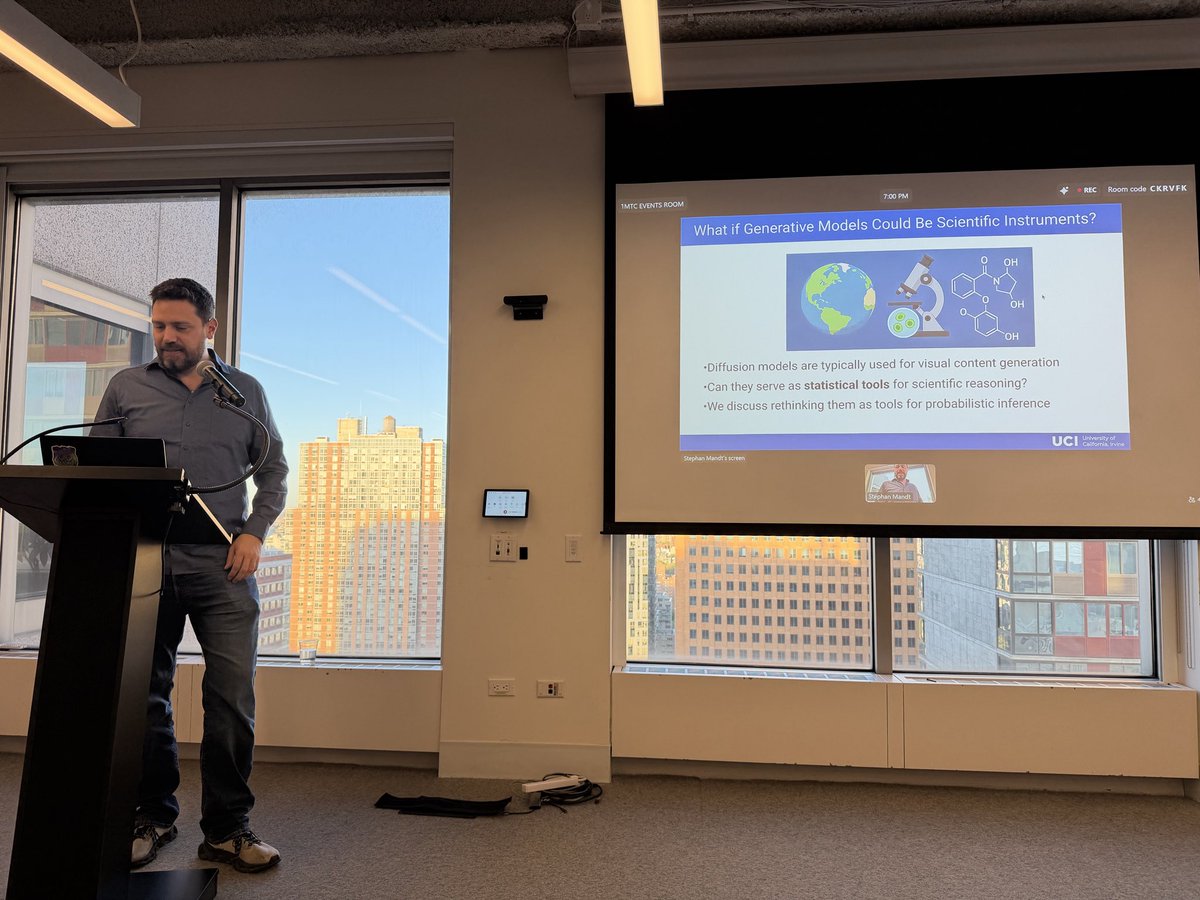
Recently gave a LEAP lecture at @Columbia and at @UCLA on a question I’m excited about: How can we design diffusion models for scientific inference—uncertainty-aware, calibrated, steerable, and heavy-tailed? https://t.co/iQhbpfdPD7
Amid all the review frustration, a big shoutout to all reviewers and area chairs. Peer feedback is a crucial step in developing papers---and it takes serious time and effort. As authors, let’s appreciate the process!
When a single telescope is projected to stream ~62 exabytes of data every year, we need better compression. Learned compression is one answer--check out our new project page here:
Made a pretty website for our ICLR 2025 work AstroCompress: neural compression for space telescopes + 320 GB of ML-ready astro image data.
https://t.co/BpIvo2sZmn
Has links to paper, data, code, Jupyter notebook, reviews, & ICLR video presentation.
Huge thanks to Laura Manduchi, Clara Meister & Kushagra Pandey, who led the 2-year effort of writing “On the Challenges and Opportunities in Generative AI” involving 27 authors. Coming out of a 2023 Dagstuhl Seminar I co-organized with @vincefort, @liyzhen2 & @sirbayes.
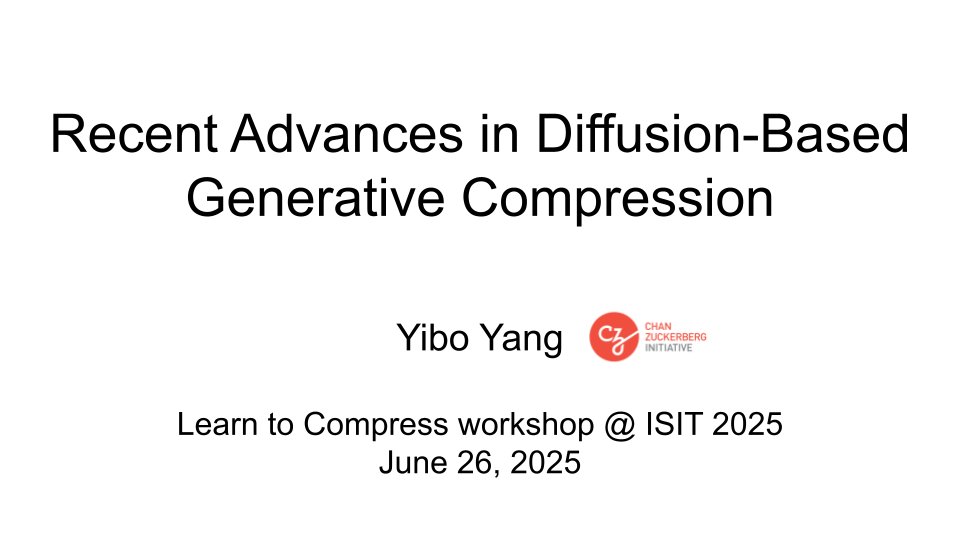
I had the pleasure of giving a talk and sharing some recent work on diffusion + compression (together with @justuswill and @StephanMandt) at the Learn to Compress workshop at #isit2025. Here are my slides: https://t.co/yycVA3gkkG Thanks again for the invitation!