I just asked #ChatGPT what it thought it would be a good next experiment for understanding child language learning and it suggested we check the effects of long-term deprivation of social interaction: https://t.co/lDJshdbHIu
Our results show just how strongly early communication may be supported by adults & their powerful inferential abilities. It also opens new questions for lang development: how can young children learn from what adults say/do in response to their early speech? Stay tuned! 7/
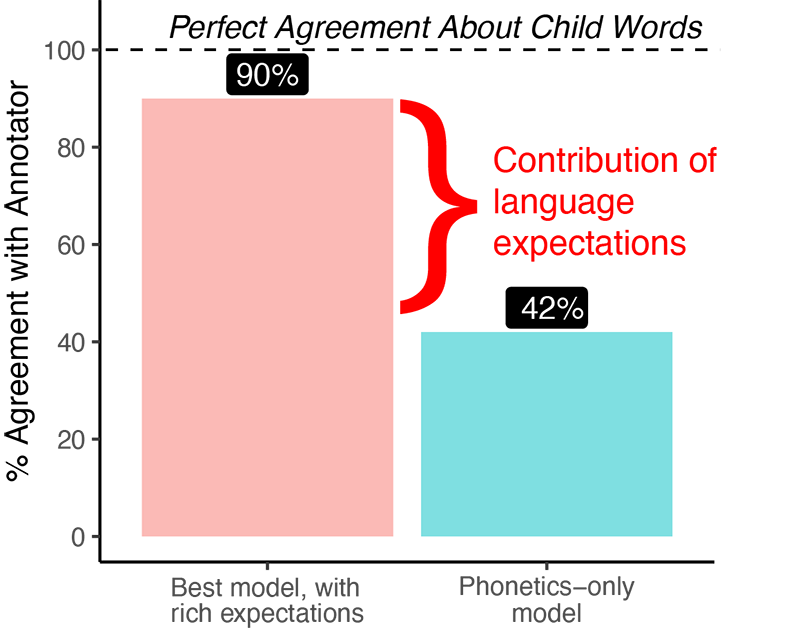
How do adults understand children’s early, highly variable speech? Our new paper in @NatureHumBehav (https://t.co/te9mUKvR1S) provides evidence that adults’ interpretations depend quite strongly on language expectations—what they think children are likely to say. 1/
It’s worth being up front about a limitation in our approach: what we called the “right answer” for what word the child said was what transcribers’ thought they said. This is an imperfect proxy for what parents think their child is saying, but a reasonable first step. 6/
@clairebergey@jmankewitz@AnnissaSaleh@m_zettersten If you would like to know more, check out our website: https://t.co/sgh0AH79O2. And if you are curious to contribute, please email us at peekbank-dev[at]lists[dot]stanford[dot]edu. Our next hackathon will be coming up soon, so it’s a great time to get involved! @kachergis go! 5/7
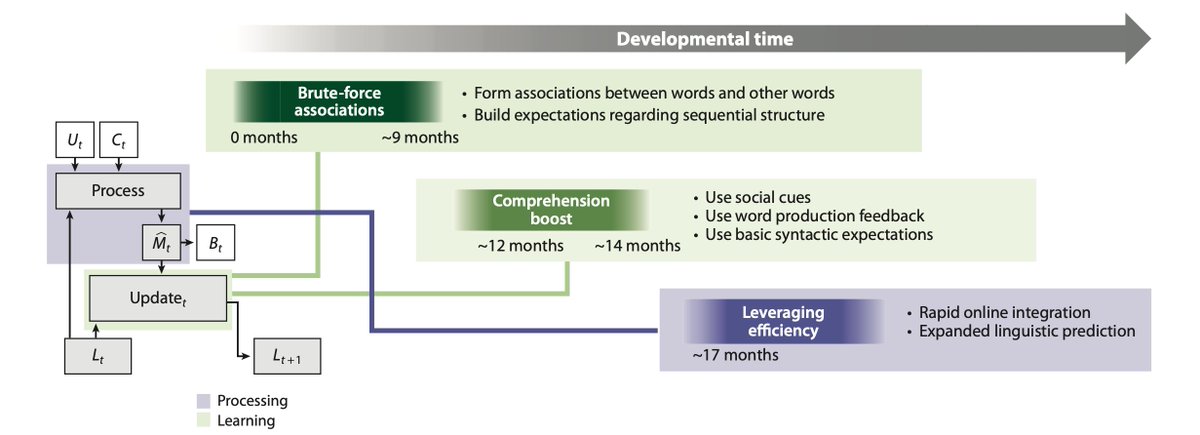
Integrating across previous work, we propose 3 (empirically testable!) phases of word learning in the 0-18 month range. We’re really excited to have this out & look forward to your thoughts! 4/4
How does word learning change over time for young children? My new article with Elika Bergelson (@bergelsonlab) in Annual Review of Linguistics takes a look! (preprint: https://t.co/TB5dovrU9l; official version: https://t.co/S11cCxQyiS) 1/4
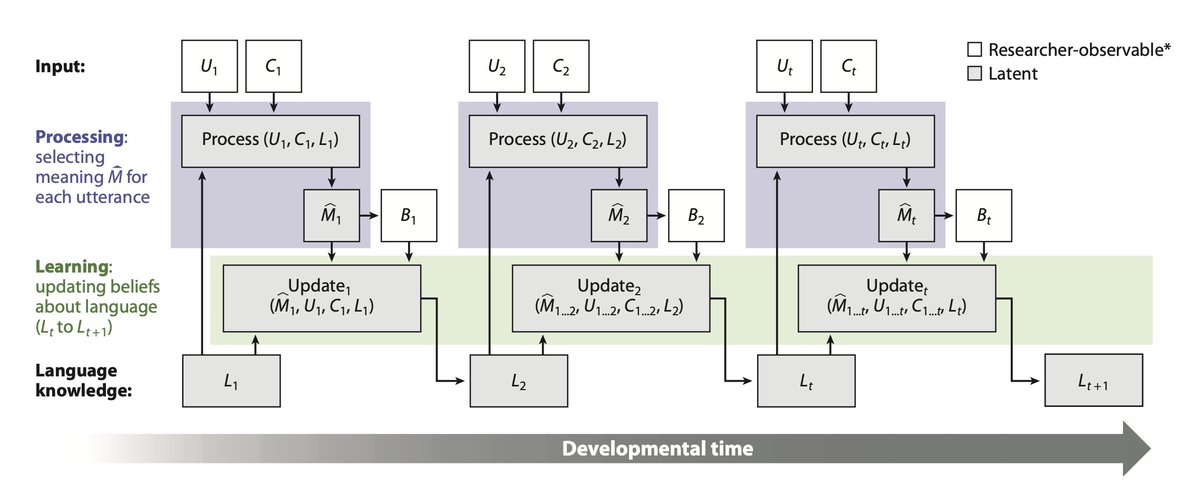
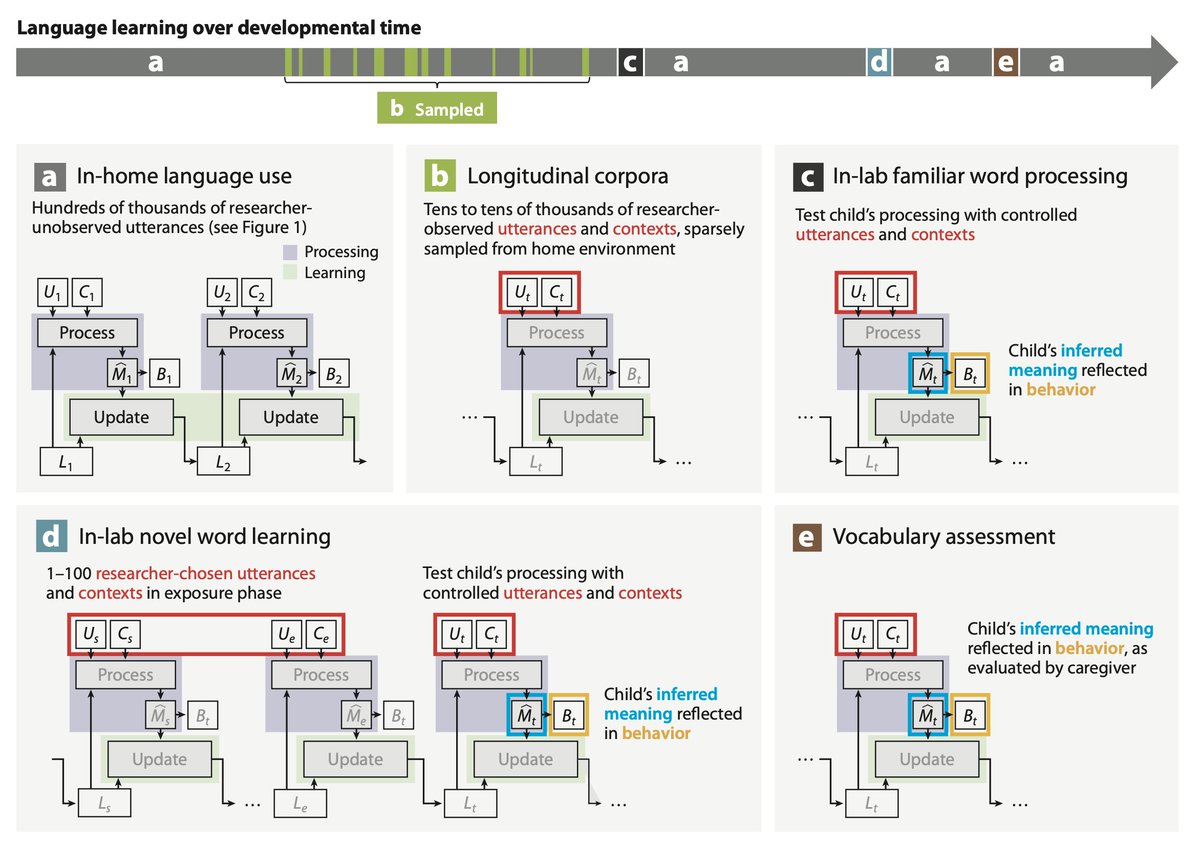
We propose a formal framework for the iterative relationship between real-time language processing and longer-term learning — where ~both~ change over time. We show how experimental and observational data can inform our hypotheses about both learning and processing. 3/4
This Thursday (11:20 EDT) at #cogsci2021, we'll be sharing our work on Peekbank, an open database of eye-tracking data focused on children's online word recognition. Check out our website here: https://t.co/fLQJMmhHtg (1/10)
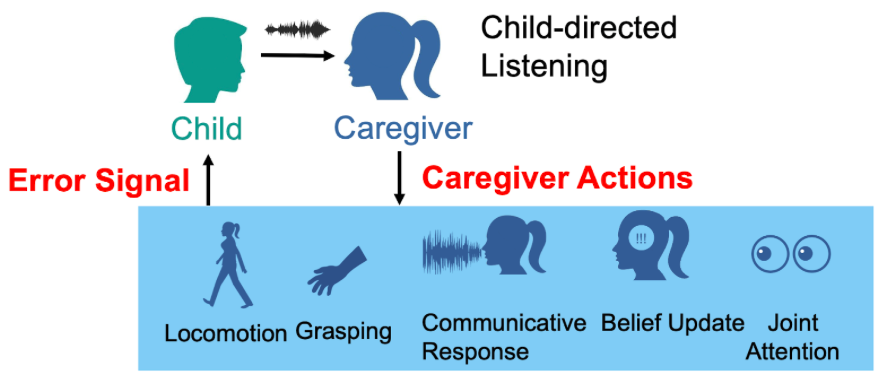
We end with questions: What can we get from thinking about language dev in this way? If we assume that successful communication is itself reinforcing, child-directed listening might provide ubiquitous feedback to the child learner!
Developmental psychologists have long studied how adults talk to children, what about how they *listen* to them? Come see my talk #CogSci2021 with @ruthefoushee @elikabergelson & @roger_p_levy! (7/29, 13:40 EDT, [link shortened] https://t.co/HX0xzOXBPK)
Using just entropy over the posterior distribution --- how certain the model is about the identity of the word --- is enough to predict whether a given phoneme string will get transcribed as a word or flagged as unintelligible by annotators!





![StephanMeylan's tweet photo. Developmental psychologists have long studied how adults talk to children, what about how they *listen* to them? Come see my talk #CogSci2021 with @ruthefoushee @elikabergelson & @roger_p_levy! (7/29, 13:40 EDT, [link shortened] https://t.co/HX0xzOXBPK) https://t.co/RSZC1KF3cw](https://pbs.twimg.com/media/E7EgTD_XMAwetYk.jpg)


