@DidierMaisto le TER
pour avoir une place , faut arriver 20 minutes avant le départ
moi avec mes 2 chats j'ai toujours une place, a coté des vélos
bref elle se prend pour une princesse
En Brasil están atribuyendo el declive de su selección de fútbol al avance del evangelismo. Y no me parece descabellado pensarlo. Por lo siguiente:
1. El fútbol brasileño tenía una identidad enraizada en la exuberancia, fiesta y colorido propios de una cultura hija del sincretismo entre lo católico y los imaginarios religiosos de origen africano. Cuando Brasil arrasaba en los mundiales sus jugadores llegaban a los estadios cantando samba y tocando tambores afrobrasileños. El juego en la cancha no era más que la extensión del festejo. Pero así era cuando los jugadores eran católicos y practicantes del sincretismo afrobrasileño. Hoy los jugadores de Brasil son mayormente evangélicos. Y el evangelismo, dada su matriz dispensacionalista y su escatología cerrada, expulsa toda forma de sincretismo: de diversidad. Es decir, acaba con el fútbol-fiesta. Los actuales jugadores de la selección brasileña llegan rezando a los partidos...Ahora tocar los tambores e invocar los santos del sincretismo afrobrasileño es cosa del diablo. Está muy mal visto. Se volvieron tristes, marciales y predecibles. Tanto en sus vidas como en la cancha.
2. En el catolicismo cuando uno se equivoca o le va mal debe reflexionar y buscar causas para mejorar. En la escatología evangélica ya todo está escrito. Si ganan el mundial es porque Dios así lo quiso. Y si pierden estrepitosamente como ahora es porque los tiempos de Dios son perfectos...En tales condiciones el jugador nunca es responsable, en última instancia, de los malos resultados. Se busca ganar y mejorar, pero siempre pensando en que pase lo que pase todo está en manos de Dios quien de antemano determina lo que va a pasar.
3. El evangelismo que llega a Brasil (y al resto de América Latina) es individualista. Es una religiosidad que articula la noción calvinista del esfuerzo individual como devoción por Dios, con la teología de la prosperidad neopentecostal. El evangélico privilegia lo individual frente a lo colectivo. La salvación es de cada uno. El fútbol brasileño de los Pelé, Garrincha, Zico, Ronaldo, Romario, Rivaldo y Ronaldinho (cuando Brasil era insuperable en la cancha) tenía un componente profundamente colectivo tanto en su aspecto táctico como estético. Cosa muy difícil de cultivar hoy en jugadores evangélicos que se ven a sí mismos como actores individuales cada uno en búsqueda de su salvación privada.
4. El evangelismo es severo y castigador. Mientras que el catolicismo (sincrético) que imperaba en Brasil era abierto y matizado. Esto amplía la creatividad y la búsqueda de distintas opciones. El futbolista brasileño del jogo bonito era ante todo creativo. Veía los partidos cerrados como algo a superar creando e inventando jugadas. Hoy, con jugadores evangélicos, la selección brasileña luce predecible y sin imaginación.
En fin, invito a que sigan el debate que hay hoy en Brasil en relación a lo que consideran son los efectos nocivos del evangelismo en la identidad de su fútbol. Porque ese debate puede extrapolarse a muchos otros ámbitos de esa sociedad. Y, por tanto, a cualquier otro país latinoamericano donde el evangelismo haya sustituido a la matriz católica (sincrética) como religiosidad mayoritaria. Al final, estos discursos de odio, vaciamiento democrático y destrucción de lo público que vemos en nuestros países no vienen de la nada.
😳 Trump just flubbed his way through his meeting with Zelenskyy, at various points referring to the "Islamic Republic of Japan," repeatedly calling Zelenskyy "President Putin," and railing against the "JCPOC"
Here's the blooper reel:
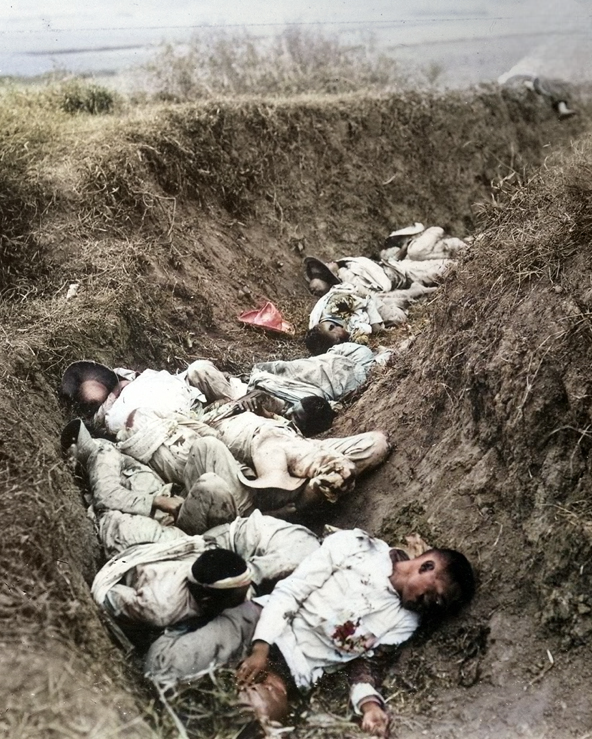
La historia que no te cuentan en la escuela, en 1899, EEUU perpetraba un genocidio de Filipinas, invadiendo el pais con 70.000 soldados con el único objetivo de colonizarlo y saquearlo, fueron masacrados hasta 1,4 millones de filipinos.
El general estadounidense Smith que lideraba la invasión a Filipinas, dio la orden a sus soldados de matar a toda persona mayor de 10 años.... por lo que las bestias imperialistas masacraron aldeas enteras, torturaron civiles y construyeron campos de concentración donde cientos de miles de civiles perecieron de hambre y enfermedades.
Los luchadores anticoloniales filipinos liderados por los Katipunan, que consiguieron liberar el pais a manos del imperialismo español en 1896, tras 300 años de dominio colonial, volverían a ser oprimidos por los estadounidenses durante otros 44 años y no conseguirían su "independencia" hasta 1946.
Al igual que ocurrió en África, Filipinas nunca ha llegado a ser realmente independiente y a partir de 1946 el imperialismo pasó a una colonización externa, poniendo a dictadores a dedo como Duterte, para tener controlado el pais como una semicolonia.
Te hablan a todas horas de los trillones de muertos del comunismo... pero por lo que sea, nunca hablan de los verdaderos millones de muertos del capitalismo.
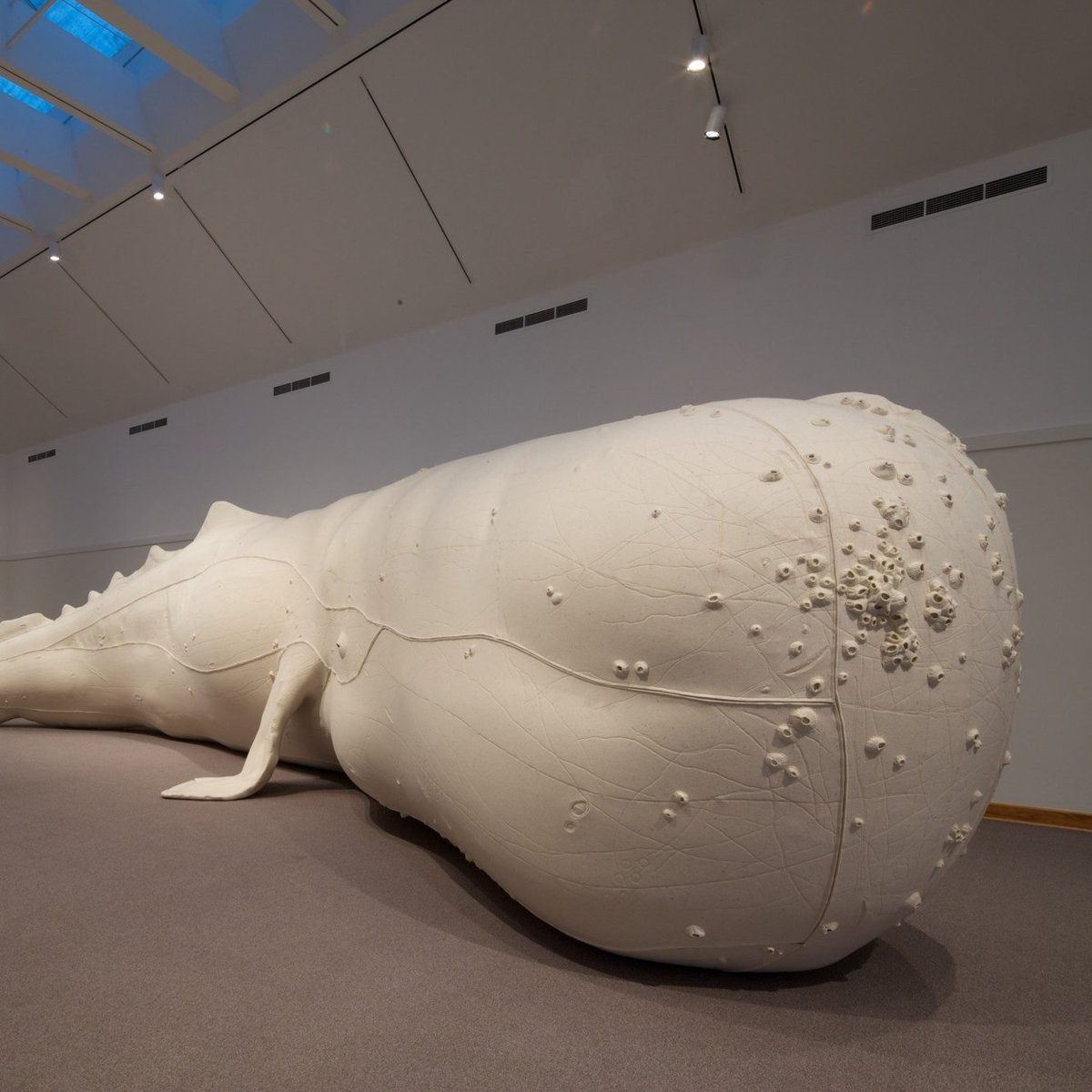
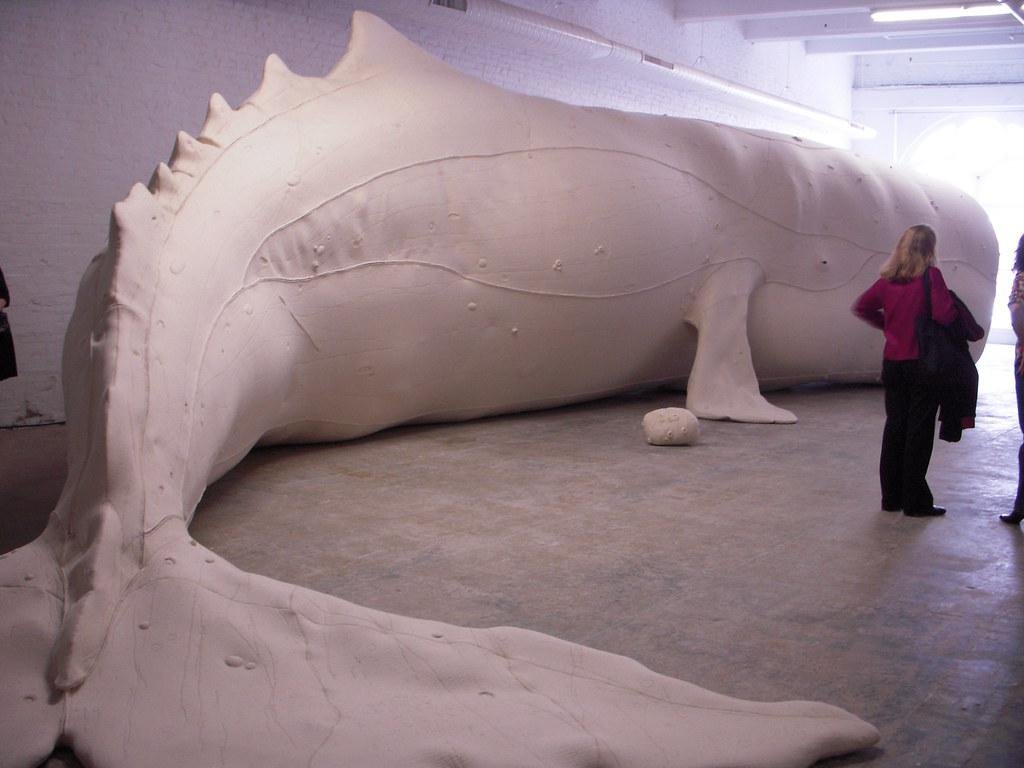
This is a replica of Mocha Dick, history's most famous sperm whale
The 70-foot whale reportedly fought off nearly 100 whaling ships, sank around 20 and evaded capture for almost 30 years
Even though it was the Soviets that sent highly trained intelligence agents to Beijing to educate, fund, and organize the early founders of the Chinese Communist Party, Mao Zedong would have absolutely never been able to successfully establish a sovereign communist state in China if he had not eventually rejected the orthodox Leninist-Russian blueprint to design and implement a highly localized communist ideology perfectly suited to the unique material conditions of the Chinese people.
This was largely because the rigid political philosophy of Vladimir Lenin strictly insisted that the uneducated, atomized peasantry could never spontaneously unite, coordinate, or organize in any meaningful way to pose a strategic threat to heavily armed, corrupt, and oppressive capitalist governments. For this exact reason, Leninist dogma dictated that there must always be a highly disciplined team of urban, middle-class intellectuals possessing superior administrative resources, financial backing, and academic faculties to coordinate the working class, organize them under a cohesive socialist ideology, and provide them with the exact operational blueprints, industrial strike guides, and guerrilla tactics required to dismantle their capitalist governments. This highly elite group of professional revolutionaries was known as the Vanguard Party, and it was the absolute, non-negotiable instruction handed down from Moscow commanding the young Chinese communists to strictly organize under this centralized urban structure.
Things were going relatively well for the Chinese communists until the urban-based Vanguard Party, which tragically consisted of middle-class elites, double agents, and direct beneficiaries of the corrupt, Western-backed Kuomintang (KMT) government in Beijing, predictably and violently betrayed the movement during the horrific 1927 Shanghai Massacre. Following this betrayal, communists on the streets of urban China were ruthlessly hunted down house by house, dragged into public squares, and either summarily executed by firing squads or thrown into maximum-security military prisons. The tiny, desperate remnants of the party were forced to flee for their lives. This was the exact historical moment when Mao Zedong, Deng Xiaoping, Zhou Enlai, Lin Biao, and Zhu De retreated with the remaining Red Army forces deep into the southern mountains. When they eventually launched their legendary "Long March" escape route, their numbers initially stood at a formidable 86,000 battle-ready soldiers. But after walking continuously for nearly 370 grueling, agonizing days, traversing treacherous swamps, climbing freezing snowy mountains, and fleeing from constant KMT artillery bombardments, thousands tragically died of malaria, starvation, hypothermia, and battlefield injuries. By the time they finally reached the safety of the dusty caves in northern Shaanxi, the entire Chinese communist force had been violently decimated, reduced to a meager, skeletal crew of barely 7,000 to 8,000 survivors.Mao Zedong himself was so physically battered and exhausted that he nearly died of a severe, life-threatening liver illness and malaria while running from the relentless Kuomintang armies.
It was this incredibly painful, bloody betrayal and catastrophic loss of life that forced Mao to permanently abandon the rigid, Eurocentric industrial urban philosophy of Vladimir Lenin and develop what is known globally as Maoism. According to Mao's newly forged doctrine, it was physically, structurally impossible to successfully build a revolution under a typical middle-class Vanguard Party in a country like China that had been brutally colonized, divided, and exploited by foreign powers. He recognized that in the colonized world, the highly educated, Western-trained, and wealthiest elites in society, the very people who possessed the administrative resources and academic capacity to coordinate a standard Marxist revolution, would always choose to submissively serve the financial interests of their white, Western colonial masters rather than ever unite the local working people under a shared, sovereign cause. To this end, Mao vehemently insisted that if China was ever going to establish a true, uncompromised socialist state and permanently break away from the suffocating shackles of Western imperialism, he had to completely bypass the untrustworthy, colonized urban intellectuals and aggressively organize the raw, rural, and massive peasantry.
It was during this period of isolation that Mao traveled deep into the forgotten Chinese countryside to actively live with, organize, and radicalize the poorest farmers, landless peasants, and agricultural laborers. Even then, the Soviet leadership in Moscow refused to support his cause, dismissing it as an ideological heresy that completely violated the urban-proletarian Leninist blueprints governing the USSR. In fact, even during the height of the Chinese Civil War between the Chinese Red Army and the Western-backed, fascist-leaning Kuomintang government, the Soviet Union actively, hypocritically collaborated with Chiang Kai-shek's KMT regime in Beijing. Joseph Stalin repeatedly advised Mao Zedong and his guerrilla fighters to pack up their weapons, surrender their autonomous territory, and allow themselves to be quietly integrated into a unified capitalist government, under the condescending warning that fighting a modern war with landless peasants was a hopelessly lost cause. Mao Zedong vehemently refused Moscow's directives, boldly insisting that in any colonized, neocolonial, or occupied society, the privileged, Western-educated comprador class will always, without fail, do the bidding of their white colonial masters, even at the absolute expense of the lives, survival, and ultimate freedom of their own domestic population.
Although the Soviet Union eventually relaxed their hostile, dogmatic stance against the Chinese Communist Party once they saw Mao's peasant armies winning actual military victories, it was not until the end of World War II that the tide completely, irreversibly turned against the Kuomintang. Following the Soviet military's rapid, crushing defeat of the Japanese Kwantung Army in Manchuria, Moscow allowed Mao Zedong's forces immediate, exclusive access to the massive, state-of-the-art weapons stockpiles, artillery divisions, and heavy armored vehicles that the occupying Japanese forces had built and abandoned. It was this sudden influx of modern, heavy military hardware that completely changed the tactical game, neutralized the air superiority of the Western-backed KMT, and eventually enabled the Red Army to execute a sweeping, devastating offensive that drove Chiang Kai-shek's corrupt forces entirely off the mainland onto the island of Taiwan.