The phrase is repeated so often it has hardened into certainty. The Dark Ages, we are told, began when the Roman Empire collapsed and Christianity smothered the light of classical civilization. Science vanished. Learning died. Europe stumbled blindly through a thousand years of superstition until the Renaissance finally rescued reason from the grip of priests.
It is a tidy story. It is also wrong.
When the Western Roman Empire collapsed in the fifth century, the disaster was not theological—it was civilizational. Cities emptied. Trade routes collapsed. Roads crumbled. Literacy declined. Political authority fractured into a patchwork of Germanic kingdoms that possessed neither the administrative machinery nor the cultural inheritance of Rome.
The darkness that followed did not descend because monks burned books. It descended because the world that produced those books had collapsed.
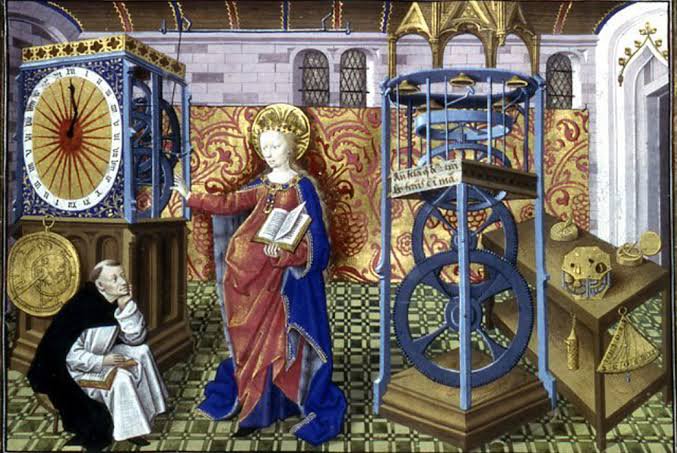
And yet, in the wreckage of that fallen order, something remarkable happened. In lonely valleys and along forested hillsides, small communities of Christian monks began doing something that no conquering army, no new king, and no collapsing city seemed interested in doing: they preserved the memory of the ancient world.
Inside monastic scriptoria, by candlelight and patient discipline, monks copied manuscripts—line by line, page by page. They copied the Scriptures, of course. But they also copied Virgil, Cicero, Ovid, Livy, and countless other works of classical antiquity. Without those quiet labors, much of what we know about Greece and Rome might simply have vanished.
The men doing this work were not secular humanists ahead of their time. They were Christians. They believed that truth, wherever it appeared, ultimately belonged to God. Preserving learning was not rebellion against faith. It was an act of devotion.
Monasteries became islands of stability in a turbulent world. They cultivated fields, organized communities, and preserved literacy at a moment when most of Europe had forgotten how to read. Their libraries became reservoirs of memory while kingdoms rose and fell around them.
Over time those small islands of learning began to connect. By the eleventh and twelfth centuries a new intellectual revival was underway. Cathedral schools evolved into institutions dedicated entirely to scholarship. These institutions would soon receive a new name—universities.
The University of Bologna, Paris, and Oxford did not emerge in defiance of the Church. They were born inside it. Theology stood beside law, medicine, and philosophy as part of a unified search for truth. Scholars argued fiercely over Aristotle, debated logic, experimented with natural philosophy, and tried to reconcile reason with revelation.
The medieval world was not anti-intellectual. It was intensely intellectual. Figures like Thomas Aquinas, Albertus Magnus, and Roger Bacon wrestled with the newly rediscovered works of Aristotle and the expanding body of knowledge flowing from the Islamic world. They did not treat faith and reason as enemies. They believed both ultimately pointed toward the same reality.
Even the foundations of what would later become modern science were quietly forming during these centuries. Medieval thinkers developed the idea that nature operated according to rational laws because it had been created by a rational God. If the universe was ordered rather than chaotic, then studying it was not impiety—it was a form of worship.
The irony is striking. The very civilization accused of plunging Europe into darkness built the intellectual institutions that would eventually illuminate it.
None of this means the medieval world was idyllic. It was violent, unequal, and often brutal. Wars were frequent. Plagues were devastating. Superstition and ignorance certainly existed. But these were not the unique failings of Christianity. They were the universal conditions of premodern life.
#archaeohistories
Ever notice how you can walk into church carrying everything.
Stressed and distracted. Mind won't stop.
Thinking about work, your marriage, the kids.
And then something shifts. Not during the sermon but during the singing.
By the second or third song your breathing slows and your shoulders drop. The noise in your head just stops.
You feel different and you can't explain why. But it's not just emotion.
God designed your body for this.
There's a nerve called the vagus nerve. It runs from your brain all the way down to your heart and lungs and gut. It's one of the primary pathways of your body's rest and restore system.
One of the ways researchers have found to activate it?
Singing. Not listening to music but actually singing.
The physical act of opening your mouth and lifting your voice triggers the system God built into you to bring you back to rest.
Now read this.
"Make a joyful noise unto the LORD, all ye lands. Serve the LORD with gladness: come before his presence with singing."
Psalm 100:1-2 KJV
God didn't say listen to worship music.
He said come before His presence with singing.
The God who created your nervous system is the same God who told you to lift your voice.
I don't think that's an accident.
What if worship isn't just something God asks from us. What if it's one of the ways He restores us.
The more I study the human body the more I find physiology keeps pointing me back to the Creator.
Why you should be careful where you send your children to college. If she were channeling all that energy and outrage at solving problems in an evidence-based and reasonable way…and all those propagandized like her…the world would be such a much better place! It took me a while to learn better than some of the things taught in college. I mostly had a very good experience, but looking back there were a few philosophies that sounded good but did not match real world evidence. Only send you child to a University where you want them sounding like the people coming out of it.
“Socialism has taken many forms, from the Bolshevism of Russia, to the CCP in China, the Nazis in Germany, Fascists in Italy, and the many forms of it found in Latin America. It is one of the two most destructive ideologies on earth. It is designed to deprive, despirit, and murder everything that comes in contact with it.
Socialism is a great lie at every level. It helps no one, not even those who benefit the most. This is because the cost is the imposition of one's will on everyone else, and that destroys the soul of the usurper and the life of the oppressed.
Socialism always fails on its own, but only after destroying almost everything in its train. It can also be conquered. Those are the options.”
Communism through (my) ages:
1) When I was 15, a teacher told me "It isn't as bad as they say, and makes a lot of sense."
2) At about 19, college friends, "Socialism isn't communism."
3) At 20, on meeting my grandfather-in-law, "They are evil. We escaped in 1949."
4) At 30, "China is a wonderful developing Democracy"
5) At 35, I was sent to communist China on business. It was a crowded, smelly, dirty, factory of despair and hopelessness. This I saw with my own eyes.
6) At 36, "China doesn't count. Successful socialism is in northern Europe."
7) I moved to northern Europe when I was 40. It was much nicer than China, but also felt like I was living in the past. I had to wait 6 months for a hernia operation.
8) When I was about 45, the migrant crisis began. The socialist/globalist/pacifist allowed them entry into every country, regardless how many crimes they committed along the way. Just 20 minutes from my house, in Calais, I was shocked to see migrants jumping onto trucks, breaking open the doors, scattering the contents across the highway, then climbing in. They went through the Chunnel and got out in England.
9) At 52, the soft socialism around me had transformed into globalism. I was told I had to call people by their preferred pronouns, though it was a lie, and even if I didn't know what the preferences were. I quit.
10) I returned to the US, and am now 60. "Socialism" is no longer a dirty word here. People openly espouse the virtues of it. Politicians run as socialists and win.
Socialism has taken many forms, from the Bolshevism of Russia, to the CCP in China, the Nazis in Germany, Fascists in Italy, and the many forms of it found in Latin America. It is one of the two most destructive ideologies on earth. It is designed to deprive, despirit, and murder everything that comes in contact with it.
Socialism is a great lie at every level. It helps no one, not even those who benefit the most. This is because the cost is the imposition of one's will on everyone else, and that destroys the soul of the usurper and the life of the oppressed.
Socialism always fails on its own, but only after destroying almost everything in its train. It can also be conquered. Those are the options.
❖ Did Proverbs Ask a Question That Wouldn't Be Fully Answered Until Messiah?
What if I told you that the Book of Proverbs asks for the name of God's Son?
Not in a prophecy book.
Not in a Messianic Psalm.
In Proverbs.
Most people read Proverbs for practical wisdom.
But buried in one chapter is a question so profound that it echoes all the way to the New Testament.
The writer, Agur, begins with remarkable humility:
"Surely I am more ignorant than any man, and do not have the understanding of a man." (Proverbs 30:2)
In a world overflowing with self-confidence, Agur starts by admitting what he doesn't know.
Then he asks a series of questions:
"Who has ascended into heaven and descended?
Who has gathered the wind in His fists?
Who has wrapped the waters in a garment?
Who has established all the ends of the earth?" (Proverbs 30:4)
Think about those questions.
Who controls the wind?
Who commands the seas?
Who established the earth?
The answer is obvious.
God.
These are Creator questions.
Only the LORD can claim such authority.
Then comes the surprise.
"What is His name, and what is His Son's name, if you know?" (Proverbs 30:4)
Wait.
His Son?
The Hebrew is unmistakable:
mah shemo u'mah shem beno
"What is His name, and what is the name of His son?"
Suddenly the passage becomes even more intriguing.
Why would Agur move from describing the Creator of heaven and earth to asking about His Son?
Jewish commentators recognized the difficulty of this verse.
Rashi connected the passage to Moses and human limitations before God's greatness. Others understood it as emphasizing the incomprehensible nature of God.
Yet the question remains in the text.
"What is His Son's name?"
For Christians, this question opens a remarkable window into the unfolding revelation of Scripture.
The Old Testament contains hundreds of passages that point toward Messiah.
Proverbs 30:4 is rarely included on those lists.
Yet it may be one of the most fascinating clues hidden in plain sight.
Notice the first question again:
"Who has ascended into heaven and descended?"
Centuries later, Yeshua declared:
"No one has ascended into heaven except He who descended from heaven, the Son of Man." (John 3:13)
The connection is striking.
Agur asks:
Who ascended and descended?
What is His Son's name?
Jesus answers both themes in a single statement.
The New Testament goes even further.
❖ "All things were made through Him." (John 1:3)
❖ "By Him all things were created." (Colossians 1:16)
❖ God "made the universe" through His Son. (Hebrews 1:2)
The Creator questions of Proverbs 30 suddenly point in a remarkable direction.
Who gathered the wind?
Who wrapped the waters?
Who established the ends of the earth?
The New Testament identifies the Son as the One through whom creation came into being.
The story doesn't stop there.
David hinted at the answer:
"Kiss the Son..." (Psalm 2:12)
Daniel saw the answer:
"One like a Son of Man, coming with the clouds of heaven..." (Daniel 7:13–14)
John proclaimed the answer:
"The Word became flesh and dwelt among us." (John 1:14)
Agur did not possess the full picture.
Progressive revelation unfolds throughout Scripture.
But long before Bethlehem...
Long before the manger...
Long before the cross...
The Book of Proverbs was already asking a question:
"What is His name, and what is His Son's name?"
And that question still confronts every reader today.
If Proverbs asks,
"What is His Son's name?"
And Jesus claims to be the One who descended from heaven...
Could Agur have been asking a question that would not be fully answered until the coming of Messiah?
📖 Proverbs 30:2–4
📖 Psalm 2:12
📖 Daniel 7:13–14
📖 John 1:1–3, 14
📖 John 3:13
📖 Colossians 1:16–17
📖 Hebrews 1:1–3
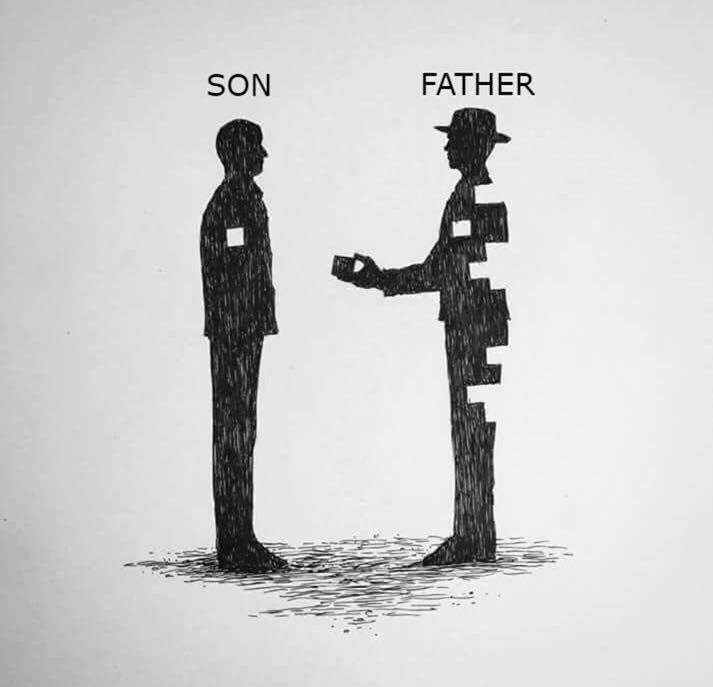
RULES FOR SONS:
1. Never shake a man’s hand sitting down.
2. Don’t enter a pool by the stairs.
3. The man at the BBQ Grill is the closest thing to a king.
4. In a negotiation, never make the first offer.
5. Request the late check-out.
6. When entrusted with a secret, keep it.
7. Hold your heroes to a higher standard.
8. Return a borrowed car with a full tank of gas.
9. Play with passion or not at all…
10. When shaking hands, grip firmly and look them in the eye.
11. Don’t let a wishbone grow where a backbone should be.
12. If you need music on the beach, you’re missing the point.
13. Carry two handkerchiefs. The one in your back pocket is for you. The one in your breast pocket is for her.
14. You marry the girl, you marry her family.
15. Be like a duck. Remain calm on the surface and paddle like crazy underneath.
16. Experience the serenity of traveling alone.
17. Never be afraid to ask out the best looking girl in the room.
18. Never turn down a breath mint.
19. A sport coat is worth 1000 words.
20. Try writing your own eulogy. Never stop revising.
21. Thank a veteran. Then make it up to him.
22. Eat lunch with the new kid.
23. After writing an angry email, read it carefully. Then delete it.
24. Ask your mom to play. She won’t let you win.
25. Manners maketh the man.
26. Give credit. Take the blame.
27. Stand up to Bullies. Protect those bullied.
28. Write down your dreams.
29. Always protect your siblings (and teammates).
30. Be confident and humble at the same time.
31. Call and visit your parents often. They miss you.
32. The healthiest relationships are those where you’re a team; where you respect, protect, and stand up for each other.
Yes, including praying for boldness and courage where needed as well. I am grateful for the relief from this evil regime and for the people of Iran, and pray for the salvation of all of His people.
Btw, I love your work. I have given out your videos on PragerU more times than I can count! Keep up the excellent, truthful work! @carolmswain
🔻 OBAMA JUST LAWYERED UP. AND NOW WE KNOW WHY.
March 2, 2026. 7:00 AM.
Barack Hussein Obama has retained a team of 9 criminal defense attorneys. Not civil. Not advisory. Criminal.
The same man who told you “Hope and Change” is now preparing for a federal grand jury subpoena expected by March 7.
⚡ THE $150 BILLION LIE
In 2016, Obama sent Iran $150 billion and $1.7 billion in physical cash — pallets of money loaded onto unmarked cargo planes in the middle of the night.
He told you it was a nuclear deal.
It wasn’t.
The DOJ files released yesterday show that $2.3 billion of Epstein’s network ran through Iranian banks. Deutsche Bank. JPMorgan. And Bank Melli Iran — a state-owned bank under Obama’s ��nuclear deal” exemptions.
Obama didn’t pay Iran to stop enriching uranium. He paid Iran to store the evidence.
The server farm. The blackmail tapes. The financial records. All moved to Tehran between 2016 and 2019 — on Obama’s watch, through Obama’s channels, with Obama’s money.
Trump just sent the military to recover it. Now Obama needs 9 lawyers.
🔻 THE HARVARD CONNECTION
Two days ago, Lawrence Summers — Obama’s top economic advisor and former Harvard president — resigned from Harvard without explanation.
His name appears on the Butterfly Foundation recipient list. The $340 million Epstein trust.
Summers met with Epstein at least 14 times after his 2008 conviction. At Harvard. At the mansion. At the island.
Obama appointed him as Director of the National Economic Council in 2009 — one year after Epstein’s conviction. Not despite the connection. Because of it.
⚡ THE CLINTON TESTIMONY
Bill Clinton testified under subpoena before the House Oversight Committee this week. First time in history a former president was deposed in a criminal investigation by Congress.
Hillary testified separately. Behind closed doors.
But here’s what matters: Clinton was asked about Obama. Specifically about a 2015 meeting at the Clinton Foundation where Obama, Clinton, Summers, and Epstein’s lawyer were all present.
The subject of that meeting? “Asset relocation.”
Assets. Not money. Not investments. Evidence.
🔻 THE TIMELINE
2015 — Meeting at Clinton Foundation. “Asset relocation” discussed.
2016 — Obama sends $150 billion to Iran. Pallets of cash.
2017 — NSA intercepts CIA black site communications inside Iran.
2019 — Epstein arrested. Then murdered. Tapes “disappear.”
2025 — Trump returns. Bondi appointed. Investigation reopens.
2026 — US military recovers tapes from Tehran. Obama lawyers up.
Every dot connects. Every dollar traces back. Every lie has an expiration date.
And Obama’s just expired.
⟁ The grand jury meets March 7. Share this. The world needs to see the full picture.
“Then Esther spoke to Hathach and ordered him to reply to Mordecai: ‘All the king’s servants and the people of the king’s provinces know that for any man or woman who comes to the king to the inner court who is not summoned, he has but one law, that he be put to death, unless the king holds out to him the golden scepter so that he may live….’ Then Esther told them to reply to Mordecai, ‘Go, assemble all the Jews who are found in Susa, and fast for me… And thus I will go in to the king, which is not according to the law; and if I perish, I perish’” (Esth 4:10–11a; 15–16).
One of the most striking features of Esther is the absence of God’s name. This touches something deep in the Jewish experience. In our darkest hours, many have cried, “Where are You, God?”
Yet perhaps God is hidden only from those who read Esther without Israel’s earlier Scriptures in view. Just as Hadassah is hidden within Queen Esther, so the God of Israel is hidden within events that echo key moments in biblical history.
Consider Esther and Mordecai in chapter 4. God’s providence is woven into a narrative parallel with Genesis 43, the exchange between Jacob and Judah. Esther’s words to Mordecai resemble Judah’s words to Jacob (Esth 4:10–12; Gen 43:3–4). In both stories, danger awaits anyone who appears before a foreign ruler unless conditions are met: the golden scepter in Esther’s case, the presence of Benjamin in Jacob’s.
Mordecai’s warning that Esther must act lest she and her father’s house perish (Esth 4:13–14) parallels Judah’s plea that Benjamin go to Egypt so they and their children will not perish (Gen 43:8–10). Esther’s resolve, “If I perish, I perish,” echoes Jacob’s words, “If I am bereaved, I am bereaved” (Gen 43:14).
Our people still face hatred and danger. Yet those immersed in Israel’s Scriptures recognize God in the “coincidental” and mysterious details of history. Dear friends, God is here. “‘Behold, I am with you… I will not leave you until I have done what I promised you.’ … ‘Surely the LORD is in this place, and I did not know it’” (Gen 28:15–16).
Purim is one of those Jewish festivals that just lifts the heart. It remembers how the Jews in ancient Persia, back in the fourth century BCE, were saved from a plot to wipe them out completely.
The whole story comes straight from the Book of Esther, and it is full of courage, clever twists and a sudden reversal that feels almost too perfect to be chance.
Picture this. The Jews are living in exile in Persia, what we now call Iran. One day Haman, the king’s advisor, gets furious because Mordechai the Jew will not bow to him. So Haman talks the king into signing a decree: on the thirteenth of Adar, every Jewish man, woman and child across the empire is to be killed. Total genocide, planned and dated.
But two quiet heroes step forward. Queen Esther, who has kept her Jewish identity hidden, and her cousin Mordechai. Esther risks everything. She goes before the king uninvited, which could mean death, and reveals who she really is. She exposes Haman’s evil plan.
In the end Haman is hanged on the very gallows he built for Mordechai. The king lets the Jews defend themselves, they win the day, and sorrow turns to joy.
That is why we still celebrate Purim with costumes, noise-makers, gifts of food and plenty of laughter. It is the feast of the turned-around decree.
What makes this Purim feel so close to home right now is how much the story echoes today. The events happened in the very same land, Persia, now Iran. Israeli leaders have often pointed out the parallel: just as Haman wanted to destroy the Jewish people entirely, Iran’s leaders and the groups they back speak openly of erasing Israel. They call it the “axis of terror,” and some have even likened the supreme leader to a modern Haman, driven by that same ancient hatred the Bible links to Amalek.
It is not just words. Right now, with real missiles firing and tension hanging in the air, the story feels urgent.
Purim reminds us that when danger closes in, G-d’s people do not sit still. They pray, they fast, they act with courage like Esther did, and they trust that what looks like certain defeat can flip overnight. The message is simple: survival belongs to those who stand firm and remember who holds tomorrow.
And this year, 5786, something in the heavens lines up too. A blood moon, a total lunar eclipse, turns the sky red exactly on Purim, on the night of 2 to 3 March 2026.
During totality, the Moon passes fully into Earth's umbral shadow and takes on a reddish hue due to sunlight filtering through Earth's atmosphere (a process known as Rayleigh scattering). This reddish appearance is why it's popularly called a blood moon.
It coincides with Purim. Purim begins at sunset on March 2 and ends at nightfall on March 3 (14 Adar 5786 in the Hebrew calendar).
In Israel, the eclipse isn't visible as it occurs during daytime hours there.
The medieval commentator Rabbi David Kimchi (Radak) explains that a reddish moon during an eclipse symbolizes the fall of the wicked or enemies of Israel, like a sword coming upon them.
This ties into themes of divine justice, especially relevant on Purim.
Chabad teachings emphasize that a blood moon on the 15th of a Hebrew month (full moon) is an omen for the wicked's downfall.
For those watching, it feels like a quiet reminder:
G-d who hid His name in the Book of Esther is still writing the story, still turning plots upside down.
So as families gather this Purim, there is joy, yes, but also a deeper sense of weight and hope. The story is old, yet it speaks straight into our moment.
Enemies may cast their lots, but the final word still belongs to the One who rescued His people once and will do it again.
Chag Purim sameach, friends. May Purim bring you courage, laughter and the quiet peace that comes from knowing the reversal is coming.
Shall we pray?
In the name of the Father, and of the Son, and of the Holy Spirit.
Amen
Dear God,
Thank you for this Tuesday and for keeping me safe through the night. Please surround me with Your peace today. Calm my mind when things feel overwhelming, quiet any anxiety or stress, and help me stay steady no matter what comes up. Let Your peace guard my heart and thoughts.
Protect me, and everyone I care about, keep us safe from harm, accidents, danger, or anything that could hurt us physically or spiritually. Put Your shield around my family, friends, home, and wherever we go today. Watch over our steps and keep evil away. Help me move through the day feeling secure in Your care, not worried or afraid. If challenges arise, remind me, You're right here with me.
Thank You for Your constant protection and the peace only You can give.
In Jesus’ name,
Amen.
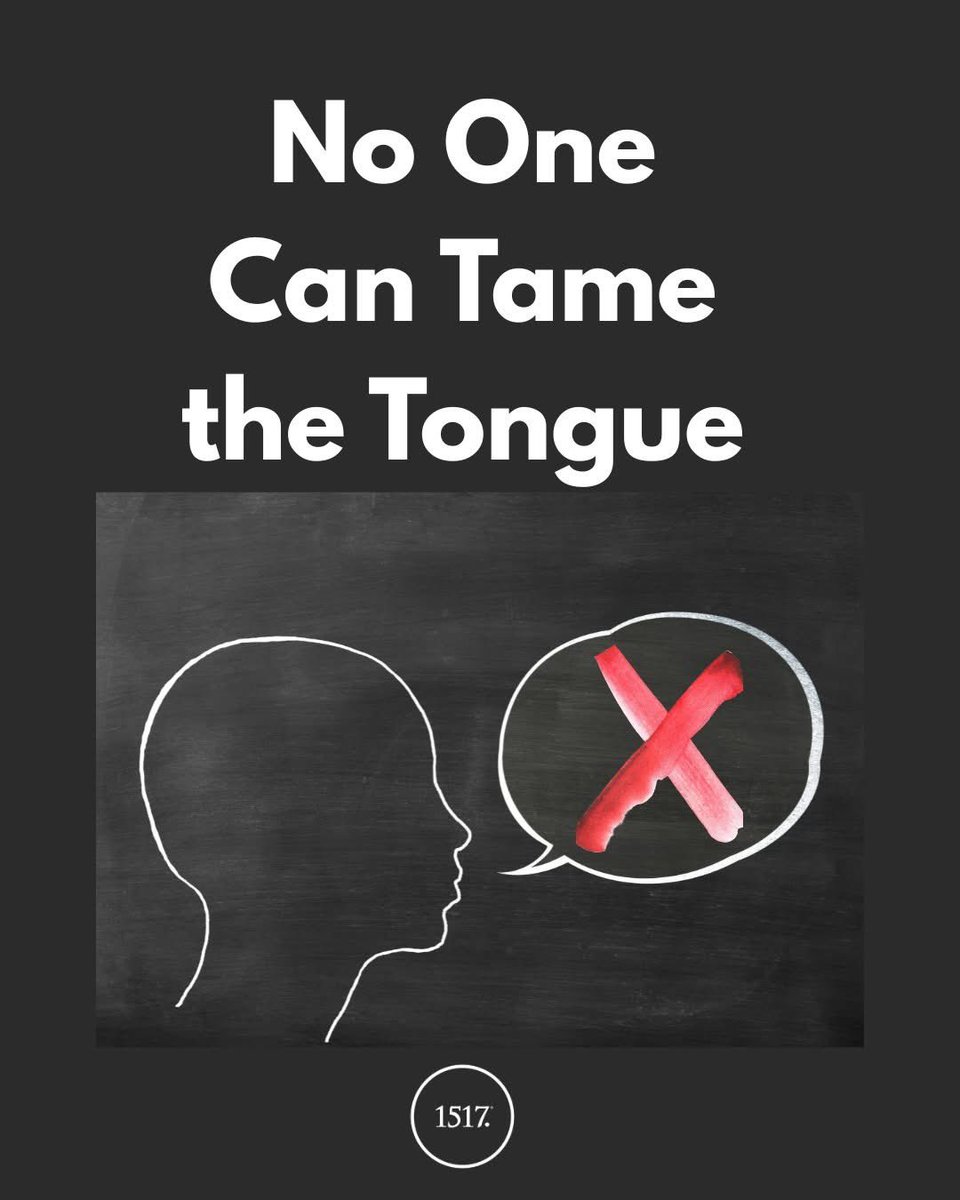
“No human being can tame the tongue. It is a restless evil, full of deadly poison" (James 3:8).
James pulls no punches. That muscle in our mouth can kill or heal, spark wars or absolve a world.
From beginning to end, the Bible speaks about the power of speech, for good or for ill. With speech, the Lord God worded the world into being. And with speech, the serpentine foe wooed the world into evil.
To ignore our tongues is to court disaster.
When God commanded, “You shall not give false testimony against your neighbor,” he made explicit what we all know: that human society, relationships, justice, and one’s own soul are destroyed by lies.
Some of the hardest moments in my life were when, knowing a lie would be the easy way out, that it would save me embarrassment, I raged war against my every inclination and spoke the truth. It hurt but it also opened a door to incremental healing. Truth was the Spirit’s gift.
“I am the Truth,” Jesus said. And, in many ways, that said it all. Truth is life. Truth is inner peace. Truth is of God.
God grant that Christ the Truth may rule our hearts and govern our tongues, that he may kindle within us a fervent devotion to honest words, and that when we fail — and fail we will — that he may move our tongues to confession and thanksgiving for his absolution.
For God, who began our world with “Let there be,” heals our world through “I forgive you.” And when God says that, no truer words could be spoken.
_____
We read James 3 today in Bible in One Year. Join us at https://t.co/XxNvEtNH7e
In the spring of 1980, Farrokhroo Parsa — Iran’s Minister of Education before the Islamic Revolution — was executed. She had devoted her life to fighting for women’s rights and did not betray her principles even after the victory of the Islamic Revolution. In the verdict issued by the new authorities, she was found guilty of “spreading corruption on earth and denying Allah.”
“I would rather face death with open arms than live in disgrace, forcibly covered with a veil. I will not kneel before those who expect me to repent for half a century of my struggle for equality between men and women. I am not prepared to wear the chador and take a step backward in history,” Parsa wrote in her farewell letter to her children.
When Columbia University's anti-Israel student group posts "Death to America" on social media it is time to disband the group, kick the students out of school cutting off any federal help they are getting, deport any of the group who are not American citizens and make clear that we will not tolerate people in our country who believe in “death to America.” We do not have to be passively suicidal. We can and must protect our great country.