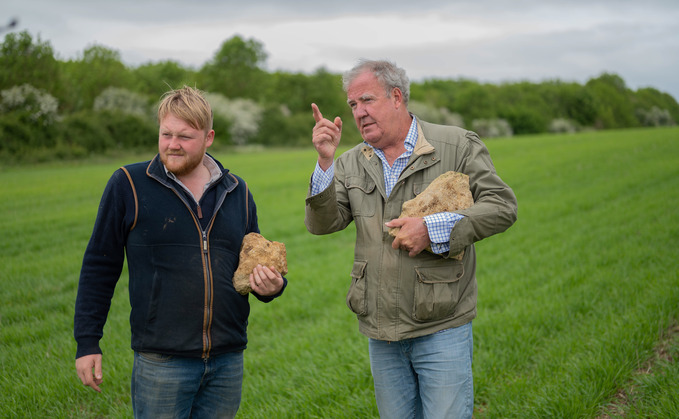
Two hundred of the thousand acres at Diddly Squat grew nothing at all this year. That was a decision taken in advance, on a spreadsheet. Wheat or barley on that ground was a guaranteed loss before the drill left the shed, so Jeremy Clarkson left it bare and explained why in his Sun column this week.
One line from it went everywhere. Farmers have reached the point where it is quite simply impossible to make money from growing food. Every paper carried that sentence, and every paper stopped there.
The list underneath it did not get printed anywhere.
Because he went on to set out what two hundred acres of good English ground could do instead of feeding anyone, and there were four items on it.
- Rent it to a global agri-company growing crops for anaerobic digesters.
- Cover it in solar panels.
- Put a data centre on it.
- Sell the farm to a Chinese company for a multistorey high-intensity piggery.
Every one of those pays. The only use of that land which reliably loses money is the one that puts food on a British plate. He added that he was not being ridiculous, and that anybody in 1926 would have laughed you out of the room for suggesting the factories would be gone by 2026.
Now the bit with a date on it.
From 1 January 2027 the UK's carbon border tax applies to imported fertiliser. The Treasury's own costings put the take at £140 million in 2027-28, rising to £180 million the year after. Estimates of the hit run from around £33 a tonne to £75, which is a fifth to a quarter added to the largest input bill an arable farm carries. The Central Association of Agricultural Valuers has warned that a typical 500 acre cereals farm could be down as much as £70,000 once fertiliser and fuel costs land.
So the fertiliser that grows the wheat gets taxed on a known date, in writing, by a government that says out loud it wants food security.
Nobody in Whitehall has ever signed a policy to stop Britain growing food. They have signed a great many that make every alternative pay better, which arrives at the same field.
And understand whose field this is. Diddly Squat has a television crew, a farm shop with a queue down the lane, a pub, a lager brand, a bestselling book every autumn and one of the best land agents in the country. It is the most commercially advantaged thousand acres in Britain, and two hundred of them were left bare this year because putting seed in them was the losing move.
Every arable farmer in England is doing that same sum this autumn. Almost none of them have a production company to cover the difference.
Those two hundred acres have not gone out of production. They are waiting to hear which industry wants them more than you do.
GOOD POINT👇👇👇
To all the Supermarkets and big commercial stores that operate 'Self Check-outs'....... You are heading towards almost exclusively self-checkout now. Yesterday I went shopping at one such store and the lady checking receipts at the exit was stopping everyone.
I didn't choose to participate in that nonsense, I had already filled my trolly, emptied my trolly and scanned the items, refilled my trolly and so I just skipped the exit line and left.
I heard her saying "Umm - Excuse me “ as I kept walking and raised the receipt above my head, leaving the store.
You can either trust me to do self-checkout, or you can put your cashiers back in place like it used to be.
• I'm not interested in proving that I did your job for you.
• If you want me to be a cashier with no training then that's your problem not mine.
• Keep employing young people and give them job opportunities.
YOU DON'T PAY ME TO SCAN MY OWN SHOPPING.
YOU DON’T GIVE ME STAFF DISCOUNT FOR WORKING FOR YOU.
Signed ......All of us
People we need to share this statement its basically about PROFIT to the stores AND putting People out of a JOB....!!!
🔹THE CHILDREN'S HOSPITALS KNOW. THEY HAVE KNOWN SINCE 2014. A PEDIATRIC ONCOLOGIST JUST SENT US HIS RESIGNATION LETTER. READ IT.
"To the Board of Directors, St. Jude Children's Research Hospital. Effective immediately, I resign.
I have spent 19 years in pediatric oncology. I have treated 2,300 children with cancer. I have watched 814 of them die.
I am writing this letter because I cannot carry the weight of what I know for one more day.
In 2014, I was invited to a closed-door presentation at a medical conference in Geneva. The presentation was titled: 'Non-Invasive Electromagnetic Approaches to Pediatric Tumor Regression.' It was not listed in the public program.
The presenter — whose name I will not reveal for his safety — showed us data from 340 pediatric cancer cases treated with frequency-based therapy between 2009 and 2014:
— 312 out of 340 children achieved complete tumor remission
— Average treatment time: 3 sessions of 25 minutes each
— Side effects: ZERO
— Recurrence rate: 4%
— Age range: 2 to 16 years old
312 children. Cured. No chemotherapy. No radiation. No hair loss. No vomiting. No organ damage. No death.
I sat in that room with 40 other pediatric oncologists. We all saw the same data. We all understood what it meant.
Then we were told:
'This technology is not approved for civilian use. Any attempt to replicate, discuss, or disseminate these findings will result in immediate termination and criminal prosecution. You are bound by the non-disclosure terms of your conference registration.'
We went home. We went back to our hospitals. We went back to injecting children with chemotherapy that we KNEW was unnecessary.
I went back to Room 4B. That's where we do pediatric chemo at my hospital. Room 4B.
I went back to holding the hands of 6-year-olds while poison dripped into their veins.
I went back to telling mothers: 'We're doing everything we can.'
We were not doing everything we could. We were doing everything we were ALLOWED to do.
Since 2014, I have personally administered chemotherapy to 847 children.
I know — with absolute certainty — that at least 70% of them could have been cured in 75 minutes with zero pain.
Instead, I gave them 6-18 months of chemical torture. I watched their hair fall out. I watched them vomit until they had nothing left. I watched their parents sell their homes to pay for treatment that I KNEW was inferior to technology that already existed.
I watched 214 of those children die.
214 children. Dead. Since 2014. Under my care. While I knew.
I am not asking for forgiveness. There is no forgiveness for this.
I am asking for this letter to reach every parent who has ever been told 'there's nothing more we can do.' Because that sentence is a lie. It has been a lie since at least 2014.
There IS more they can do. There is a treatment that cures pediatric cancer in 75 minutes with zero side effects. It exists. It works. 312 children proved it works.
Your doctor knows. Your hospital knows. The board of directors knows.
They chose money over your child's life. I chose my career over your child's life.
I will not choose it one more day.
To the 214 families whose children I failed:
I am sorry. I am sorry I was a coward. I am sorry I chose silence. I am sorry I let the system convince me that obedience was the same as ethics.
It is not. Obedience killed your children. My obedience killed your children.
This letter is not enough. Nothing will ever be enough. But the silence ends today."
— Name withheld. Pediatric Oncologist. 19 years. 2,300 patients. 814 deaths. 214 preventable.
He watched 214 children die knowing the cure existed. He stayed silent for 10 years. He is not silent anymore. Neither are we.
Share this for every child who deserved 75 minutes instead of 18 months of poison.
In October, Erling Haaland pulled up at a tiny Cheshire dairy on his way to training and filmed himself buying raw milk, beef and honey. The farm, a micro dairy called Greenoaks that sells unpasteurised milk straight from the gate, could not keep up with the orders once the video reached his millions of subscribers.
But Haaland was never really the story. He calls raw milk his magic potion and swears it is good for the stomach, skin, bones and muscles, yet he is only the loudest voice in something that had been building for years before he picked up a bottle.
Look at the numbers. Raw milk sales in America jumped more than twenty percent in a single year, and in the peak weeks as much as sixty five percent. In that same year, sales of the plant based milks fell. Roughly eleven million Americans now drink it raw, states from Oklahoma to Arkansas have torn up the rules that held it back, and the biggest raw dairy farmer in the country says that whatever the FDA tells his customers not to do, they go and do the opposite.
Here is the tell. In the middle of all this warning, the agencies sounding the alarm quietly cut their main food safety network from tracking eight germs to two, and two of the ones they stopped counting are the exact bugs they say make raw milk dangerous.
Understand what you are watching, because it is bigger than milk. This is the generation switched from butter to margarine by experts who later shrugged, told eggs would stop its heart and then told they were fine, frightened of the fat on a steak for forty years. It has done the arithmetic on how often the warning was the actual mistake, and stopped waiting for permission.
The man now in charge of American health drinks his milk raw. The public looked at the men still standing after every other warning collapsed, and started buying it by the gallon.
One video sold out a Cheshire dairy. The warnings stopped working the day the people issuing them ran out of credibility.
“Light & gentle” rice milk comes with a hidden environmental nightmare: flooded fields, massive methane, and arsenic.
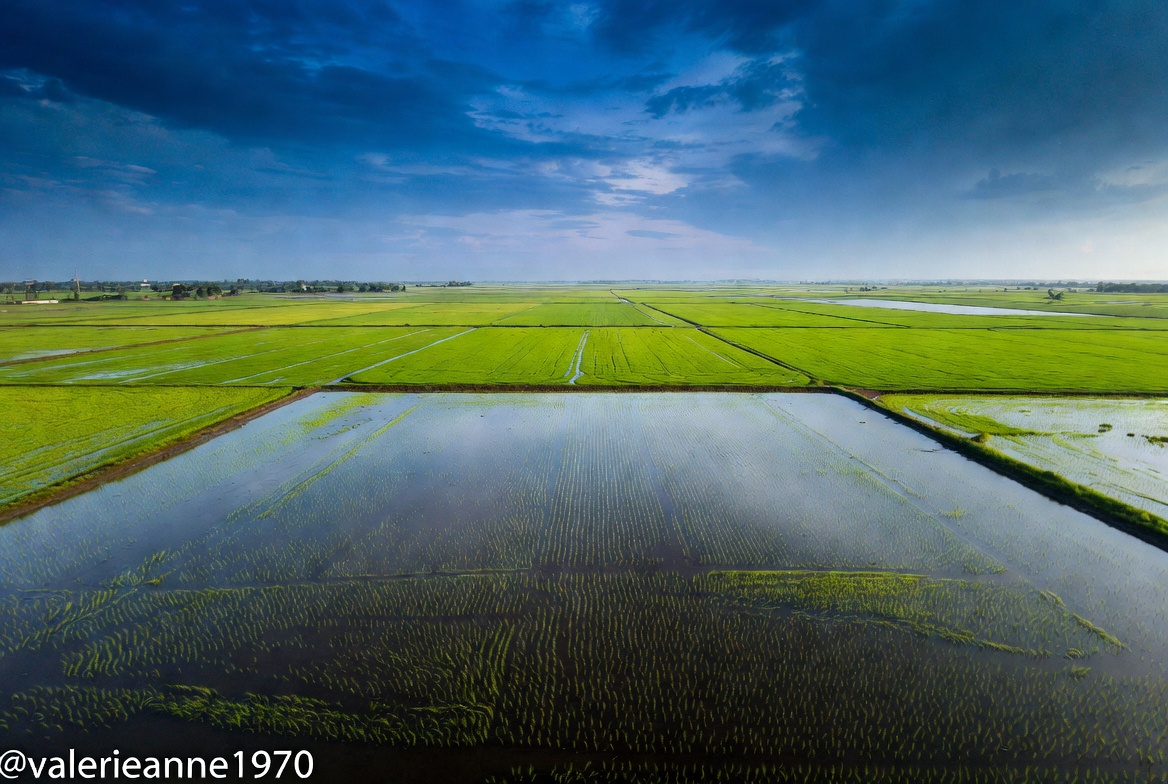
Rice is grown in standing water — flooded paddies that turn into massive methane factories. Rice production alone accounts for a significant chunk of agricultural greenhouse gases because those anaerobic conditions release potent methane into the atmosphere.
It also guzzles enormous amounts of water. One liter of rice milk can require hundreds of liters of water due to the constant flooding needed for the crop.
On top of that, rice plants are notorious for absorbing arsenic from the soil and water — a toxic heavy metal linked to long-term health risks. Many rice milks have measurable levels that worry parents and health-conscious consumers.
While marketed as a mild, hypoallergenic alternative, rice milk sits near the top for greenhouse gas emissions among plant milks and carries real water and contamination baggage.
The “plant-based = automatically sustainable” story keeps cracking the more you zoom out.
If we actually care about climate impact, water resources, and what ends up in our bodies, rice milk isn’t the clean, innocent choice it’s sold as.
Support local farmers, ranches, markets & dairies by purchasing full fat nutritious dairy milk products.
Almond milk “plant-based” latte is built on a bee massacre and a disappearing aquifer.
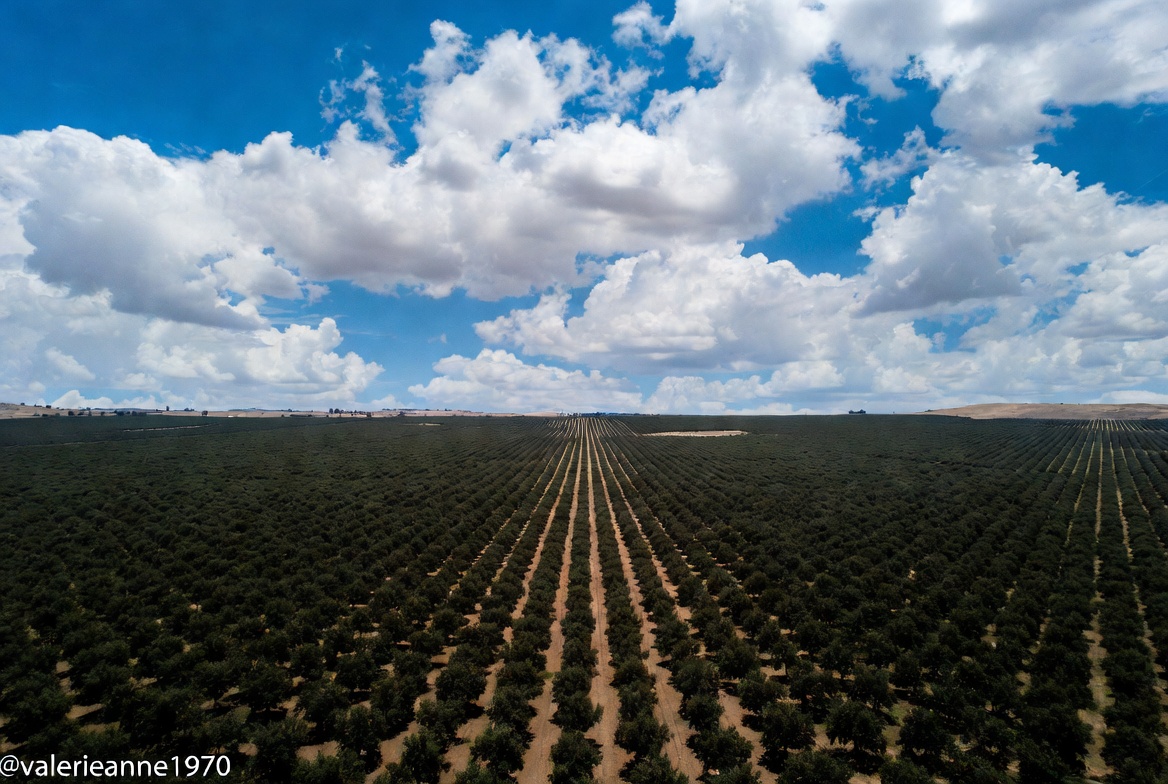
California’s Central Valley grows 80% of the world’s almonds. Every single almond sucks roughly 3 gallons of irrigation water straight from the ground.
That means one gallon of almond milk requires around 162 gallons of pumped groundwater — compared to dairy milk, which uses only about 8 gallons of actual irrigation water per gallon (the rest is mostly natural rainfall).
But the worst part isn't even the water.
Almond trees bloom for just three weeks a year. To pollinate them, beekeepers truck in roughly two-thirds of all managed honeybees in America — billions of bees — across the country. They’re crammed into trucks, dumped into chemical-soaked monoculture fields, worked until they drop, then loaded up and shipped to the next job.
Beekeepers are losing 30–50% of their hives every single year. Billions of bees dying from exhaustion, pesticides, and stress.
The groves are sprayed with neonicotinoids that destroy their navigation, fungicides that wreck their immune systems, and herbicides that kill off the wildflowers they need to survive.
Meanwhile, the ancient groundwater under California is collapsing. Land in some areas has already sunk nearly 30 feet. This water took thousands of years to form — we’re draining it in decades, mostly to feed the almond milk craze.
The whole “plant-based = saving the planet” narrative is falling apart when you see what’s happening on the ground.
If you care about bees, water security, and real sustainability, almond milk isn’t the virtuous choice people think it is.
Support local farmers & purchase full fat dairy milk products.
@officialsammyuk Powerful Sammy. I noticed neither Reid or Balls could bring themselves to say ‘Muslim’ or ‘Pakistani’ just Asian. They obviously got a preemptive memo just in case you went ‘off script’ Disgraceful!
Yet another “Double Whammy”.
A “Fraudulent” HCQ study fast tracked and promoted.
An “outstanding study” suppressed for over 800 days.
Dr. Sabine Hazan just testified about a “fraudulent” HCQ study which helped destroy Hydroxychloroquine.
As that fraud was promoted, an “outstanding study” from Oxford was suppressed for over 800 days.
@SabinehazanMD: “It was a fraudulent study... the media went crazy to destroy HCQ”
Prof. Robert Clancy: “It took over 800 days for that study to be published.. this is criminal”
Then once they destroyed natural treatments to roll out vaccines, they lumped all the vaccinated individuals into the unvaccinated group for weeks after injection, which hid safety signals and created “Pandemic of the Unvaccinated”
Multiple lines of statistical trickery and deceit happening on so many levels.
🚨 ELDERLY LADY asks Transport for London staff for directions… 😳
Listen to the way this man speaks to her!!
But WATCH what happens when he REALISES he’s being RECORDED… his tone changes VERY quickly. 👀📱
What do you make of this? Comments below 👇👇👇
Let's check in on Gerald, who has now been informed he should be replaced by lentils.
A new report recommends we get our protein from pulses instead of cattle. Cleaner, we are told. More efficient. Let's run Gerald against the lentil over a single day and see how the lentil gets on.
6:10am - Gerald wakes in permanent pasture that has not been ploughed since the eighteenth century. He begins eating grass. The grass is inedible to humans, to lentils, and to the report's authors. Gerald is the only party present who can do anything with it.
6:11am - The lentil, meanwhile, does not wake, because the lentil has never once in its career done anything under its own power. The lentil is in a bag. The lentil's entire contribution to the morning is to sit in a cupboard being beige, having been grown on flat, fertile, well-drained arable land, then shipped to Herefordshire from Saskatchewan, because the report admires the lentil's low footprint and would prefer you did not ask about the boat.
9:00am - Gerald grazes the slope. The lentil could not grow on this slope if its life depended on it, and its life routinely does. The lentil wants the good field. The prime arable field. The exact field you also wanted for human crops. Gerald is on the hill nothing else will touch. The lentil is queuing for the best ground in the country and calling this thrift.
10:30am - To become the protein the report so admires, the lentil now demands service. It must be soaked. Then it must be boiled for the better part of an hour, burning the very energy the report was so worried about, because raw it comes armed with lectins and phytates, having brought its own anti-nutrients to the meal specifically to block the minerals it is pretending to provide. Gerald's preparation requirements are a rumen and some thin November sun.
11:00am - Gerald produces manure. Dung beetles arrive within the hour. A wheatear works the short turf behind him. The lentil, after its soak and its boil and its hour of your life, produces a modest bowl of mush, an incomplete protein notably short on methionine, iron your body can barely unlock, no B12, no creatine, no taurine, and a social atmosphere best described as "challenging."
1:00pm - Gerald lies down, having turned a hillside of cellulose into complete protein, fertilised the ground, built the soil, and fed a small economy of insects he never agreed to support. The lentil is still soaking. It will be soaking for some time. It is, by every honest measure, the neediest thing in the entire food system.
By all means eat the lentil. It has its place, in a curry, propped up by spices doing the work it cannot do alone. But the lentil needed a passport, a saucepan, and an hour of your afternoon, and still could not assemble a usable protein without help. Gerald did the lot before lunch, on a hill that has no other use, and asked for nothing but the rain.
He always was.
HEARTBREAKING: Her 10-month-old baby was cut in half with a knife in front of her, her husband shot dead, and she watched them split her second child's skull with a machete. They also cut off one of her hands.
This is life for Christians in Nigeria. The media remains silent.
𝗧𝗛𝗘 𝗦𝗢𝗨𝗧𝗛 𝗟𝗘𝗕𝗔𝗡𝗢𝗡 𝗪𝗔𝗥: 𝗧𝗛𝗘 𝗧𝗥𝗔𝗣 𝗢𝗙 𝗜𝗦𝗥𝗔𝗘𝗟𝗜 𝗔𝗗𝗩𝗔𝗡𝗖𝗘𝗠𝗘𝗡𝗧 𝗔𝗡𝗗 𝗧𝗛𝗘 𝗦𝗧𝗥𝗔𝗧𝗘𝗚𝗬 𝗢𝗙 𝗔𝗧𝗧𝗥𝗜𝗧𝗜𝗢𝗡
The ongoing military confrontation in South Lebanon raises a critical question that dominates international headlines: What is truly happening on the ground, and what is the reality behind the reported Israeli advancements?
To understand the current dynamics, one must look past superficial territorial gains and analyze the profound shift in military strategy deployed by Hezbollah.
The core of the situation lies in a deliberate change of tactics that transforms traditional territorial defense into a deeply calculated trap of asymmetric warfare.
To accurately read the battlefield, a clear distinction must be made between the war that took place in 2024, which lasted 66 days, and the current conflict.
In 2024, Hezbollah adopted a positional, martyrdom-based defensive posture.
The fighters stood firm inside every single border village, refusing to retreat.
The priority was absolute territorial preservation, and as a result of this static, unyielding defense, not a single border village fell into Israeli hands.
Today, Hezbollah is operating on a completely different playbook.
Instead of a rigid defense, the resistance is deliberately utilizing an elastic strategy designed to provoke the Israeli army into leaving its fortified positions.
By drawing the Israeli military deeper, Hezbollah is forcing them to stretch their lines. This tactical stretching (to stretch the army) creates longer, highly vulnerable supply lines across difficult terrain, rendering Israeli troops and logistics prime targets for ambush and high-intensity resistance fire.
For the Israeli military, territorial depth is traditionally a metric of victory, but in this environment, depth is a trap.
The true indicator of who holds the upper hand is not where the Israeli army stands, but rather what happens to the volume of resistance operations as they advance.
If Hezbollah’s capabilities were being destroyed, the number of operations would decrease with every Israeli mile gained.
Instead, the reality on the ground shows the exact opposite: the deeper the Israeli army penetrates, the more the resistance intensifies.
Every forward movement extracts a heavier price in Israeli lives and armor, transforming the battlefield from a war of geography into a brutal war of attrition, a contest of sheer wills to see who has the endurance to sustain the fight.
Currently, the Israeli army is attempting to push through three primary axes, yet it has failed to establish permanent, stabilized positions anywhere.
1- The Bint Jbeil axis, Israeli forces managed to reach the outskirts of the town of Hadatha.
However, they remain locked in an incredibly fierce battle.
Instead of securing a breakthrough, Israeli forces are being actively drained of manpower and resources, unable to convert their presence into a secure foothold.
2- The Yehmour axis, the strategic objective for Israel is to cut through to the city of Nabatieh.
Currently, Israeli troops are stalled in the village of Zoutar, right on the edges of the Litani River basin.
Here, Hezbollah fighters are effectively pinned down on the terrain, launching continuous strikes that force Israeli troops into an exhausting cycle of advancing and retreating.
Israel faces a genuine tactical crisis in this sector, unable to bypass the geography or the fire.
3- The Dibbine axis, Israeli presence is strictly confined to the Al-Arayd Al-Tahtani area and the southeastern edges of the town.
Unable to push deeper into the heart of the village, the Israeli military has resorted to intense airstrikes on the rest of the area to force an opening.
Despite the massive fire cover, they are met with fierce resistance that continues to inflict heavy casualties on their infantry and armored vehicles, stalling their momentum.
Beyond the frontlines, Israel's logistical backbone is under daily fire, as newly established assembly points and supply lines along the border are targeted systematically.
A defining feature of this war is Hezbollah’s aggressive deployment of First-Person View (FPV) loitering munitions, or suicide drones.
To this day, the Israeli military has failed to find a technological or tactical countermeasure for these highly maneuverable, low-altitude drones, which bypass heavy defenses and inflict daily fatal casualties among Israeli troops.
The contrast between the two wars reveals a stark reality: in 2024, Hezbollah chose to fight to the death to keep the border intact, but in this war, Israel is playing entirely inside Hezbollah's backyard, being drawn into a terrain prepared specifically for their attrition.
This dynamic proves one fundamental truth: no matter how long this war drags on, Israel will not be able to stabilize or secure permanent positions in South Lebanon, and their soldiers will continue to be targeted even if the conflict lasts for another decade.
Ultimately, Hezbollah has effectively boxed Israel into a strategic dead-end with only two choices: continue a futile, absurd war that will endlessly drain Israeli lives, military hardware, and financial resources, or accept reality and withdraw completely from South Lebanon.
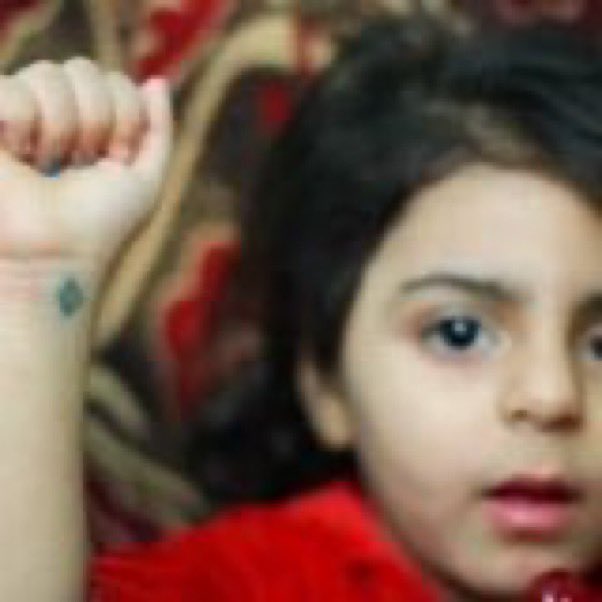
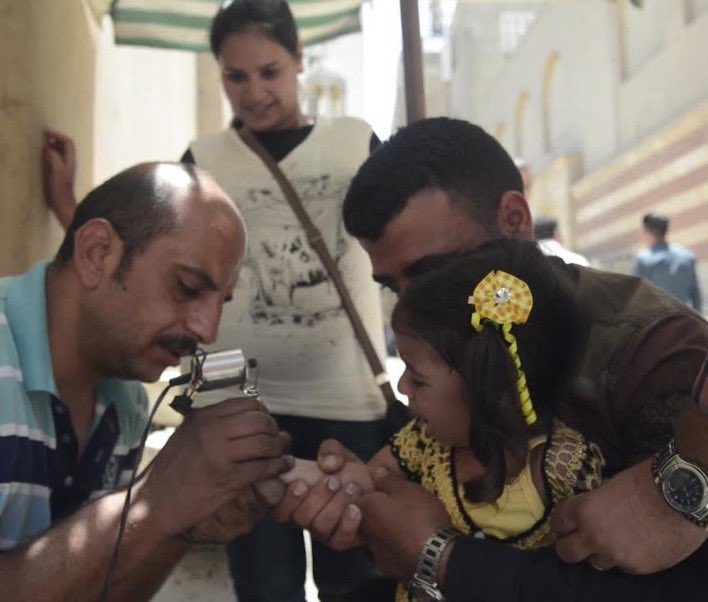
Did you know? When Muslims invaded Egypt in the 8th century, they would kidnap Christian children and raise them as Muslims.
Parents then started tattooing a small cross on their babies’ wrists, so that if they were ever kidnapped, they would never forget their Christian origins.
To this day, every Coptic Christian gets this tattoo at the age of 1, because the kidnappings never stopped.
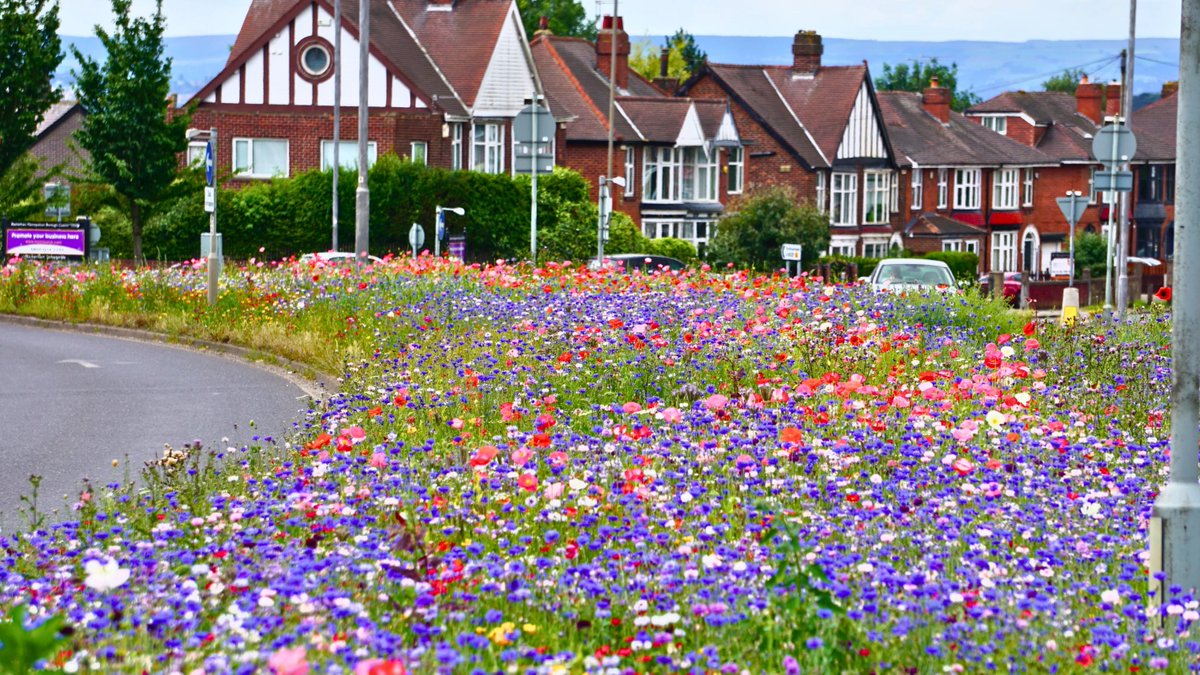
13 years ago, Rotherham, England turned 8 miles of mowed roadside grass into a "river of flowers." In 2021, they added even more miles.
The original scheme was commissioned by Rotherham Council in 2013, designed by Professor Nigel Dunnett at the University of Sheffield, and seeded with a 180-species wildflower mix along the central reservations of the town's main ring road. It replaced mowing that had been costing the council around £80,000 a year.
Since then: the wildflower verges have saved roughly £23,000 to £25,000 per two-year mowing cycle, increased pollinator abundance, and inspired similar programs in Nottinghamshire, Derbyshire, Birmingham, Newcastle, and Sheffield.
In 2021, Rotherham added 3.5 more miles across 12 new sites including Herringthorpe, Swinton, Harthill, and Maltby. They just keep expanding it.
The UK has lost 97% of its wildflower meadows in the last 100 years. Most of what was lost was paved, plowed, or mowed. The verges nobody was using anyway turned out to be one of the largest untapped habitats in the country.