🙏 Selamat Hari Raya Waisak 2560 BE / 2026.
Semoga Dharma memberi kita kekuatan menghadapi kebenaran, kebijaksanaan menjalani hidup, serta kedamaian bagi diri, keluarga, dan seluruh makhluk.
Rahayu 🙏🪷
🌿 Rayakan International Day of Yoga 2026 di One Earth Yoga & Meditation Festival ke-18. Yoga, meditasi, sehat lahir batin. 21 Juni | PPOP DKI Jakarta. 🙏💙
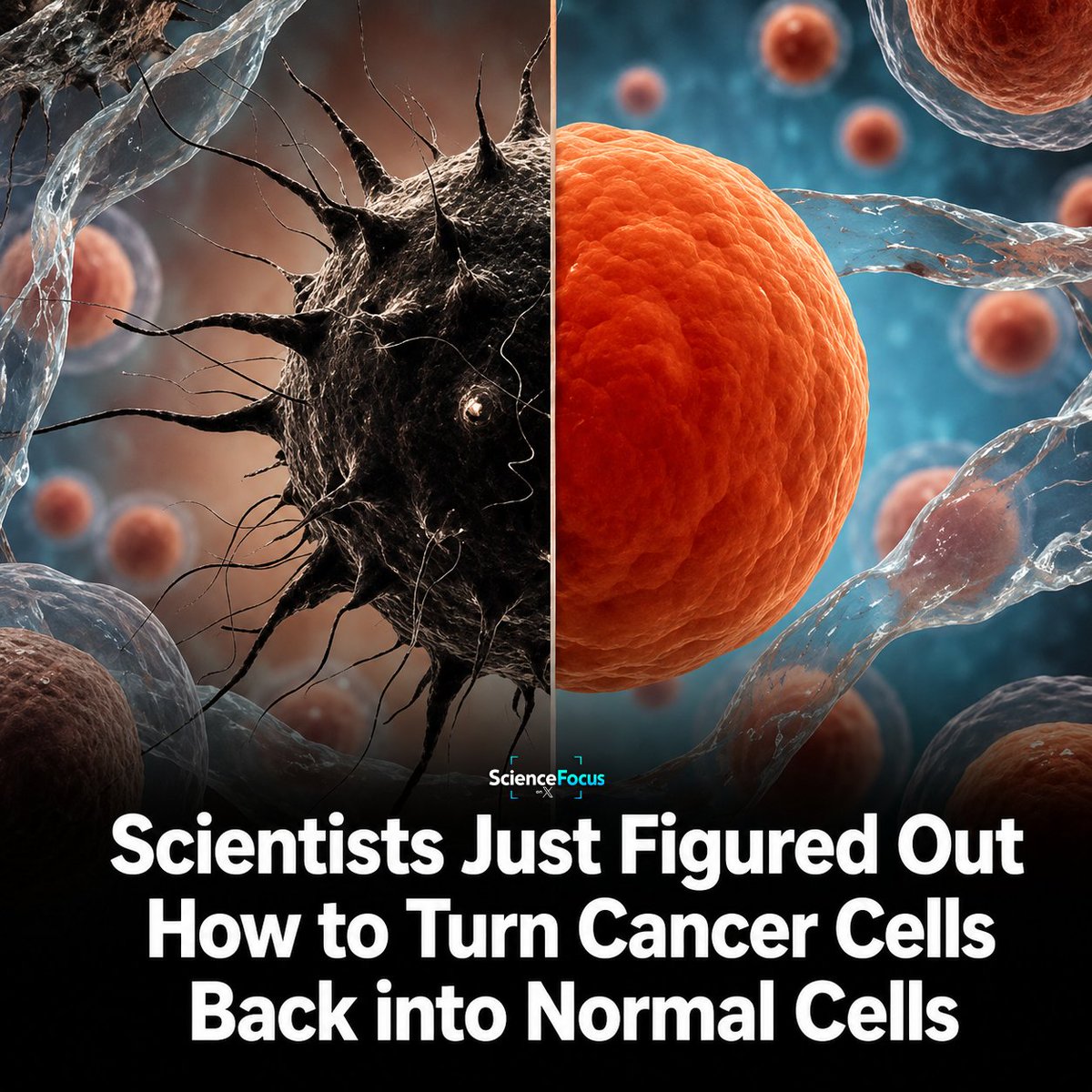
Cancer cells just got told to go back to being normal.
And they listened.
Scientists in South Korea pulled off something that sounds like science fiction.
Instead of killing cancer cells (the standard playbook for decades), they flipped them. Reprogrammed them. Sent them home.
Researchers at KAIST, led by Professor Kwang-Hyun Cho, built a digital twin of a cancer cell's gene network and went hunting for the exact moment a healthy cell tips over into becoming malignant.
That moment has a switch.
They found it.
By silencing three specific genes (MYB, HDAC2, and FOXA2), the team watched colon cancer cells slow down, lose their aggression, and start behaving like normal intestinal cells again.
No gene editing. No toxic chemo. No collateral damage to healthy tissue.
Just a quiet rewrite of the cell's fate.
They tested it in computer models, in lab dishes, and in mice. The mice given the reprogrammed cells grew far smaller tumors than those left untreated.
Traditional cancer treatment is a war. You bomb the bad guys and hope the good ones survive the blast.
This is something else entirely. It's reversal. It's persuasion at the cellular level.
The study was published in Advanced Science in December 2024, and a follow-up paper in February 2025 captured the molecular switch behind the whole thing.
The implications stretch far beyond colon cancer. If cells can be guided home, the entire definition of "treatment" starts to shift.
Cancer used to be a sentence. It's starting to look like a question with new answers.
Source: KAIST / Advanced Science (Professor Kwang-Hyun Cho et al., 2024–2025)
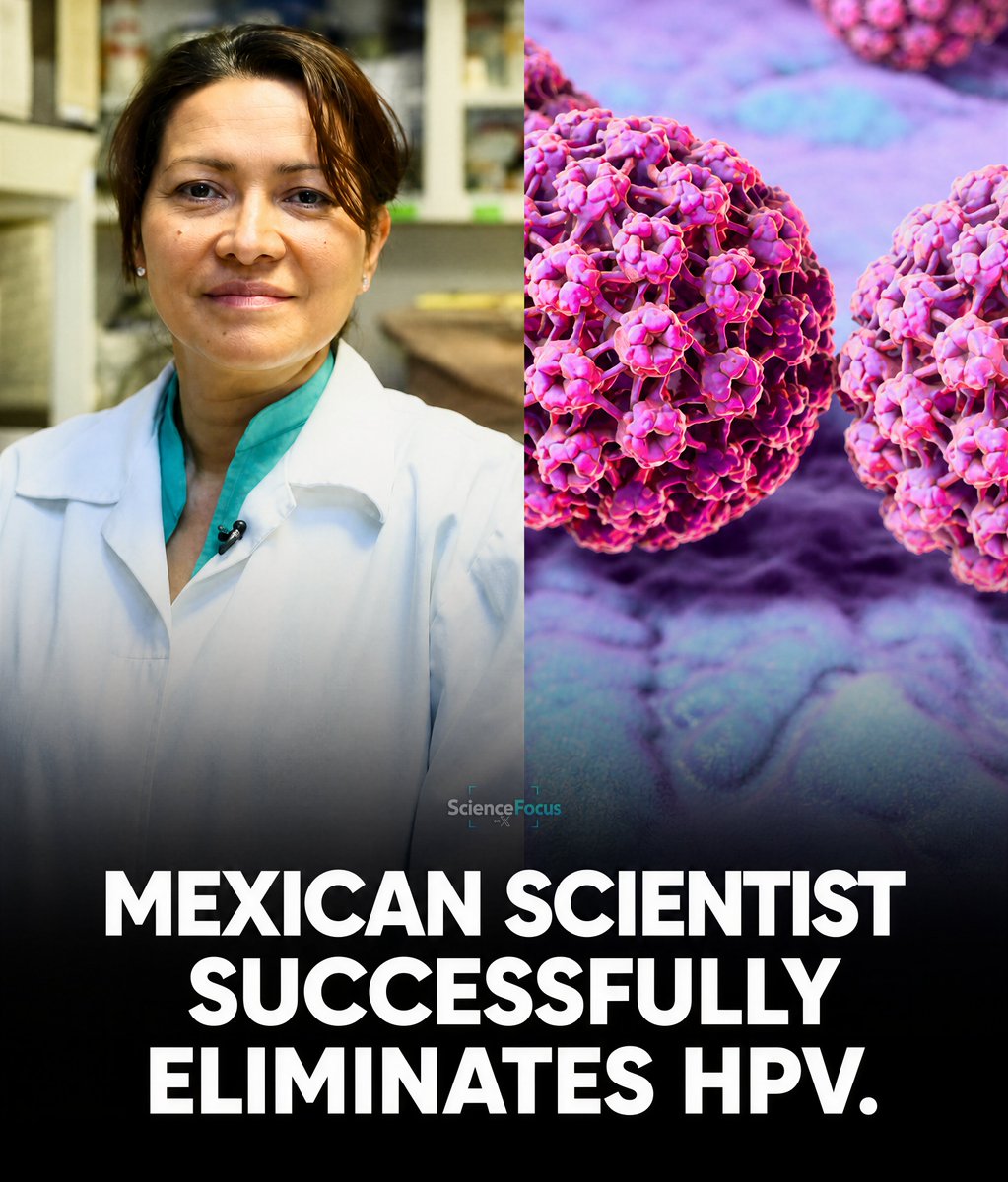
She's the Mexican scientist who just rewrote the rules on one of the world's most common viruses.
After 20 years of relentless research at Mexico's Instituto Politécnico Nacional, Dr. Gallegos pulled off something the medical world hadn't seen before.
She wiped out HPV. Completely.
Her weapon? A non-invasive technique called photodynamic therapy — no scalpels, no chemo, no chemotherapy aftermath.
Here's how it works.
A drug called delta-aminolevulinic acid is applied to the cervix. It transforms into a fluorescent compound that only sticks to damaged cells. Healthy cells flush it out. Then a beam of light is aimed at the area — and the infected cells get destroyed on the spot.
Healthy tissue? Untouched.
The numbers are wild.
In 29 women in Mexico City who had HPV without lesions, the virus was eliminated in 100% of cases. In the broader study across Oaxaca and Veracruz, 420 more women were treated — with 64.3% success in those carrying both HPV and premalignant lesions, and 57.2% in those with lesions alone.
This matters more than people realise.
HPV is the most common sexually transmitted infection on the planet. Around 80% of women will catch some form of it in their lifetime. It's behind nearly every case of cervical cancer worldwide.
And until now, there was no cure. Only vaccines and screenings.
Dr. Gallegos changed that conversation.
Quietly. From a lab in Mexico City. Without the global spotlight she deserves.
One woman. Two decades. A breakthrough that could save millions.
Source: Instituto Politécnico Nacional (IPN), Mexico City — research led by Dr. Eva Ramón Gallegos
Ladakh's fragile ecology calls for our care and responsibility. Let us come together to protect its biodiversity, water, wildlife, and timeless wisdom.
Bhikkhu Sanghasena
Founder President & Spiritual Director @MIMCLadakh
Save the Himalayas Foundation, New Delhi