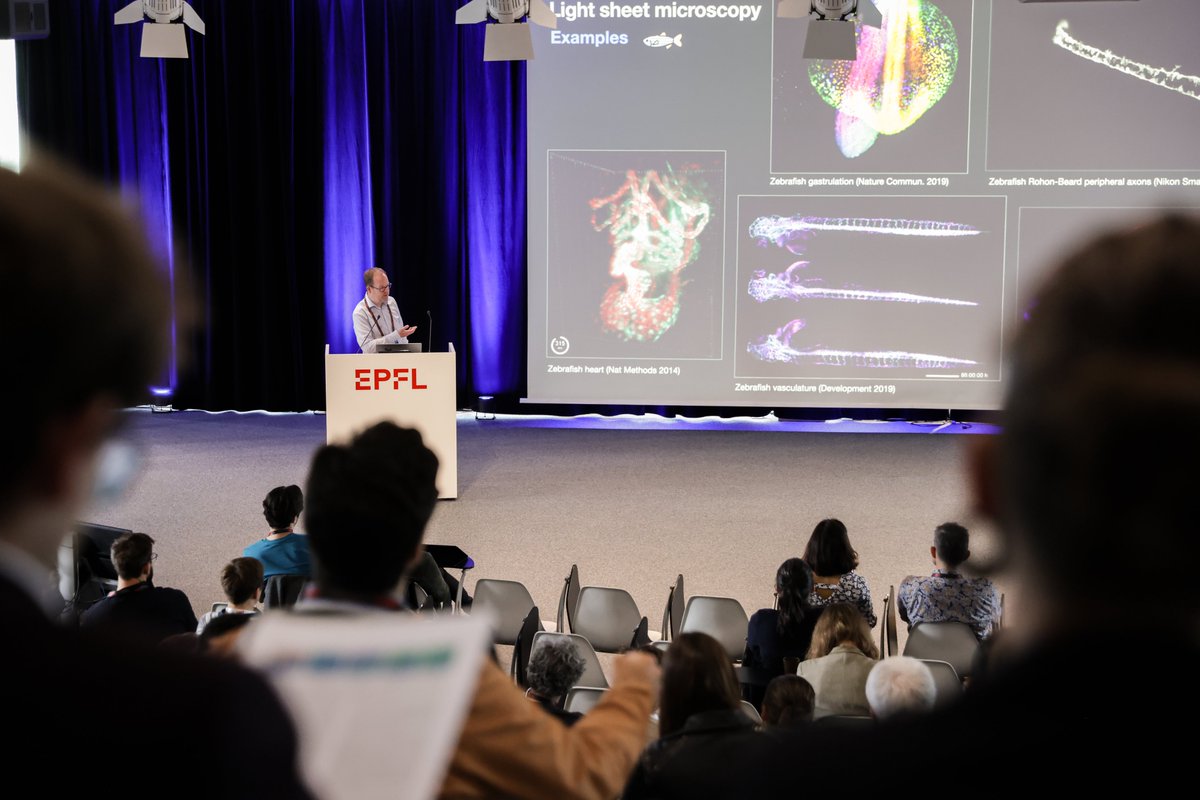
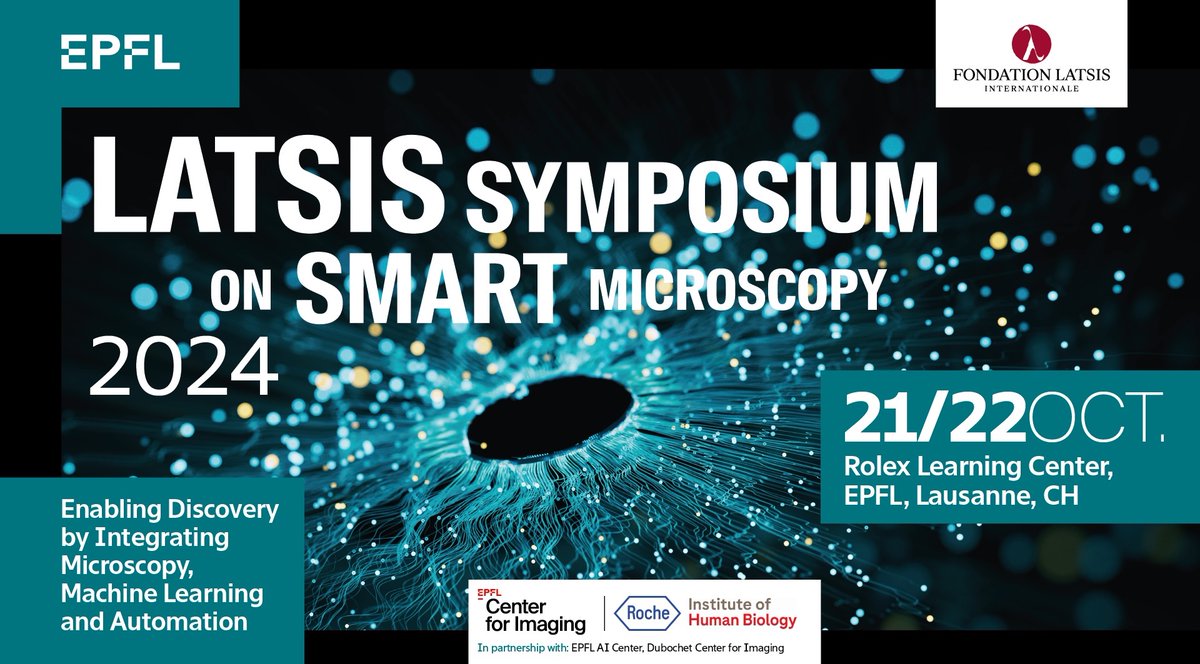
🙌📢 Excited to announce the 2024 @EPFL Latsis Symposium on Smart Microscopy!
Join us for groundbreaking discussions on integrating microscopy, ML, and automation. Don't miss out on this opportunity to connect with top minds in the field.
Register now: https://t.co/Tw52Oo2M8S
My new @MBoCjournal @biorxivpreprint highlight is out!
@Dora_Mahecic and @SulianaManley demonstrate real-time adaptation of the imaging acquisition frame rate triggered by machine-learning recognition of the onset of specific biological processes💥
https://t.co/ZHlpXGvfVt
A study in @naturemethods shows that event-driven acquisition uses neural-network-based recognition of specific biological events to trigger switching between slow and fast super-resolution imaging, enriching the capture of interesting events. https://t.co/kpOfteXbMp
@lysine_7@Dora_Mahecic@RetoPaul@SulianaManley I will think about it in more detail ;) Henry Pinkard also reflects on this in the News & Views he wrote together with Laura Waller:
https://t.co/Z5L7ct1Y0G
@Dora_Mahecic@RetoPaul@SulianaManley This works for constant exposure times, but different frame rates. Some modern cameras do have trigger modes that allow variable frame rates dynamically (https://t.co/t5fTp3dgXJ Level Mode). This could be integrated via our modular architecture (https://t.co/ooCPaMNXiG)
@Dora_Mahecic@RetoPaul@SulianaManley For interaction with fully Micro-Manager driven microscopes, the plugin can either delay single acquisition events for standard acquisition or use the Magellan acquisition framework (#pycromanager) to insert individual acquisition events into the acquisition plan.
Microscopes can be made smart enough for decision making, check out our work on event triggered #STED microscopy from @jonatanalvelid @DamentiMartina and Chiara Sgattoni.
Also have a look at our napari plugin to watch your recorded slow mo in all its glory.
https://t.co/aTrPwgP28B
By the super talented https://t.co/mxN0Q7Y9mp and Steven Sinclair Brown.
Do you want a slow motion replay of the awesome thing your sample does only rarely? Upgrade your microscope with event driven acquisition and marvel: https://t.co/LHrYXz7arv
We used neural networks to adjust acquisitions on the fly.
For all those who have ever sat in front of the microscope waiting for your sample to "do something special", this one is for you: https://t.co/qTddKuw4I0
We have integrated a neural network into our microscope to detect events of interest and adapt the acquisition accordingly.
@RetoPaul@Dora_Mahecic@SulianaManley We think it is adaptable to many different samples and events. We are working on a few :). What would you (like to) use it for?
How does polyphosphate affect the biophysical properties of starved cells? See our work, a great collaboration w/ @SulianaManley about how polyP tunes cytoplasmic+nucleoid dynamics. Congrats Sofia Magkiriadou, Amanda Habel, @SteppWilli, + Dianne Newman. https://t.co/xX6b99Ba4L
Is every picture worth 1'000 words?
Not all 🔬 images are equally useful, depending on the biol. context in question. We developed event-driven acquisitions to prioritize the capture of more informative data, reducing needless light exposure and getting more bang for your photons
It's #fluorescencefriday again, and here we have a #super-resolution image of Mycobacterium smegmatis taken with the #Kinetix! Until next week, enjoy the weekend!
Mitochondria divide by two different pathways. One pathway is used during cell growth and the other is for damaged mitochondria. Learn more in a super N&V by @raj_mito & @hhiggslab https://t.co/FjAtSQNrt4
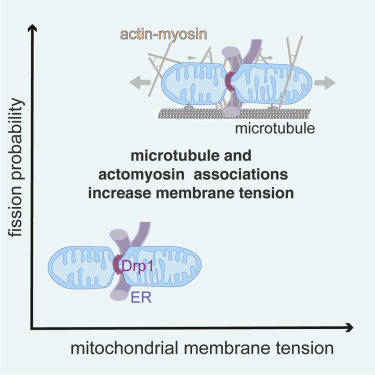
In the crowded cellular environment, how do fluctuating mechanical forces influence mitochondrial division? With @LinaCarlini, we provide in situ estimates of key physical parameters during constriction and propose a model where membrane tension catalyzes mitochondrial division.