It starts days earlier, with a purchase order placed on what last week said you'd need.
The truck either matches that order or it doesn't. If it doesn't, someone's already calling the next vendor on the list.
What comes in gets checked against the parameters you might have never thought it mattered.
By the time it reaches your plate in some office, none of this is visible. You see food. You don't see what had to be bought, checked, and re-bought for it to look this ordinary.
Somewhere, a truck is already on its way for tomorrow's supplies. On time, or not? Ask me after I've checked my Excel tracker.
1. Lead times that look stable in ERP but aren't in real life.
2. Supplier commitments with no capacity behind them.
3. Inventory numbers that don't reflect what's actually usable.
4. Expedite decisions still running on gut feel.
5. Dashboards that show the problem after it's already on fire.
This is the real state of supply chain. AI should be closing this gap. Because I am doing this and getting credible results as well.
What if an 18-year-old walked away from college, with just $1000 in pocket -- to completely reinvent supply chain?
That’s exactly what @MichaelDell did in 1984. At just 18, he started @Dell Computers from his dorm room 2713 of the Dobie Center residential building. He didn’t just build a #PC company but an entirely new supply chain model.
His defining chapter began in the mid-1980s when he pioneered the direct-to-consumer, build-to-order system:
--> Customers configure exactly what they want
--> Dell assembles only after the order is placed
--> Zero finished-goods inventory
--> Suppliers hold inventory at their own cost
--> “Virtual integration” that turned the entire value chain into a competitive weapon
The result? Lower costs, lightning-fast delivery, unmatched customization and an industry-wide revolution in lean, demand-driven operations that’s still studied in every top supply chain program today.
He was shaping how #supplychains should be built — efficient, customer-obsessed, and relentlessly innovative.
In 2018, the Council of Supply Chain Management Professionals (@cscmp) inducted him into the Supply Chain Hall of Fame for these groundbreaking contributions. And he is still flourishing leveraging the same legendary model to win in the AI era.
Michael is proof that in business (and in leadership) bold moves and innovation are just as powerful as vision.
1/ Modern supply chains are more global, interconnected and prone to disruption than they have been in the past.
2/ Businesses need to take proactive steps to identify and mitigate the impacts of supply chain challenges and disruptions.
3/ Addressing supply chain challenges before they become major bottlenecks can increase customer satisfaction, reduce costs and create a more efficient and effective operation.
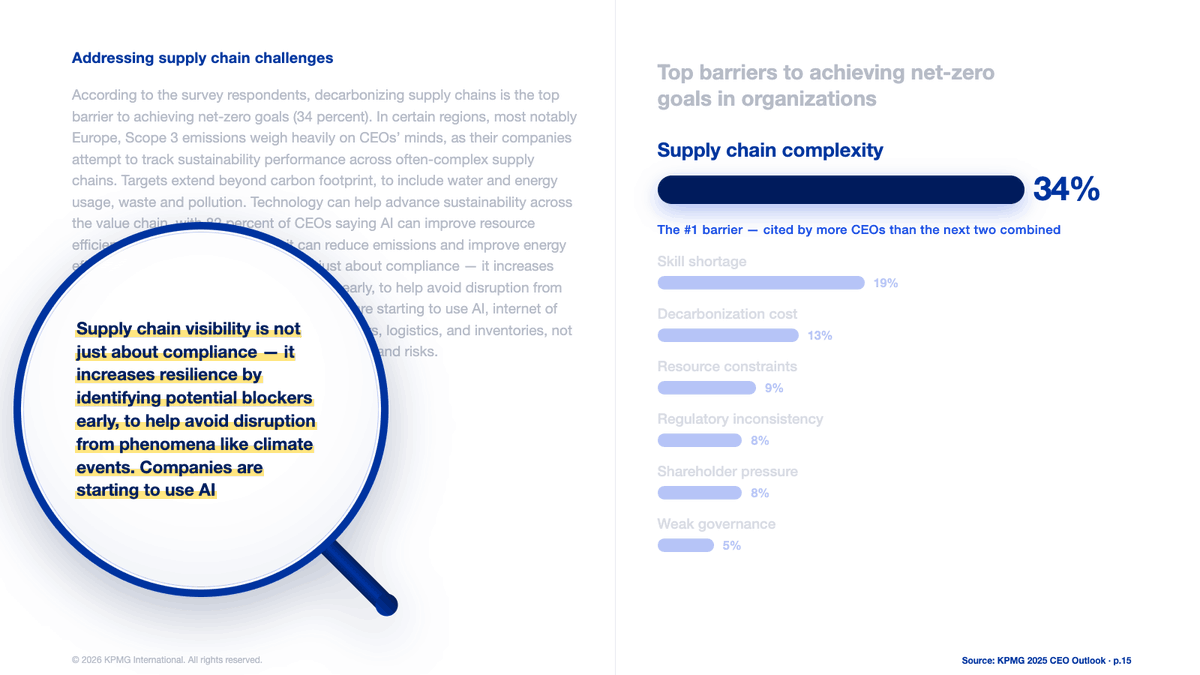
Supply chain complexity is quietly becoming one of the biggest blockers to net-zero goals.
What’s interesting is that companies are starting to realise AI + real-time visibility isn’t just a “nice to have” for compliance anymore -- it’s becoming core infrastructure for resilience, faster decisions, and actually running sustainable operations at scale.
Top GenAI engineers I know: 17–25 years old!
“Years of experience” = tech's most overrated metric!
Not "senior" by corp standards, but they tinker w/ LLMs, frameworks & papers 24/7—endlessly curious w/ stamina for a field evolving weekly.
@HeizenOfficial, we walk the talk 🎥
The #SCLSME2026 main stage is tackling a question many supply chain leaders are already feeling:
Can software development speed truly keep up with real-world logistics volatility and what changes when systems are built by AI-native engineers?
@amanarora2021 , Co-founder & CEO of @HeizenOfficial, joins the conversation as a Silver Sponsor, sharing why execution velocity is fast becoming a competitive edge.
If you’re building or operating in supply chain & logistics, this is one session to watch.
Thanks to @fortinusevents for curating the Supply Chain & Logistics Summit Middle East 2026.
Heizen turns 1 🎉
What we learned after working with 42 customers:
Even with AI, building production-grade software is still hard.
Most enterprise engineering teams spend <30% of their time coding — the rest goes into meetings, planning, QA, DevOps, compliance.
With Heizen:
AI compresses time.
Humans perfect quality.
Together → software gets built 10x faster at 80% cost.
Year 1:
• 21+ AI-native engineers
• 42 customers across India + US
• A delivery model that actually works in the real world
Grateful to the early believers and the team behind this. 🙏
That’s the part most teams underestimate. And the part that truly decides success. At Heizen, We’ve learned that real transformation doesn’t end when a project goes live -- it begins when people start believing in it and we’re constantly optimising for that.
Every failed transformation leaves behind two things:
a great strategy deck and a tired team.
Because culture doesn’t change when a product goes live.
It changes when people start believing it’s worth adapting for.
In most enterprises, the real challenge isn’t building the system - it’s earning the trust of the people who’ll use it every day.
Technology scales processes.
Culture scales belief.
And belief is what sustains transformation long after the consultants leave.