Shhh stop grunting… Remember I will take care of you my little bear? It’s time to put your fur on! Now relax boy… let me push your head down….. Feels good right? Soft? Warm and Fuzzy? Now let’s slowly zip you up and there! Wish you could see yourself my little CareBear 🐻🧸
The greater blue-eared starling is genuinely stunning, with metallic iridescent teal blue on its body and its blazing bright, yellow-orange eyes with large, dark pupils
[read more: https://t.co/sE3pMEiZGc]
https://t.co/5UmjcnNgSK
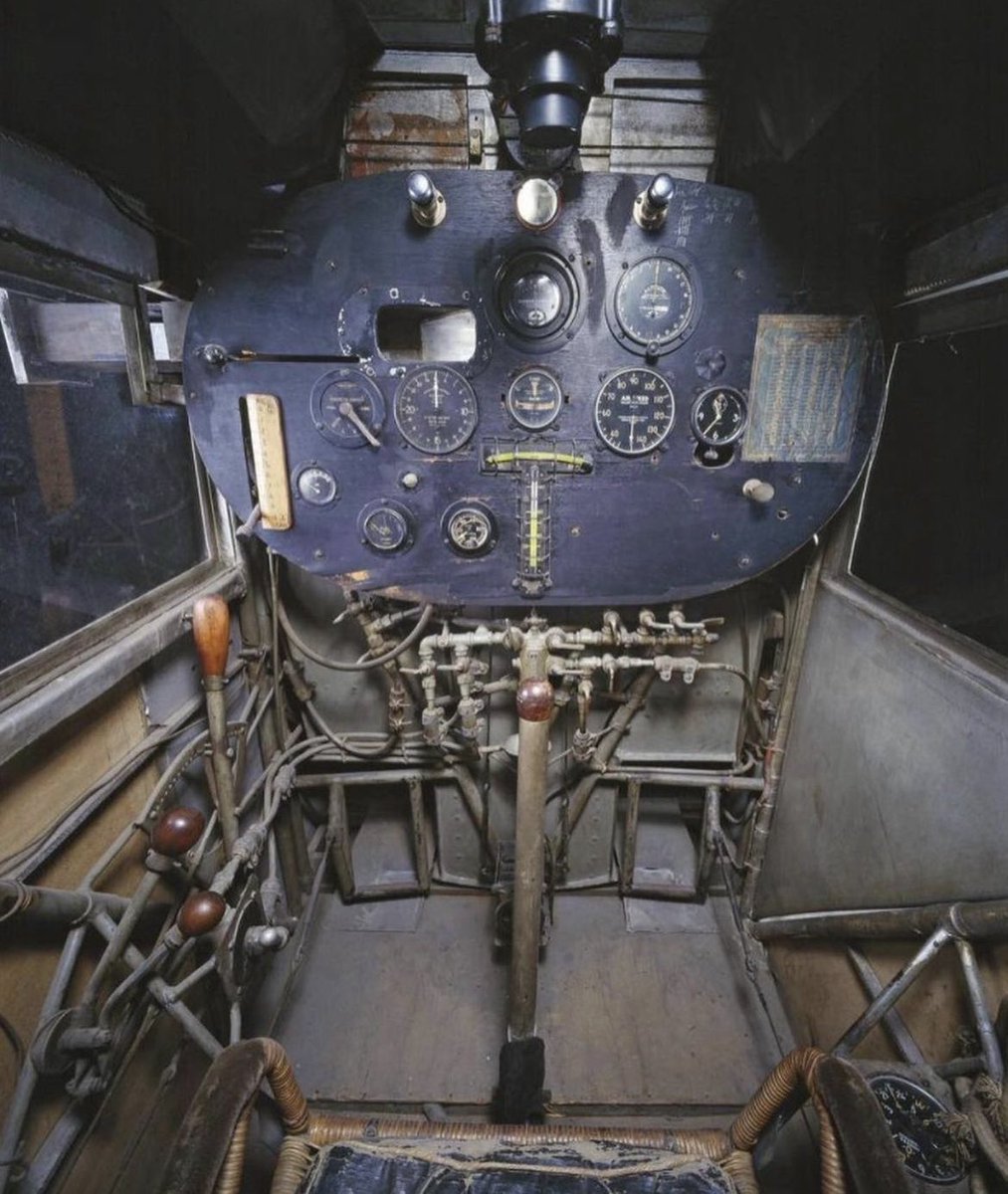
This is the cockpit in which Charles Lindbergh sat while piloting the first aircraft to make a solo non-stop transatlantic flight, the Spirit of Saint Louis, in May of 1927. Note the periscope used instead of a forward window. The Spirit was designed and built in San Diego to compete for the $25,000 Orteig Prize, which was offered by New York hotel owner Raymond Orteig to the first aviator to cross the Atlantic non-stop, either from New York to Paris or vice versa.
Lindbergh, a U.S. Air Mail pilot, believed that a single-engine, single-seat, high-wing monoplane would provide him with the best chance of success. Under his close supervision, the Spirit was designed and constructed in just 60 days.
To enhance the center of gravity and minimize the risk of being crushed in case of a crash, Lindbergh had the large main and forward fuel tanks placed in the front section of the fuselage, ahead of the pilot, with the oil tank acting as a firewall. As a result of this design choice, there was no front windshield, and forward visibility was limited to the side windows. However, this arrangement didn't bother Lindbergh, as he was accustomed to flying in the rear cockpit of mail planes with mail bags in the front. When he needed to see forward, he would simply look out the sides.
To address the need for some forward vision, Lindbergh enlisted the help of a former submarine serviceman to design and install a periscope. Inside the cramped cockpit, measuring 94 cm wide, 81 cm long, and 130 cm high, Lindbergh couldn't even stretch his legs.
Today, the Spirit of St. Louis is on display at the Smithsonian National Air and Space Museum.