Check out my latest article: Entertainment, Media, and Tech: 3 Powerful Tools for Connecting Younger Generations to Faith https://t.co/KzEUGkA115 via @LinkedIn
What is House Of Faith?
We are building a faith-driven entertainment ecosystem for Africa and the global diaspora.
We invite you to join the movement 👉🏾 https://t.co/qBSckrZddz
Naija, get ready! @victorosimhen9 steps into the Hot Seat with @frankedoho. Brains over boots—will he smash the questions like a rocket header or need a lifeline? This special edition is a glimpse of what’s coming back on WWTBAM? Nigeria – Series 2
Are YOU ready?
#WWTBAM
🚨Aaron Wan-Bissaka - The Misunderstood
Facts:
- His crosses are poor
- He rarely shoots, and his last attempt was so off-target it might have ended up in the throw-in
- He struggles with aerial balls (but which fullback excels in the air?)
Also facts:
- He's one of the best defenders you need in big games, even outperforming Kyle Walker in high-stakes matches
- Kyle Walker is considered the best right-back in the league, yet he plays for attacking Manchester City and may go the entire season without a goal or assist, but still receives praise for his defensive work
- Wan-Bissaka is criticized for similar contributions, despite doing them better
Wan-Bissaka may not deliver great crosses, but he:
- Consistently moves the ball forward
- Plays with attackers and holds possession
- Rarely loses possession
- Makes runs that drag opposition players out of position, freeing up space for other attackers
Example: Manchester United's second goal vs Manchester City in the FA Cup final - Wan-Bissaka's run dragged two City players away from Fernandes, allowing him to play a perfect pass for Kobbie Mainoo to score
Don't soil Wan-Bissaka's name just because he doesn't fit the modern full-back mold. He might not be your starter, and Manchester United might sell him, but recognize his strengths. And give him his flowers. #MUFC
Taking this as an opportunity to do a master thread because I’m tired at this point. We all understand the challenges of operating in Nigeria, the vast majority are neither new nor surprising. Despite this, there are so many distortions and half truths in the discussion that I keep wondering, to what end? Setting aside the impact of dishonest doomsday framing on the Nigerian economy, have people considered the impact on companies trying to sell their goods and services while their customers are being told they’re gone?
1. Unilever first started disposing of product lines in 2021 with their tea business. These moves are to cut unprofitable lines. In 2023, revenue surged by around a third and profit after tax almost doubled. If you have product lines which are a drag on profitability, you either make them more profitable or cut them. Presenting this standard business practice as an exit of the company is bizarre. They’ve appointed Bolaji Balogun (one of my faves) as Chairman now so I’m pretty excited to see where next. https://t.co/8SVmJoyw7u
2. GSK announced their plans to restructure and divest from manufacturing in 2019, announcing Fidson as their local partner (https://t.co/cyRljB0Ons). They haven’t directly manufactured in Nigeria since they shut the Agbara plant in 2021. They are moving to third party distribution across several emerging markets (https://t.co/LTA7stgYd3).
3. Equinor sold because production was declining in their Nigerian assets. Between 2019 and 2020 Agbami production fell from 36000 boepd to 29000. That being said, the plan to sell was already underway in Jan 2023. This one is sad as we need more CapEx for new fields and to revive existing ones. Equinor had a strong discovery rate and IOCs just have deeper pockets. Hopefully we continue to see other IOCs taking final investment decisions as we’ve seen quite a few this year. https://t.co/zZZBPJ3abr
4. Sanofi-Aventis was not manufacturing locally. They have handed over exclusive distribution rights for their general medicines segment in Nigeria to CFAO, a French conglomerate, building on a similar arrangement in 20+ other African countries. https://t.co/kswAsTowBb
5. P&G moved to shut its Agbara plant for sanitary towels and diapers in 2018 because they and Kimberly Clark got decimated by Hayat Kimya who entered in 2015, grew volume by 844% within a year of opening their own plant in 2017, and were already at the time being tipped to achieve industry dominance by 2019. See the next tweet for what it looks like when you can’t compete. (https://t.co/TCDHdIvoeO).
6. Bolt decided to exit its food delivery because of poor performance. While the market for food delivery faced challenges, it marked impressive growth in 2023, however the company had struggled to translate its existing transportation networks and heavy investments into market share. According to Bolt’s own communications manager: “the company had managed to control only 5% of the Nigerian market, despite its heavy investments”. (https://t.co/luXX56OSVP / https://t.co/NB5l3AYWxM)
7. Jumia Food, according to their CEO, also exited because they couldn’t compete. In his own words: “we were fighting very hard in a difficult and extremely competitive market with many competitors having very deep pockets and being aggressive.” They took this decision across 7 African markets. Their main competitors: Glovo, Uber Eats and Chowdeck. He further argued that the market is unattractive everywhere: “Food delivery is a market with very low barriers to entry. You need an app that’s working somewhere in the world… So, getting into a new market is ridiculously fast; it’s just a matter of buying market share. I mean, I might be simplifying a bit, but the barriers to entry are usually pretty weak, making it a very unattractive business worldwide.” (https://t.co/HoglYAYAri)
In line with my commitment to revitalizing legacy projects, I am pleased to announce that the Plateau Investment and Property Development Company (PIPC) has entered into a head of term agreement with Strom Infrastructure Investment and Management Limited to refurbish the Hill Station Hotel in Jos to a world-class standard establishment.
I personally oversaw this process, with the Managing Director of PIPC, Hon. Danlami Jelka, signing on behalf of the shareholders of Hill Station Hotel. This initiative is a key part of my directive to breathe new life into dormant enterprises under PIPC's purview.
Hon. Jelka has highlighted the importance of creating a conducive environment for private investors to rejuvenate inactive businesses for the benefit of our state's populace. Under this agreement, the investor will lease, rehabilitate, and operate the Hill Station Hotel for an initial 20-year period, renewable by mutual consent.
The rehabilitation cost, estimated at N8.5 billion by consultants engaged by PIPC, is expected to have a significant economic impact. This includes direct employment for approximately 160 citizens, engagement of unskilled workers during the hotel's refurbishment, and an estimated boost of N8.6 billion to the state's income through the investment's multiplier effect. Additionally, it will generate indirect employment opportunities in service provision and supplies to the hotel.
I extend my gratitude to Hon. Jelka and his team for their dedication, and to Kolapo Joseph, CEO of Strom Infrastructure Investment and Management Limited, for their commitment to this transformative project. This collaboration underscores our commitment to fostering an investor-friendly environment in Plateau State.
A quick insight into the drive and determination to win from Sir Dave Brailsford.
This is a fantastic attitude, one that I can imagine will become infectious to those working with him at United.
These are the sort of people we need at the club - failing should hurt, and you should do everything in your power to not experience that hurt again.
Starts today, the 22nd right up until the 30th of December 2023, I will be teaching daily on setting your sails right for 2024. Online only
Venue Instagram Live @pastorpoju and on https://t.co/eYVvtNlqiv.
Time: 8pm daily
From Friday the 22nd up until the 30th.
Topic: Set your sail right for 2024
Harness the power in the winds of 2024 for your quantum leap.
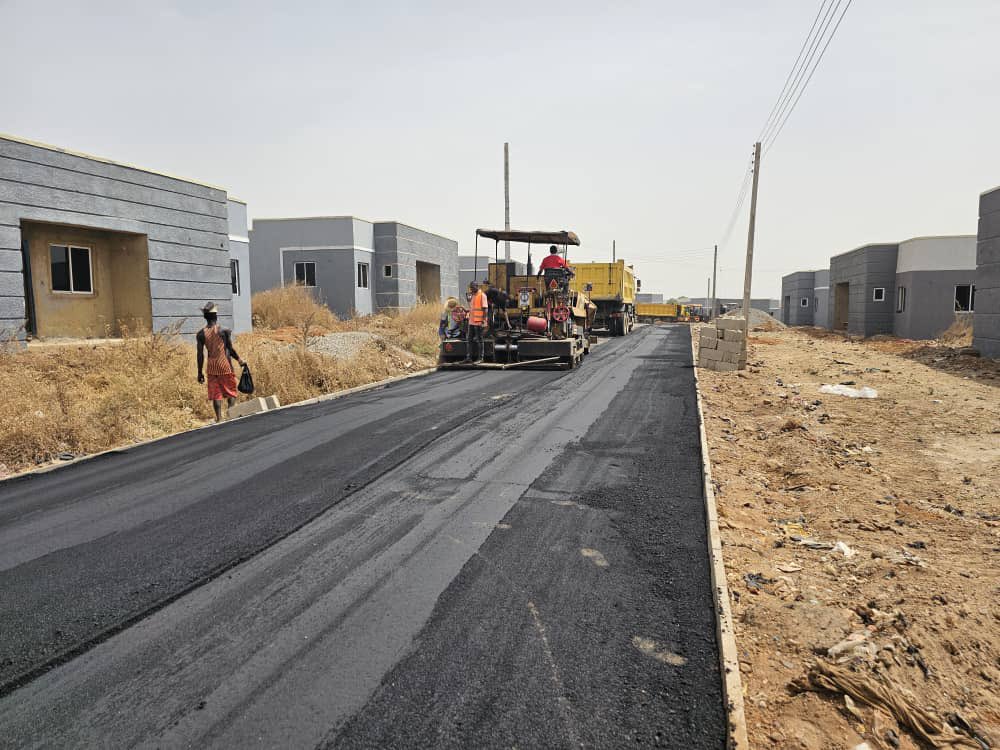
We are pleased to announce the guarantee of NGN3 billion initial debt financing under a NGN12.5 billion Debt Programme for Modern Shelter Systems and Services Limited for the development of 370 affordable housing units
QUICK WINS REPORT
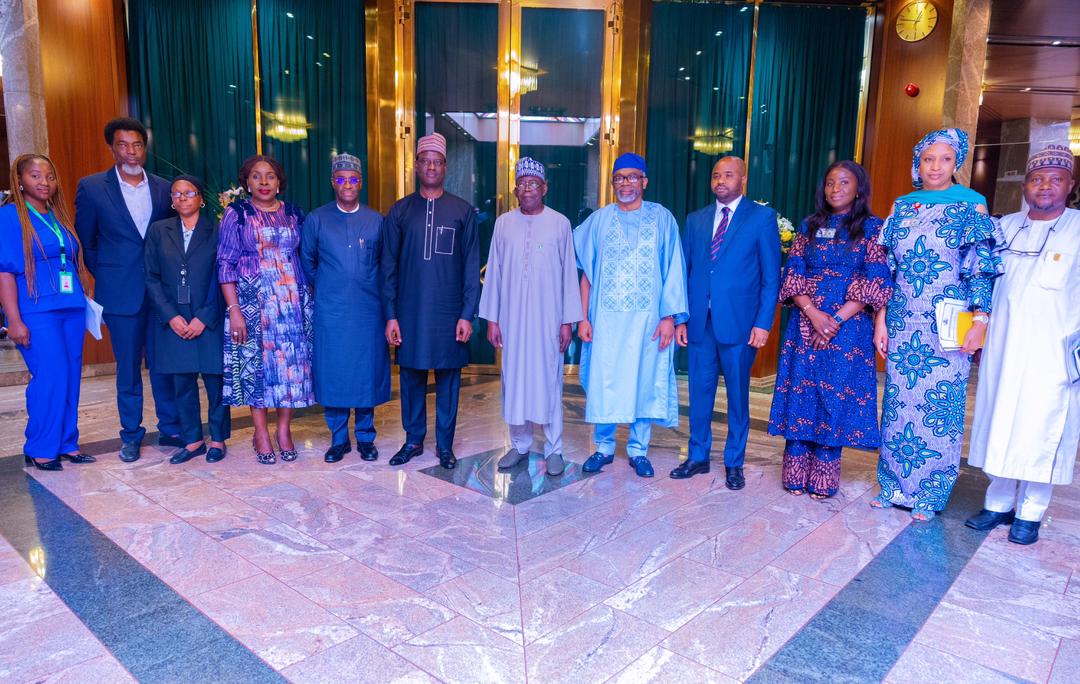
The Presidential Fiscal Policy and Tax Reforms Committee was set up by President Bola Ahmed Tinubu to review and advise on reforms to shape Nigeria's fiscal policy and tax system.
The Committee’s terms of reference covers Fiscal Governance; Revenue Transformation and Economic Growth Facilitation.
The work of the committee is further divided into 3 phases, being Quick Wins within 30 days; Critical Reforms within 6 months and Implementation within 1 year.
The committee has presented its reports to the President with key recommendations to address critical economic issues ranging from exchange rate management, impact of fuel subsidy removal, moderation of inflation, and facilitating economic growth. The key recommendations include, but not limited to:
1. Measures to address duplication of functions in public service, ensure prudent public financial management and optimize value from government assets and natural resources
2. Policy signalling and collaboration by MDAs, economic management, and policy execution team
3. Use of technology “Data4Tax” to expand the tax net
4. Increase personal income tax exempt threshold and personal relief allowance
5. Tax break for private sector in respect of wage increases to low-income earners, transport subsidy and net increase in employment
6. Permit the payment of taxes on foreign currency denominated transactions in Naira for Nigerian businesses.
7. Remove impediments to global employment opportunities for Nigerians based in Nigeria
8. Suspension of VAT on diesel and tax waivers on CNG, CNG conversion, and renewable energy items
9. Comprehensive review of tariffs on the 43 items unbanned from accessing forex in the official market and fiscal policy review of other items prohibited for imports
10. Reforms of Withholding Tax Regulations to ensure simplicity and ease the pressure on working capital of businesses
11. Facilitate the use of mobile phones for conditional cash transfers and introduce a spending framework for subsidy removal and forex reform windfall, including a national portal to track spending by FG, states and local governments
12. Suspension of multiple taxes which place burdens on the poor and small businesses and compensate with windfalls revenue of certain agencies
13. Expand the official foreign exchange market to incorporate BDCs, forex apps and retail fx dealers, and outlaw transactions in the black market
14. Digitalise Nigeria’s fx regime and discourage speculative demands and hoarding of fx in cash
15. Imposition of excise tax on foreign exchange transactions outside the official market
16. Implement forward contracts for the importation of PMS as a short-term measure pending improvement in key economic indices
17. Discontinue with the fx verification portal and requirement for Certificate of Capital Importation and export proceeds restriction
18. Address impediments to export promotion and bottlenecks regarding Exports Expansion Grants, and remove restriction on repatriation and use of export proceeds by exporters
19. Modify Tax ProMax to allow taxpayers to make part payments of outstanding tax liabilities
20. Grant waiver of penalty and interests on the condition of full payment of outstanding tax liabilities on or before 31 December 2023