It's done bro.
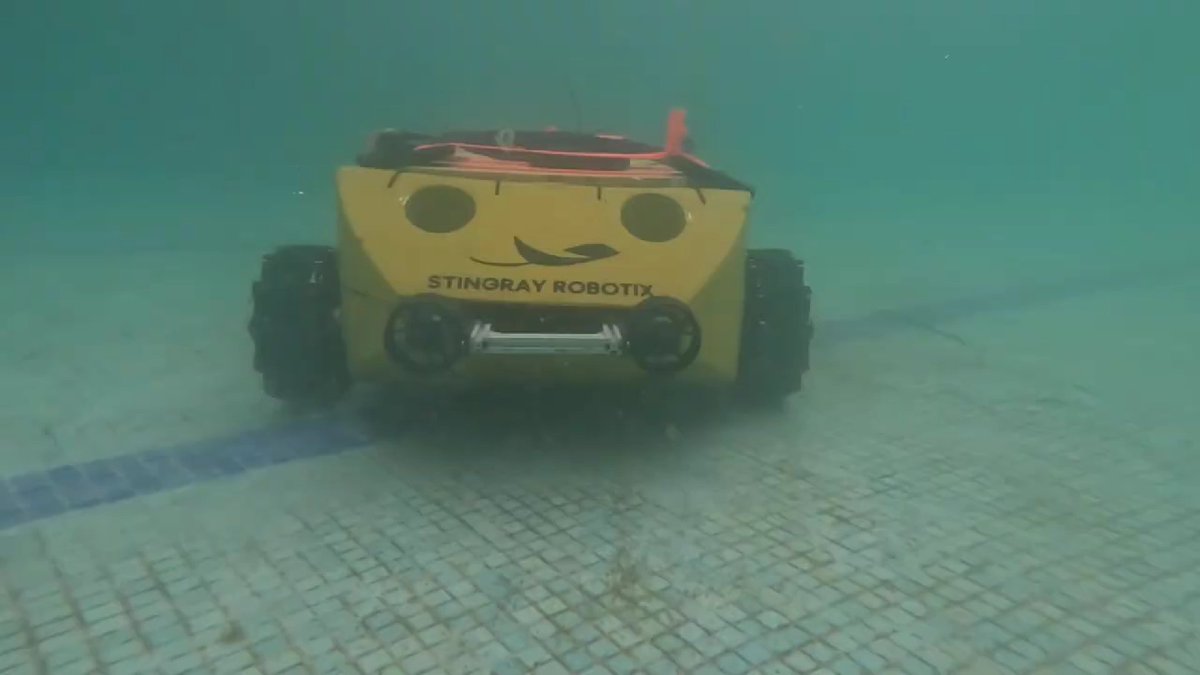
Here is the full video of The Hull Crawler in full action.
This is what cleaning a hull without dry-docking actually looks like.
Have a great watch and let us know what you think!👇
Peek inside the crawler 👀
Custom ROS 2 interface board, onboard compute, sensors, and a lot of wires. All of it has to work underwater.
#Robotics#ROS2#MarineTech
Thanks @ctorobotics! Magnetic crawl, cavitation jets, up to 200 m. Yes! it’s real, and more tests are coming. Follow up at @stingrayrobotix to keep up.
Underwater robots are taking hull cleaning to a new level. 🌊
Delhi-based Stingray Robotix has tested an underwater hull-cleaning robot that magnetically crawls along ship hulls and uses cavitation jets to remove biofouling. It is reportedly capable of operating at depths of up to 200 metres.
Could robots like this make ship maintenance safer and more efficient?
🏢 Company: @stingrayrobotix
🎥 Media: Runtime (@RuntimeBRT - X )
⚠️ This content is shared for informational purposes only. CTO Robotics Media is a media platform and does not own or develop the technology shown. Credit belongs to the original creators.
#UnderwaterRobotics #MarineTechnology #Robotics #ShipMaintenance #Automation #CTORoboticsMedia
Thanks for telling our story, @RuntimeBRT! 🙏
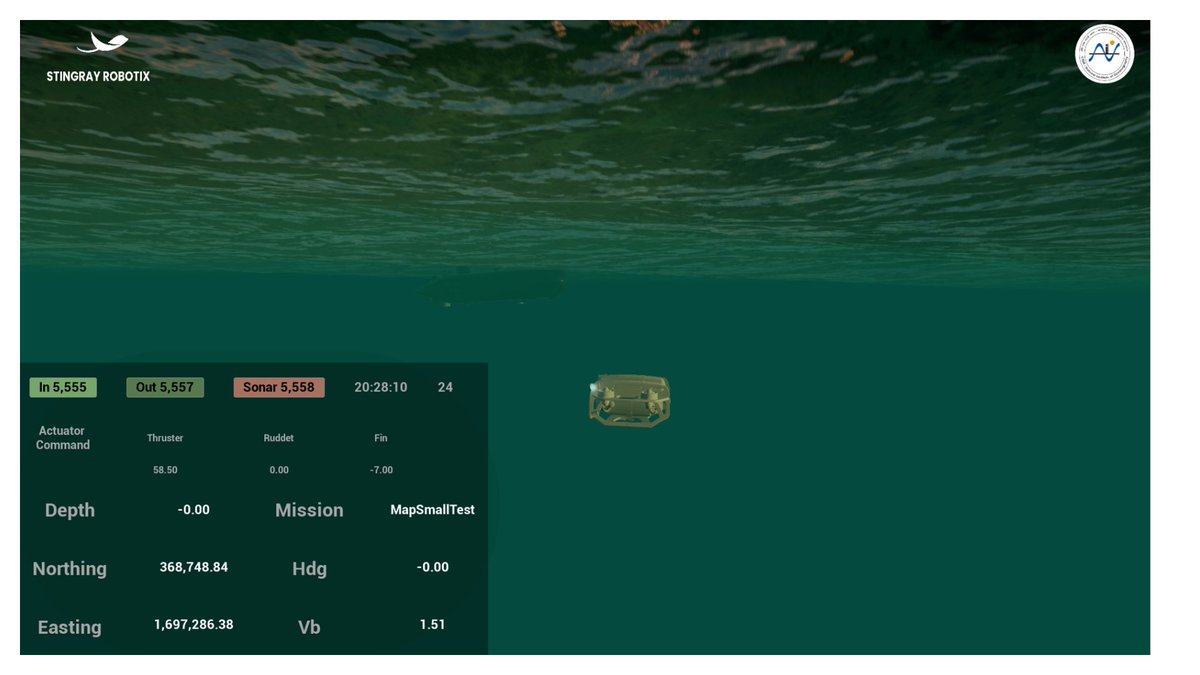
We also built HydroSim, our own UE5 underwater simulator with 6-DOF physics and realistic sensors. Software first, then water.
Follow @stingrayrobotix#Simulation#Robotics
🚨 Delhi-based Stingray Robotix (@stingrayrobotix) has successfully tested their underwater hull-cleaning robot.
It can magnetically crawl along ship hulls, uses cavitation jets to remove biofouling and can go as deep as 200 metres.
🚨 Delhi-based Stingray Robotix (@stingrayrobotix) has successfully tested their underwater hull-cleaning robot.
It can magnetically crawl along ship hulls, uses cavitation jets to remove biofouling and can go as deep as 200 metres.
Underwater robots are taking hull cleaning to a new level. 🌊
Delhi-based Stingray Robotix has tested an underwater hull-cleaning robot that magnetically crawls along ship hulls and uses cavitation jets to remove biofouling. It is reportedly capable of operating at depths of up to 200 metres.
Could robots like this make ship maintenance safer and more efficient?
🏢 Company: @stingrayrobotix
🎥 Media: Runtime (@RuntimeBRT - X )
⚠️ This content is shared for informational purposes only. CTO Robotics Media is a media platform and does not own or develop the technology shown. Credit belongs to the original creators.
#UnderwaterRobotics #MarineTechnology #Robotics #ShipMaintenance #Automation #CTORoboticsMedia
@RuntimeBRT Thanks for the shoutout @RuntimeBRT!
Biofouling quietly costs ships fuel and time. We built the Hull Crawler to fix that without taking the vessel out of service.
Follow along at @stingrayrobotix !
DID YOU KNOW?
A ship’s hull can turn into a floating reef.
Barnacles + algae = more drag = up to 40% more fuel burned.
Our autonomous crawler cleans it off with cavitation jets while the ship keeps sailing.
VISIT : https://t.co/N1fWgvqatZ
Myths about ship hulls that are costing the industry millions in fuel!
1.Myth: “A little fouling is harmless.”
2.Myth: “Dry dock is the only real fix.”
3.Myth: “Fouling only affects speed.” (It also spreads invasive species.)
Meanwhile, Reality: It doesn’t have @stingrayrobotix
Hull cleaning shouldn't mean taking the ship out of service.
Our autonomous crawler removes biofouling with cavitation jets while the vessel stays operational, with inspection and compliance analytics built in.
Visit on https://t.co/thS1cgP7B7 and learn more.
#robotics#marine
How does a robot find its way across a ship's hull?
It uses sensors to track its own position, so it can cover every patch of steel without missing a spot or cleaning the same one twice.
Think of it as a robot lawnmower, but underwater and on a wall.
#Robotics#Automation
Say Hi! to our hull crawler.
Yes, it has a face. No, it won't judge your hull.
It cleans ship biofouling while the ship stays in service.
#robotics#maritime
@BostonDynamics Good sim fidelity is what makes RL transfer. We took the same approach underwater with our own simulator, HydroSim. Great work @BostonDynamics
Do check out @stingrayrobotix
Simulate first, splash later.
HydroSim, our in-house underwater simulator on Unreal Engine 5, running a live mapping on thruster, rudder and fin commands, sonar and position all streaming in real time.
What is the first thing you would test in a sim like this? 👇
Invention creates.Innovation rethinks.
At @StingrayRobotix, we’re rethinking how underwater hulls are maintained.
Because some problems don’t need bigger solutions.
They need smarter ones.
#innovation#invention#robotics#Robotech
This is what building a robot actually looks like.
Less demo footage, more wrenching on a component until it's right.
Building Stingray Robotix, one bolt at a time.
Breaking news: our robot did not assemble itself overnight!
The WHOLE team gathered around building an amazing robot piece by piece.
This is the part that doesn't make the highlight reel but makes everything else possible.
Grateful for a team that shows up like this.