This week's Tuesday tip is about using the Stitchmastery Dash symbol sets to create cables stitches using single lines with vertical/horizontal dashes for knits and purls, rather than Stitchmastery's default dot style. Watch the tutorial here: https://t.co/JpJ3g9SWz8
This week's article refresher is @kateatherley's blog about charting (and working) cables on the wrong side, prompted by someone wanting to convert a chart from in the round to worked-flat. You can read her post here: https://t.co/naohQK0RZt
This tutorial shows how to chart slipped stitches. You can choose between the stacked Vs in the Basic Stitches drawer, or the abbreviations and key entries for the straight-lined slip stitches from the Brioche Stitches drawer can be changed to suit. https://t.co/TQdx95fifu
Your semi-regular reminder to back up your chart files, stitch libraries and so on. Setting aside 1/2 hour this month to review your storage and back-up system could help avoid problems if you have a computer failure. Find out more at our help centre: https://t.co/QBTHWSvlft
Our article from @kateatherley on charting short rows prompted a question from a reader about how to handle charting short rows in the round. You can read all about that here: https://t.co/hCsQt0CEtS
If you're designing a chart for a pattern that will contain more than one size, and the chart has sections that should be repeated different numbers of times based on the chosen size, you can add a qualifier to your Repeats in Stitchmastery. Learn how: https://t.co/TfVT7xx7kq
Stitchmastery provides an automatic stitch count in your written instructions. You can choose whether those show every row/round, only when the count changes, or not at all. Find out how here: https://t.co/XqqncJNmen
There's a new interview on our blog today, featuring designer and author Emma Vining aka @Purlemma. You can read all about her journey into designing and writing about knitwear design here: https://t.co/ckjI9ShEVT
There isn't one universally accepted way to chart tuck stitches in knitting, but Stitchmastery provides stitches which allow you to chart even very long tuck stitches with minimal clutter. Find out how: https://t.co/kWbXoVhthr
Sometimes you might want your knitting chart row/column number labels to start with something other than 1. This tutorial demonstrates how to set that up: https://t.co/OlnmQTtc8c
Stitchmastery's flip tools allow you to flip a section of a chart horizontally or vertically, and when flipping along the vertical axis it replaces any left-leaning stitches with right-leaning or vice versa. @kateatherley explored this tool on our blog: https://t.co/anX48YGekQ
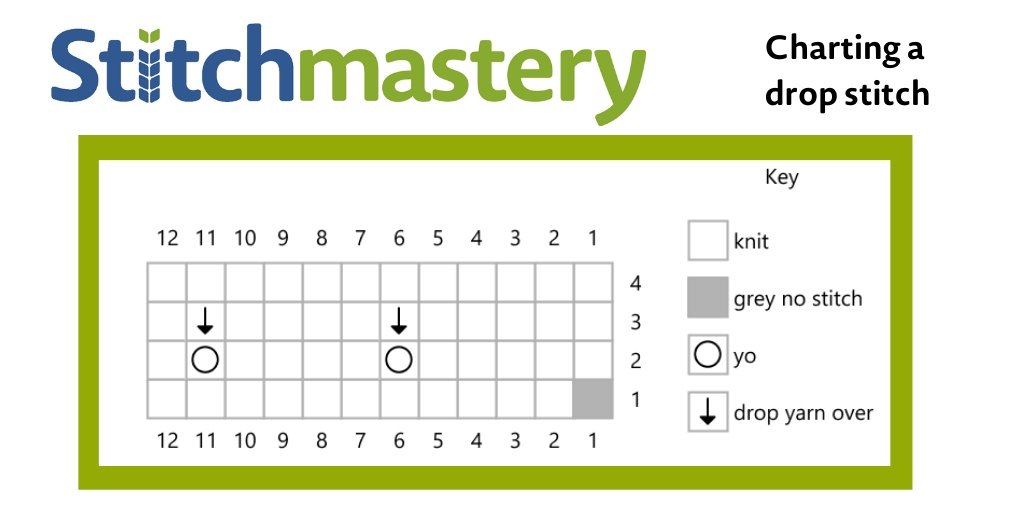
This video shows how to create a custom stitch to be used for dropping a stitch or yarn over, including how to change the "produces" value and finding a choice of downward-pointing arrows to use. https://t.co/XbnDnlAl5p
Do you want to make a chart with every second row shaded a different colour - or filled with all purls, for example? Learn how to do that in less than 1 minute by watching our tutorial: https://t.co/LMJmWAtg3n
Fill mode is one of the timesaving tools in Stitchmastery. Find out how to use it here: https://t.co/9QUGAUsBr8
A reminder that all our videos have a written explanation in the description box underneath, as well as links to other sources of explanation and help.
Sometimes it's not possible to condense stitches into repeats in a large knitting chart. One option for legibility is to split the chart and add overlaps, using the border function to indicate which stitches have already been worked. Learn how here: https://t.co/huJf7KU1FI
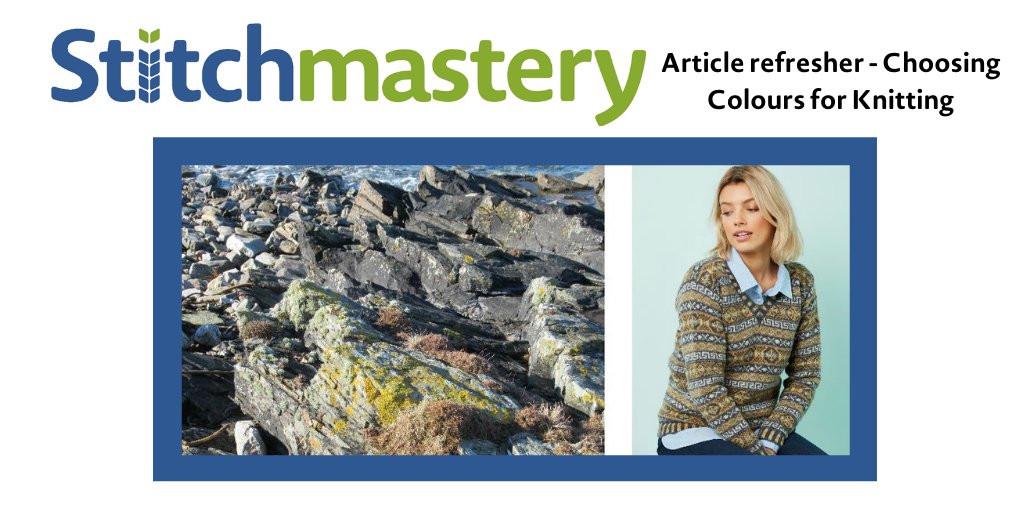
One of the guest articles on our blog is from Claire Neicho discussing her approaches for choosing colours for knitting. You can read her article here: https://t.co/jpEG1behVj
A quirk of the Text Input tool is that the type of symbol you use to indicate a repeat will affect whether the repeated stitches are drawn out in the chart or not. The latter is useful if you want to add a border to indicate the repeat. Learn more: https://t.co/W8I2Kgxct3
It is probably fair to say that most people who use Stitchmastery take the approach of adding symbols to a blank chart, but it is possible to generate a chart by inputting written instructions. This tutorial explains how: https://t.co/yfdjCIS55T
We have a new Stitchmastery user interview on the blog today, featuring Michele Lee Bernstein. Find out all about her work as a designer and her inspirations: https://t.co/iC8GmZDcdi
This week's article refresher sees @kateatherley discuss some of the main conventions in charting knitwear - eg why do we use a purl dot for a wrong-side knit stitch? You can read the article here: https://t.co/tuNW856hL2